
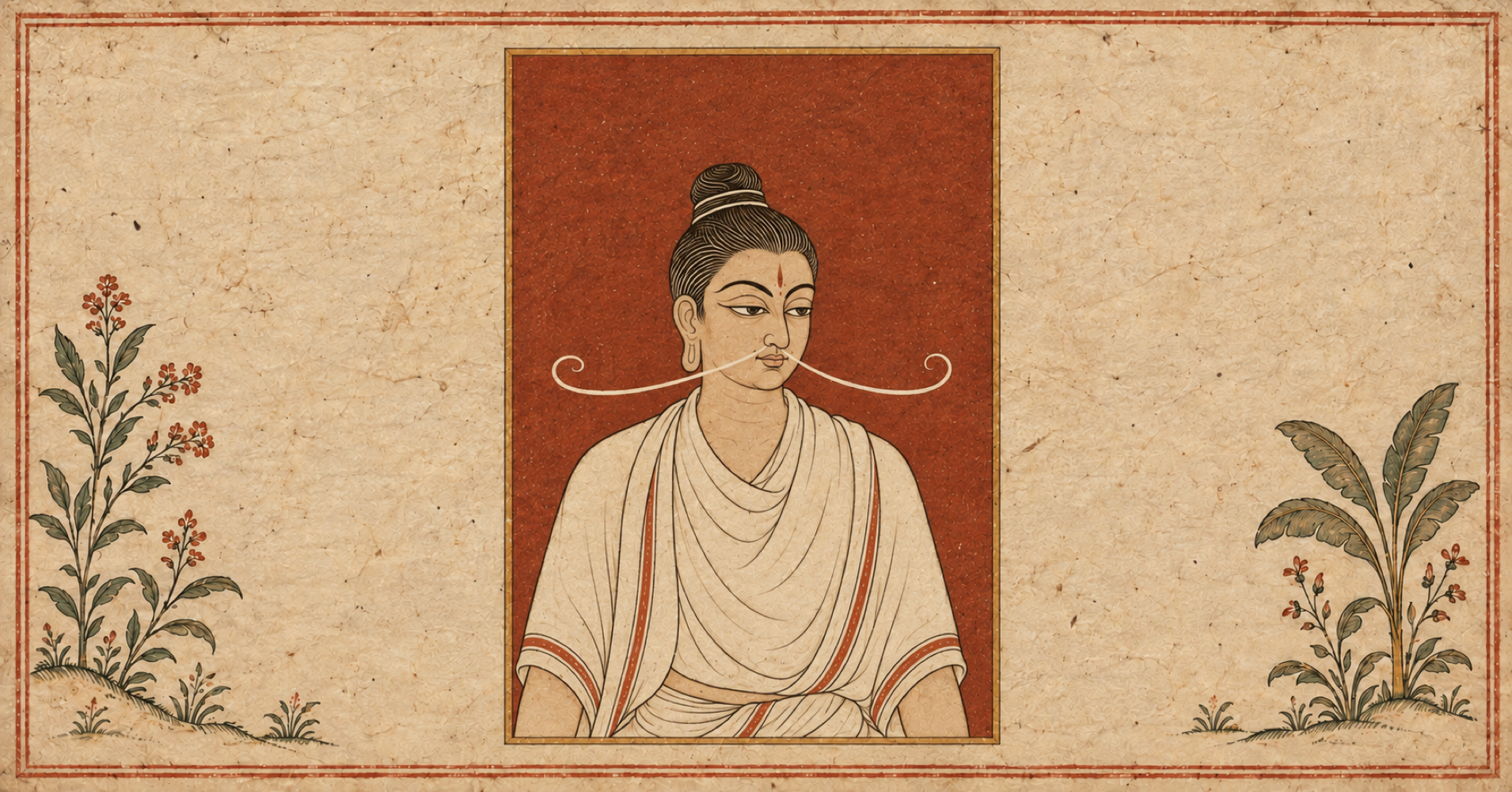
Two open lines of breath in front of a half-length figure.

Haṭhatattvakaumudī 10.21*2–23*1: Utkarṣa and Apakarṣa: Directing breath at the nostrils

Utkarṣa and Apakarṣa open a supplementary collection. These procedures combine closures at the nose with retention or with exhalation and inhalation.

Dr. Ronald Steiner Dr. Ronald Steiner
Haṭhatattvakaumudī 10.21*2
अथात्र ग्रन्थान्तरे विशेषः |
athātra granthāntare viśeṣaḥ | Analysis ▾ Analysis ▴
atha
particle
now
atra
adverb
here
grantha
tatpuruṣa-compound genitive
substantive masculine
of a treatise
antare
lokative singular
substantive neuter
in another
viśeṣaḥ
nominative singular
substantive masculine
a particular feature
Metre: none
Now (atha), here (atra), [follows] a particular feature (viśeṣaḥ | nom sg) from another treatise (granthāntare | loc sg).
Dr. Ronald Steiner - 2026 - historically literal
Another voice can broaden your view of a familiar practice. Compare carefully what seems familiar and what it adds.
Dr. Ronald Steiner - 2026 - modern transfer
Haṭhatattvakaumudī 10.21*3
अथ प्रसङ्गादभ्यासार्थं केचन उपयुक्ताः कुम्भकाः कथ्यन्ते |
atha prasaṅgād abhyāsārthaṃ kecana upayuktāḥ kumbhakāḥ kathyante | Analysis ▾ Analysis ▴
atha
particle
now
prasaṅgāt
ablative singular
substantive masculine
on this occasion
abhyāsa
tatpuruṣa-compound genitive
substantive masculine
of practising
artham
accusative singular
substantive masculine
for the purpose
kecana
nominative plural masculine
kiñcana
pronoun
some
upayuktāḥ
nominative plural masculine past participle passive
previx
verbal root
suitable
kumbhakāḥ
nominative plural
substantive masculine
breath retentions
kathyante
3rd person plural passive present
verbal root
are described
Metre: none
Now (atha), on this occasion (prasaṅgāt | abl sg), some (kecana | nom pl m) suitable breath retentions (upayuktāḥ kumbhakāḥ | nom pl) are described (kathyante | 3p pl pas pres) for the purpose of practice (abhyāsārtham | acc sg).
Dr. Ronald Steiner - 2026 - historically literal
With each new form of breathing, consider which question it answers for your practice. You can take your time before making it part of what you do.
Dr. Ronald Steiner - 2026 - modern transfer
Haṭhatattvakaumudī 10.22
सङ्कर्षको रोधबलं हि यावत्सम्मुह्य नासायुगरन्ध्रमूलम् |
saṅkarṣako rodha-balaṃ hi yāvat; sammuhya nāsā-yuga-randhra-mūlam | Analysis ▾ Analysis ▴
saṅkarṣakaḥ
nominative singular masculine
saṅkarṣaka
adjective
drawing in
rodha
tatpuruṣa-compound genitive
substantive masculine
of retention
balam
accusative singular
substantive neuter
strength
hi
particle
for
yāvat
adverb
as long as
sammuhya
absolutus
previx
verbal root
having become confused; the proposed sense of closing is not lexically established
nāsā
tatpuruṣa-compound genitive
substantive feminine
of the nose
yuga
tatpuruṣa-compound genitive
substantive neuter
of the pair
randhra
tatpuruṣa-compound genitive
substantive neuter
of the openings
mūlam
accusative singular
substantive neuter
the base
कुर्यात्तदग्रे ननु रेचपूराव् उत्कर्षकुम्भः कथितः स धात्रा ||22||
kuryāt tad-agre nanu reca-pūrāv; utkarṣa-kumbhaḥ kathitaḥ sa dhātrā ||22|| Analysis ▾ Analysis ▴
kuryāt
3rd person singular aktive optative
verbal root
one should perform
tad
tatpuruṣa-compound genitive
pronoun dem
of that
agre
lokative singular
substantive neuter
after this
nanu
particle
certainly
reca
dvandva-compound
substantive masculine
exhalation
pūrau
accusative dual
substantive masculine
and inhalation
utkarṣa
karmadhāraya-compound
substantive masculine
Utkarṣa
kumbhaḥ
nominative singular
substantive masculine
breath retention
kathitaḥ
nominative singular masculine past participle passive
verbal root
called
saḥ
nominative singular masculine
pronoun dem
this
dhātrā
instrumental case singular
substantive masculine
by the creator
Metre: Indravajrā
The one drawing in (saṅkarṣakaḥ | nom sg m) [retains the breath] for as long as (yāvat) the strength to retain [allows] (rodha-balam | acc sg). For (hi), having closed (sammuhya | abs) the base of the two nostril openings (nāsā-yuga-randhra-mūlam | acc sg), one should certainly (nanu) afterwards (tad-agre | loc sg) perform (kuryāt | 3p sg act opt) exhalation and inhalation (reca-pūrau | acc du). This (saḥ | nom sg m) [practice is] called (kathitaḥ | nom sg m ppp) the Utkarṣa breath retention (utkarṣa-kumbhaḥ | nom sg) by the creator (dhātrā | ins sg).
Dr. Ronald Steiner - 2026 - historically literal

I supplement the elliptical opening as “[retains the breath] for as long as the strength to retain [allows]”. This connects the instruction with yāvat.

Translation Comment
Notice when consciously remaining still turns into holding on. The transition back into movement is part of the practice, too.
Dr. Ronald Steiner - 2026 - modern transfer
sammuhya nāsāyuga GDJ2007 ] saṃmudranāyuga GDJ2007-b
Critical Apparatus
Haṭhatattvakaumudī 10.22*1
इत्य् उत्कर्षकुम्भः |
ity utkarṣa-kumbhaḥ | Analysis ▾ Analysis ▴
iti
particle
thus ends
utkarṣa
karmadhāraya-compound
substantive masculine
Utkarṣa
kumbhaḥ
nominative singular
substantive masculine
breath retention
Metre: none
Thus (iti) [ends] the Utkarṣa breath retention (utkarṣa-kumbhaḥ | nom sg).
Dr. Ronald Steiner - 2026 - historically literal
Close this reflection by retracing inwardly the shift between gathering yourself and moving on.
Dr. Ronald Steiner - 2026 - modern transfer
Haṭhatattvakaumudī 10.23
आमुह्य घोणार्धम् अधोविभागे यद्रेचपूरौ विदधाति तिष्ठन् |
āmuhya ghoṇārdham adho-vibhāge; yad reca-pūrau vidadhāti tiṣṭhan | Analysis ▾ Analysis ▴
āmuhya
absolutus
previx
verbal root
having become confused; the proposed sense of closing is not lexically established
ghoṇā
tatpuruṣa-compound genitive
substantive feminine
of the nose
ardham
accusative singular
substantive neuter
one half
adhas
karmadhāraya-compound
adverb
below
vibhāge
lokative singular
substantive masculine
in the region
yat
particle
when
reca
dvandva-compound
substantive masculine
exhalation
pūrau
accusative dual
substantive masculine
and inhalation
vidadhāti
3rd person singular aktive present
previx
verbal root
he performs
tiṣṭhan
nominative singular masculine present participle active
verbal root
remaining
स एष कुम्भो गदितो विधात्रा नाम्नापकर्षः प्रणवात्मना ऽयम् ||23||
sa eṣa kumbho gadito vidhātrā; nāmnāpakarṣaḥ praṇavātmanā 'yam ||23|| Analysis ▾ Analysis ▴
saḥ
nominative singular masculine
pronoun dem
this
eṣaḥ
nominative singular masculine
pronoun dem
here
kumbhaḥ
nominative singular
substantive masculine
breath retention
gaditaḥ
nominative singular masculine past participle passive
verbal root
called
vidhātrā
instrumental case singular
substantive masculine
by the creator
nāmnā
instrumental case singular
substantive neuter
by name
apakarṣaḥ
nominative singular
substantive masculine
Apakarṣa
praṇava
bahuvrīhi-compund
substantive masculine
Oṃ
ātmanā
instrumental case singular masculine
substantive masculine
whose essence is
ayam
nominative singular masculine
pronoun dem
this
Metre: Pādas 1–2: Indravajrā; Pāda 3: Upendravajrā; Pāda 4: Indravajrā
When (yat) [someone], having closed (āmuhya | abs) one half of the nose (ghoṇārdham | acc sg), remains (tiṣṭhan | nom sg m pca) in the lower region (adho-vibhāge | loc sg) [and] performs (vidadhāti | 3p sg act pres) exhalation and inhalation (reca-pūrau | acc du), that (saḥ | nom sg m) [is] this breath retention (eṣaḥ kumbhaḥ | nom sg). This (ayam | nom sg m) [is] called (gaditaḥ | nom sg m ppp) Apakarṣa (apakarṣaḥ | nom sg) by name (nāmnā | ins sg), by the creator (vidhātrā | ins sg), whose essence is Oṃ (praṇavātmanā | ins sg m).
Dr. Ronald Steiner - 2026 - historically literal

I connect adho-vibhāge with tiṣṭhan: “remains in the lower region”. I understand yat … sa eṣaḥ as a conditional construction, supplying “[is]”; the name Apakarṣa follows in a separate sentence.

Translation Comment
For a moment, focus on one side of your nose and feel the natural breath there. A small field of sensation can offer plenty to observe closely.
Dr. Ronald Steiner - 2026 - modern transfer
āmuhyaghoṇārdhamadhovibhāge GDJ2007 ] āmujyayovibhāge GDJ2007-b

praṇavātmanā 'yam GDJ2007 ] praṇavātmanā'dhyaṃ GDJ2007-b
Critical Apparatus
Haṭhatattvakaumudī 10.23*1
इत्य् अपकर्षकुम्भः |
ity apakarṣa-kumbhaḥ | Analysis ▾ Analysis ▴
iti
particle
thus ends
apakarṣa
karmadhāraya-compound
substantive masculine
Apakarṣa
kumbhaḥ
nominative singular
substantive masculine
breath retention
Metre: none
Thus (iti) [ends] the Apakarṣa breath retention (apakarṣa-kumbhaḥ | nom sg).
Dr. Ronald Steiner - 2026 - historically literal
After attending to one side, broaden your attention to the whole breath again.
Dr. Ronald Steiner - 2026 - modern transfer

Continue with AYI Free

Illustrations: AI-generated.

Editor

Dr. Ronald Steiner

From Ulm

The "Yoga Doc" - Dr. Ronald Steiner is the founder of the AYI method. This method links traditional Ashtanga Yoga with innovative Yogatherapy and living Philosophy. This forms a practice that is personal for each and... more ›

Messages and ratings
0 messages

Please log in to write a message. Go to login

No messages yet.