

siddha सिद्ध – vollendet; verwirklicht; gelungen
Adjektiv · Substantiv Maskulin · Substantiv Neutrum · Worttyp nicht bestimmt
Wörterbuchquellen
AYI Wörterbuch Adjektiv · Substantiv Maskulin
Adjektiv
vollendet; verwirklicht; gelungen
Cappeller 1891 Adjektiv
Originaltext · Englisch · Adjektiv
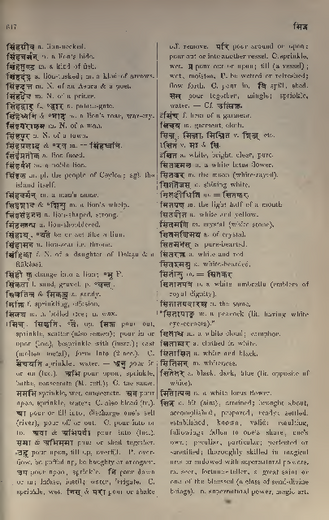
siddha ·a. hit (aim), attained; brought about, accomplished, prepared, ready; settled, established, known, valid; resulting, following; fallen to one's share, one's own; peculiar, particular; pertected or sanctified; thoroughly skilled in magical arts or endowed with supernatural powers. m. seer, fortune-teller, a great saint or one of the blessed (a class of semi-divine beings). n. supernatural power, magic art.
Monier-Williams 1872 Adjektiv · Worttyp nicht bestimmt
Originaltext · Englisch · Adjektiv
Siddha, as, ā, am, accomplished, effected, com- pleted, finished, perfected, fulfilled, performed, ob- tained, acquired, gained; succeeded, successful; settled, established, substantiated, demonstrated, proved; valid (as a rule of grammar or in law); admitted to be true or right; adjudicated, decided, terminated (as a lawsuit); paid, liquidated, settled (as a debt); ready (as money); thoroughly pre- pared, concocted, compounded (as drugs &c.); cooked, dressed; matured, ripened, ripe; subjugated, subdued, brought into subjection (by magical power); thoroughly skilled or versed (in magical arts &c.); perfected or sanctified (by penance, austerities, &c.); emancipated, beatified; endowed with supernatural powers or faculties, (of these eight are usually enu- merated, see under siddhi below; but twenty-six others are sometimes added, e. g. dūra-śravaṇa, sarvajña-tva, manoyāyi-tva, vahni-stambha, &c., see under stambha); sacred, holy, pious, divine, immortal, eternal; well-known, eminent, celebrated; illustrious, shining, splendid; (as), m. a semi-divine being supposed to be of great purity and holiness, and said to be specially characterized by the eight supernatural faculties (of which aṇiman is the first; see under siddhi; according to some the Siddhas inhabit, together with the Munis &c., the Bhuvar- loka or middle region between the earth and the sun; according to the Viṣṇu-Purāṇa eighty-eight thousand of them occupy the regions of the sky north of the sun and south of the seven Ṛṣis; they are regarded as immortal, but only in the sense of living to the end of a Kalpa; in the later mytho- logy they appear to be sometimes confused with the Sādhyas, whose place they seem occasionally to take, see sādhya); an inspired sage or seer (as Vyāsa and others); any holy or sanctified personage or great saint (especially one who by austere practices has attained some or all of the five states of beatitude, see saloka-tā, sarūpa-tā, sāmīpya, sāyujya, sārṣṭi-tā); an adept in magical or mystical arts, one who by the performance of certain mystical rites has acquired superhuman powers, (see above and under siddhi); a lawsuit, judicial trial (= vyava- hāra); a kind of dark Dhustūra or thorn-apple; another plant or a sort of hard sugar (= guḍa); N. of the twenty-first of the astronomical Yogas; (ās), m. pl., N. of a people; (ā), f. a medicinal plant or root (= ṛddhi); N. of one of the eight Yoginīs, (see under yogin); (am), n. sea-salt.

Originaltext · Englisch · Worttyp nicht bestimmt
siddha , siddha, &c. See col. 2.
Petersburger 1855 Worttyp nicht bestimmt
Originaltext · Deutsch · Worttyp nicht bestimmt
siddha s. u. 1. und 2. sidh.
Böhtlingk 1879 Adjektiv · Substantiv Maskulin · Substantiv Neutrum
Originaltext · Deutsch · Adjektiv
1. siddha Adj. s. u. 1. sidh.
Originaltext · Deutsch · Substantiv Maskulin · Substantiv Neutrum
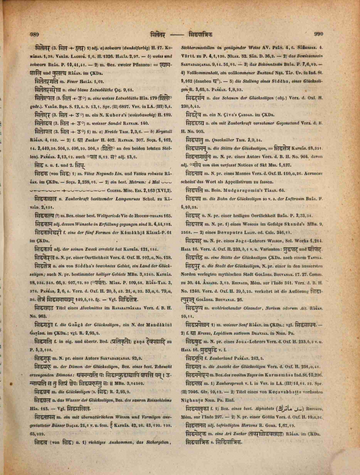
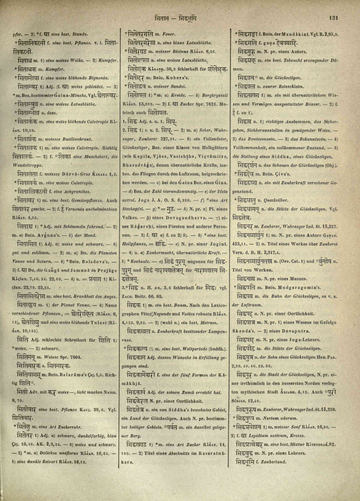
2. siddha — 1〉 s. u. 2. sidh. — 2〉 m. — a〉 Seher, Wahrsager, Zauberer Chr. 327,31. — b〉 ein Vollendeter, Glückseliger, Bez. einer Klasse von Halbgöttern (wie Kapila, Vyāsa, Vasiṣṭha, Viśvāmitra, Bharadvāja), denen übernatürliches Kräfte, insbes. das Fliegen durch den Luftraum, beigeschrieben werden. — c〉 bei den Jaina Bez. eines Jina. — d〉 Bez. der Zahl vierundzwanzig. — e〉 der 21ste astrol. Yoga J. A. O. S. 6,236. — f〉 *eine Art Stechapfel. — g〉 *= guḍa. — h〉 N. pr. — α〉 Pl. eines Volkes. — β〉 eines Devagandharva. — γ〉 eines Rājarṣi, eine Fürsten und anderer Personen. — 3〉 f. ā — a〉 f. zu 2〉b〉. — b〉 *eine best. Heilpflanze, = ṝddhi. — c〉 N. pr. einer Yoginī. — 4〉 n. — a〉 Zaubermacht, übernatürliche Kraft. — b〉 *Kochsalz. — c〉 siddhaṃ puram ungenau für siddhapuram und siddhaṃ nārāyaṇakṣetram für nārāyaṇasya siddhakṣetram.
Originaltext · Deutsch · Substantiv Neutrum
3. *siddha n. H. an. 3,6 fehlerhaft für middha; vgl. ZACH. Beitr. 66. 85.
Apte 1890 Adjektiv · Substantiv Maskulin · Substantiv Neutrum
Originaltext · Englisch · Adjektiv · Substantiv Maskulin · Substantiv Neutrum
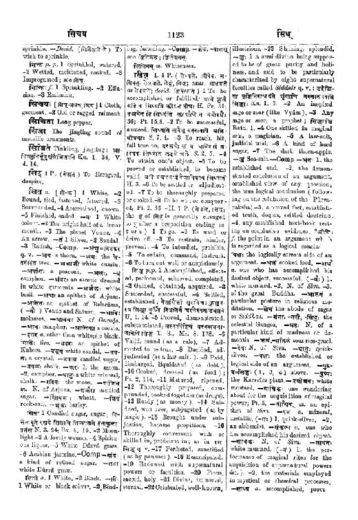
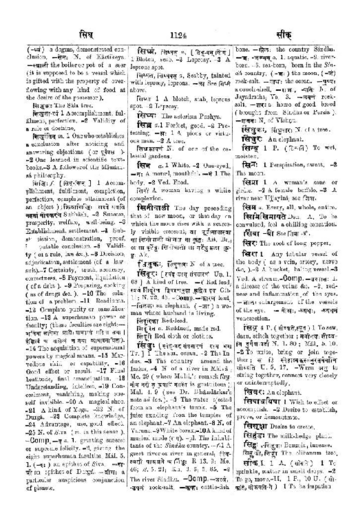
siddha p. p. 1 Accomplished,, effected, performed, achieved, completed. 2 Gained, obtained, acquired. 3 Succeeded, successful. 4 Settled, established; naisargikī surabhiṇaḥ kusumasya siddhā mūrdhni sthitirna caraṇairavatāḍanāni U. 1. 14. 5 Proved, demonstrated, substantiated; tasmādiṃdriyaṃ pratyakṣapramāṇamiti siddhaṃ T. S., Ms. 8. 178. 6 Valid, sound (as a rule). 7 Admitted to be true. 8 Decided, adjudicated (as a law-suit.). 9 Paid, discharged, liquidated (as debt). 10 Cooked, dressed (as food); Pt. 2. 114. 11 Matared, ripened. 12 Thoroughly prepared, compounded, cooked together (as drugs). 13 Ready (as money). 14 Subdued, won over, subjugated (as by magic). 15 Brought under subjection, become propitious. 16 Thoroughly conversant with or skilled in, proficient in; as in ratasiddha q. v. 17 Perfected, sanctified (as by penance). 18 Emancipated. 19 Endowed with supernatural powers or faculties. 20 Pious, sacred, holy. 21 Divine, immortal, eternal. 22 Celebrated, well-known, ([Page 1123-c]) illustrious. 23 Shining, splendid, — ddhaḥ 1 A semi-divine being supposed to be of great purity and holiness, and said to be particularly characterized by eight supernatural faculties called Siddhis q. v.; udvejitā vṛṣṭibhirāśrayaṃte śṛṃgāṇi yasyātapavaṃti siddhāḥ Ku. 1. 5. 2 An inspired sage or seer (like Vyāsa). 3 Any sage or seer, a prophet; siddhādeśa Ratn. 1. 4 One skilled in magical arts, a magician. 5 A law-suit, judicial trial. 6 A kind of hard sugar. 7 The dark thorn-apple. — ddhaṃ Sea-salt. Comp. — aṃtaḥ 1 the established end. 2 the demonstrated conclusion of an argument, established view of any question, the true logical conclusion (following on the refutation of the Pūrvapakṣa). 3 a proved fact, established truth, dogma, settled doctrine. 4 any established text-book resting on conclusive evidence. ˚koṭiḥ f. the point in an argument which is regarded as a logical conclusion. ˚pakṣaḥ the logically correct side of an argument. — annaṃ cooked food. — artha a. one who has accomplished his desired object, successful. — (rthaḥ) 1 white mustard. 2 N. of Śiva. 3 of the great Buddha. — āsanaṃ a particular posture in religious meditation. — kṣetraṃ the abode of sages or Siddhas. — gaṃgā, -nadī, -siṃdhuḥ the celestial Ganges. — grahaḥ N. of a particular kind of madness or dementia. — jalaṃ, -salilaṃ sour rice-gruel. — devaḥ N. of Śiva. — dhātuḥ quicksilver. — pakṣaḥ the established or logical side of an argument. — puruṣa = siddhaḥ (1, 3, 4) above. — puṣpaḥ the Karavīra plant. — prayojanaḥ white mustard. — yātrikaḥ one wandering about for the acquisition of magical power; Pt. 5. — yogin m. an epithet of Śiva. — rasa a. mineral, metallic. — (saḥ) 1 quick-silver. 2 an alchemist. — saṃkalpa a. one who has accomplished his desired object. — sādhakaḥ N. of Śiva. — sādhanaḥ white mustard. — (naṃ) 1 the performance of magical rites for the acquisition of supernatural powers &c. 2 the materials employed in mystical or chemical processes. — sādhya a. accomplished, proved. ([Page 1124-a]) — (dhyaṃ) a dogma, demonstrated conclusion. — senaḥ N. of Kārtikeya. — sthālī the boiler or pot of a seer (it is supposed to be a vessel which is gifted with the property of overflowing with any kind of food at the desire of the possessor).
Cappeller 1887 Worttyp nicht bestimmt
Originaltext · Deutsch · Worttyp nicht bestimmt
siddha s. 1. sidh.

Originaltext · Deutsch · Worttyp nicht bestimmt
siddha (s. 2. sidh) vollommen, wunderkräftiger, Meister in (—˚). m. ein Vollendeter, Seliger, Seher, Zauberer; Pl. Volksname. n. Zauberkraft.
Burnouf 1866 Adjektiv
Originaltext · Französisch · Adjektiv
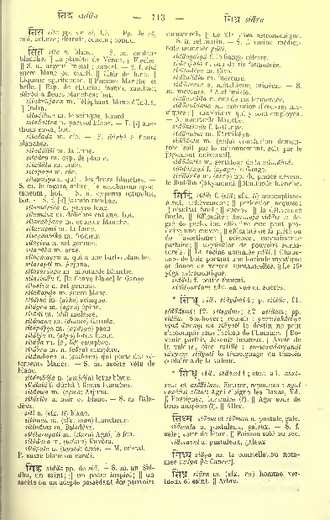
siddha siddha pp. de sidh. — S. m. un Siddha, un saint; un poète inspiré; un ascète ou un adepte possédant des pouvoirs [Page713-2] surnaturels. Le 21ᵉ yoga astronomique. — S. n. sel marin. — S. f. racine médicinale nommée ṛddhi. siddhagaṅgā f. le Gange céleste. siddhajala n. eau de riz fermentée. siddhadeva m. Śiva. siddhadhātu m. mercure. siddharasa a. métallique, minéral. — S. m. mercure. Alchimiste. siddhasalila n. eau de riz fermentée. siddhasādhana m. exécution d'œuvres magiques; matériaux qui y sont employés. — N. moutarde blanche. siddhasindhu f. le Gange. siddhasena m. Kārttikeya. siddhānta m. (anta) conclusion démontrée [soit par le raisonnement, soit par le jugement universel]. siddhāntin m. sectateur de la mīmāṃsā. siddhāpagā f. (apagā) le Gange. siddhārtha m. (artha) np. du prince devenu le Buddha Śākyamuni. Moutarde blanche.
Quelltextfundstellen (50)
DYS 4 Fundstellen
GoS 1 Fundstelle
HP 22 Fundstellen
HP 1.33-1.43: Siddhāsana 12 Fundstellen
Direkt belegt
HTK 1 Fundstelle
HTK 10.34*2–38*1: Asvaṅgaśṛṅkhalā und Kumbhāntaraśṛṅkhalā 1 Fundstelle
Direkt belegt
-
HTK 10.37 Segment 32
PYS 1 Fundstelle
SiSa 21 Fundstellen
SiSa 3.84-3.87: Siddhāsana 4 Fundstellen
Direkt belegt
Weitere 10 Quelltextseiten
Mit AYI Free weitermachen
Bildquelle: AYI Archiv.