

agni अग्नि – fire
substantive masculine · Word type unspecified
Dictionary sources
AYI dictionary substantive masculine
Cappeller 1891 substantive masculine
Original text · English · substantive masculine
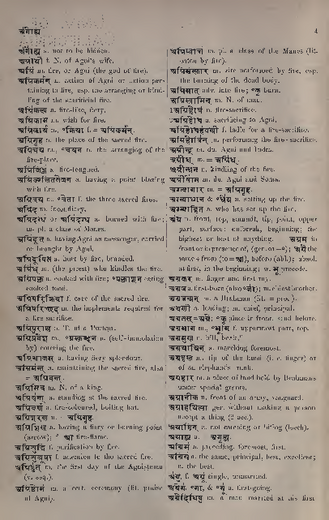
agní ·m. fire, or Agni (the god of fire).
Monier-Williams 1872 substantive masculine
Original text · English · substantive masculine
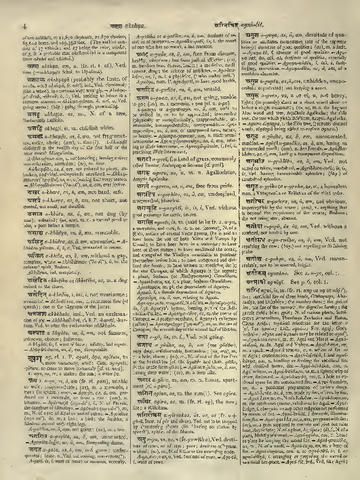
agni agni, is, m. (fr. rt. aṅg or ag or añj?), fire; sacrificial fire of three kinds, Gārhapatya, Āha- vanīya, and Dakṣiṇa; the number three; the god of fire; the fire of the stomach, the digestive faculty; the gastric fluid; bile; gold; N. of various plants, Semi- carpus Anacardium, Plumbago Zeylanica and Rosea, Citrus Acida; mystical substitute for the letter r [cf. Lat. igni-s; Lith. ugni-s; Slav. ognj; Goth. auhn'-s; ἄιγλη and ἀγλαός may be related to agni].
Petersburger 1855 substantive masculine · Word type unspecified
Original text · German · substantive masculine
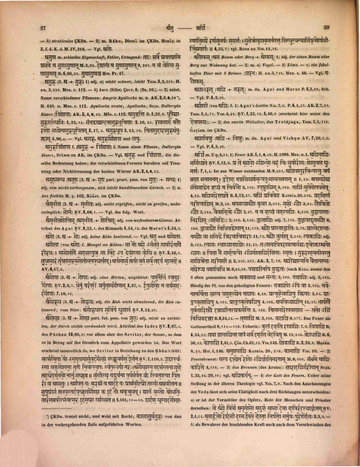
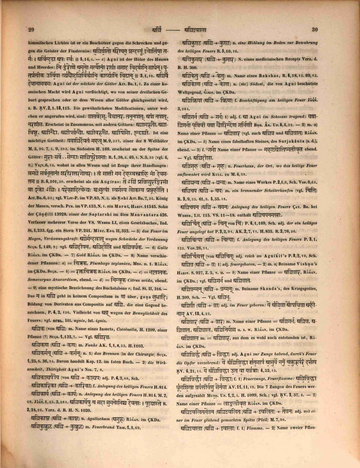
agní m. Uṇ. 4,51. 1〉 Feuer AK. 1,1,1,48. H. 1099. MED. n. 1. a̱gninā̱gniḥ samìdhyate ṚV. 1,12,6. pra te a̱gnayo̱ 'gnibhyo̱ vara̱ṃ niḥ su̱vīrā̀saḥ śośucanta dyu̱mantàḥ ṚV. 7,1,4. Ist aus Wasser entstanden M. 9,321. agnivāyuravibhyastu trayaṃ brahma sanātanam . dudoha yajñasiddhyarthamṛgyajuḥsāmalakṣaṇam .. M. 1,23. apāmagneśca saṃyogāddhema rūpyaṃ ca nirbabhau M. 5,113. spṛṣṭvāgnim M. 5,103. nāgniṃ mukhenopadhamet M. 4,53. agnimārokṣyate R. 6,72,57. agniṃ praviveśa KATHĀS. 20,216. pradakṣiṇaṃ parītyāgnim M. 2,48. apasavyamagnau kṛtvā M. 3,214. gṛhye 'gnau M. 3,84. laukike 'gnau M. 3,282. vaivāhike 'gnau M. 3,67. na ca havyaṃ vahatyagniḥ M. 4,249. juhuyāttābhiragnim (samidbhiḥ) M. 2,186. M. 4,145. hutāgniḥ adj. M. 7,145. juhuyādghṛtamagnau M. 8,106. hutvāgnau vidhivaddhomān M. 11,119. agnau prāstāhutiḥ M. 3,76. prāsyedātmānamagnau vā samiddhe triravākśirāḥ M. 11,73. agnau kuryāt M. 3,210. tyaktāgniḥ adj. M. 3,153. tyāgaḥ svādhyāyāgnyoḥ M. 11,59. ta (mātāpitarāvācāryaśca) evoktāstrayo 'gnayaḥ .. pitā vai gārhapatyo 'gnirmātāgnirdakṣiṇaḥ smṛtaḥ . gururāhavanīyastu sāgnitretā garīyasī .. M. 2,230. M. 2,231. AK. 2,7,19. agnīṃścātmani vaitānānsamāropya yathāvidhi M. 6,25. M. 6,38. pañcāgnīnapi juhvataḥ (nach KULL. ausser den 3 eben genannten noch āvasathya und sabhya) M. 3,100. pañcāgniḥ adj. M. 3,185. Häufig der Pl. von den geheiligten Feuern: yatrāgnayo 'pi vā M. 3,103. navenānarcitā hyasya paśuhavyena cāgnayaḥ M. 4,28. pratyūhennāgniṣu kriyāḥ M. 5,84. prāduṣkṛtāgniṣu M. 4,104. prāduṣkṛteṣvagniṣu M. 4. M. 106. apavidhyāgnīn M. 11,41. bhāryāyai pūrvamāriṇyai dattvāgnīnantyakarmaṇi M. 5,168. citāmāropayāmāsa — tato 'gniṃ vidhivaddattvā R. 4,24,42. — tṛṇāgni M. 3,168. kaṭāgni M. 8,377. Das Feuer als Gottesurtheil M. 8,114—116. Uebertr.: kulaṃ dahati rājāgniḥ M. 7,9. viṣāgni R. 6,34,23. tathā jñānāgninā pāpaṃ sarvaṃ dahati vedavit M. 11,246. krodhāgni R. 6,36,43. kopāgni R. 1,41,3. ŚĀK. Ch. 61,13. VID. 145. śokāgni R. 2,24,8. MṚCCH. 8,21. HIT. I, 146. anuśayāgni KATHĀS. 20,216. kāmāgni VID. 10. — 2〉 Feuersbrunst: yasya dṛśyeta rogo 'gnirjñātimaraṇam M. 8,108. saṃbhrame cāgnikārite M. 4,118. — 3〉 das Brennen (des Arztes): kṣārādagnirgarīyān SUŚR. 1,35,10. SUŚR. 1,29,10; vgl. agnikarman. — 4〉 der Gott des Feuers. Ueber seine Stellung in der älteren Theologie vgl. NIR. 7,8. Nach den Anschauungen des Veda lässt sich seine Thätigkeit nach drei Richtungen unterscheiden. a〉 er ist der Vermittler des Opfers, Bote der Menschen und Priester derselben: tve àgne̱ viśvè a̱mṛtā̀so a̱druhà ā̱sā de̱vā ha̱viràda̱ntyāhùtam ṚV. 2,1,14. a̱ntardū̱to rodàsī da̱sma ī̀yate̱ hotā̱ niṣàtto̱ manùṣaḥ pu̱rohìtaḥ ṚV. 3,3,2. — b〉 als Bewahrer der leuchtenden Kraft auch nach dem Verschwinden des himmlischen Lichtes ist er ein Beschützer gegen die Schrecken und gegen die Geister der Finsterniss: a̱gnirjā̱to àrocata̱ ghnandasyū̱ṃ jyotìṣā̱ tamàḥ . avìnda̱dgā a̱paḥ svàḥ .. ṚV. 5,14,4. — c〉 Agni ist der Hüter des Hauses und Heerdes: ni dùro̱ṇe a̱mṛto̱ martyā̀nā̱ṃ rājā̀ sasāda vi̱dathā̀ni̱ sādhàn . ghṛ̱tapràtīka urvi̱yā vyàdyauda̱gnirviśvā̀ni̱ kāvyā̀ni vi̱dvān .. ṚV. 3,1,18. agniṃrvai devānāmavamaḥ Agni ist der nächste der Götter AIT. BR. 1,1. Zu einer kosmischen Macht wird Agni verflüchtigt, wo von seiner dreifachen Geburt gesprochen oder er dem Wesen aller Götter gleichgesetzt wird, z. B. ṚV. 2,1. ṚV. 10,115. Die gewöhnlichsten Modificationen, unter welchen er angerufen wird, sind: jātavedas, vaiśvānara, tanūnapāt, apāṃ napāt, narāśaṃsa. Erscheint in Zusammens. mit andern Göttern: agnāmarutau, agnāviṣṇū, agnīndrau, agnīparjanyau, agnīvaruṇau, agnīṣomau, indrāgnī. Ist eine mächtige Gottheit: yathāgnirdaivataṃ mahat M. 9,317. einer der 8 Welthüter M. 5,96. M. 7,4. M. 9,303. im Südosten H. 169. erscheint an der Spitze der Götter: surāḥ sarve … sendrāḥ sāgnipurogamāḥ R. 1,38,2. R. 1,49,1. N. 5,33 (vgl. N. 4,9.) VIŚV. 6,15. wohnt in allen Wesen und ist Zeuge ihrer Handlungen: tvamagne sarvabhūtānāṃ śarīrāntaragocaraḥ . tvaṃ sākṣī mama dehasthastrāhi māṃ devasattama .. R. 6,101,30. erscheint als ein Angiras: te 'gniṃ prajighyuraṅgirasāṃ vā eko 'gniḥ . parehyādityebhyaḥ śvaḥsutyāṃ svargasya lokasya prabrūhīti . AIT. BR. 6,34; vgl. VĀYU-P._im_VP. 83, N. 3. als Ṛṣi AIT. BR. 7,34. König der Manen, versch. PUR._im_VP. 153, N. 1. ein Marut, HARIV. 11545. Sohn der Śāṇḍilī HARIV. 13928. einer der Saptarṣi im 4ten Manvantara HARIV. 426. Verfasser mehrerer Verse der VS. WEBER LI, eines Gesetzbuches, Ind. St. I, 233. fgg. ein Stern VP. 241. Misc. Ess. II, 352. — 5〉 das Feuer im Magen, Verdauungskraft: agnermandatvāt wegen Schwäche der Verdauung SUŚR. 1,149,9; vgl. agnidīpana, agnidīpti und agnivardhaka. — 6〉 Galle RĀJAN._im_ŚKDR. — 7〉 Gold RĀJAN._im_ŚKDR. — 8〉 Name verschiedener Pflanzen: a〉 = citraka, Plumbago zeylanica, MED. n. 1. RĀJAN._im_ŚKDR. SUŚR. — b〉 = raktacitraka RĀJAN._im_ŚKDR. — c〉 = bhallātaka, Semecarpus Anacardium, ebend. — d〉 = nimbūka Citrus acida, ebend. — 9〉 eine mystische Bezeichnung des Buchstabens r, Ind. St. II, 316. — Das na in agni geht in keinem Compositum in ṇa über, gaṇa kṣubhnādi; Bildung von Derivaten aus Compositis auf agni, die eine Gegend bezeichnen, P. 4,2,126. Vielleicht von aj wegen der Beweglichkeit des Feuers; vgl. огнь litt. ugnis, lat. ignis.
Original text · German · Word type unspecified
agni [vgl. [1:28]] Z. 16 lies: āvasathya. (revision)
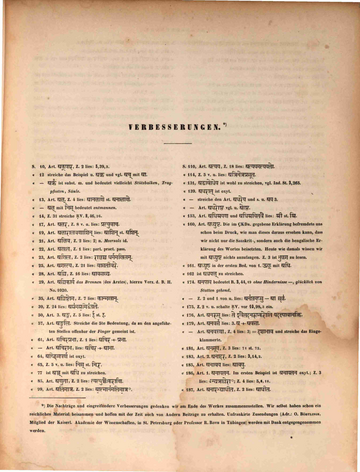
Original text · German · Word type unspecified
agni Z. 16 lies āvasathya. agneḥ puram N. eines Wallfahrtsortes MBH. 13,1729.
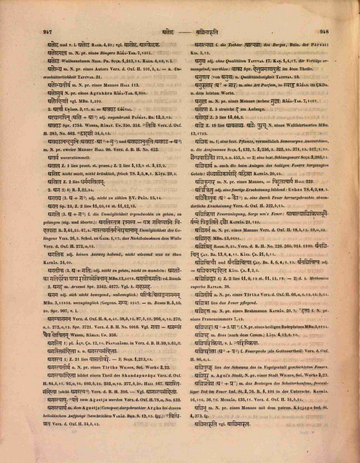
Original text · German · Word type unspecified
agni 1〉 als Feuer Bez. der Zahl drei SŪRYAS. 1,30. SŪRYAS. 1,33. — 10〉 Bez. der auf i und u auslautenden Nominalstämme KĀTANTRA 2,1,50. KĀTANTRA 2,1,65.
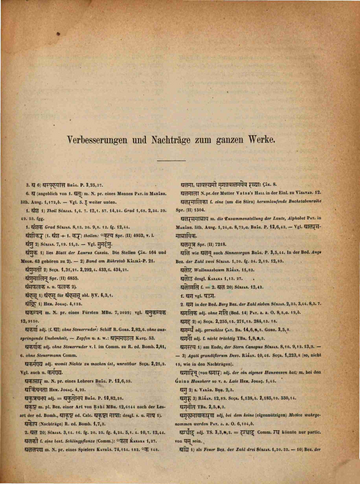
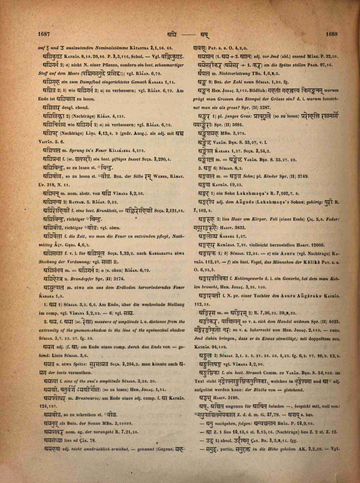
Böhtlingk 1879 substantive masculine · Word type unspecified
Original text · German · substantive masculine
agní m. — 1〉 Feuer. — 2〉 der Gott des Feuers. — 3〉 Feuersbrunst. — 4〉 das Brennen des Arztes. — 5〉 das Feuer im Magen, Verdauungskraft. — 6〉 Schichtung des Feueraltars Ind. St. 13,217. — 7〉 Feueraltar ŚULBAS. 2,1. — 8〉 *Galle. — 9〉 Semecarpus anacardium SUŚR. 2,119,18. *Plumbago zeylanica und *Citrus acida. — 10〉 Bez. der Zahl drei. — 11〉 mystische Bez. des Lautes r. — 12〉 Bez. der Nominalstämme auf i und u.
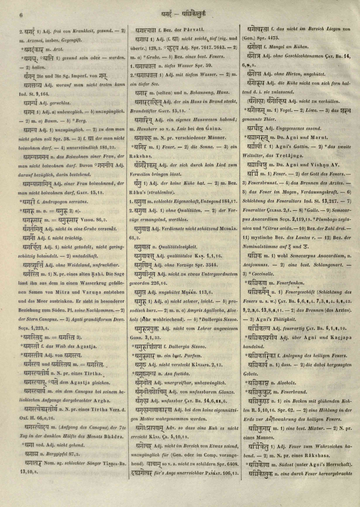
Original text · German · Word type unspecified
agni 7〉 so v. a. agnikṣetra ĀPAST. ŚR. 14,8,5. [Nachtrag, Band 5]
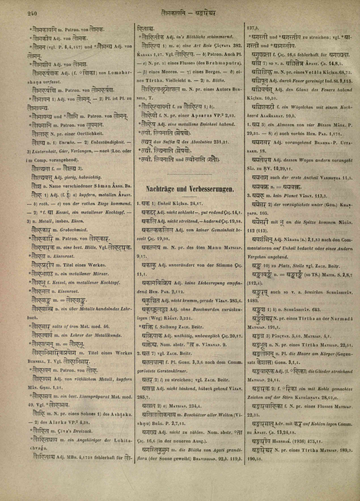
Original text · German · Word type unspecified
agní I. 5. [Nachtrag, Band 7]
Apte 1890 substantive masculine
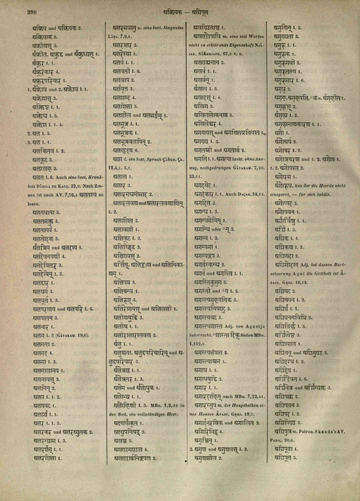
Original text · English · substantive masculine
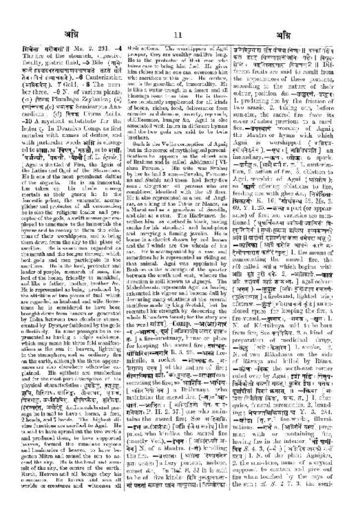
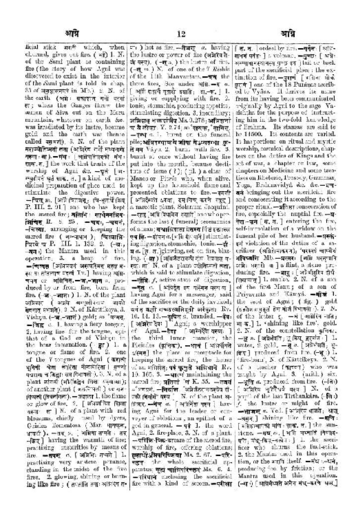
agniḥ [aṃgati ūrdhvaṃ gacchati aṃg-ni, nalopaśca Uṇ. 4. 50, or fr. aṃc ‘to go.’] 1 Fire kopa˚, ciṃtā˚, śoka˚, jñāna˚, rāja˚, &c. 2 The God of fire. 3 Sacrificial fire of three kinds (gārhapatya, āhavanīya and dakṣiṇa); pitā vai gārhapatyo' gnirmātāgnirdakṣiṇaḥ smṛtaḥ . gururāhavanīyastu ([Page 0011-a]) sāgnitretā garīyasī .. Ms. 2. 231. 4 The fire of the stomach, digestive faculty, gastric fluid. 5 Bile ( nābherūrdhvaṃ hṛdayādadhastādāmāśayamācakṣate tadgataṃ sauraṃ tejaḥ pittaṃ ityācakṣate). 6 Cauterization (agnikarman). 7 Gold. 8 The number three. 9 N. of various plants: (a) citraka Plumbago Zeylanica; (b) raktacitraka; (c) bhallātaka Semicarpus Anacardium; (d) niṃbaka Citrus Acida. 10 A mystical substitute for the letter r. In Dvandva Comp. as first member with names of deities, and with particular words agni is changed to agnā, as ˚viṣṇū, ˚marutau, or to agnī, ˚parjanyau, ˚varuṇau, ˚ṣomau [cf. L. ignis.] [Agni is the God of Fire, the Ignis of the Latins and Ogni of the Slavonians. He is one of the most prominent deities of the Ṛgveda. He is an immortal, has taken up his abode among mortals as their guest; he is the domestic priest, the successful accomplisher and protector of all ceremonies; he is also the religious leader and preceptor of the gods, a swift messenger employed to announce to the immortals the hymns and to convey to them the oblations of their worshippers, and to bring them down from the sky to the place of sacrifice. He is sometimes regarded as the mouth and the tongue through which both gods and men participate in the sacrifices. He is the lord, protector and leader of people, monarch of men, the lord of the house, friendly to mankind, and like a father, mother, brother &c. He is represented as being produced by the attrition of two pieces of fuel which are regarded as husband and wife. Sometimes he is considered to have been brought down from heaven or generated by Indra between two clouds or stones, created by Dyau, or fashioned by the gods collectively. In some passages he is represented as having a triple existence, which may mean his three-fold manifestations as the sun in heaven, lightning in the atmosphere, and as ordinary fire on the earth, although the three appearances are also elsewhere otherwise explained. His epithets are numberless and for the most part descriptive of his physical characteristics: dhūmaketu, hutabhuj, śuci, rohitāśva, saptajihva, tomaradhara, ghṛtānna, citrabhānu, ūrdhvaśocis, śociṣkeśa, harikeśa, hiraṇyadaṃta, ayodaṃṣṭra &c. In a celebrated passage he is said to have 4 horns, 3 feet, 2 heads, and 7 hands. The highest divine functions are ascribed to Agni. He is said to have spread out the two worlds and produced them, to have supported heaven, formed the mundane regions and luminaries of heaven, to have begotten Mitra and caused the sun to ascend the sky. He is the head and summit of the sky, the centre of the earth. Earth, Heaven and all beings obey his commands. He knows and sees all worlds or creatures and witnesses all ([Page 0011-b]) their actions. The worshippers of Agni prosper, they are wealthy and live long. He is the protector of that man who takes care to bring him fuel. He gives him riches and no one can overcome him who sacrifices to this god. He confers, and is the guardian of, immortality. He is like a water-trough in a desert and all blessings issue from him. He is therefore constantly supplicated for all kinds of boons, riches, food, deliverance from enemies and demons, poverty, reproach, childlessness, hunger &c. Agni is also associated with Indra in different hymns and the two gods are said to be twin brothers. Such is the Vedic conception of Agni; but in the course of mythological personifications he appears as the eldest son of Brahmā and is called Abhimānī (Viṣṇu Purāṇa). His wife was Svāhā; by her he had 3 sons-Pāvaka, Pavamāna and Śuci; and these had forty-five sons: altogether 49 persons who are considered identical with the 49 fires. He is also represented as a son of Angiras, as a king of the Pitṛs or Manes, as a Marut and as a grandson of Śāṇḍila, and also as a star. The Harivaṃśa describes him as clothed in black, having smoke for his standard and head-piece and carrying a flaming javelin. He is borne in a chariot drawn by red horses and the 7 winds are the wheels of his car. He is accompanied by a ram and sometimes he is represented as riding on that animal. Agni was appointed by Brahmā as the sovereign of the quarter between the south and east, whence the direction is still known as Āgneyī. The Mahābhārata represents Agni as having exhausted his vigour and become dull by devouring many oblations at the several sacrifices made by king Śvetaki, but he recruited his strength by devouring the whole Khāṇḍava forest; for the story see the word khāṃḍava]. Comp. — a(ā)gāraṃ — raḥ, -ālayaḥ, -gṛhaṃ [agnikāryāya agāraṃ śāka˚ ta.] a fire-sanctuary, house or place for keeping the sacred fire; vasaṃścaturthognirivāgnyagāre R. 5. 25. — astraṃ firemissile, a rocket. — ātmaka a. [ agnirātmā yasya] of the nature of fire; somātmikā strī, ˚kaḥ pumān. — ādhānaṃ consecrating the fire; so ˚āhiti. — ādheyaḥ [agnirādheyo yena] a Brāhmaṇa who maintains the sacred fire. — (yaṃ) = ˚ādhānaṃ. — āhitaḥ [agnirāhito yena, vā paranipātaḥ P. II. 2. 37.] one who maintains the sacred fire; See āhitāgni. — idh m. (agnīdhraḥ) [agniṃ iṃddhe sa agnīdh] the priest who kindles the sacred fire (mostly Ved). — iṃdhanaḥ [agniridhyate anena] N. of a Mantra. — (naṃ) kindling the fire. — utpātaḥ [agninā divyānalena kṛtaḥ utpātaḥ] a fiery portent, meteor, comet &c. In Bṛ. S. 33 it is said to be of five kinds: divi bhuktaśubhaphalānāṃ patatāṃ rūpāṇi yāni tānyulkāḥ . ([Page 0011-c]) dhiṣṇyolkāśanividyuttārā iti paṃcadhā bhinnāḥ .. ulkā pakṣeṇa phalaṃ tadvat dhiṣṇyāśanistribhiḥ pakṣaiḥ . vidyudahobhiḥ ṣaḍbhistadvattārā vipācayati .. Different fruits are said to result from the appearances of these portents, according to the nature of their colour, position &c. — uddharaṇaṃ, -uddhāraḥ 1 producing fire by the friction of two araṇis. 2 taking out, before sun-rise, the sacred fire from its cover of ashes previous to a sacrifice. — upasthānaṃ worship of Agni; the Mantra or hymn with which Agni is worshipped ( agnirupasthīyate'nena). — edhaḥ [agnimedhayati] an incendiary. — kaṇaḥ, -stokaḥ a spark. — karman n. [agnau karma sa. ta.] 1 cauterization. 2 action of fire. 3 oblation to Agni, worship of Agni (agnihotra); so ˚kārya offering oblations to fire, feeding fire with ghee &c.; nirvartitāgnikāryaḥ K. 16; ˚ryārdhadagdha K. 39, Ms. 3. 69, Y. 1. 25. — kalā a part (or appearance) of fire; ten varieties are mentioned (dhūmrārcirūṣmā jvalinī jvālinī visphuliṃginī . suśrīḥ surūpā kapilā havyakavyavahe api .. yādīnāṃ daśavarṇānāṃ kalā dharmapradā amūḥ). — kārikā [agniṃ karoti ādhatte karaṇe kartṛtvopacārāt kartari ṇvul] 1 the means of consecrating the sacred fire, the ṛk called agnīdhra which begins with agniṃ dūtaṃ puro dadhe. 2 = agnikārya. — kāṣṭhaṃ [agneḥ uddīpanaṃ kāṣṭhaṃ śāka ˚ta.] agallochum (aguru). — kukkuṭaḥ [agneḥ kukkuṭaiva raktavarṇasphuliṃgatvāt] a firebrand, lighted wisp of straw. — kuṃḍaṃ [agnerādhānārthaṃ kuṃḍaṃ] an enclosed space for keeping the fire, a fire-vessel. — kumāraḥ, -tanayaḥ, -sutaḥ 1 N. of Kārttikeya said to be born from fire, See kārttikeya. 2 a kind of preparation of medicinal drugs. — ketuḥ [agneḥ keturiva] 1 smoke. 2 N. of two Rākṣasas on the side of Rāvaṇa and killed by Rāma. — koṇaḥ -dik the south-east corner ruled over by Agni; iṃdro vahniḥ pitṛpatirnairṛto varuṇo marut . kubera īśaḥ patayaḥ pūrvādīnāṃ diśāṃ kramāt .. -kriyā [ agninā nirvartitā kriyā, śāka. ta.] 1 obsequies, funeral ceremonies. 2 branding; bheṣajāgnikriyāsu ca Y. 3. 284. — krīḍā [tṛ. ta.] fire-works, illuminations. — garbha a. [agnirgarbhe yasya] pregnant with or containing fire, having fire in the interior; ˚rbhāṃ śamīmiva Ś. 4. 3. — (rbhaḥ) [agniriva jārako garbho yasya] 1 N. of the plant Agnijāra. 2 the sun-stone, name of a crystal supposed to contain and give out fire when touched by the rays of the sun; cf. Ś. 2. 7. 3 the ([Page 0012-a]) sacrificial stick araṇi which, when churned, gives out fire. — (rbhā) 1 N. of the Śamī plant as containing fire (the story of how Agni was discovered to exist in the interior of the Śamī plant is told in chap. 35 of anuśāsanaparva in Mb.). 2 N. of the earth (agneḥ sakāśāt garbho yasyāṃ sā; when the Ganges threw the semen of Śiva out on the Meru mountain, whatever on earth &c. was irradiated by its lustre, became gold and the earth was thence called vasumatī). 3 N. of the plant mahājyotiṣmatī latā (agniriva garbho madhyabhāgo yasyāḥ sā). — graṃthaḥ [agnipratipādako graṃthaḥ śaka. ta.] the work that treats of the worship of Agni &c. — ghṛtaṃ [ agnyuddīpanaṃ ghṛtaṃ śāka. ta.] a kind of medicinal preparation of ghee used to stimulate the digestive power. — cit m. [agniṃ citavān; ci-bhūtārthe kvip P. III. 2. 91] one who has kept the sacred fire; yatibhiḥ sārdhamanagnimagnicit R. 8. 25. — cayaḥ, -cayanaṃ, — cityā. arranging or keeping the sacred fire (agnyādhāna); cityāgnicitye ca P. III. 1. 132. 2 ( — yaḥ, — yanaḥ) the Mantra used in this operation. 3 a heap of fire. — citvat [agnicayanaṃ astyasmin matup masya vaḥ tāṃtatvānna padatvaṃ Tv.] having agnicayana or agnicit. — ja, -jāta a. produced by or from fire, born from fire. — (jaḥ, -jātaḥ) 1 N. of the plant agnijāra (agnaye agnyuddīpanāya jāyate sevanāt prabhavati). 2 N. of Kārttikeya. 3 Viṣṇu. — (jaṃ, -jātaṃ) gold; so ˚janman. — jihva a. 1 having a fiery tongue. 2 having fire for the tongue, epithet of a God or of Viṣṇu in the boar incarnation. — (hvā) 1 a tongue or flame of fire. 2 one of the 7 tongues of Agni (karālī dhūminī śvetā lohitā nīlalohitā . suvarṇā padmarāgā ca jihvāḥ sapta vibhāvasoḥ). 3 N. of a plant lāṃgalī (agnerjihveva śikhā yasyāḥsā); of another plant (jalapippalī) or gajapippalī (viṣalāṃgalā). — jvālā 1 the flame or glow of fire. 2 [agnerjvāleva śikhā yasyāḥ sā] N. of a plant with red blossoms, chiefly used by dyers, Grislea Tomentosa (Mar. dhāyaphūla, dhāyaṭī). — tap a. [agninā tapyate; tap — kvip] having the warmth of fire; practising austerities by means of fire. — tapas a. [agnibhiḥ tapyate] 1 practising very austere penance, standing in the midst of the five fires. 2 glowing, shining or burning like fire; (tapatīti tapāḥ agniriva ([Page 0012-b]) tapāḥ) hot as fire. — tejas a. having the lustre or power of fire (agneriva tejo yasya). ( — s n.) the lustre of fire. ( — s m.) N. of one of the 7 Ṛṣis of the 11th Manvantara. — trayaṃ the three fires, See under agni. — da a. [agniṃ dāhārthaṃ gṛhādau dadāti; dā. — ka.] 1 giving or supplying with fire. 2 tonic, stomachic, producing appetite, stimulating digestion. 3 incendiary; agnidān bhaktadāṃścaiva Ms. 9. 278; agnidānāṃ ca ye lokāḥ Y. 2. 74; so ˚dāyaka, ˚dāyin. — dagdha a. 1 burnt on the funeral pile; agnidagdhāśca ye jīvā ye'pyadagdhāḥ kule mama Vāyu. 2 burnt with fire. 3 burnt at once without having fire put into the mouth, because destitute of issue (?); (pl.) a class of Manes or Pitṛs who, when alive, kept up the household flame and presented oblations to fire. — damanī [agnirdamyate 'nayā; dam-ṇic karaṇe lyuṭ] a narcotic plant, Solanum Jacquini. — dātṛ [agniṃ vidhānena dadāti] one who performs the last (funeral) ceremonies of a man; yaścāgnidātā pretasya piṃḍaṃ dadyātsa eva hi. — dīpana a. [agniṃ dīpayati] stimulating digestion, stomachic, tonic. — dīpta a. [tṛ. ta.] glowing, set on fire, blazing. — (ptā) [agnirjaṭharānalo dīptaḥ sevanāt yasyāḥ sā] N. of a plant jyotiṣmatī latā, which is said to stimulate digestion. — dīptiḥ f. active state of digestion. — dūta a. [agnirdūta iva yasmin yasya vā] having Agni for a messenger, said of the sacrifice or the deity invoked; yamaṃ ha yajño gacchatyagnidūto araṃkṛtaḥ Rv. 10. 14. 13. — dūṣita a. branded. — devaḥ [agnireva devaḥ] Agni; a worshipper of Agni. — devā [agnirdevo yasyāḥ] the third lunar mansion, the Pleiades (kṛttikā). — dhānaṃ [agnirdhīyate 'smin] the place or receptacle for keeping the sacred fire, the house of an agnihotṛ; padaṃ kṛṇute agnidhāne Rv. 10. 165. 3. — dhāraṇaṃ maintaining the sacred fire; vratināṃ ˚ṇaṃ K. 55. — nayanaṃ = ˚praṇayanaṃ. — niryāsaḥ [agnerjaṭharānalasyeva dīpako niryāso yasya] N. of the plant agnijāra. — netra a. [agnirnetā yasya] having Agni for the leader or conveyer of oblations, an epithet of a god in general. — padaṃ 1 the word Agni. 2 fireplace. 3 N. of a plant. — parikri-ṣkri-yā care of the sacred fire, worship of fire, offering oblations; gṛhārtho'gnipariṣkriyā Ms. 2. 67. — paricchadaḥ the whole sacrificial apparatus; gṛhyaṃ cāgniparicchadaṃ Ms. 6. 4. — paridhānaṃ enclosing the sacrificial fire with a kind of screen. — parīkṣā ([Page 0012-c]) [tṛ. ta.] ordeal by fire. — parvataḥ [ agnisādhanaṃ parvataḥ] a volcano. — pucchaḥ [agneḥ agnyādhānasthānasya puccha iva] tail or back part of the sacrificial place; the extinction of fire. — purāṇaṃ [agninā proktaṃ purāṇaṃ] one of the 18 Purāṇas ascribed to Vyāsa. It derives its name from its having been communicated originally by Agni to the sage Vasiṣṭha for the purpose of instructing him in the twofold knowledge of Brahma. Its stanzas are said to be 14500. Its contents are varied. It has portions on ritual and mystic worship, cosmical descriptions, chapters on the duties of Kings and the art of war, a chapter on law, some chapters on Medicine and some treatises on Rhetoric, Prosody, Grammar, Yoga, Brahmavidyā &c. &c. — praṇayanaṃ bringing out the sacrificial fire and consecrating it according to the proper ritual. — pratiṣṭhā consecration of fire, especially the nuptial fire. — praveśaḥ -śanaṃ [sa. ta.] entering the fire, self-immolation of a widow on the funeral pile of her husband. — praskaṃdanaṃ violation of the duties of a sacrificer (agnihomākaraṇa); ˚parastvaṃ cāpyevaṃ bhaviṣyasi Mb. — prastaraḥ [agniṃ prastṛṇāti agneḥ prastaro vā] a flint, a stone producing fire. — bāhuḥ [agnerbāhuriva dīrghaśikhatvāt] 1 smoke. 2 N. of a son of the first Manu; of a son of Priyavrata and Kāmyā. — bījaṃ 1 the seed of Agni; (fig.) gold (rudratejaḥsamudbhūtaṃ hema bījaṃ vibhāvasoḥ). 2 N. of the letter r. — bhaṃ [agniriva bhāti; bhā-ka.] 1 ‘shining like fire’, gold. 2 N. of the constellation kṛttikā. — bhu n. [agnerbhavati; bhū-kvip hrasvāṃtaḥ] 1 water. 2 gold. — bhū a. [agnerbhavati; bhūkvip] produced from fire. — (bhūḥ) 1 ‘fire-born’, N. of Kārttikeya. 2 N. of a teacher (kāśyapa) who was taught by Agni. 3 (arith.) six. — bhūti a. produced from fire. — (tiḥ) [agniriva bhūtiraiśvaryaṃ yasya] N. of a pupil of the last Tīrthaṃkara. — (tiḥ) f. the lustre or might of fire. — bhrājas a. Ved. [agniriva bhrājate; bhrāj — asun] shining like fire. — maṇiḥ [agnerutthāpako maṇiḥ śāka. ta.] the sunstone. — math m. [agniṃ mathnāti niṣpādayati; maṃth-kvip-nalopaḥ] 1 the sacrificer who churns the fuel-stick. 2 the Mantra used in this operation, or the araṇi itself. — maṃthaḥ, -thanaṃ, producing fire by friction; or the Mantra used in this operation. — (thaḥ) [agnirmathyate anena maṃth-karaṇe ghañ] ([Page 0013-a]) N. of a tree gaṇikārikā (Mar. naravela) Premna Spinosa ( tatkāṣṭhayorgharṣaṇehi āśu vahnirutpadyate). — māṃdyaṃ slowness of digestion, loss of appetite, dyspepsia. — mārutiḥ [agniśca marucca tayorapatyaṃ iñ tato vṛddhiḥ it ca; dvipadavṛddhau pṛ. pūrvapadasya hrasvaḥ Tv.] N. of the sage Agastya. — mitraḥ N. of a king of the Śuṅga dynasty, son of Pushpamitra who must have flourished before 150 B. C. - the usually accepted date of Patañjali-as the latter mentions puṣpamitra by name. — mukhaḥ a. having Agni at the head. — (khaḥ) [ agnirmukhabhiva yasya] 1 a deity, god, (for the gods receive oblations through Agni who is therefore said to be their mouth; agnimukhā vai devāḥ; agnirmukhaṃ prathamaṃ devatānāṃ &c; or agnirmukhe agre yeṣāṃ, for fire is said to have been created before all other gods.) 2 [agnirmukhaṃ pradhānamupāsyo yasya] one who maintains the sacred fire (agnihotṛdvija). 3 a Brāhmaṇa in general (agnirdāhakatvāt śāpāgnirmukhe yasya, for Brāhmaṇas are said to be vāgvajrāḥ). 4 N. of two plants citraka Plumbago Zeylanica and bhallātaka Semicarpus Anacardium (agniriva sparśāt duḥkhadāyakaṃ mukhamagraṃ yasya, tanniryāsasparśena hi dehe kṣatotpattestayostathātvam). 5 a sort of powder or cūrṇa prescribed as a tonic by cakradatta. 6 ‘fire-mouthed’, sharp-biting, an epithet of a bug Pt. 1. — (khī) [agniriva mukhamagraṃ yasyāḥ, gaurādi-ṅīṣ] 1 N. of a plant bhallātaka (Mar. bibavā, bhilāvā) and lāṃgalikā (viṣalāṃgalā). 2 N. of the Gāyatrī Mantra (agnireva mukhaṃ mukhatvena kalpitaṃ yasyāḥ sā, or agneriva mukhaṃ prajāpatimukhaṃ utpattidvāraṃ yasyāḥ, agninā samaṃ prajāpatimukhajātatvāt; kadācidapi no vidvān gāyatrīmudake japet . gāyatryagnimukhī yasmāttasmādutthāya tāṃ japet .. gobhila). 3 a kitchen [pākaśāla agniriva uttaptaṃ mukhaṃ yasyāḥ sā]. — mūḍha a. [tṛ. ta.] Ved. made insane or stupefied by lightning or fire. — yojanaṃ causing the sacrificial fire to blaze up. — rakṣaṇaṃ 1 consecrating or preserving the sacred (domestic) fire or agnihotra. 2 [agniḥ rakṣyaṃte anena atra vā] a Mantra securing for Agni protection from evil spirits &c. 3 the house of an agnihotṛ. — rajaḥ, -rajas m. [agniriva rajyate dīpyate; raṃj-asun, nalopaḥ] 1 a scarlet insect by name iṃdragopa. 2 (agneḥ rajaḥ) the might or power of Agni. 3 gold. — rahasyaṃ mystery of (worshipping &c.) Agni; N. of the tenth book of the Śatapatha Brāhmaṇa. — rāśiḥ a heap of fire, burning pile. — ruhā [agniriva rohati ruh-ka] ([Page 0013-b]) N. of the plant māṃsādanī or māṃsarohiṇī (tadaṃkurasya vahnitulyavarṇatayā utpannatvāttathātvaṃ tasyāḥ) — rūpa a. [agneriva rūpaṃ varṇo yasya] fire-shaped; of the nature of fire. — (paṃ) the nature of fire. — retas n. the seed of Agni; (hence) gold. — rohiṇī [agniriva rohati; ruh-ṇini] a hard inflammatory swelling in the armpit. — lokaḥ the world of Agni, which is situated below the summit of Meru; in the Purāṇas it is said to be in the aṃtarikṣa, while in the Kāśī Khaṇḍa it is said to be to the south of iṃdrapurī; etasyā dakṣiṇe bhāge yeyaṃ pūrdṛśyate śubhā . imāmarciṣmatīṃ paśya vītihotrapurīṃ śubhām .. — vadhūḥ Svāhā, the daughter of Dakṣa and wife of Agni. — varcas a. [agnervarca iva varco yasya] glowing or bright like fire. ( — n.) the lustre of Agni. ( — m.) N. of a teacher of the Purāṇas. — varṇa a. [agneriva varṇo yasya] of the colour of fire; hot, fiery; surāṃ pītvā dvijo mohādagnivarṇāṃ surāṃ pibet Ms. 11. 91; gomūtramagnivarṇaṃ vā pibedudakameva vā Ms. 92. — (rṇaḥ) 1 N. of a prince, son of Sudarśana. 2 of a King of the solar race, See R. 19. 3. the colour of fire. — (rṇā) a strong liquor. — vardhaka a. stimulating digestion, tonic. — (kaḥ) 1 a tonic. 2 regimen, diet (pathyāhāra). — vallabhaḥ [ agnervallabhaḥ sukhena dāhyatvāt] 1 the Śāla tree, Shorea Robusta. 2 the resinous juice of it. — vāsas a. [agniriva śuddhaṃ vāso yasya] having a red (pure like Agni) garment. ( — n.) a pure garment. — vāha a. [agniṃ vāhayati gamayati anumāpayati vā] 1 smoke. 2 a goat. — vāhanaṃ a goat (chāga). — vid m. 1 one who knows the mystery about Agni. 2 an agnihotrin q. v. — vimocanaṃ ceremony of lowering the sacrificial fire. — visarpaḥ pain from an inflamed tumour, inflammation. — viharaṇaṃ, -vihāraḥ 1 taking the sacrificial fire from agnīdhra to the sadomaṃḍapa. 2 offering oblations to fire; pratyāsannā ˚velā K. 348. — vīryaṃ 1 power or might of Agni. 2 gold. — veśaḥ [agnerveśa iva] N. of an ancient medical authority (caraka). — śaraṇaṃ — śālā -laṃ a fire-sanctuary; ˚mārgamādeśaya Ś. 5; a house or place for keeping the sacred fire; ˚rakṣaṇāya sthāpitohaṃ V. 3. — śarman a. [agniriva śṛṇāti tīvrakopatvāt; śṝ-manin] very passionate. ( — m.) N. of a sage. — śikha a. [agneriva agniriva vā śikhā yasya]. fiery, fire-crested; dahatu ˚khaiḥ sāyakaiḥ Rām. — (khaḥ) 1 a lamp. 2 a rocket, fiery arrow. 3 an arrow in general. 4 safflower plant. 5 saffron. 6 jāṃgalīvṛkṣa. — (khaṃ) 1 saffron. 2 gold. ([Page 0013-c]) — (khā) 1 a flame; śarairagniśikhopamaiḥ Mb. 2. N. of two plants lāṃgalī (Mar. vāgacabakā or kaḻalāvī) Gloriosa Superba; of another plant (Mar. also kaḻalāvī) Menispermum Cordifolium. — śuśrūṣā careful service or worship of fire. — śekhara a. fire-crested. — (raḥ) N. of the kusuṃbha, kuṃkuma & jāṃgalī trees. — (raṃ) gold. — śauca a. [agneriva śaucaṃ yasya] bright as fire; purified by fire K. 252. — śrī a. [agneriva śrīryasya] glowing like fire; lighted by Agni. — ṣṭut, -ṣṭubh, -ṣṭoma &c. see ˚-stut, ˚-stubh &c. — saṃskāraḥ 1 consecration of fire. 2 hallowing or consecrating by means of fire; burning on the funeral pile; yathārhaṃ ˚raṃ mālavāya dattvā Dk. 169; nāsya kāryo'gnisaṃskāraḥ Ms. 5. 69, R. 12. 56. — sakhaḥ, -sahāyaḥ 1 the wind. 2 the wild pigeon (smoke-coloured) 3 smoke. — saṃbhava a. [paṃ. ba.] sprung or produced from fire. — (vaḥ) 1 wild safflower. 2 lymph, result of digestion. — (vaṃ) gold. — sākṣika [agniḥ sākṣī yatra, kap] a. or adv. keeping fire for a witness, in the presence of fire; paṃcabāṇa˚ M. 4. 12; ˚maryādo bhartā hi śaraṇaṃ striyāḥ H. 1. v. l., R. 11. 48. — sāraṃ [agnau sāraṃ yasya atyaṃtānalottāpanepi sārāṃśādahanāt Tv.] rasāṃjana, a sort of medical preparation for the eyes. ( — raḥ — raṃ) power or essence of fire. — sūtraṃ a thread of fire. 2 a girdle of sacrificial grass (mauṃjīmekhalā) put upon a young Brāhmaṇa at the time of investiture. — staṃbhaḥ 1 stopping the burning power of Agni. 2 N. of a Mantra used in this operation. 3 N. of a medicine so used. — stut m. (agniṣṭut) [ agniḥstūyate'tra; stu-ādhāre kvip ṣatvaṃ] the first day of the Agniṣṭoma sacrifice; N. of a portion of that sacrifice which extends over one day; yajeta vāśvamedhena svarjitā gosavena vā . abhijidviśvajidbhyāṃ vā trivṛtāgniṣṭutāpi vā .. Ms. 11. 75. — stubh (˚ṣṭubh) m. [agniḥ stubhyate'tra; stubh-kvip ṣatvaṃ] 1 = agniṣṭoma. 2 N. of a son of the sixth Manu. — stomaḥ ( ˚ṣṭomaḥ) [agneḥ stomaḥ stutisādhanaṃ yatra] N. of a protracted ceremony or sacrificial rite extending over several days in spring and forming an essential part of the jyotiṣṭoma. 2 a Mantra or Kalpa with reference to this sacrifice; ˚me bhavo maṃtraḥ ˚maḥ; ˚masya vyākhyānaṃ, kalpaḥ ˚maḥ P. IV. 3. 66. Vārt. 3 N. of the son of the sixth Manu. 4 a species of the Soma plant; ˚sāman a part of the Sāma Veda chanted at the conclusion of the Agniṣṭoma sacrifice. — stha a. (ṣṭha) [agnau sthātumarhati; ([Page 0014-a]) sthāka ṣatvaṃ] placed in, over, or near the fire. — (ṣṭhaḥ) an iron frying-pan; in the aśvamedha sacrifice the 11th Yūpa which of all the 21 is nearest the fire. — svāttaḥ (written both as ˚svātta and ˚ṣvātta) (pl.) [agnitaḥ i. e. śrāddhīyaviprakararūpānalāt suṣṭhu āttaṃ grahaṇaṃ yeṣāṃ te] N. of a class of Pitṛs or Manes who, when living on earth, maintained the sacred or domestic fires, but who did not perform the Agniṣṭoma and other sacrifices. They are regarded as Manes of Gods and Brāhmaṇas and also as descendants of Marīci, Ms. 3. 195 (manuṣyajanmanyagniṣṭomādiyāgamakṛtvā smārtakarmaniṣṭhāḥ saṃto mṛtvā ca pitṛtvaṃ gatāḥ iti sāyaṇaḥ). — hut, -hotṛ Ved. sacrificing to Agni, having Agni for a priest. — hotraṃ [agnaye hūyate'tra, hu-tra, ca. ta.] 1 an oblation to Agni (chiefly of milk, oil and sour gruel.). 2 maintenance of the sacred fire and offering oblation to it; (agnaye hotraṃ homo'smin karmaṇīti agnihotramiti karmanāma); or the sacred fire itself; tapovanāgnihotradhūmalekhāsu K. 26; hotā syāt ˚trasya Ms. 11. 36; ˚tramupāsate Ms. 11. 42; strīṃ dāhayet ˚treṇa Ms. 5. 167, Ms. 6. 4, Y. 1. 89. The time of throwing oblations into the fire is, as ordained by the sun himself, evening (agnaye sāyaṃ juhuyāt sūryāya prātarjuhuyāt). Agnihotra is of two kinds; nitya of constant obligation (yāvajjīvamagnihotraṃ juhoti) and kāmya occasional or optional (upasadbhiścaritvā māsamekamagnihotraṃ juhoti). — (tra) a. Ved. 1 destined for, connected with, Agnihotra. 2 sacrificing to Agni; ˚havanī (ṇī) a ladle used in sacrificial libations, or agnihotrahavirgrahaṇī ṛk Tv.; See havirgrahaṇī; ˚hut offering the agrihotra; ˚āhutiḥ invocation or oblation connected with agrihotra. — hotrin a. [agnihotra-matvarthe ini] 1 one who practises the Agnihotra, or consecrates and maintains the sacred fire. 2 one who has prepared the sacrificial place.


Cappeller 1887 substantive masculine
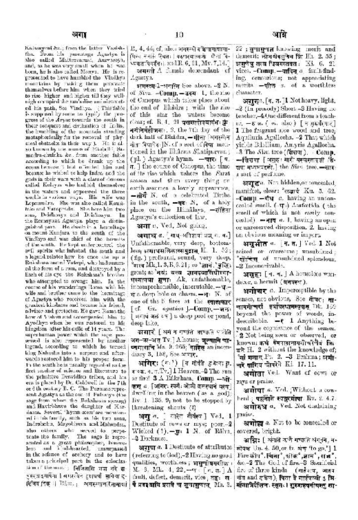
Original text · German · substantive masculine
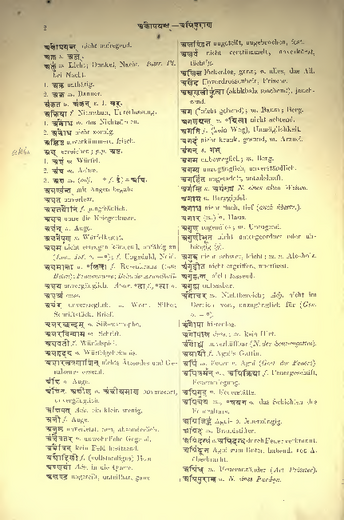
agni m. Feuer u. Agni (Gott des Feuers).
Burnouf 1866 substantive masculine
Original text · French · substantive masculine
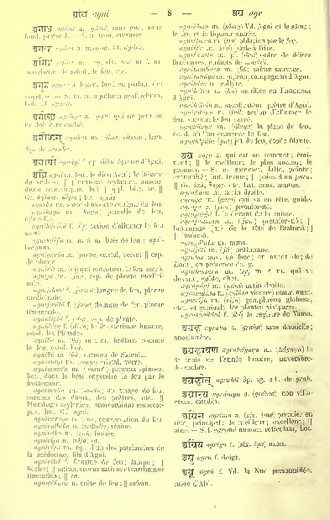
agni agni m. feu; le dieu Agni; le Régent du sud-est. plumbago zeylanica, anacardium semecarpus, bot. qqf. bile, or. Gr. ἀγλαός, αἴγλη; lat. ignis. agnika m. sorte d'insecte couleur de feu. agnikaṇa m. (kaṇa) parcelle de feu, étincelle. agnikārikā f. (kṛ) action d'allumer le feu sacré. agnikāṣṭha n. m à m. bois de feu: agallochum. agnigarbha m. (garbha) cristal, verre; esp. de plante. agnicit m. (ci) qui entretient le feu sacré. agnija m. (jan) esp. de plante médicinale. agnijihvā f. (jihvā) langue de feu, plante médicinale. agnijvālā f. (jval) flamme de feu, plante tinctoriale. agnidīptā f. (dīp) esp. de plante. agnidevā f. (deva) le 3ᵉ astérisme lunaire, c-à-d. les Pléiades. agnibha m. (bhā) m à m. brillant comme le feu, c-à-d. l'or. agnibhū m. (bhū) surnom de Skanda. agnimaṇi m. (maṇi) cristal, verre. agnimantha m. (manth) premna spinosa, bot., dont le bois engendre le feu par le frottement. agnimukha m. (mukha) au visage de feu, surnom des dieux, des prêtres, etc. Plumbago zeylanica, anarcardium semecarpus, bot. Cf. agni. agnirakṣaṇa n. (rakṣ) conservation du feu. agnivallabha n. (vallabha) résine. agnivāha m. (vah) fumée. agnivīja n. (vīja) or. agniveśa m. np. d'un des patriarches de la médecine, fils d'Agni. agniśikā f. flamme de feu; lampe; flèche; safran, crocus sativus et carthamus tinctorius; or. agniśekhara n. crête de feu; safran. [Page008-2] agniṣoma m. (soma) Vd. Agni et le soma; le feu et la liqueur sacrée. agniṣṭoma m. (stu) oblation par le feu. agniṣṭha m. (sthā) poêle à frire. agniṣvāita m. pl. (ātta) ordre de déités funéraires, enfants de marīci. agnisambhava m. (bhū) safran sauvage. agnisahāya m. pigeon, compagnon d'Agni. agnisāra n. collyre. agnihotra n. (hu) sacrifice en l'honneur d'Agni. agnihotrin m. sacrificateur, prêtre d'Agni. agnīndhana n. (indh) action d'allumer le feu, surtout le feu sacré. agnyālaya m. (ālaya) la place du feu, c-à-d. où l'on conserve le feu. agnyutpāta (pat) jet de feu, étoile filante.
Occurrences in source texts (50)
DYS 8 occurrences
GoS 4 occurrences
HP 9 occurrences
HTK 3 occurrences
HTK 10.6*2–9*1: Ujjāyī / Ujjāyikā and Sūryabheda 1 occurrence
Direct occurrences
-
HTK 10.7 Segment 42
HTK 10.11*2–14*1: Bhastrikā: Breath like a bellows 1 occurrence
Direct occurrences
-
HTK 10.14 Segment 29
HTK 10.26–29*1: Cakra, Śaṅkha, Vāmāvartta, Vartmagati and Gadā 1 occurrence
Direct occurrences
-
HTK 10.27*1 Segment 5
IVU 1 occurrence
MAN 1 occurrence
SiSa 14 occurrences
SiSa 1.71-1.81: Avidyā und Elemente 4 occurrences
Direct occurrences
SiSa 2.32-2.34: Inneres Feuer 2 occurrences
Direct occurrences
4 more source pages
SVU 8 occurrences
Continue with AYI Free
Image source: AYI archive.