

evam एवम् – such; in this way; thus
adverb · particle · Word type unspecified
Dictionary sources
AYI dictionary adverb
such; in this way; thus
Cappeller 1891 adverb
Original text · English · adverb
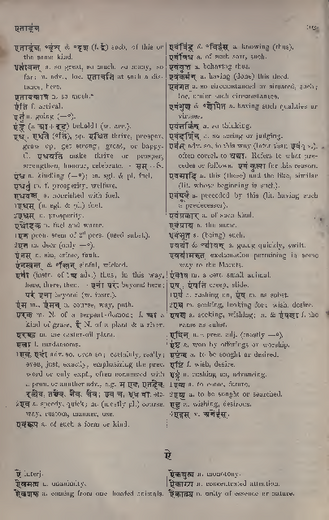
evám ·adv. so, in this way (later than evá q.v.), often correl. to yathā. Refers to what precedes or follows. evaṃ kṛtvā for this reason.
Monier-Williams 1872 particle
Original text · English · particle
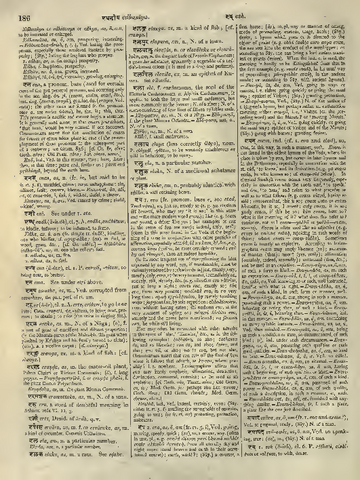
evam evam, ind. (cf. 1. eva and etad), so, thus, in this way, in such a manner, such. Evam is not found in the oldest hymns of the Veda, where its place is taken by eva, but occurs in later hymns and in the Brāhmaṇas, especially in connection with the rt. vid, ‘to know,’ and its derivatives (e. g. ya evaṃ veda, he who knows so; cf. evaṃ-vid below). In classical Sanskrit evam occurs very frequently, espe- cially in connection with the roots vac, ‘to speak,’ and śru, ‘to hear,’ and refers to what precedes as well as to what follows (e. g. evam uktvā, having so said; evamevaitat, this is so; evam astu or evam bhavatu, be it so, I assent; asty evam, it is so; yady evam, if this be so; kim evam, how so? what is the meaning of it? what does this refer to? maivam, not so! evam — yathā or yathā — evam, so — as). Evam is often used like an adjective (e. g. evaṃ te vacane rataḥ, rejoicing in such words of thine; where evam = evaṃ-vidhe). Sometimes evam is merely an expletive. According to lexico- graphers evam may imply likeness (so); sameness of manner (thus); assent (yes, verily); affirmation (certainly, indeed, assuredly); command (thus, &c.); and be used as an expletive.
Petersburger 1855 adverb
Original text · German · adverb
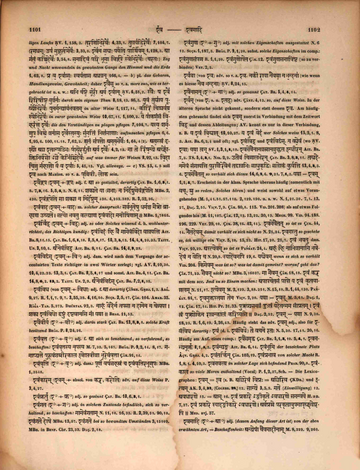
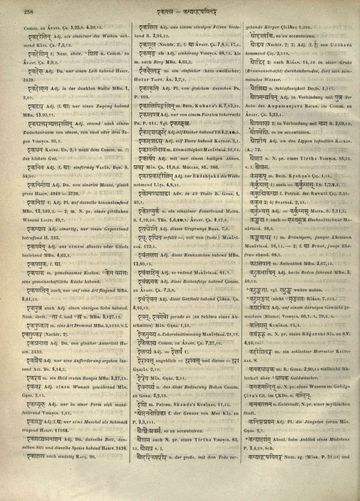
evám (von e, s. u. etad) adv. ŚĀNT. 4,13. so, auf diese Weise. In der älteren Sprache nicht gekannt, sondern statt dessen eva. Am häufigsten gebraucht findet sich evam zuerst in Verbindung mit dem Zeitwort vid und dessen Ableitungen; AV. kennt es nur in dieser Verbindung, z. B. ya e̱vaṃ vi̱dyāt AV. 10,10,27. ya e̱vaṃ vedà wer Solches weiss AV. 15,2,1. AV. 15,8,3. AIT. BR. 6,2. AIT. BR. 6,4 und oft; vgl. evaṃvid und evaṃvidvaṃs. na kye̱vaṃ (wo ṚV. evā) yathā̱ tvam SV. I, 3,1,1,10. evamevainānajasrānajuhvata indhīran AIT. BR. 7,2. TS. 5,4,3,1. NIR. 2,2. utaivaṃ cinnālabheran ŚAT. BR. 3,8,3,11. tadyadenamevaṃ saṃgāyanti purāṇairevainaṃ tadrājabhiḥ sādhukṛdbhiḥ salokaṃ kurvanti ŚAT. BR. 13,4,3,3. ŚAT. BR. 13,4,3,6. evamevaitat so verhält sich dieses ŚAT. BR. 14,6,7,6. ŚAT. BR. 14,6,9,21. ŚAT. BR. 14,7,1,2. yathā — evam ŚAT. BR. 1,1,4,7. Erscheint in der klass. Sprache überaus häufig (namentlich mit vac, śru so reden, Solches hören) und weist sowohl auf etwas Vorangehendes (M. 1,41. M. 1,51. M. 1,57. M. 1,110. M. 2,129. M. 2,190. u. s. w. N. 1,21. N. 1,30. N. 7,1. N. 13,27. DAŚ. 2,55. VIŚV. 7,9. ŚĀK. 80,8. ŚĀK. 80,115. VID. 201. VID. 208) als auf etwas Folgendes hin (M. 11,107. ŚĀK. 12,12. ŚĀK. 13,22. ŚĀK. 30,13. MEGH. 99. VID. 94. VID. 188. VID. 196. VID. 229. VET. 29,10. ŚUK. 38,16. ŚUK. 42,14). evamevaitat so ist es ŚUK. 44,14. naitadevam damit verhält es sich nicht so N. 21,24. evamastu so geschehe es, ich willige ein VIŚV. 5,18. VIŚV. 15,23. HIT. 17,20. HIT. 21,7. evaṃ bhavatu dass. VIŚV. 10,29. astyevam so ist es PAÑCAT. 24,4. ahaṃ hi nābhijānāmi bhavedevaṃ na veti ca N. 20,9. syādevamapi N. 19,6. yadyevam wenn es sich so verhält VID. 204. kimevam was ist so? was ist damit gemeint? worauf geht das? ŚĀK. 71,23. maivam nicht so! MBH. 3,16037. mā maivam ŚĀK. 18,18. evaṃ kar mit dem acc. Jmd zu so Einem machen: apāpacetasaṃ pāpo ya evaṃ kṛtavānnalam N. 11,17. ityevam M. 2,129. M. 3,88. M. 3,251. N. 15,18. R. 1,44,130. PAÑCAT. 84,7. evamuktastathā tena VIŚV. 2,20. yathā — evam M. 5,61. DAŚ. 1,12. ŚĀK. 17,14. HIT. Pr. 31. HIT. Pr. 33. putravyasanajaṃ duḥkhaṃ yadetanmama sāṃpratam . evaṃ tvaṃ putraśokena rājankālaṃ kariṣyasi .. DAŚ. 2,52. evam — yathā N. 9,30. N. 18,25. R. 1,6,19. R. 5,26,43. Häufig steht das adv. evam adj., also für evaṃvidha derartig: evaṃ (d. i. evaṃvidhe) te vacane rataḥ N. 5,30. N. 17,41. N. 20,16. Häufig am Anf. eines comp.: eváṃsamṛddha ŚAT. BR. 5,1,3,10. ŚAT. BR. 5,5,4,1. evamabhyanūktá ŚAT. BR. 8,1,4,2. evaṃnyaṅga AIT. BR. 6,14. evaṃbhūmi der bezeichnete Platz ĀŚV. GṚHY. 4,2. evaṃtarkin ŚĀK. 103,19. evaṃprabhāva von solcher Macht R. 1,8,1. R. 4,10,5. evamavastha in solcher Lage sich befindend PRAB. 90,8. evaṃkāla so viele Moren enthaltend (Vocal) P. 1,2,27, Sch. — Die Lexicographen: evam = iva (z. B. agnirevaṃ vipraḥ = agniriva ŚKDR.) und ittham AK. 3,4,32,12. (COLEBR. 3,4,28,12). sāmye AK. 3,5,9. mate (Einwilligung) AK. 12. avadhāraṇe AK. 15. = ām AK. 16. evaṃ prakāre 'ṅgīkṛte 'vadhāraṇe samanvaye H. an. 7,37. evaṃ prakāre syādaṅgīkāre 'vadhāraṇe . arthapraśne parakṛtāvupamāpṛcchayorapi .. MED. avy. 57.⫽print_change
Böhtlingk 1879 adverb · Word type unspecified
Original text · German · adverb
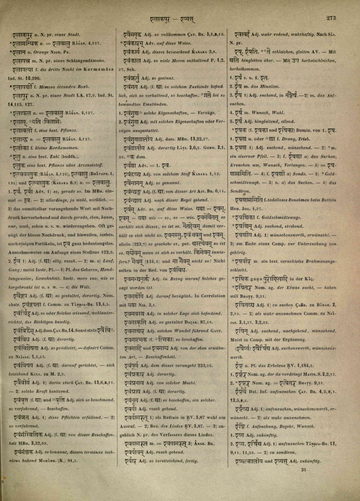
evám Adv. so, auf diese Weise. yathā — evam, evam — yathā wie — so, so — wie. evamevaitat so verhält sich dieses, so ist es. naitadevam damit verhält es sich nicht so. evamastu, evaṃbhavatu und evam allein (Chr. 323,7) so geschehe es, gut. astyevam so ist es. yadyevam wenn es sich so verhält kimevam inwiefern? maivam (Chr. 134,3) und mā maivam nicht so! Nicht selten in der Bed. von evaṃvidha.
Original text · German · Word type unspecified
evam , evamevo gerade so (an Schluss eines Abschnittes) MĀN. GṚHY. 1,23. [Nachtrag, Band 3]
Original text · German · Word type unspecified
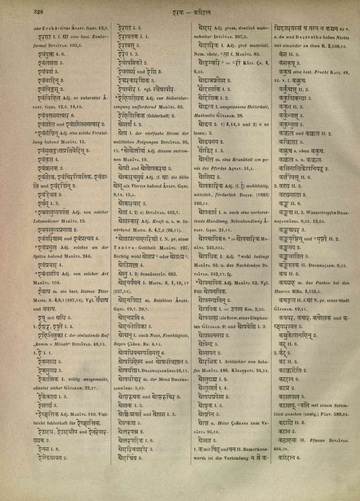
evám I. 3. [Nachtrag, Band 7]
Cappeller 1887 adverb
Original text · German · adverb
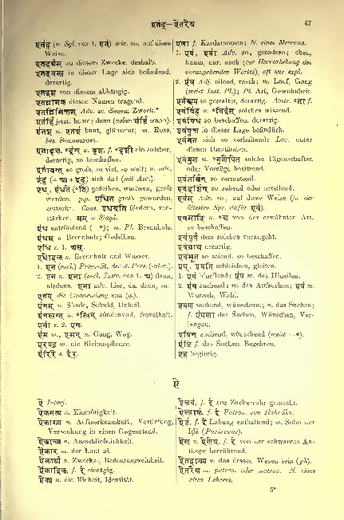
evám Adv. so, auf diese Weise (in der ältesten Spr. dafür evá)
Burnouf 1866 adverb
Original text · French · adverb
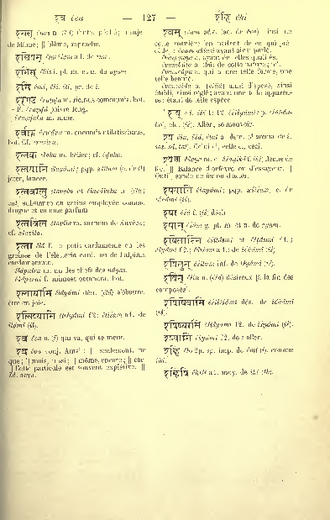
evam evam adv. (ac. de eva) ainsi, de cette manière [en parlant de ce qui précède]: evam uktvā ayant ainsi parlé. evaṃguṇa a. ayant de telles qualités. evambhūta a. (bhū) de cette nature; tel. evamrūpa a. qui a une telle forme, une telle beauté. evamvidha a. (vidhā) ainsi disposé, ainsi établi, ainsi réglé; ayant une telle apparence; étant de telle espèce.
Occurrences in source texts (70)
DYS 22 occurrences
DYS 60–66: Prāṇāyāma 5 occurrences
Direct occurrences
9 more source pages
DYS 89–93: Stages of Development 2 occurrences
Direct occurrences
DYS 154–167: Vajrolī for the Male Yogi 2 occurrences
Direct occurrences
GoS 3 occurrences
HP 13 occurrences
5 more source pages
HP 3.94-3.102*1: Śakti Cālana 2 occurrences
Direct occurrences
HTK 2 occurrences
IVU 1 occurrence
MandUp 5 occurrences
SiSa 12 occurrences
5 more source pages
SVU 5 occurrences
SVU 4.17-4.22: Knowledge and Protection 2 occurrences
Direct occurrences
VBT 7 occurrences
Continue with AYI Free
Image source: AYI archive.