

jñāna ज्ञान – knowledge; cognition; understanding
substantive neuter · Word type unspecified
Dictionary sources
AYI dictionary substantive neuter
knowledge; cognition; understanding
Derived from
Cappeller 1891 substantive neuter
Original text · English · substantive neuter
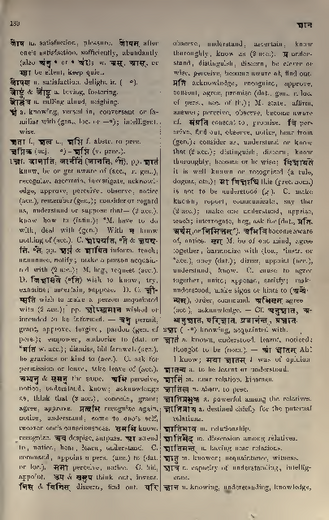
jñāna ·n. knowing, understanding, knowledge, esp. higher knowledge, science, wisdom; conscience, organ of intelligence or sense. Abstr. °tva n.
Monier-Williams 1872 substantive neuter
Original text · English · substantive neuter
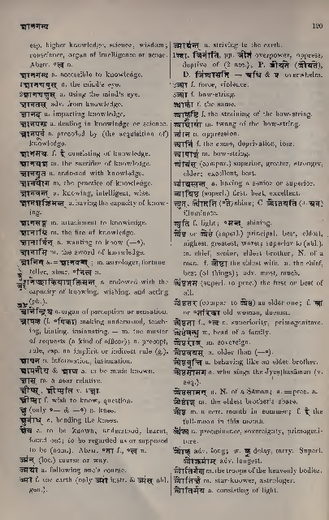
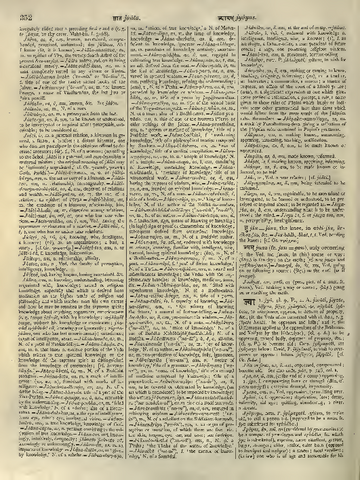
Jñāna, am, n. knowing, understanding, becoming acquainted with, knowledge; sacred or religious knowledge, especially that which is derived from meditation on the higher truths of religion and philosophy and which teaches man his own nature and how he may be reunited to the supreme spirit; knowledge about anything, cognizance, consciousness (e. g. tasya jñānāt, with his knowledge; a-jñānāt tasya, without his knowledge or cognizance; jñā- nād a-jñānād vā, knowingly or ignorantly; vigata- jñāna, one who has lost consciousness); conscience; organ of intelligence, sense.
Petersburger 1855 substantive neuter · Word type unspecified
Original text · German · substantive neuter
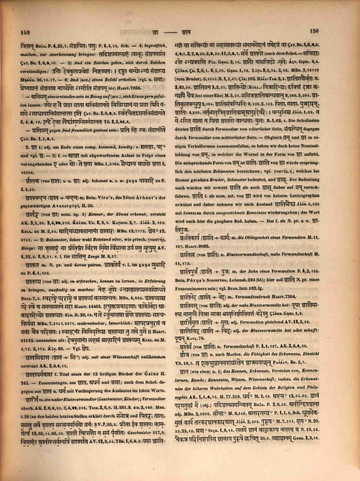
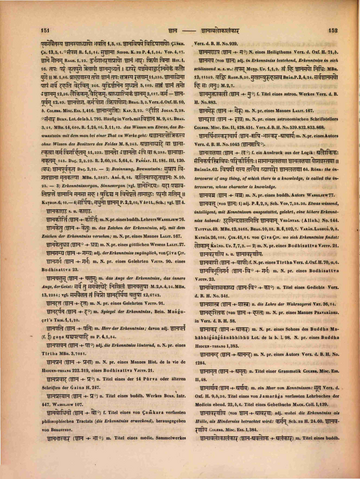
jñāna (wie eben) n. 1〉 das Kennen, Erkennen, Verstehen von, Kennenlernen, Kunde; Kenntniss, Wissen, Wissenschaft; insbes. die Erkenntniss der höheren Wahrheiten auf dem Gebiete der Religion und Philosophie AK. 1,1,4,15. H. 77. H. 310. dharma˚ M. 2,13. ātma˚ M. 12,85. M. 12,92. jñānaṃ paramaguhyaṃ me (obj.) yadvijñānasamanvitam BHĀG. P. 2,9,30. atīndriyajñānā adj. MBH. 2,2602. sīmā˚ M. 8,249. āntaratamya˚ P. 1,1,9, Sch. dyūtamekamukhaṃ kāryaṃ taskarajñānakāraṇāt YĀJÑ. 2,203. puruṣa˚ M. 7,211. haya˚ N. 20,22. N. 25,13. vraṇa˚ SUŚR. 1,8,15. lakṣaye jñānaṃ bāhukasya nalasya ca N. 19,26. naikatra pariniṣṭhāsti jñānasya puruṣe kvacit N. 20,6. yathājñānam GOBH. 3,9,18. pṛthagevaitasya jñānasyādhyāyo bhavati GOBH. 1,5,13. jñānaviṣaye vidviṣāṇayoḥ ŚĀṄKH. ŚR. 13,5,1. ˚saṃpanna R. 1,1,14. sujñānā SIDDH. K._zu_P. 4,1,54. VOP. 4,17. jñāne maunam RAGH. 1,22. durbhagābharaṇaprāyo jñānaṃ bhāraḥ kriyāṃ vinā HIT. I, 16. tapaḥ paraṃ kṛtayuge tretāyāṃ jñānamucyate . dvāpare yajñamevāhurdānamekaṃ kalau yuge .. M. 1,86. brāhmaṇasya tapo jñānaṃ tapaḥ kṣatrasya rakṣaṇam M. 11,235. jñānāgninā pāpaṃ sarvaṃ dahati vedavit M. 246. buddhirjñānena śudhyate M. 5,109. sattvaṃ jñānaṃ tamo 'jñānam M. 12,26. laikikam, vaidikam, ādhyātmikaṃ jñānam M. 2,117. karma — jñānapūrvam M. 12,89. jñānayoga, karmayoga (kriyāyoga) BHAG. 3,3. Verz. d. Oxf. H. 10,b. COLEBR. Misc. Ess. I, 416. jñānānmuktiḥ KAP. 3,23. ˚dīpti YOGAS. 2,28. ˚saṃbhāra BURN. Lot. de la b. l. 795. Häufig in Verb. mit vijñāna M. 9,41. BHAG. 3,41. MBH. 14,600. R. 1,24,16. R. 3,11,12. das Wissen um Etwas, das Bewusstsein mit dem man bei einer That zu Werke geht: ajñānātkṣetrikasya ohne Wissen des Besitzers des Feldes M. 8,243. ajñānādyadi vā jñānātkṛtvā karma vigarhitam M. 11,232. jñānato 'jñānato 'pi vā M. 8,288. jñānājñānakṛtam M. 145. DAŚ. 2,2. DAŚ. 2,23. R. 3,60,26. R. 5,64,6. PAÑCAT. II, 181. PAÑCAT. II,III, 120. (vadha) jñānapūrvakṛta DAŚ. 2,22. — 2〉 Besinnung, Bewusstsein: suṣvāpa vigatajñānā mṛtakalpā MBH. 1,5827. ARJ. 8,16. kalināpahṛtajñānaḥ N. 10,25. — 3〉 Erkenntnissorgan, Sinnesorgan (vgl. jñānendriya)ḥ yadā pañcāvatiṣṭhante jñānāni manasā saha . buddhiśca na viceṣṭate tāmāhuḥ paramāṃ gatim .. KAṬHOP. 6,10. — 4〉 sarpiṣaḥ, madhuno jñānam P. 2,2,10, Vārtt., Sch.; vgl. jñā 4.
Original text · German · Word type unspecified
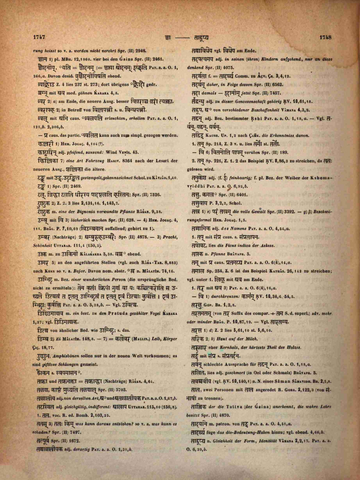
jñāna 1〉 das Annehmen, Statuiren: sarvatrotsṛja bhedajñānam Spr. 4155. pl. (verdächtig) Kenntnisse Spr. 409. jñāna als Śakti Verz. d. Oxf. H. 149,b,43. WEBER, RĀMAT. UP. 323. fg. WEBER, RĀMAT. UP. 326. jñānā f. ebend. PAÑCAR. 3,2,30.

Original text · German · Word type unspecified
jñāna 1〉 pl. MBH. 12,1860. vier bei den Jaina Spr. (II) 2461.
Böhtlingk 1879 substantive neuter · Word type unspecified
Original text · German · substantive neuter
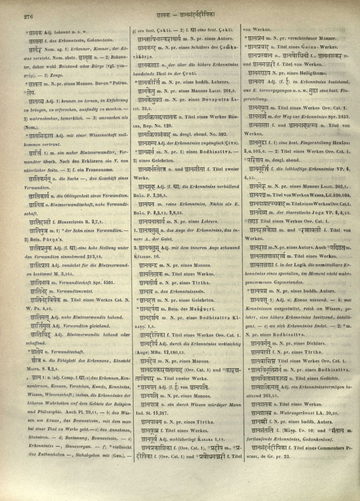
jñāna — 1〉 n. (adj. Comp. f. ā) — a〉 das Erkennen, Kennenlernen, Kennen, Verstehen, Kunde, Kenntniss, Wissen, Wissenschaft; insbes. die Erkenntniss der höheren Wahrheiten auf dem Gebiete der Religion und Philosophie Auch Pl. Chr. 79,11. — b〉 das Wissen um Etwas, das Bewusstsein, mit dem man bei einer That zu Werke geht. — c〉 das Annehmen, Statuiren. — d〉 Besinnung, Bewusstsein. — e〉 Erkenntniss-, Sinnesorgan. — f〉 *vielleicht das Zuthunhaben —, Sichabgeben mit (Gen.). — g〉 [Page2-276-b] ein best. Śakti. — 2〉 f. ā eine best. Śakti.
Original text · German · Word type unspecified
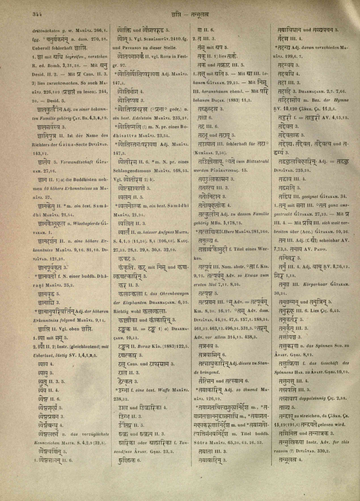
jñāna II. 1〉a〉 die Buddhisten nehmen 10 höhere Erkenntnisse an MAHĀVY. 57. [Nachtrag, Band 7]
Apte 1890 substantive neuter
Original text · English · substantive neuter
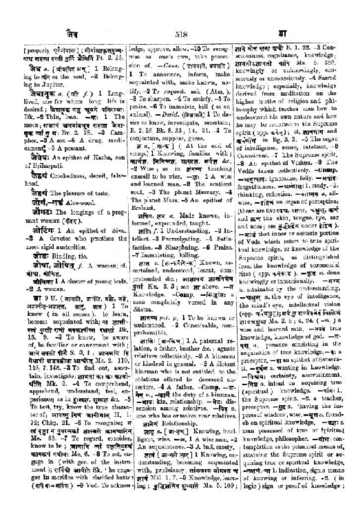
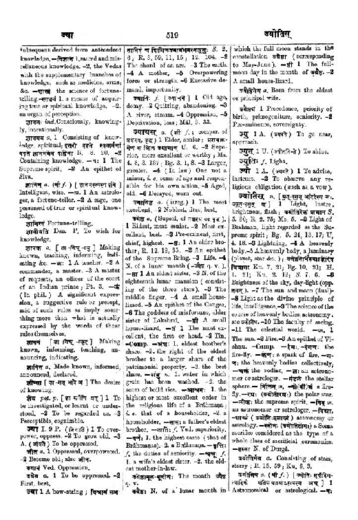
jñānaṃ [jñā-bhāve lyuṭ] 1 Knowing, understanding, becoming acquainted with, proficiency; sāṃkhyasya yogasya ca jñānaṃ Māl. 1. 7. 2 Knowledge, learning; buddhirjñānena śudhyati Ms. 5. 109; ([Page 0518-c]) jñāne maunaṃ kṣamā śatrau R. 1. 22. 3 Consciousness, cognizance, knowledge; jñānato'jñānato vāpi Ms. 8. 288. knowingly or unknowingly, consciously or unconsciously. 4 Sacred knowledge; especially, knowledge derived from meditation on the higher truths of religion and philosophy which teaches man how to understand his own nature and how he may be reunited to the Supreme spirit (opp. karman); cf. jñānayoga and karmayoga in Bg. 3. 3. 5 The organ of intelligence, sense, intellect. 6 Conscience. 7 The Supreme spirit. 8 An epithet of Viṣṇu. 9 The Vedās taken collectively. Comp. — aṃnutpādaḥ ignorance, folly. — apohaḥ forgetfulness. — abhyāsaḥ 1 study. 2 thinking, reflection. — ātman a. allwise. — iṃdriyaṃ an organ of perception; (these are five tvaca, rasanā, cakṣus, karṇa and ghrāṇa the skin, tongue, eye, ear and nose; see buddhiṃdriya under iṃdriya). — kāṃḍaṃ that inner or esoteric portion of Veda which refers to true spiritual knowledge, or knowledge of the Supreme spirit, as distinguished from the knowledge of ceremonial rites (opp. karbhakāṃḍa). — kṛta a. done knowingly or intentionally. — gamya a. attainable by the understanding. — cakṣus n. the eye of intelligence, the mind's eye, intellectual vision (opp. carmacakṣus); sarvaṃ tu samavekṣyedaṃ nikhilaṃ jñānacakṣuṣā Ms. 2. 8; Ms. 4. 24. ( — m.) a wise and learned man. — tattvaṃ true knowledge, knowledge of god. — tapas n. penance consisting in the acquisition of true knowledge. — daḥ a preceptor. — dā an epithet of Sarasvatī. — durbala a. wanting in knowledge. — niścayaḥ certainty, ascertainment. — niṣṭha a. intent on acquiring true (spiritual) knowledge. — patiḥ 1 the Supreme spirit. 2 a teacher, preceptor. — mudra a. ‘having the impress of wisdom’, wise. — mūla a. foundeb on spiritual knowledge. — yajñaḥ a man possessed of true or spiritual knowledge, philosopher. — yogaḥ contemplation as the principal means of, attaining the Supreme spirit or acquiring true or spiritual knowledge. — lakṣaṇaṃ, -ṇā 1 indication, sign, a means of knowing or inferring. 2 (in logic) sign or proof of knowledge; ([Page 0519-a]) subsequent derived from antecedent knowledge. — vijñānaṃ 1 sacred and miscellaneous knowledge. 2 the Vedas with the supplementary branches of knowledge, such as medicine, arms, &c. — śāstraṃ the science of fortune-telling. — sādhanaṃ 1 a means of acquiring true or spiritual knowledge. 2 an organ of perception.
Cappeller 1887 substantive neuter
Original text · German · substantive neuter
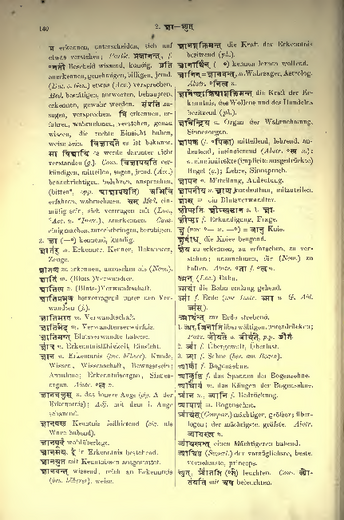
jñāna n. Erkenntnis (bes. höhere), Kunde, Wissen, Wissenschaft, Bewusstsein; Annahme; Erkenntnisorgan, Sinnesorgan. Abstr. ˚tva n.
Burnouf 1866 substantive neuter
Original text · French · substantive neuter
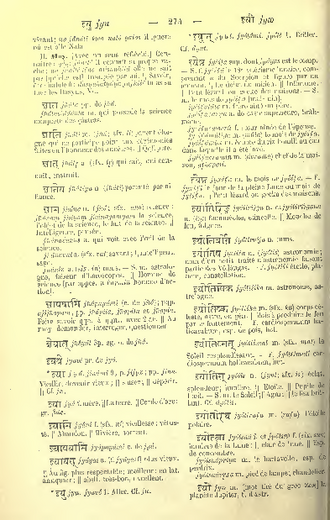
jñāna jñāna n. (jñā; sfx. ana) science: jñānaṃ jñeyaṃ jñānagamyam la science, l'objet de la science, le but de la science. Intelligence, pensée. jñānacakṣus a. qui voit avec l'œil de la science. jñānavat a. (sfx. vat) savant; intelligent, sage. jñānin a. (sfx. in) mms. — S. m. astrologue, faiseur d'horoscopes. Homme de science [par oppos. à karmin homme d'action].
Derived words
Occurrences in source texts (96)
DYS 2 occurrences
GoS 2 occurrences
HP 9 occurrences
HP 4.0*1-4.0*14: Samādhi and Laya 2 occurrences
Direct occurrences
HP 4.11*15-4.11*28: Space and Laya 2 occurrences
Direct occurrences
-
HP 4.11*25 Segment 6
-
HP 4.11*25 Segment 10
HP 4.47-4.55*4: Nāda Binds the Mind 2 occurrences
Direct occurrences
MandUp 1 occurrence
PYS 20 occurrences
PYS 2.30–34: Vows and Counterreflection 1 occurrence
Occurrences through derived words
-
PYS 2.34 Segment 15
8 more source pages
PYS 3.17–20: Extraordinary Knowledge 3 occurrences
Direct occurrences
PYS 3.26–28: Knowledge of the Cosmos 3 occurrences
Direct occurrences
PYS 3.52–55: Viveka and Kaivalya 2 occurrences
Direct occurrences
SiSa 40 occurrences
SiSa 1.1-1.3: Das eine Wissen 4 occurrences
Direct occurrences
SiSa 1.20-1.31: Karma und Erkenntnis 3 occurrences
Direct occurrences
SiSa 1.35-1.44: Täuschungs-Gleichnisse 9 occurrences
Direct occurrences
-
SiSa 1.39 Segment 2
-
SiSa 1.39 Segment 10
-
SiSa 1.40 Segment 6
-
SiSa 1.40 Segment 16
-
SiSa 1.41 Segment 20
-
SiSa 1.41 Segment 25
-
SiSa 1.43 Segment 10
Occurrences through derived words
SiSa 1.51-1.64: Selbst als Licht 5 occurrences
Direct occurrences
Occurrences through derived words
-
SiSa 1.59 Segment 3
10 more source pages
SiSa 2.44-2.48: Erkenntnisweg 3 occurrences
Direct occurrences
SiSa 5.10-5.14: Subtile Hindernisse 2 occurrences
Direct occurrences
SiSa 5.191-5.207: Kailāsa und Mahāśūnya 2 occurrences
Direct occurrences
-
SiSa 5.193 Segment 3
-
SiSa 5.200 Segment 13
SiSa 5.208-5.222: Rājayoga 4 occurrences
Direct occurrences
-
SiSa 5.218 Segment 1
-
SiSa 5.218 Segment 4
-
SiSa 5.220 Segment 21
-
SiSa 5.221 Segment 10
SS 7 occurrences
1 more source page
SVU 2 occurrences
VBT 13 occurrences
VBT 93–100: Pain and Desire 3 occurrences
Direct occurrences
VBT 130–138: Name and Fourfoldness 4 occurrences
Direct occurrences
1 more source page
Continue with AYI Free
Image source: AYI archive.