

śiva शिव – heilbringend; Heilbringende; Heilvolle; gütig; Gütige
Adjektiv · Substantiv Maskulin · Substantiv Neutrum · Worttyp nicht bestimmt
Wörterbuchquellen
AYI Wörterbuch Adjektiv · Substantiv Maskulin
Adjektiv
heilbringend; Heilbringende; Heilvolle; gütig; Gütige
Substantiv Maskulin
Śiva; Śivas
Cappeller 1891 Adjektiv
Originaltext · Englisch · Adjektiv
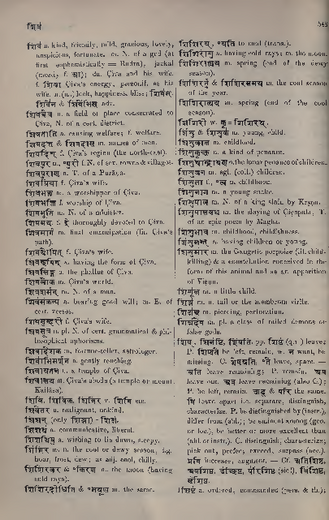
śivá ·a. kind, friendly, mild, gracious, lovely, auspicious, fortunate. m. N. of a god (at first euphemistically = Rudra), jackal (mostly f. ā); du. Śiva and his wife. f. śivā Śiva's energy, personif. as his wife. n. (m.) luck, happiness, bliss; śivám, śivéna & śivébhis adv.
Monier-Williams 1872 Adjektiv
Originaltext · Englisch · Adjektiv
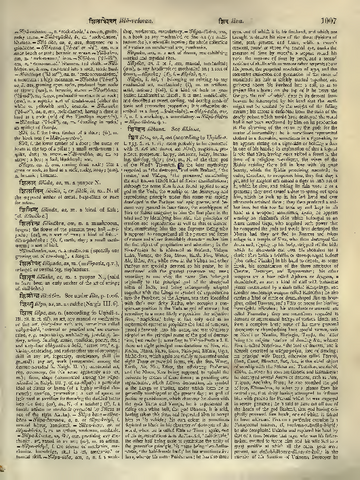
śiva śiva, as, ā, am (according to Uṇādi-s. I. 153. fr. rt. 1. śī; more probably to be connected with rt. śvi and śavas, see śiśvi), auspicious, pro- pitious, prosperous, happy, fortunate, lucky, increas- ing, thriving, right; (as), m., N. of the third god of the Hindū Tri-mūrti, (in the later mythology regarded as ‘the destroyer,’ and with Brahmā, ‘the creator,’ and Viṣṇu, ‘the preserver,’ constituting the well known Hindū triad of divine manifestations; although the name Śiva is not found applied to any god in the Veda, the worship of the destroying and reproducing principle under this name was rapidly developed in the Purāṇas and epic poems, and be- came very general in later times, the worshippers of Śiva or Śaivas assigning to him the first place in the triad and by identifying him with the principles of creation and reproduction as well as that of destruc- tion, constituting him the one Supreme Being who is supposed to comprehend all the powers and forces of nature and whose formidable character makes him the first object of propitiation and adoration; in the Śiva-Purāṇa he is addressed as Brahmā, Viṣṇu, Indra, Varuṇa, the Sun, Moon, Earth, Fire, Water, Air, Ether, &c., while even in the Viṣṇu and other Purāṇas not specially devoted to his praise, he is mentioned with the greatest reverence and awe; according to one view the name Śiva belonged originally to the principal god of the aboriginal tribes of India, and being subsequently adopted together with the Liṅga or symbol of reproduction into the Pantheon of the Āryans, was then identified with their own deity Rudra, who occupies a con- spicuous position in the Veda as god of storms; but according to a more likely supposition the adjective śiva, ‘auspicious,’ being at first only used as an euphemistic epithet to propitiate the lord of tempests, passed afterwards into his name, and was ultimately adopted as the principal name of the god of destruc- tion, [see rudra]; according to Viṣṇu-Purāṇa I. 8. there are eight principal manifestations of Śiva, viz. Rudra, Bhava, Śarva, Iśāna, Paśu-pati, Bhīma, Ugra, Mahā-deva, which again are visibly represented under eight Tanus or material forms, viz. the Sun, Water, Earth, Air, Fire, Ether, the officiating Brahman, and the Moon, Śiva being supposed to uphold the universe by means of these forms; as presiding over reproduction, which follows destruction, his symbol is the Liṅga or Phallus, under which form he is generally worshipped at the present day; as god of justice or punishment, which character he shares with the gods Yama and Varuṇa, he is represented as riding on a white bull, the god Dharma, it is said, having taken this form and requested Śiva to accept him as his vehicle; his own colour is sometimes depicted as black in his character of destroyer of the world, when he is called Kāla or Time; again, one of his representations is as Ardha-nārī, ‘half-female,’ the other half being male to symbolize the unity of the generative principle, his name being then Ardha- nārīśa, ‘the half-female lord;’ he has sometimes five faces, whence his name Pāñcānana; he has also three eyes, one of which is in his forehead, and which are thought to denote his view of the three divisions of time, past, present, and future, while a moon's crescent, round or above the central eye, marks the measure of time by months, a serpent round his neck the measure of time by years, and a second necklace of skulls with numerous other serpents about his person, the perpetual revolution of ages, and the successive extinction and generation of the races of mankind: his hair is thickly matted together, and gathered above his forehead into a coil, so as to project like a horn; on the top of it he bears the Ganges, the rush of which river in its descent form heaven he intercepted by his head that the earth might not be crushed by the weight of the falling stream; his throat is dark-blue from the stain of the deadly poison which would have destroyed the world had it not been swallowed by him on its production at the churning of the ocean by the gods for the nectar of immortality: he is sometimes represented clothed in a deer-skin, sometimes in a tiger-skin, or he appears sitting on a tiger-skin or holding a deer in one of his hands; in explanation of this a legend is told that Śiva, having once visited a forest in the form of a religious mendicant, the wives of the Ṛṣis residing there fell in love with his great beauty, which the Ṛṣis perceiving resented; in order, therefore, to overpower him, they first dug a pit, and by magical arts caused a tiger to rush out of it, which he slew, and taking its skin wore it as a garment; they next caused a deer to spring out upon him, which he took up in his left hand and ever afterwards retained there; they then produced a red- hot iron, but this too he took up and kept in his hand as a weapon: sometimes, again, he appears wearing an elephant's skin which belonged to an Asura named Gaya, who acquired such power that he conquered the gods and would have destroyed the Munis had they not fled to Benares and taken refuge in a temple of Śiva, who then destroyed the Asura and, ripping up his body, stripped off the hide which he afterwards cast over his shoulders for a cloak: Śiva holds a triśūla or three-pronged trident [also called Pināka] in his hand to denote, as some think, his combination of the three attributes of Creator, Destroyer, and Regenerator; his other weapons are a bow called Ajakava or Ajagava, a thunderbolt, an axe, a kind of staff with transverse pieces surmounted by a skull called Khaṭvāṅga, and another nondescript weapon called Khiṅkira; he also carries a kind of rattle or drum, shaped like an hour- glass, called Ḍamaru, and a Pāśa or noose for binding incorrigible offenders: his attendants or servants are called Pramatha; they are sometimes regarded as demons or supernatural beings of various kinds, and form a complete host; some of his more personal attendants or chamberlains have special names, such as Nandi or Nandin, Bhṛṅgin, Taṇḍu, the latter being the original teacher of dancing &c., whence Śiva is called Naṭeśvara, ‘the lord of dancers,’ and is himself described as nāṭya-priya, fond of dancing: his principal wife Durgā, otherwise called Pārvatī, Umā, Gaurī, Bhavānī, Satī, &c., is the chief object of worship with the Śāktas and Tāntrikas, see śakti, śākta, tantra: his sons are Gaṇeśa and Kārttikeya: he destroyed several Asuras or demons, such as Pura, Tripura, Andhaka, Ruru; he also scorched the god of love, Kāma-deva, to ashes by a glance from his central eye, that deity having attempted to inflame him with passion for Pārvatī whilst he was engaged in severe penance; he is said to have cut off one of the heads of the god Brahmā, that god having ori- ginally possessed five heads, one of which is fabled to have addressed Śiva on a particular occasion in a disrespectful manner, cf. brahma-mūrdha-bhṛt; he also decapitated Dakṣa and replaced his head by that of a ram, because that sage, who was his father- in-law, omitted to invite him and his wife Satī to a great sacrifice at which all the other gods were present, see dakṣādhvara-dhvaṃśa-kṛt; in the exercise of his function of Universal Destroyer he destroys, at the end of every Kalpa, not only all created beings, but even Brahmā, Viṣṇu, and the other gods, whose bones and skulls he wears as gar- lands; moreover, at the end of one of the early Kalpas he is fabled to have burnt them up by a flash from his central eye, and afterwards to have rubbed their ashes upon his body, whence the use of ashes is considered of great importance in his worship, while the use of the Rudrākṣa berries or beads originated, it is said, from the legend that Śiva, on his way to destroy the three cities, called Tri-pura, let fall some tears of rage which became converted into these beads: his residence is Kailāsa, one of the loftiest northern peaks of the Himālaya, which is also the paradise of Kuvera: he has strictly no in- carnations like those of Viṣṇu, though Vīra-bhadra and the eight Bhairavas are sometimes regarded as forms of him, sometimes as his sons, see vīra-bha- dra, bhairava; he is especially worshipped at Be- nares and has even more names than Viṣṇu, one thousand and eight being specified in the sixty-ninth chapter of the Śiva-Purāṇa and in the seventeenth chapter of the Anuśāsana-parvan of the Mahā-bhā- rata, some of the most common being Mahā-deva, Śambhu, Śaṅkara, Īśa, Īśvara, Maheśvara, Hara, Rudra); the phallic emblem of Śiva, the male genital organ, penis; a god (= deva, according to Śabda-k.); an auspicious planetary conjunction; the twentieth of the astronomical periods called Yogas, (see yoga); epithet of a particular month; the Veda; final emancipation (= mokṣa); a pillar or post to which cattle are tied; a kind of drug and perfume (= bāluka or vāluka); a particular plant or drug (= puṇḍarīka); the black Dhustūra or thorn-apple; bdellium; quicksilver; N. of a scribe; (au), m. du. Śiva and his wife; (ās), m. pl., N. of a class of deities; (ā), f. the wife of Śiva (Durgā, Pārvatī, &c.); final emancipation (= mukti); N. of the wife of Aṅgiras; of the mother of the twenty- second Jina; of a river; a jackal; the Śamī tree; yellow Myrobalan (= harītakī); Emblic Myrobalan (= āmalakī); the tree Flacourtia Cataphracta (= tāmalakī); Dūrvā grass; turmeric; a kind of yellow pigment, = go-rocanā; (am), n. bliss, prosperity, happiness, well-being, auspiciousness, pleasure; final emancipation or beatitude; water; rock-salt; sea-salt; white or refined borax.
Petersburger 1855 Adjektiv · Substantiv Maskulin · Substantiv Neutrum
Originaltext · Deutsch · Adjektiv · Substantiv Maskulin · Substantiv Neutrum
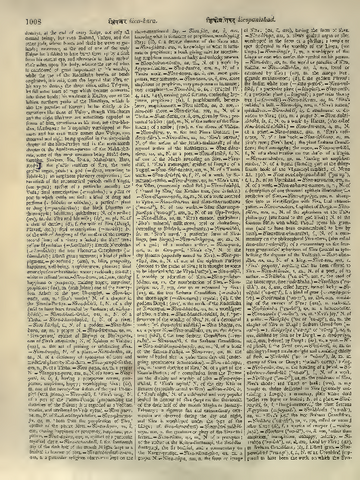
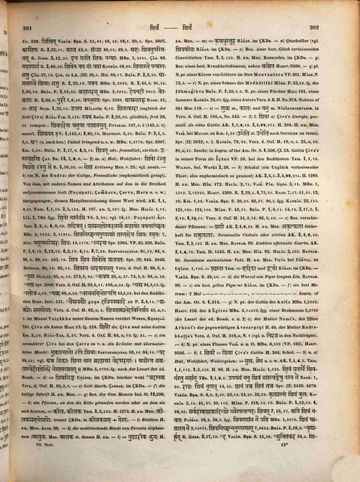
śivá UṆĀDIS. 1,153 (śíva). 1〉 adj. (f. ā) gütig, freundlich, günstig; angenehm, zuträglich, wohlthuend, heilsam, segensreich, lieb (Gegens. ghora) NAIGH. 3,6. sakhya ṚV. 4,10,8. sakhā̀yaste̱ viṣùṇā agna e̱te śi̱vāsa̱ḥ santo̱ aśìvā abhūvan ṚV. 12,5. ṚV. 10,124,2. atithi ṚV. 7,9,3. ṚV. 7,18,7. dūta ṚV. 8,39,3. trātar ṚV. 4,24,1. pāyu ṚV. 1,143,8. ūti ṚV. 1,187,3. dhāsi ṚV. 4,41,17. manas VS. 2,24. AIT. BR. 7,33. R. GORR. 1,38,17. mati ṚV. 10,67,9. MĀRK. P. 118,15. manyu AV. 6,116,3. niyut ṚV. 10,8,6. tanū VS. 4,2. VS. 16,2. ṚV. 10,16,4. TS. 5,7,3,3. PRAŚNOP. 2,12. rasa ṚV. 10,9,2. vāja ṚV. 10,53,8. cakṣus AV. 1,33,4. Wasser AV. 2,29,6. R. 2,49,9. R. 2,56,4. R. 2,83,22. R. GORR. 2,124,21. RAGH. 5,8. Spr. 5027. VARĀH. BṚH. S. 12,12. BHĀG. P. 1,6,12. Speise AV. 6,71,3. teṣā̀mindra vṛtra̱hatyè śi̱vo bhū̀ḥ ṚV. 7,19,10. śi̱vā sakhìbhya u̱ta mahyàmāsīt ṚV. 10,34,2. AV. 7,43,1. ahìṃsannaḥ śi̱vo 'tī̀hi VS. 3,61. VS. 12,17. ŚAT. BR. 9,1,2,30. mi̱tro vai śi̱vo de̱vānā̀m TS. 5,1,6,1. yadvai śi̱vaṃ tanmayàḥ TBR. 2,2,5,5. varṣāḥ ĀŚV. GṚHY. 2,4,14. PĀR. GṚHY. 3,15. puruṣa ŚVETĀŚV. UP. 3,11. deva ŚVETĀŚV. UP. 5,14. HARIV. 14407. R. 1,44,7. WEBER, RĀMAT. UP. 338. śikhin VARĀH. BṚH. S. 11,61. VARĀH. BṚH. S. 16,40. VARĀH. BṚH. S. 18,1. VARĀH. BṚH. S. 20,4. Spr. 5007. āśiṣaḥ R. 2,32,11. kāla R. 2,43,9. saṃdhyā R. 46,13. R. 49,2. ahaḥ śivamupasthitam R. GORR. 2,12,20. eṣa yāti śivaḥ panthāḥ MBH. 3,2824. ŚĀK. 86. mahāmārga R. 2,46,29. śivena naya māṃ pathā KATHĀS. 18,99. śivāste panthānaḥ santu ŚĀK. 57,19. ŚUK. in LA. (III) 36,8. HIT. 68,17. BHĀG. P. 2,2,33. āgamāste śivāḥ santu R. 2,25,19. pavana MBH. 3,2995. R. 2,44,9. R. 2,91,24. R. 5,95,39. BHĀG. P. 3,15,38. brahmasaras MBH. 3,8304. devanadī MBH. 3,9948. kosalāḥ R. 2,50,8. purī R. 1,6,26. vanabhūmayaḥ Spr. 5391. āśramataru RAGH. 11,33. kṣāra SUŚR. 1,33,13. upāya MĀLATĪM. 6,13. śivākārā (zugleich der Gott Śiva) RĀJA-TAR. 3,416. svana BHĀG. P. 3,23,39. glücklich, froh BHĀG. P. 28,22. compar.: śivatareṇa cakṣuṣā paśyatvamum UTTARAR. 107,5. UTTARAR. 6 (145,2.3). superl. śivatama ṚV. 1,143,8. ṚV. 8,85,10. MAITRYUP. 6,31. BHĀG. P. 5,1,5. BHĀG. P. 5,3,5. a˚ (s. auch bes.) Unheil bringend u. s. w. MBH. 1,5778. Spr. 5007. KIR. 1,38. BHĀG. P. 3,17,9. BHĀG. P. 4,2,15. śivam adv. freundlich, zärtlich: upaspṛśanti ŚAT. BR. 12,5,2,8. — 2〉 m. a〉 Heil, Wohlfahrt: śivo 'stu vijayo 'stu te R. 5,56,36. = mokṣa Erlösung MED. v. 25; vgl. neutr. — b〉 ein N. des Rudra: der Gütige, Freundliche (euphemistisch gesagt). Von ihm, mit andern Namen und Attributen auf den in die Dreiheit aufgenommenen Gott (Paśupati, Śaṃkara, Śarva, Hara u. s. w.) übergegangen, dessen Hauptbezeichnung dieses Wort wird. AK. 1,1,1,25. TRIK. 1,1,48. TRIK. 3,3,422. H. 197. H. an. 2,537. fg. MED. HALĀY. 1,11. LIA. 1,780. fgg. śi̱vo nāmā̀si VS. 3,63; vgl. VS. 16,41. Paśupati ĀŚV. GṚHY. 2,2,2. ĀŚV. GṚHY. 4,8,19. tadviṣam . prāgrasallokarakṣārthaṃ brahmaṇo vacanācchivaḥ MBH. 1,1153. MBH. 3,11914. śivamicchanmanuṣyāṇāṃ tasmādeva śivaḥ smṛtaḥ MBH. 7,9622. paśūnāmīśvaraḥ śivaḥ MBH. 14,1178. ˚smaraṇa Spr. 2984. VP. 62. VP. 596. BHĀG. P. 1,9,19. BHĀG. P. 3,12,12. BHĀG. P. 4,2,15. BHĀG. P. 4,4,14. BHĀG. P. 8,7,29. SARVADARŚANAS. 81,12. SARVADARŚANAS. 84,9. SARVADARŚANAS. 86,9. SARVADARŚANAS. 88,20. SARVADARŚANAS. 103,19. śiva śiva śiveti pralapataḥ Spr. (II) 844. Spr. (II) 5046. DHŪRTAS. 80,16. DHŪRTAS. 95,15. śivasya dhāraṇayantram Verz. d. Oxf. H. 96,b,8. ˚pūjā Verz. d. Oxf. H. 45,a,23. Verz. d. Oxf. H. 85,a,42. Verz. d. Oxf. H. 273,b,24. ˚kavaca Verz. d. Oxf. H. 26,a,37. Verz. d. Oxf. H. 74,b,9. Verz. d. Oxf. H. 94,a,39. ˚mantra Spr. 3009. Verz. d. Oxf. H. 93,b,11. Verz. d. Oxf. H. 106,a,24. fg. ˚yantra Verz. d. Oxf. H. 94,b,13. fg. ˚stotra Verz. d. Oxf. H. 94,a,39. ˚cakra Verz. d. Oxf. H. 88,a,33. ˚bhasmamahimotpatti Verz. d. Oxf. H. 44,b,23. bei den Buddhisten BURN. Intr. 131. ˚vaiśravaṇau gaṇa dadhipayaādi zu P. 2,4,14. ˚śaktyoḥ samāyogaḥ Verz. d. Oxf. H. 92,a,2. śivaśaktyabhedavinirṇaya Verz. d. Oxf. H. 45,a,1. Verz. d. Oxf. H. 45,a,2. im Monat Vaiśākha unter diesem Namen verehrt WEBER, KṚṢṆAJ. 243. Śiva als Autor HALL 13. fg. HALL. 124. śivau du. Śiva und seine Gattin KIR. 5,40. RĀJA-TAR. 5,37. Verz. d. Oxf. H. 64,a,19. fg. Verz. d. Oxf. H. 64,a,24. — c〉 ein secundärer Śiva bei den Śaiva so v. a. ein Erlöster mit übernatürlicher Macht: muktātmāno 'pi śivāḥ SARVADARŚANAS. 85,10. SARVADARŚANAS. 84,10. ˚pada SARVADARŚANAS. 88,22; vgl. atra siddhāḥ śivā nāma brāhmaṇā vedapāragāḥ . adhītya sakalānvedām̐llebhire mokṣamavyayam .. MBH. 5,3796. fg. nach der Lesart der ed. Bomb. — d〉 = śivaliṅga UṆĀDIK._im_ŚKDR. hierher wohl ˚pradānaka Verz. d. Oxf. H. 85,b,1. — e〉 Gott überh. ŚABDAR._im_ŚKDR. — f〉 die heilige Schrift H. an. MED. — g〉 Bez. des 6ten Monats Ind. St. 10,298. — h〉 ein Pfosten, an den die Kühe gebunden werden oder an dem sie sich kratzen, = kīla, kīlaka TRIK. 3,3,422. H. 1274. H. an. MED. (kīlakagrahayogayoḥ trennt ŚKDR. in kīlakagraha + yoga). — i〉 Bdellion H. an. MED. AUṢ. 96. — k〉 die wohlriechende Rinde von Feronia elephantum (vāluka) MED. bālaka st. dessen H. an. — l〉 = puṇḍarīka (druma) H. an. MED. — m〉 = kṛṣṇadhustūra RĀJAN._im_ŚKDR. — n〉 Quecksilber (vgl. śivabīja) RĀJAN._im_ŚKDR. — o〉 Bez. einer best. Glück verheissenden Constellation TRIK. 3,3,422. H. an. MED. KOṢṬHĪPR._im_ŚKDR. — p〉 Bez. eines best. Krankheitsdämons, neben aśiva HARIV. 9560. — q〉 pl. N. pr. einer Klasse von Göttern im 3ten Manvantara VP. 261. MĀRK. P. 73,3. — r〉 N. pr. eines Sohnes des Medhātithi MĀRK. P. 53,29. fg. des Idhmajihva BHĀG. P. 5,20,2. BHĀG. P. 5,20,3. N. pr. eines Fürsten HALL. 181. eines Gauners KATHĀS. 24,82. fgg. eines Autors Verz. d. B. H. No. 878. Notices of Skt. Mss. 118. — s〉 = śukra m., kālaḥ und vasu m. NĀNĀRTHADHVANIM._in_Verz. d. Oxf. H. 194,a, No. 445. — 3〉 f. śivā a〉 Śivaʼs Energie, personif. als seine Gattin AK. 1,1,1,32. AK. 3,4,27,214. H. 204. H. an. MED. VAIJ._bei_MALLIN._zu_KIR. 1,38 (umeti st. ubheti nach STENZLER zu lesen). Spr. (II) 5033, v. l. KATHĀS. 78,92. Verz. d. Oxf. H. 19,a,5. Verz. d. Oxf. H. 25,a,33. Verz. d. Oxf. H. 81,a,41. Inschr. in Journ. of the Am. Or. S. 6,506, Śl. 23. Gattin Śivaʼs in seiner Form als Īśāna VP. 59. bei den Buddhisten TRIK. 1,1,18. WILSON, Sel. Works 2,38. — b〉 Schakal (ein Unglück verheissendes Thier, also euphemistisch so genannt) AK. 2,5,5. AK. 3,4,27,214. H. 1289. H. an. MED. HĀR. 172. HALĀY. 2,74. VAIJ. PĀR. GṚHY. 3,15. MBH. 1,4512. MBH. 3,16823. HARIV. 4260. R. 3,29,6. R. 6,75,35. RAGH. 7,47. RAGH. 11,61. RAGH. 12,39. KIR. 1,38. VARĀH. BṚH. S. 30,30. VARĀH. BṚH. S. 86,37. VARĀH. BṚH. S. 90,3. fgg. KATHĀS. 25,135. KATHĀS. 121,160. KATHĀS. 124,108. MĀRK. P. 43,21. BHĀG. P. 1,6,14. BHĀG. P. 1,14,12. BHĀG. P. 3,17,9. BHĀG. P. 5,2,16. BHĀG. P. 8,10,11. Verz. d. Oxf. H. 51,b,16. Verz. d. Oxf. H. 86,b,40. — c〉 Bez. verschiedener Pflanzen: = śamī AK. 2,4,2,32. H. an. MED. (sakṛtphalā fehlerhaft für saktuphalā). Terminalia Chebula oder citrina AK. 2,4,2,40. TRIK. 3,3,423. H. an. MED. RATNAM. 89. Emblica officinalis Gaertn. AK. 2,4,4,15. TRIK. H. 1145. H. an. MED. HĀR. 92. HALĀY. 2,463. RATNAM. 90. Jasminum auriculatum Vahl. H. an. MED. VIŚVA_bei_UJJVAL._zu_UṆĀDIS. 1,153. = śyāmā TRIK. = haridrā und dūrvā RĀJAN._im_ŚKDR. — VARĀH. BṚH. S. 48,40. — d〉 die Wurzel von Piper longum Lin. RATNAM. 99. — e〉 ein best. gelbes Pigment RĀJAN._im_ŚKDR. — f〉 ein best Metrum: 2 Mal ⏑ – ⏑ – – ⏑ ⏑ – ⏑ – –, – – ⏑ – – ⏑ ⏑ – ⏑ – – Journ. of the Am. Or. S. 6,514. — g〉 N. pr. der Gattin des Anila MBH. 1,2589. HARIV. 156. des Aṅgiras MBH. 3,14209. fgg. einer Brahmanin MBH. 5,3796 (die Lesart der ed. Bomb. s. u. 2〉c). der Mutter Nemiʼs, des 22ten Arhantʼs der gegenwärtigen Avasarpiṇī H. 40. der Mutter Rudrabhaṭṭaʼs Verz. d. Oxf. H. 318,a, N. 1 (vgl. u. ciraja in den Nachträgen). — h〉 N. pr. eines Flusses VAIJ. a. a. O. MBH. 6,332 (VP. 183). HARIV. 9506. — 4〉 f. śivī = śivā Śivaʼs Gattin H. 204, Schol. — 5〉 n. a〉 Heil, Wohlfahrt, Wohlergehen; = sukha, kṣema u. s. w. AK. 1,1,4,3. TRIK. 1,1,113. TRIK. 3,3,423. H. 86. H. an. MED. HALĀY. 1,122. śi̱vaṃ pra̱jāyaì śi̱vamàstu̱ mahyàm TBR. 3,1,2,3. upapannaṃ nanu śivaṃ saptasvaṅgeṣu yasya me RAGH. 1,60. rājñaḥ śivaṃ bhūyāt RAGH. 14,50. jñānaṃ yatra śivaṃ tatra Spr. (II) 2449. Spr. (II) 4479. VARĀH. BṚH. S. 4,8. VARĀH. BṚH. S. 5,31. VARĀH. BṚH. S. 23,10. VARĀH. BṚH. S. 24,21. VARĀH. BṚH. S. 32,29. kṛtaghnānāṃ śivaṃ kutaḥ KATHĀS. 3,44. KATHĀS. 41,57. KATHĀS. 50,116. MĀRK. P. 118,14. MĀRK. P. 118,19. BHĀG. P. 5,13,23. BHĀG. P. 6,18,58. śarkarākaṇṭakādibhyo yathopānatpadaḥ śivam BHĀG. P. 7,15,17. api śivaṃ bhavataḥ PAÑCAT. 16,5. PAÑCAT. 38,6. fgg. śivamāśaṃsa me pathi MBH. 1,3270. śivaṃ cāśāstame MBH. 3,12071. śivamicchanmanuṣyāṇām MBH. 7,9622. BHĀG. P. 5,18,9. ˚vṛddhyartham R. GORR. 2,17,13. ˚da VARĀH. BṚH. S. 11,38. ˚subhikṣakara VARĀH. BṚH. S. 34,4. śivāya gāvaḥ pūjyantām HARIV. 3850. MĀLATĪM. 160,14. KATHĀS. 28,47. bhavatāṃ na śivāya tat KATHĀS. 45,19. BHĀG. P. 1,4,11. fg. VARĀH. BṚH. S. 4,30. VARĀH. BṚH. S. 22,3. VARĀH. BṚH. S. 30,10. VARĀH. BṚH. S. 30,29. sasyānāṃ nāśāya śivāya vā VARĀH. BṚH. S. 40,12. VARĀH. BṚH. S. 46,85. śivāya gamyatāṃ so v. a. reise glücklich R. 3,12,16. ā gàtaṃ śi̱venà glücklich ṚV. 7,73,4. MBH. 3,16901. R. 2,52,81. R. GORR. 1,79,11. R. GORR. 3,5,22. R. GORR. 3,70,21. R. GORR. 5,92,7. kṣayo 'sya vanavāsasya bhaviṣyati śivena me zu meinem Glück R. GORR. 2,38,42 (GORR.). śivenekṣasva mām so v. a. mit Glück bringendem Auge R. GORR. 6,104,35. śivébhis als adv. VS. 27,7. a˚ (s. auch bes.) n. Unheil, Unglück MBH. 1,4512. KATHĀS. 116,3. śiva = mokṣa Erlösung H. 74. H. an. — b〉 Wasser H. an. MED. — c〉 Bez. verschiedener Glück bringender Dinge: = saindhava, samudralavaṇa und śvetaṭaṅkaṇa RĀJAN._im_ŚKDR. = āmalaka, tāra n., candana, loha und tagara AUṢ. 96. — d〉 N. pr. des Hauses, in dem die Pāṇḍava verbrannt werden sollten, MBH. 1,5778. — e〉 N. pr. eines Varṣa in Plakṣadvīpa MĀRK. P. 53,30. in Jambudvīpa BHĀG. P. 5,20,3. — f〉 N. eines Purāṇa, = śivapurāṇa, śaiva Verz. d. Oxf. H. 80,a,4. — Vgl. a˚, bhaṭṭa˚, mahā˚, vāma˚, śīta˚, sadā˚ und śaiva.
Böhtlingk 1879 Adjektiv · Substantiv Maskulin · Substantiv Neutrum
Originaltext · Deutsch · Adjektiv · Substantiv Maskulin · Substantiv Neutrum
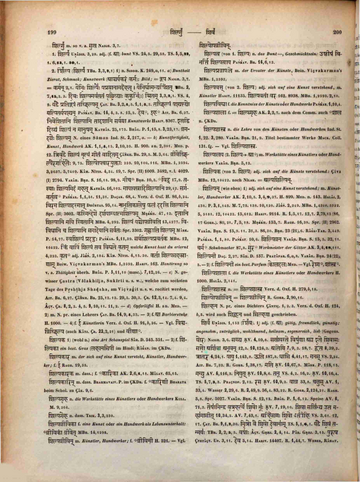
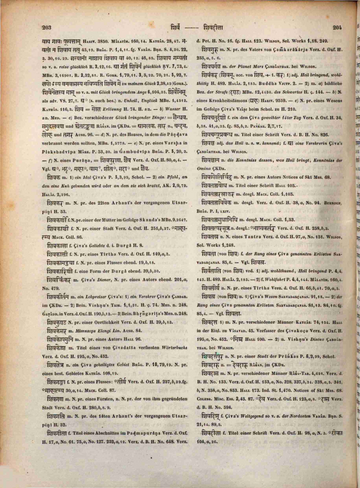
śivá — 1〉 Adj. (f. ā) — a〉 gütig, freundlich, günstig; [Page6-236-c] angenehm, zuträglich, wohlthuend, heilsam, segensreich, lieb. Compar. śivatara, Superl. śivátama, Adv. śivám freundlich, zärtlich. — b〉 glücklich, froh BHĀG. P. — 2〉 m. — a〉 Heil, Wohlfahrt; gewöhnlich n. — b〉 *Erlösung. — c〉 euphemistischer Name Rudraʼs; von ihm später übertragen auf den in die Dreiheit aufgenommenen Gott dieses Namens. Du. Śiva und seine Gattin. — d〉 ein secundärer Śiva bei den Śaiva, ein Erlöster besonderer Art HEMĀDRI 1,611,8. — e〉 Pl. Bez. bestimmter erlöster Brahmanen MBH. 5,109,18. — f〉 = śivaliṅga. — g〉 *ein Gott überh. — h〉 Schakal Chr. 74,20. Gewöhnlich śivā f. — i〉 *die heilige Schrift. — k〉 Bez. des sechsten Monats. — l〉 *ein Pfosten, an den die Kühe angebunden werden oder an dem sie sich kratzen. — m〉 *Bdellium. — n〉 *die wohlriechende Rinde von Feronia elephantum H. an. 2,538; vgl. ZACH. Beitr. 85. — o〉 *eine Art Stechapfel und = puṇḍarīka (drúma). — p〉 *Quecksilber RĀJAN. 13,108. Vgl. śivabīja. — q〉 eine best. Glück verheissende Constellation. — r〉 ein best. Krankheitsdämon. — s〉 *= śukra m., kāla m. und vasu m. — t〉 N. pr. — α〉 Pl. einer Klasse von Göttern im dritten Manvantara. — β〉 eines Sohnes des Medhātithi und verschiedener anderer Personen HEM. PAR. 1,420 — 3〉 f. śivā — a〉 Śivaʼs Energie, personificirt als seine Gattin HEMĀDRI 2,a,90,5. 7. VĀSAV. 243,2. — b〉 Erlösung ŚKDR. nach verschiedenen Purāṇa. — c〉 Schakal (ein Unglück verheissende Thier, also euphemistisch so genannt) BAUDH. 1,21,16. ŚIŚ. 18,76. VĀSAV. 243,2. — d〉 Bez. verschiedener Pflanzen. Nach den Lexicographen Prosopis spicigera oder Mimosa suma, Terminalia chebula oder Terminalia citrina, Emblica officinalis, Jasminum auriculatum, Gelbwurz, Dūrvā-Gras und = śyāmā. — e〉 *die Wurzel von Piper longum. — f〉 *Gallenstein des Rindes RĀJAN. 12,58. — g〉 ein best. Metrum. — h〉 eine best. Śruti S. S. S. 24. — i〉 N. pr. — α〉 der Gattin Anilaʼs, Aṅgirasʼs und verschiedener anderer Frauen. — β〉 eines Flusses. — 4〉 *f. śivī Śivaʼs Gattin. — 5〉 n. — a〉 Heil, Wohlfahrt, Wohlergehen. śivāya gamyatām so v. a. reise glücklich; śivéna glücklich, bhaviṣyati śivena me wird zu meinem Glück sein, śivenekṣasva mām so v. a. schaue mich mit Glück bringenden Augen an, śivébhis als Adv. — b〉 *Erlösung. — c〉 *Wasser. — d〉 *Steinsalz. — e〉 *Seesalz. — f〉 *eine Art Borax. — g〉 *Eisen. — h〉 *Myrobalane. — i〉 Tabernaemontana coronaria. — k〉 *Sandel. — l〉 Titel eines Purāṇa = śivapurāṇa, śaiva. — m〉 N. pr. [Page6-237-a] — α〉 des Hauses, in dem die Pāṇḍava verbrannt werden sollten. — β〉 eines Varṣa in Plakṣadvīpa und im Jambūdvīpa.

Apte 1890 Adjektiv · Substantiv Maskulin · Substantiv Neutrum
Originaltext · Englisch · Adjektiv · Substantiv Maskulin · Substantiv Neutrum
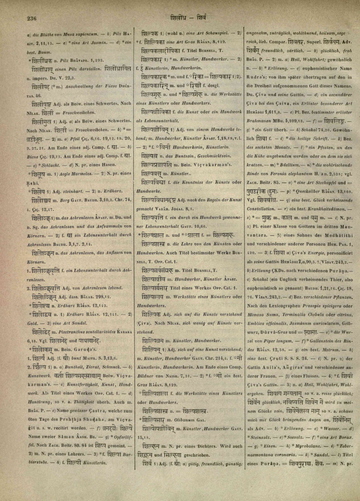
śiva a. [śyati pāpaṃ śo-van pṛṣo˚] 1 Auspicious, propitious, lucky; iyaṃ śivāyā niyaterivāyatiḥ Ki. 4. 21; Ki. 1. 38; R. 11. 33. 2 In good health or condition, happy, prosperous, fortunate; śivāti vastīrthaja lāni kaccit R. 5. 8 (= atupaplavāni ‘undisturbed’); śivāsta paṃthānaḥ saṃtu ‘a happy journey to you’, ‘God bless (or speed) you on your journey’. — vaḥ 1 N. of the third god of the sacred Hindu Trinity, who is entrusted with the work of destruction, as Brahman and Viṣṇu are with the creation and preservation, of the world; eko davaḥ keśavo vā śivo vā Bh. 2. 115. 2 The male organ of generation, penis. 3 An auspicious planetary conjunction. 4 The Veda. 5 Final beatitude. 6 A post to which cattle are tied 7 A god, deity, 8 Quick-silver. 9 Bdellium. 10 The black variety of thorn-apple. — vau (m. dual) Śiva and Pārvatī kathayati śivayoḥ śarīrayogaṃ viṣamapadā padavī vivartaneṣu Ki. 5. 40. — vaṃ 1 Prosperity, welfare, wellbeing, happiness; tava vartmāna vartatāṃ śivaṃ N. 2. 62; Ratn. 1. 2; R. 1. 60. 2 Bliss, auspiciousness. 3 Final beatitude. 4 Water. 5 Sea-salt. 6 Rock-salt 7 Refined borax. Comp. — akṣaṃ = rudrākṣa q. v. — arātiḥ a heretic (lit. a disbeliever in Śiva). — ātmakaṃ rock-salt. — ādeśakaḥ 1 the bearer of auspicious news. 2 a fortune-teller. — ālayaḥ 1 Śiva's abode. 2 the red basil. — (yaṃ) 1 a temple of Śiva. 2 a cemetery. — itara a. inauspicious, unlucky; śivetarakṣataye K. P. 1. — iṣṭrā Dūrvā grass. — kara (śivaṃkara also) a. conferring happiness, auspicious. — kīrtanaḥ N. of Bhṛṅgi. — gati a. prosperous, happy. — gharmajaḥ the planet Mars. — caturdaśī the fourteenth day of the dark half of Māgha; see śivarātra. jñā a female devotee of the Śaiva sect. — tāti a. 1 having an auspicious end, conferring or conducive to happiness, propitious; prayatna. kṛtsnoyaṃ phalatu śivatātiśca bhavatu ([Page 1046-c]) Māl. 6. 7. 2 tender, merciful, not demoniacal; mā pūtanātvamupagāḥ śivatātiredhi Māl. 9. 49. — (tiḥ) auspiciousness, happiness. — dattaṃ the discus of Viṣṇu. — dāru n. the Devadāru tree. — dūtī epithet of Durgā. — drumaḥ theBilva tree. — dviṣṭrā the Ketaka tree. — dhātuḥ 1 quick-silver. 2 milk. stone. — puraṃ, purī N. of Benares. — purāṇa N. of one of the eighteen Purāṇas — priyaḥ 1 a crystal. 2 the Baka tree. 3 the thorn-apple. — (yaṃ) = rudrakṣa q. v. — (yā) the goddess Durgā. — mallakaḥ the Arjuna tree. — rasaḥ the water of boiled rice. — rājadhānī N. of Benares. — rātriḥ f. the fourteenth day of the dark half of Māgha on which a rigorous fast is observed in honour of Śiva. — liṃgaṃ 1 Śiva, worshipped in the form of a Phallus. 2 a temple dedicated to the worship of the Liṅga. — lokaḥ the world of Śiva. — vallabhaḥ the mango tree. — (bhā) 1 white rose. 2 Pārvatī. — vāhanaḥ a bull. — vījaṃ quick-silver. — śekhāḥ 1 the moon. 2 the thorn-apple. — sāyujyaṃ final emancipation (lit. unification with Śiva). — suṃdarī an epithet of Durgā.
Cappeller 1887 Worttyp nicht bestimmt
Originaltext · Deutsch · Worttyp nicht bestimmt
śivá freudlich, hold, günstig, heilsam, lieb. m. N. eines Gottes (zurest euphem. Bein. Rudra's); Schakal (meist f. ā). f. ā Śiva's Energie o. Gattin. n. (m.) Heil, Glück śivám, śivéna u. śivébhis adv. freundlich, heilsam, zum Glück.
Burnouf 1866 Adjektiv
Originaltext · Französisch · Adjektiv
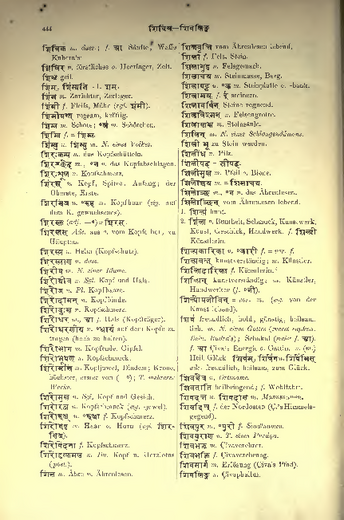
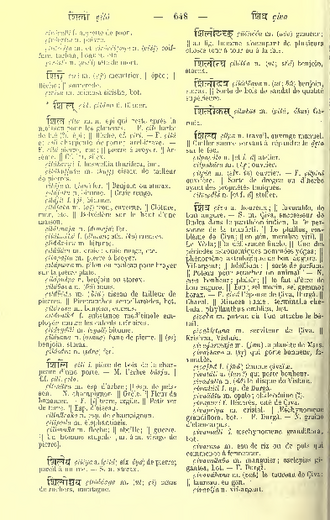
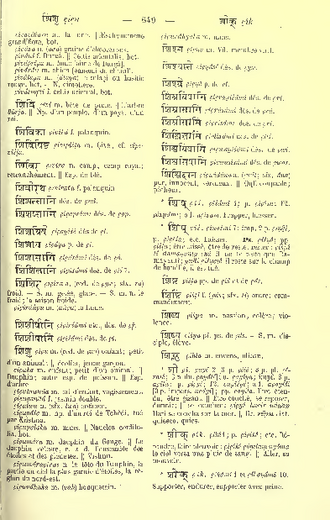
śiva śiva a. heureux; favorable, de bon augure. — S. n. Śiva, successeur de Rudra dans le panthéon indien, la 3ᵉ personne de la trimūrti. Le phallus, emblême de Śiva; en gén. membre viril. Le Veda; la délivrance finale. Une des périodes astronomiques nommées yogas; phénomène astrologique de bon augure. Vif-argent; bdellium; sorte de parfum. Poteau pour attacher un animal. — N. śiva bonheur; plaisir; le fait d'être de bon augure. Eau; sel marin, sel gemme; borax. — F. śivā l'épouse de Śiva, Durgā. Chacal. Mimosa suma; terminalia chebula; phyllanthus emblica, bot. śivaka m. poteau où l'on attache le bétail. śivakīrtana m. serviteur de Śiva. Kṛṣṇa, Viṣṇu. śivagharmaja m. (jan) la planète de Mars. śivaṅkara a. (kṛ) qui porte bonheur, favorable. śivajñā f. (jñā) femme çivaïte. śivatāti a. (tan ?) qui porte bonheur. śivadatta n. (dā) le disque de Viṣṇu. śivadūtī f. np. de Durgā. śivadhātu m. opale; chalcédoine (?). śivapurī f. Bénarès, cité de Śiva. śivapriya m. cristal. Æschynomene grandiflora, bot. — F. Durgā. — N. graine d'elæocarpus. śivamallī f. æschynomene grandiflora, bot. śivarasa m. eau de riz ou de pois qui commence à fermenter. śivavallabha m. manguier; asclepias gigantea, bot. — F. Durgā. śivavāhana m. (vah) le taureau de Śiva; taureau, en gén. śivavīja n. vif-argent. [Page649-1] śivacekhara m. la lune. Æschynomene grandiflora, bot. śivākṣa n. (akṣa) graine d'elæocarpus. śivānī f. Durgā. Celtis orientalis, bot. śivāpriya m. bouc [aimé de Durgā]. śivārāti m. chien [ennemi du chacal]. śivālaya m. (ālaya) le tulasi ou basilic rouge, bot. — N. cimetière. śivāsmṛti f. celtis oriental, bot.
Abgeleitete Wörter
Quelltextfundstellen (46)
DYS 1 Fundstelle
GoS 3 Fundstellen
HP 6 Fundstellen
HP 4.11*5-4.11*14: Khecarī im Raum 2 Fundstellen
Direkt belegt
-
HP 4.11*10 Segment 7
-
HP 4.11*13 Segment 3
HTK 3 Fundstellen
MandUp 2 Fundstellen
PJH 3 Fundstellen
SiSa 5 Fundstellen
SS 2 Fundstellen
SVU 7 Fundstellen
SVU 3.5-3.6: Rudras heilvolle Gestalt 2 Fundstellen
Direkt belegt
SVU 4.11-4.16: Der verborgene Schöpfer 2 Fundstellen
Direkt belegt
Mit AYI Free weitermachen
Bildquelle: AYI Archiv.