

antar अन्तर् – inner
adjective · adverb · particle · Preposition · Word type unspecified
Dictionary sources
AYI dictionary adjective · adverb
Cappeller 1891 adverb
Original text · English · adverb
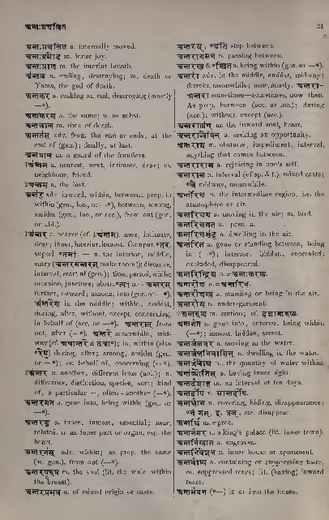
antár ·adv. inward, within, between; prep. in within (gen., loc., or --°), between, among, amidst (gen., loc., or acc.), from out (gen. or abl.).
Monier-Williams 1872 particle
Original text · English · particle
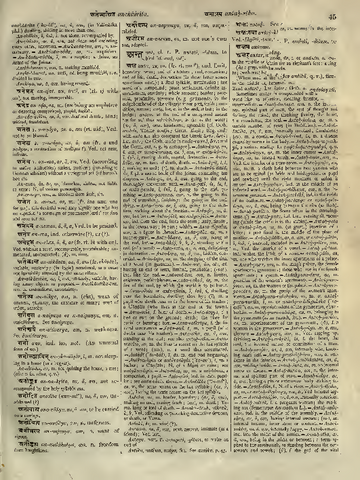
antar antar, ind. within, between, amongst, in the middle or interior; a particle of assent. (As a prep. with loc.) in the middle, in, between, in- to; (with acc.) between; (with gen.) in, in the middle. (When used at the end of a compound) in, into, in the middle of, between, out of the midst of [cf. Zend antarĕ; Lat. inter; Goth. undar]. Sometimes antar is compounded with a following word like an adjective, meaning interior, internal, intermediate.
Petersburger 1855 adverb · Word type unspecified
Original text · German · adverb
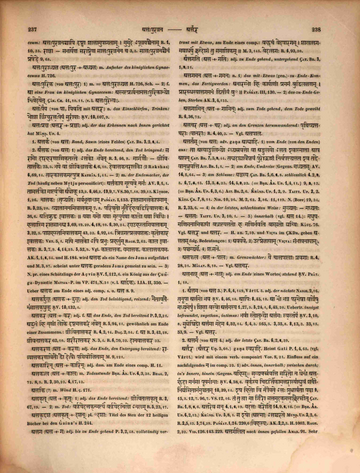
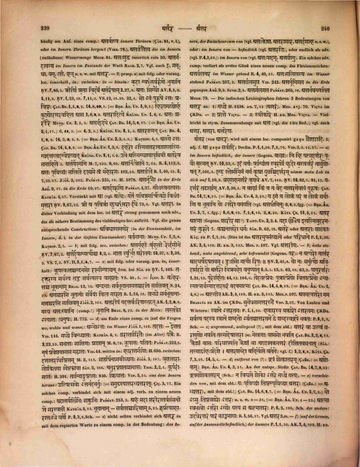
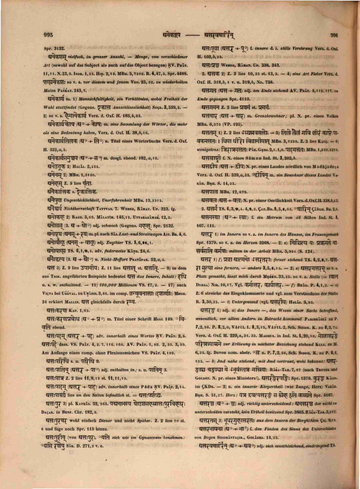
antár (ántar Uṇ. 5,60.) gaṇa svarādi. Heisst Gati P. 1,4,65. (vgl. Vārtt.) wird mit einem verb. componirt VOP. 8,21. Einfluss auf ein nachfolgendes na im comp. VOP. 8,22. 1〉 adv. innen, innerhalb; zwischen durch; inʼs Innere, hinein (Gegens. bahis): sa̱myaksràvanti sa̱rito̱ na dhenā̀ a̱ntarhṛ̱dā manàsā pū̱yamā̀nāḥ ṚV. 4,58,6. vṛkàsya ci̱dvartìkāma̱ntarā̱syā̀dyu̱vaṃ śacī̀bhirgrasi̱tāmàmuñcatam ṚV. 10,39,14. e̱ṣa hi̱to vi nī̀yate̱ 'ntaḥ śu̱bhrāvàtā pa̱thā ṚV. 9,15,3. ṚV. 9,12,7. ṚV. 9,96,7. VS. 12,16. taṃ tu̱ tvā mā̱ girau sa̱ntamudaka̱manta̱śchaitsīt ŚAT. BR. 1,8,1,6. antareva san ŚAT. BR. 4,1,1,19. yadantaḥ karoti ŚAT. BR. 14,9,1,16. (= BṚH. ĀR. UP. 6,2,13.) CHĀND. UP. 5,8,1. sa eṣo (ātmā) 'ntaścarate MUṆḌ. UP. 2,2,6. R. 2,5,13. R. 5,74,29. PAÑCAT. I, 24. PAÑCAT. I,220,6 (vihasya). AK. 2,2,3. H. 1003. RAGH. 2,32. VID. 126. VID. 143. VID. 229. antargalita nach innen gefallen AMAR. 91. Sehr häufig am Anf. eines comp.: antarvāṣpa innere Thränen (ŚĀK. 81, v. l.), oder im Innern Thränen bergend (VIKR. 78.), antarjalaugha die im Innern (enthaltene) Wassermenge MEGH. 61. antaḥśuddha innerlich rein MEGH. 50. antarmadāvastha im Innern im Zustande der Wuth RAGH. 2,7. Vgl. auch i, gam, dhā, yam, lī, han u. s. w. mit antar. — 2〉 praep. a〉 mit folg. oder vorang. loc. innerhalb, in; zwischen; in — hinein: ka̱dā nva1̱̀ntarvarùṇe bhuvāni ṚV. 7,86,2. trīṇì vra̱tā vi̱dathè a̱ntarèṣām ṚV. 2,27,8. a̱ntaḥ sindhaù AV. 6,1,2. AV. 5,11,8. ṚV. 1,23,19. ṚV. 7,11,3. VS. 12,15. VS. 12,39. VS. 32,4. so 'yaṃ puruṣe 'ntaḥ praviṣṭaḥ ŚAT. BR. 1,1,3,2. ŚAT. BR. 14,8,10,1. (= BṚH. ĀR. UP. 5,9,1.) hiraṇmayyorha kuśyorantaravahita āsa ŚAT. BR. 3,6,2,9. antarāditye CHĀND. UP. 1,6,6. antaḥ śarīre MUṆḌ. UP. 3,1,5. antarhṛdaye ŚAT. BR. 14,5,1,17. (= BṚH. ĀR. UP. 2,1,17.) ŚAT. BR. 14,6,11,3. (= BṚH. ĀR. UP. 4,2,3.) CHĀND. UP. 8,1,3. antarātman ŚAT. BR. 4,1,2,2. ŚAT. BR. 14,5,3,6. ŚAT. BR. 14,5,3,8. (= BṚH. ĀR. UP. 2,3,4. BṚH. ĀR. UP. 2,3,5.) KAṬHOP. 4,1. āsye 'ntaḥ ŚAT. BR. 14,4,1,9. = BṚH. ĀR. UP. 1,3,8. daharo 'sminnantarākāśastasminyadantastadanveṣṭavyam CHĀND. UP. 8,1,1. CHĀND. UP. 8,1,2. ubhe asmindyāvāpṛthivī antareva samāhite 3. antarveśmani M. 7,223. M. 8,69. antarniveśane M. 7,62. R. 6,112,9. antaḥ pṛthivyāṃ salile dṛśyase tvaṃ mahoragaḥ R. 6,102,23. antarjale R. 1,40,13. R. 5,7,39. R. 5,7,47. YĀJÑ. 3,302. PAÑCAT. 255,18. H. 1078. antarbhūmau in der Erde ARJ. 9,17. in die Erde ARJ. 10,27. antardāruṇi PAÑCAT. I, 37. nītastamasyantaḥ KATHĀS. 4,57. Verstärkt mit ā (vgl. adhi): yattè pavitra̱marcìṣyagne̱ vitàtama̱ntarā ṚV. 9,67,23. trī ṣa pa̱vitrā̀ hṛ̱dya1̱̀ntarā dàdhe ṚV. 9,73,8. Vgl. antarā. In dieser Verbindung mit dem loc. ist antar streng genommen noch adv., das als nähere Bestimmung des vieldeutigen loc. auftritt. Vgl. die genau entsprechende Construction: avidyāyāmantare (in der Unwissenheit, im Innern, d. i. in der tiefsten Unwissenheit) vartamānāḥ MUṆḌ. UP. 1,2,8. KAṬHOP. 2,5. — b〉 mit folg. acc. zwischen: a̱ntarma̱hī bṛ̀ha̱tī rodàsī̱me ṚV. 7,87,2. a̱ntarde̱vānmartyā̀ṃśca ṚV. 8,2,4. mānta sthùrno̱ arā̀tayaḥ ṚV. 10,57,1. ṚV. 3,38,3. VS. 7,5. SV. II, 5,1,4,7. — c〉 mit folg. oder vorang. gen. in, innerhalb: kūpasyāntaścandramaso raśmīnpaśyan ITIH._bei_SĀY._zu_ṚV. 1,105. tadantarasya sarvasya tadu sarvasyāsya bāhyataḥ VS. 40,5. = ĪŚOP. 5. bahirantaśca bhūtānām BHAG. 13,15. candramāḥ sarvabhūtānāmantaścarati sākṣivat N. 24,29. antaścarasi bhūtānāṃ sarveṣāṃ kila māruta R. 1,34,18. tvamagne sarvabhūtānāmantaścarasi sākṣivat YĀJÑ. 2,104. antarīpaṃ yadantarvāriṇastaṭam AK. 1,2,3,8. yasya antaḥsthāni (comp. !) bhūtāni BHAG. 8,22. in der Mitte: lastako 'syāntaḥ (dhanuṣaḥ) H. 775. — d〉 am Ende eines comp. in (auf die Fragen wo, wohin und wann): ambho'ntaḥ im Wasser YĀJÑ. 1,149. tadantaḥ — aikṣata VID. 144. madhye vindhyāntaḥ KATHĀS. 4,1. jarāntarjaritaiḥ (im Alter) patraiḥ R. 3,22,25. sabhāntaḥ sākṣiṇaḥ prāptān M. 8,79. kūpāntaḥ patitaḥ PAÑCAT. 222,2. nṛpaṃ praveśayāmāsa maṭhāntaḥ VID. 44. mitten in: hārāntarmaṇiḥ H. 650. zwischen: dantāntaradhiṣṭhitam M. 5,141. saptarṣināgavīthyantaḥ YĀJÑ. 3,187. vṛkṣāntarāloketayā jyotsnayā SĀV. 5,106. caturaṣṭaśatagrāmāntaḥ TRIK. 2,2,4. kūrparāṃsāntaḥ H. 591. tarjanyaṅguṣṭhāntaḥ H. 840. kriyāntaḥ VOP. 5,34. aus dem Innern heraus: utpitsavo 'ntarnadabhartuḥ (= samudrasyāntarabhyantarāt) ŚIŚ. 3,77. Ein solches comp. verbindet sich mit einem adj. verb. zu einem neuen comp.: ghaṭāntarvartibhiḥ saktubhiḥ PAÑCAT. 253,2. ahaṃ sadā śarīrāntarvāsinī te sarasvatī KATHĀS. 4,11. bhūtānām — sarvāntaścāriṇām KATHĀS. 5,25. charpratyāhārāntaḥsthe varṇe P. 8,3,8, Sch. — e〉 nicht selten verbindet sich antar in mit dem regierten Worte zu einem comp. in der Bedeutung: das Innere, der Zwischenraum von (vgl. antaḥkośa, antarāgāra, antardaśāha u. s. w.), oder: im Innern von — befindlich (vgl. antaragni), oder endlich als adv. (vgl. P. 4,3,60.): im Innern von (vgl. antaḥpādam, antarjānu). Ein solches adv. comp. verliert als erstes Glied eines neuen comp. das Flexionszeichen: antarjalacara im Wasser gehend R. 4,40,31. antaḥsalilastha im Wasser stehend PAÑCAT. 257,3. antarjalasupta VID. 242. antarbhūmigata in die Erde gegangen ARJ. 9,8. SUND. 2,8. antargalagata PAÑCAT. 265,10. antarbhavanapatita MEGH. 79. — Die indischen Lexicographen führen 3 Bedeutungen von antar an: 1〉 madhye H. 1538. H. an. 7,42 (antaraṃ). MED. avy. 70. VIŚVA_im_ŚKDR. — 2〉 prānte VIŚVA. — 3〉 svīkāre H. an. MED. VIŚVA. — Vielleicht in etym. Zusammenhange mit anta (vgl. die 14te Bed.); vgl. auch antara, antarā, antareṇa.
Original text · German · Word type unspecified
antar 1〉 im Innern so v. a. im Innern des Hauses, im Frauengemach Spr. 1579. so v. a. im Herzen Spr. 3268. — 2〉c〉 niścitya yaḥ prakramate nā- ntarvasati karmaṇaḥ mitten in der Arbeit MBH. 5,994 (S. 124).
Böhtlingk 1879 adverb · particle
Original text · German · adverb · particle
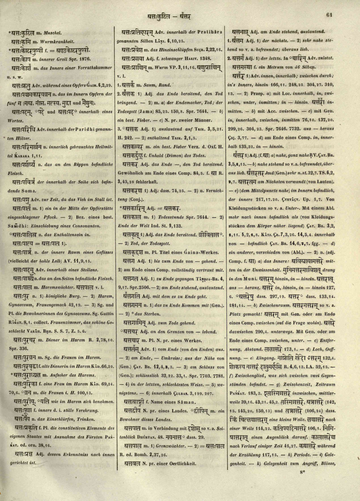
antár — 1〉 Adv. innen, innerhalb; zwischen durch; inʼs Innere, hinein Chr. 166,11. Chr. 248,26. Chr. 304,27. Chr. 310,13. — 2〉 Praep. — a〉 mit Loc. innerhalb, in, zwischen, unter, inmitten; in — hinein antárā́ inmitten. — b〉 mit Acc. zwischen. — c〉 mit Gen. in, innerhalb, zwischen, inmitten Chr. 76,10. Chr. 137,20. Chr. 299,26. Chr. 304,23. Spr. 7646. Spr. 7732. aus — heraus ŚIŚ. 3,77. — d〉 am Ende eines Comp. in, innerhalb Chr. 135,32. in — hinein.
Cappeller 1887 adverb
Original text · German · adverb
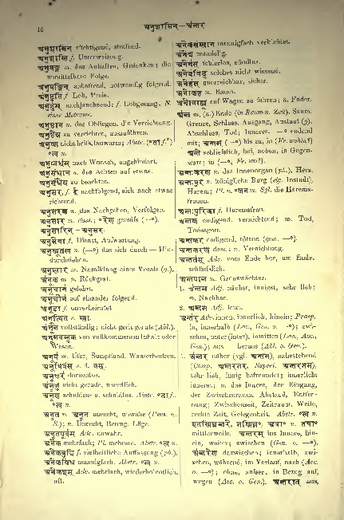
antár Adv. innen, innerlich, hinein; Praep. in, innerhalb (Loc., Gen. o. —˚; zwischen, unter (inten)inmitten (Loc., Acc., Gen.) aus — heraus (Abl. o. Gen).
Burnouf 1866 Preposition
Original text · French · Preposition
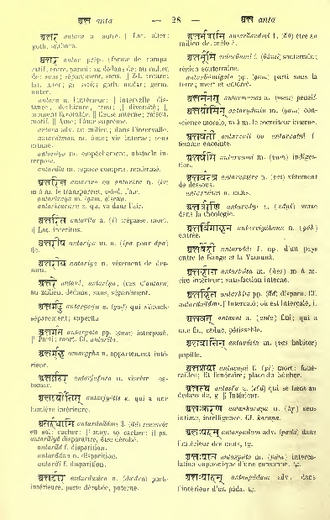
antar antar prép. (forme de comparatif) entre, parmi; au dedans de; au milieu de; sous; séparément, sans. Zd. antare; lat. inter; gr. ἐντός; goth. undar; germ. unter. antara n. l'intérieur; intervalle; distance, déchirure, trou; diversité; moment favorable. Cause interne; raison, motif. Ame; l'âme suprême. antarā adv. au milieu; dans l'intervalle. antarātman m. âme; vie interne; sens intime. antarāya m. empêchement, obstacle interposé. antarāla m. espace compris, renfermé.
Derived words
Further derivatives (3)
Occurrences in source texts (74)
DYS 2 occurrences
GoS 4 occurrences
HP 18 occurrences
HP 1.17-1.32: Āsana 2 occurrences
Occurrences through derived words
HP 1.33-1.43: Siddhāsana 2 occurrences
Occurrences through derived words
4 more source pages
HP 4.9-4.11*4: Gaze and Lunar Nectar 1 occurrence
Occurrences through derived words
-
HP 4.11*3 Segment 17
HP 4.11*15-4.11*28: Space and Laya 4 occurrences
Direct occurrences
-
HP 4.11*21 Segment 1
-
HP 4.11*21 Segment 10
Occurrences through derived words
-
HP 4.11*15 Segment 11
-
HP 4.11*22 Segment 7
HTK 6 occurrences
HTK 10.6*2–9*1: Ujjāyī / Ujjāyikā and Sūryabheda 1 occurrence
Direct occurrences
-
HTK 10.7 Segment 18
HTK 10.21*2–23*1: Utkarṣa and Apakarṣa 1 occurrence
Occurrences through derived words
-
HTK 10.21*2 Segment 4
HTK 10.34*2–38*1: Asvaṅgaśṛṅkhalā and Kumbhāntaraśṛṅkhalā 2 occurrences
Occurrences through derived words
-
HTK 10.38 Segment 7
-
HTK 10.38*1 Segment 4
HTK 10.44–46*1: Ekameru, Dvimeru and Trimeru 1 occurrence
Occurrences through derived words
-
HTK 10.44 Segment 2
IVU 1 occurrence
MandUp 3 occurrences
PJH 1 occurrence
PYS 7 occurrences
SiSa 11 occurrences
SiSa 2.13-2.20: Suṣumṇā und Citrā 1 occurrence
Occurrences through derived words
-
SiSa 2.13 Segment 7
SiSa 4.1-4.8: Yonimudrā-Kreislauf 1 occurrence
Occurrences through derived words
-
SiSa 4.1 Segment 11
4 more source pages
SiSa 5.94-5.101: Mūlādhāra-Siddhis 1 occurrence
Occurrences through derived words
-
SiSa 5.97 Segment 2
SiSa 5.223-5.233: Praxis im Leben 1 occurrence
Occurrences through derived words
-
SiSa 5.227 Segment 8
SiSa 5.253-5.260: Haushalter-Abschluss 2 occurrences
Occurrences through derived words
-
SiSa 5.258 Segment 5
-
SiSa 5.260 Segment 10
SS 3 occurrences
SVU 4 occurrences
SVU 3.13-3.18: In the Heart and in the World 1 occurrence
Occurrences through derived words
-
SVU 3.13 Segment 4
Continue with AYI Free
Image source: AYI archive.