

anu अनु – afterward; following; along; throughout
adverb · particle · previx · Preposition · substantive masculine · Word type unspecified
Dictionary sources
AYI dictionary particle · previx
particle
afterward; following; along; throughout
previx
after; along; following
Cappeller 1891 adverb · substantive masculine
Original text · English · adverb
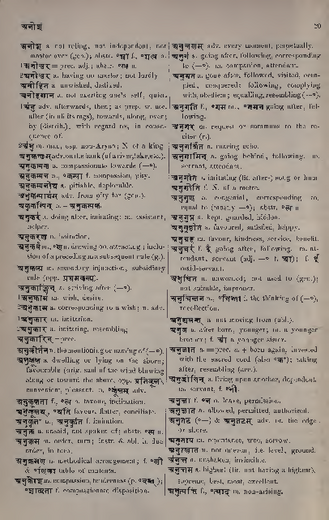
ánu1 ·adv. afterwards, then; as prep. w. acc. after (in all its mgs), towards, along, over; by (distrib.), with regard to, in consequence of.
Original text · English · substantive masculine
ánu2 ·m. man, esp. non-Aryan; N. of a king.
Monier-Williams 1872 particle · substantive masculine · Word type unspecified
Original text · English · particle
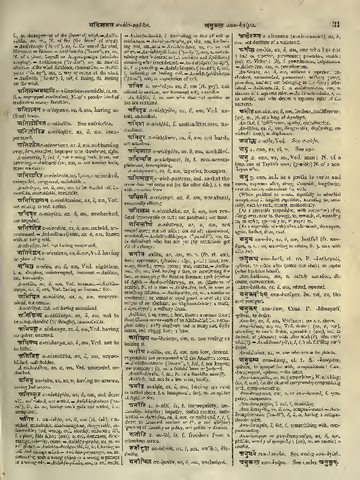
anu 3 . anu, ind. as a prefix to verbs and nouns, expresses after, along, alongside, lengthwise, near to, under, subordinate to, with. (When prefixed to nouns, especially in adverbial compounds) it implies repetition, according to, seve- rally, each by each, orderly, methodically. (As a separable preposition, with accusative) after, along, over, near to, through, to, towards, at, according to, in order, agreeably to, in regard to. (As a separable adverb) after, afterwards, thereupon, again, further, then, next.
Original text · English · substantive masculine
anu 2 . anu, us, m., Ved. man; N. of a king, one of Yayāti's sons; (possibly) N. of a non- Āryan tribe.
Original text · English · Word type unspecified
anu 1 . anu, us, vī, u. See aṇu.
Petersburger 1855 adverb · substantive masculine · Word type unspecified
Original text · German · adverb
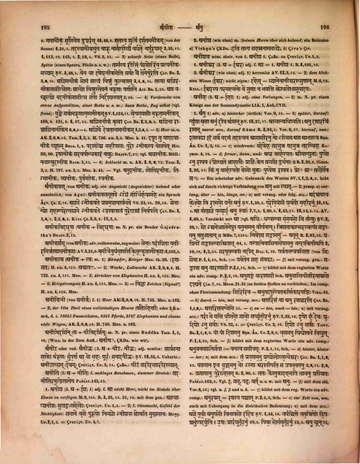
1. ánu 1〉 adv. a〉 hinterher (örtlich) VOP. 9,18. — b〉 später, darauf: nyùptā a̱kṣā anù dī̱va ā̀san ṚV. 10,27,17. asmānbadhiṣyati . anu dāśarathiṃ rāmam zuerst uns, darauf Rāma R. 2,84,4. VOP. 8,37. hierauf, nun: etāvadvā idaṃ sarvaṃ yadannaṃ tadātmana āgāsīranu no 'sminna anna ābhajasva BṚH. ĀR. UP. 1,3,18. — c〉 wiederum: yadeveha tadamutra yadamutra tadanviha KAṬHOP. 4,10. — d〉 ferner, dann, und: adya bārhaspataḥ śrīmānyuktaḥ puṣyo 'nu rāghava . procyate brāhmaṇaiḥ prājñaiḥ kena tvamasi durmanāḥ .. R. 2,26,9. (GORR. 2,26,11: kiṃ nu bārhaspato yogo yuktaḥ puṣyeṇa rāghava . pro˚ brā˚ tajjñairyena tva˚). — Ein scheinbar adv. Gebrauch des Wortes SV. I, 1,2,4,2. hebt sich auf durch richtige Verbindung von anu mit syāt. — 2〉 praep. a〉 entlang, über — hin, längs, an; α〉 mit vorang. oder folg. acc.: adṛ̀śramasya ke̱tavo̱ vi ra̱śmayo̱ janā̱m̐ anù ṚV. 1,50,3. pa̱re̱yi̱vāṃsàṃ pra̱vatò ma̱hīranù ṚV. 10,14,1. ā yā̀hyagne pa̱thyā̱3̱̀ anu̱ svāḥ ṚV. 7,7,2. ṚV. 1,80,8. ṚV. 8,43,21. ṚV. 10,14,2. ṚV. 10,14,14. AV. 6,69,2. Verstärkt mit ā (vgl. adhi): dhanvānvā mṛ̀ga̱yaso̱ vi tàsthuḥ ṚV. 2,38,7. so 'śvamedhaśateneṣṭvā yamunāmanu vīryavān . triśatāśvānsarasvatyāṃ gaṅgāmanu catuḥśatān .. MBH. 7,2384. niveśya gaṅgāmanu — camūm R. 2,83,26. dhvajinīṃ gaṅgāmanvāśritām R. 2,84,1. pampānivāsināmeṣāmanu mandākinīmapi R. 3,10,18. R. 6,3,31. sarayūmanvayāṃ nadīm DAŚ. 1,19. parvatamanvavasitā (von si) senā P. 1,4,85, Sch. (= parvatena saha saṃbaddhā). — β〉 mit vorang. gen.: gaṅgāyā anu vārāṇasī P. 2,1,16, Sch. — γ〉 bildet mit dem regierten Worte ein adv. comp. P. 2,1,16. anugaṅgaṃ vārāṇasī Sch. anumālinītīramāśramo dṛśyate ŚĀK. 7,10. MEGH. 21. MEGH. 51 (an beiden Stellen zu verbinden). Im comp. ohne Flexionsendung: giririva — anutaṭapuṣpitakarṇikārayaṣṭiḥ VIKR. 44. — b〉 durch — hin, mit vorang. acc.: antarikṣaṃ vā anu rakṣaścarati ŚAT. BR. 1,1,2,4. antarikṣamanvemi ŚAT. BR. 1,1,2,22. — c〉 zu — hin, nach — hin; α〉 mit vorang. acc.: parā̀ me yanti dhī̱tayo̱ gāvo̱ gavyū̀tī̱ranù ṚV. 1,25,16. e̱ṣo hà de̱vaḥ pra̱diśo 'nu̱ sarvāḥ VS. 32,4. = ŚVETĀŚV. UP. 2,16. diśo 'nu sarvāḥ TAITT. BR. 3,1,1,6. yāṃ yāṃ diśamanu BṚH. ĀR. UP. 3,8,9. vṛkṣamanu vidyotate vidyut P. 1,4,90, Sch. — β〉 bildet mit dem regierten Worte ein adv. comp.: anuvanamaśanirgatā (= vanasya samīpam) P. 2,1,15, Sch. — d〉 hinter, hinter — her; α〉 mit dem acc.: ta̱ṃ praya̱ntama̱nu pra̱cyotosta̱syeśvaraḥ ŚAT. BR. 1,1,2,22. yajamāna eva juhūmanu yo 'smā arātīyati sa upabhṛtamanu ŚAT. BR. 3,2,11. ŚAT. BR. 5,2,2. jagāmānu purohitam R. 2,90,3. tataḥ kautukādahamapi tāvanu prasthitaḥ PAÑCAT. 165,5. Vgl. i, gam, pad, vart u. s. w. mit anu. — β〉 mit dem abl. VOP. 8,56; vgl. u. f,β und u. k. — γ〉 bildet mit dem reg. Worte ein adv. comp.: anuratham = rathasya paścāt P. 2,1,6, Sch. — e〉 zur Zeit von, um, auch mit Uebergang in die distributive Bedeutung; α〉 mit dem acc.: agne̱ pūrvā̱ anū̱ṣasò vibhāvaso dīdetha ṚV. 1,44,10. vayàścitte pata̱triṇò dvi̱paccatùṣpadarjuni . u̱ṣaḥ prārànnṛ̱tūm̐ranù ṚV. 1,49,3. pibā̱ somàmṛ̱tūm̐ranù ṚV. 1,15,5. anu̱ dyūn ṚV. 1,71,6. prakāśībhāvasyānuviṣṭambhamanu NIR. 12,1. — β〉 in distr. Bed. am Anfange eines adv. comp.; s. anukālam, anukṣaṇam, anudivasam, anvaham. — f〉 unmittelbar nach, nach, auf (zeitlich); α〉 mit dem acc.: pūrvā̱manu̱ prayàti̱mā dàde va̱strīnyu̱ktān ṚV. 1,126,5. i̱daṃ hyanvojàsā su̱taṃ rā̀dhānāṃ pate ṚV. 3,51,10. tāḥ kalpamānā anu manuṣyaviśaḥ kalpanta iti AIT. BR. 1,9. tadanu hierauf MEGH. 13. AMAR. 65. — β〉 mit dem gen.: anu tasyāparaṃ bhūtam — prāptam ARJ. 3,20. tasyānu (Calc. Ausg.: tato 'nu) damayantī ca vavande pitaram N. (BOPP) 25,2. — g〉 nach (in der Reihenfolge), mit dem acc.: tadanu darauf ŚRUT. 38. (BR. 39.) vṛkṣaṃ vṛkṣamanu ciñcati er begiesst einen Baum nach dem andern P. 1,4,90, Sch. mit dem Nebenbegriff der Unterordnung: anu hariṃ surāḥ = harerhīnāḥ P. 1,4,86, Sch. viṣṇumanvarcyate bhargaḥ VOPAD. 5,7. Im comp. s. anujyeṣṭha, anupūrva u. s. w. — h〉 gemäss, nach Art, entsprechend; mit dem acc.: anù sva̱dhām ṚV. 1,88,6. sva̱dhāmanù ṚV. 1,6,4. vaśā̱m̐ anù ṚV. 1,82,3. anù vra̱tam ṚV. 2,38,3. pañca̱ vyùṣṭī̱ranu̱ pañca̱ dohā̱ gāṃ pañcànāmnīmṛ̱tavo̱ anu̱ pañcà AV. 8,9,15. tānì bhrāta̱ranù vaḥ kṛ̱tvyemàsi ṚV. 1,161,3. ṚV. 1,52,14. ṚV. 10,11,3. ta̱deta̱syaivā̱nu mā̱trām ŚAT. BR. 1,1,3,2. ya evaitamanu bhavati yo vai tamanu bhāryāṃ bubhūrṣati BṚH. ĀR. UP. 1,3,18. tasya puruṣavidhatāmanvayaṃ puruṣavidhaḥ TAITT. UP. 2,2. śākalyasya saṃhitāmanu prāvarṣat P. 1,4,84, Sch. (hetubhūtasaṃhitājñānopalakṣitaṃ varṣaṇam). anu rājānāmāryāṃ ca kaikeyīṃ kāraya R. 2,58,16. sarvaṃ māmanu te VIKR. 110. — i〉 in Betreff von, in Bezug auf; mit dem acc.: eṣā brahmaṇamanu gāthā CHĀND. UP. 4,17,9. sādhurdevadatto mātaramanu P. 1,4,90, Sch. sādhurnipuṇo vā mātaramanu SIDDH. K._zu_P. 2,3,43. yadatra māmanu syāt was hiebei auf mich, auf meinen Theil, fallen sollte P. 1,4,90, Sch. — k〉 in Folge, wegen; mit dem abl.: samasto vata loko 'yaṃ bhajate kāraṇādanu . tvaṃ tu niṣkāraṇādeva prīyase varavarṇini .. R. 6,10,23. — Mehrere anu mit verschiedener Bedeutung erscheinen in dem Verse ṚV. 10,17,11: drapścàskanda pratha̱mām̐ anu̱ dyūni̱maṃ ca̱ yoni̱manu̱ yaśca̱ pūrvàḥ . sa̱mā̱naṃ yoni̱manù sa̱ṃcaràntaṃ dra̱psaṃ jùho̱myanù sa̱pta hotrā̀ḥ .. vgl. auch VS. 13,5. Eine Constr. mit dem gen. ṚV. 9,109,7. (= SV. I, 5,1. SV. I,5,10.) wird durch Herstellung von anupūrvyaḥ beseitigt. — Die indischen Grammatiker und Lexicogr. geben anu, das als indecl. im gaṇa cādi erscheint, folg. Bedeutungen: 1〉 aparabhāve NIR. 1,3. paścāt P. 2,1,6. AK. 3,4,32,9. (COL. 3,4,28,9). H. an. 7,30. MED. avy. 42.⫽print_change — 2〉 āyāme P. 2,1,16. H. an. MED. avy. 43. — 3〉 yatsamayā, saṃnidhau, samīpe P. 2,1,15. H. an. MED. — 4〉 vīpsāyām P. 1,4,90. VOP. 5,7. H. an. MED. — 5〉 lakṣaṇe, cihne P. 1,4,84. P. 1,4,90. VOP. H. an. MED. — 6〉 itthaṃbhūtākhyāne, itthaṃbhūte, itthaṃbhāve P. 1,4,90. VOP. H. an. MED. — 7〉 sādṛśye NIR. 1,3. AK. H. an. MED. avy. 42. yogyatāyām P. 2,1,6, Sch. 8〉 bhāge P. 1,4,90. VOP. H. an. MED. avy. 43. — 9〉 hīne P. 1,4,86. VOP. H. an. MED. avy. 42. — 10〉 tṛtīyārthe, sahārthe P. 1,4,85. VOP. H. an. MED. — 11〉 anukrame P. 2,1,6. MED. avy. 43. — Ueber den Accent eines comp. mit anu s. P. 6,2,189. P. 6,2,190. — Vgl. nu.
Original text · German · substantive masculine
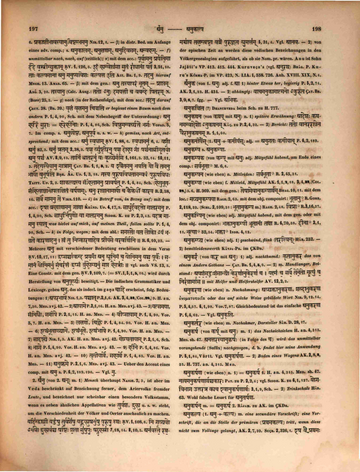
2. ánu (von 2. an) m. 1〉 Mensch überhaupt NAIGH. 2,3, ist aber im Veda beschränkt auf Bezeichnung ferner, dem Ariervolke fremder Leute, und bezeichnet nur scheinbar einen besondern Volksstamm, wenn es neben ähnlichen Appellativen wie turvaśa, druhyu u. s. w. steht, um die Verschiedenheit der Völker und Oerter anschaulich zu machen. yadìndrāgnī̱ yadùṣu tu̱rvaśèṣu yaddru̱hyuṣvanùṣu pū̱ruṣu̱ sthaḥ ṚV. 1,108,8. ni ga̱vyavo 'nàvo dru̱hyavàśca ṣa̱ṣṭiḥ śa̱tā sùṣupu̱ḥ ṣaṭsa̱hasrā̀ ṚV. 7,18,14. ṚV. 8,10,5. anàvaste̱ ratha̱maśvā̀ya takṣa̱ntvaṣṭā̱ vajràṃ puruhūta dyu̱mantàm ṚV. 5,31,4. Vgl. ānava. — 2〉 von der epischen Zeit an werden diese vedischen Bezeichnungen in den Völkergenealogien aufgeführt, als ob sie Nom. pr. wären. Anu ist Sohn Yayātiʼs VP. 413. VP. 415. VP. 444. Kuruvaśaʼs (vgl. anuratha) BHĀG. P. Kuruʼs KŪRMA-P._im_VP. 423, N. LIA. I, 558. LIA. I, Anh. XVIII. XIX, N. 726. LIA. I, Anh. XVIII. XIX, N. 4.
Original text · German · Word type unspecified
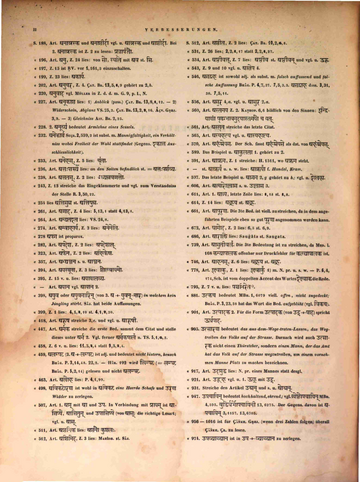
anu [vgl. [1:196]] Z. 24 lies: von so, syati mit ava st. si. (revision)
Original text · German · Word type unspecified
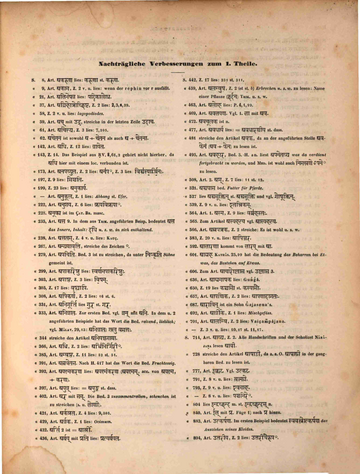
anu [vgl. [1:197]] Z. 15 ist ṚV. vor {1,161,3} einzuschalten. (revision)
Original text · German · Word type unspecified
ánu [vgl. [1:197]] Z. 9 lies: siñcati. (revision)
Original text · German · Word type unspecified
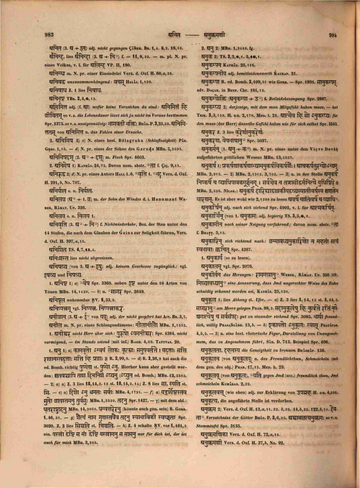
1. anu 1〉a〉 kāmavṛtto 'nvayaṃ lokaḥ kṛtsnaḥ samupavartate . yadvṛttāḥ santi rājānastadvṛttāḥ santi hi prajāḥ .. R. 2,99,9 — d〉 R. 2,26,9 hat auch die ed. Bomb. richtig puṣyeṇa st. puṣyo 'nu. Hierher kann aber gestellt werden: ṛtavaścāpi tathā dinaniśe 'pyanu ('pyuta ed. Bomb.) MBH. 12,2383. — 2〉a〉α〉 *Z. 3 lies 10,14,2. 12 st. 10,14,2. 14; Z. 8 lies sā, syati st. si. — c〉α〉 diśo 'nu bhramataḥ sarvāḥ MBH. 4,1721. — f〉α〉 yadurjyeṣṭhastava suto jātastamanu turvasuḥ MBH. 1,3520. tadanu Spr. 1427. — γ〉 mit dem abl.: dhṛtarāṣṭrādanu MBH. 14,2060. dhanvantareranu (könnte auch gen. sein) R. GORR. 1,46,31. — g〉 śaityaṃ nāma guṇastavaiva tadanu svābhāvikī svacchatā Spr. 3020. Z. 2 lies siñcati st. ciñcati. — h〉 Z. 4 schalte ṚV. vor ṚV. 1,161,3 ein. yastvāṃ dveṣṭi sa māṃ dveṣṭi yastvāmanu sa māmanu wer für dich ist, der ist auch für mich MBH. 3,505.
Original text · German · Word type unspecified
2. anu 2〉 MBH. 1,3488. fg.
Böhtlingk 1879 adverb · particle · substantive masculine
Original text · German · adverb · particle
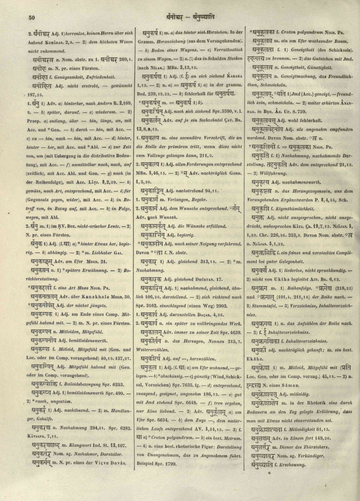
1. ánu — 1〉 Adv. — a〉 hinterher, nach Andern R. 2,109,9. — b〉 später, darauf. — c〉 wiederum. — 2〉 Praep. — a〉 entlang, über. — hin, längs, an, mit Acc. und *Gen. — b〉 durch — hin, mit Acc. — c〉 zu — hin, nach — hin, mit Acc. — d〉 hinter, hinter — her, mit Acc. und *Abl. — e〉 zur Zeit von, um (mit Uebergang in die distributive Bedeutung), mit Acc. — f〉 unmittelbar nach, nach, auf (zeitlich), mit Acc. Abl. und Gen. — g〉 nach (in der Reihenfolge), mit Acc. LĀṬY. 9,2,29. — h〉 gemäss, nach Art, entsprechend, mit Acc. — i〉 für (Gegensatz gegen, wider), mit Acc. — k〉 in Betreff von, in Bezug auf, mit Acc. — b〉 in Folge, wegen, mit Abl.
Original text · German · substantive masculine
2. ánu m. — 1〉 im ṚV. Bez. nicht-arischer Leute. — 2〉 N. pr. eines Fürsten.
Apte 1890 particle · substantive masculine
Original text · English · particle
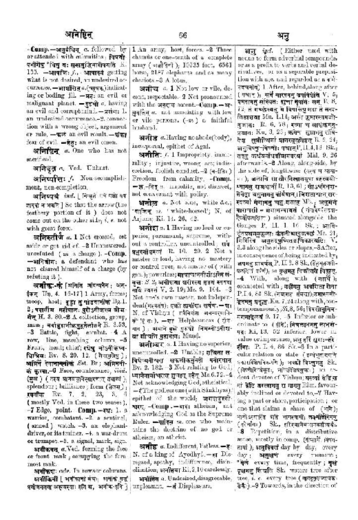
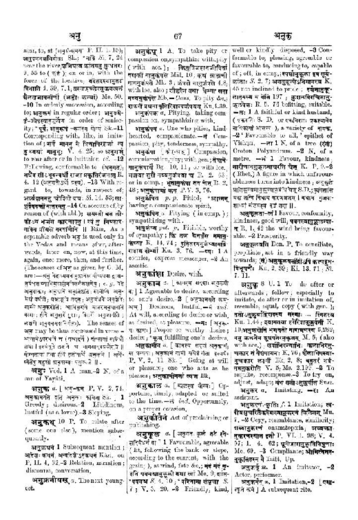
anu ind. (Either used with nouns to form adverbial compounds, or as a prefix to verbs and verbal derivatives, or as a separable preposition with acc. and regarded as a karmapravacanīya) 1 After, behind, along after (paścāt); sarve nāradamanu upaviśaṃti V. 5; pramadāmanu saṃsthitaḥ śucā nṛpatiḥ san R. 8. 72; taṃ gacchaṃtyanu ye vipattiṣu sadā te tatpratiṣṭhāśayā Mu. 1. 14; asau kumārastamajonujātaḥ R. 6. 78; ratyā ca sāśaṃkamanuprayātaḥ Ku. 3. 23; krameṇa suptāmanu saṃviveśa suptotthitāṃ prātaranūdatiṣṭhat R. 2. 24; anuviṣṇu = viṣṇoḥ paścāt P. II. 4. 18 Sk.; tadanu katheyarmādhavīyāmavasthāṃ Māl. 9. 26 afterwards. 2 Along, along-side, by the side of, lengthwise (yasya ca āyāmaḥ); jalāni sā tīranikhātayūpā vahatyayodhyāmanu rājadhānīṃ R. 13. 61; so' śvamedhaśateneṣṭvā yamunāmanu vīryavān . triśatāśvān sarasvatyāṃ gaṃgāmanu catuḥśatān Mb.; anugaṃgaṃ vārāṇasī = gaṃgāmanvāyataṃ ( gaṃgādairghyasadṛśadairghyopalakṣitā) situated alongside the Ganges P. II. 1. 16 Sk.; āvirbhūtaprathamamukulāḥ kaṃdalīścānukacchaṃ Me. 21; giririva anutaṭapuṣpitakarṇikārayaṣṭiḥ V. 3. 3 along the sides or slopes. 3 After, in consequence of, being indicated by; japamanu prāvarṣat P. II. 3. 8 Sk. ( hetubhūtajapopalakṣitaṃ varṣaṇaṃ); so vṛkṣamanu vidyotate vidyut. 4 With, along with (sahārthe); connected with; nadīmanu avasitā semā P. I. 4. 85 Sk. (nadyāsaha saṃbaddhā); umāstanodbhedamanu pravṛddhaḥ Ku. 7. 24 along with, contemporaneously; Śi. 8. 56; divasonumitramagamadvilayaṃ Śi. 9. 17. 5 Inferior or subordinate to (hīne); mitralābhamanu lābhasaṃpadaḥ Ki. 13. 52 inferior, lower in value or importance; anu hariṃ surāḥ = harerhīnāḥ P. I. 4. 86 Sk. 6 In a particular relation or state (itthaṃbhūtākhyāne prakāraviśeṣanirūpaṇe); bhakto viṣṇumanu Sk. (viṣṇoritthaṃbhūtaḥ, bhaktiviśeṣayuktaḥ) an ardent devotee of Viṣṇu; yastvāṃ dveṣṭi sa māṃ dveṣṭi yastvāmanu sa māmanu Rām. favourably inclined or devoted to. 7 Having a part or share, participation; or one that claims a share of (bhāge); bhāgo'syāsti iti bhāgasvāmī; lakṣmīrharimanu (harerbhāgaḥ) Sk., harisvāmikabhāgavatītyarthaḥ. 8 Repetition, in a distributive sense, mostly in comp. (vīpsārthe, viṣayatāyāṃ); anudivasaṃ day by day, every day; anukṣaṇaṃ every moment; ˚velaṃ every time, frequently; vṛkṣaṃ vṛkṣamanu siṃcati Sk. waters tree after tree, i. e. every tree (yāvadvṛkṣavyāpakaḥ sekaḥ). 9 Towards, in the direction of ([Page 0067-a]) near, to, at (anuryatsamayā P. II. 1. 15); anuvanamaśanirgataḥ Sk.; ˚nadi Śi. 7. 24 near the river; prajighāya kāṃtamanu mugdhataraḥ Śi. 9. 55 to (prati); on or in, with the force of the locative; yadetadasyānutaṭaṃ vibhāti Śi. 4. 39, Śi. 7. 1; tasmādgaccheranukanakhalaṃ śailarājāvatīrṇāṃ (jahnoḥ kanyāṃ) Me. 50. 10 In orderly succession, according to; anukramaṃ in regular order; anujyeṣṭhaṃ = jyeṣṭhasyānupūrvyeṇa in order of seniority; ˚pūrvaṃ; anurūpaṃ = rūpasya yogyaṃ Sk. 11 Corresponding with, like, in imitation of; sarvaṃ māmanu te priyāvirahajāṃ tva tu vyathāṃ mānubhūḥ V. 4. 25; so anugarj to roar after or in imitation of. 12 Following, conformable to (anugata); tathaiva so'bhūdanvartho rājā prakṛtiraṃjanāt R. 4. 12 (anugato'rtho yasya). 13 With regard to, towards, in respect of; ardhyadānamanu codito vacaḥ Śi. 14. 53; sādhurdevadatto mātaramanu. 14 On account of, by reason of (with abl.); samasto bata loko'yaṃ bhajate kāraṇādanu . tvaṃ tu niṣkāraṇādeva prīyase varavarṇini .. Rām. As a separable adverb anu is used only in the Vedas and means after, afterwards, later on, now, at this time, again, once more, then, and further. (The senses of anu as given by G. M. are: — anu vedādhyayanānuṣṭhānasāmīpyapaścādbhāvānubaṃdhasāmyābhimukhahīnavisargalakṣaṇeṣu; e. g. vede anuvākaḥ; anuṣṭhāne anutiṣṭhati; sāmīpye anumeghaṃ varṣati; paścādbhāve tadanu; anubaṃdhane anuśete; sāmye anukaroti; ābhimukhye mātaramanudhāvati vatsaḥ; hīne anuhariṃ surāḥ; visarge anujānīte; lakṣaṇe anuvanamaśanirgataḥ). The senses of anu may be thus expressed in verse: -āyāme'parabhāve ca (paścādarthe) vīpsāyāṃ sannidhau tathā . itthaṃbhūte lakṣaṇe ca bhāgasādṛśyayorapi .. yogyatāyāṃ tathā hīne tṛtīyārthe hyanukrame . artheṣveteṣu bahuśo hyanuśabdaḥ prayujyate ...
Original text · English · substantive masculine
anuḥ Ved. 1 A man. 2 N. of a son of Yayāti.
Cappeller 1887 adverb
Original text · German · adverb
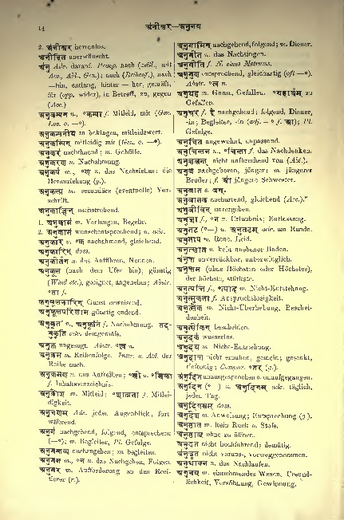
ánu Adv. darauf. Praep. nach (zeitl., mit Acc., Abl., Gen.); nach (Reihenf.) nach -hin, entlang, hinter — her, gemäßig, für (opp. wieder), in Betreff, zu, gegen (Acc.)
Burnouf 1866 Preposition · substantive masculine
Original text · French · Preposition
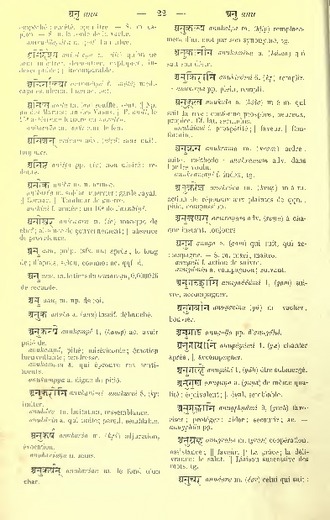
anu anu, prép. (sfx. nu) après; le long de; d'après, selon, comme; ac. qqf. d.
Original text · French · substantive masculine
anu anu, m. le tiers du trasareṇu, 0,000026 de seconde.
Original text · French · substantive masculine
anu anu, m. np. de roi.
Derived words
Occurrences in source texts (63)
DYS 2 occurrences
GoS 4 occurrences
HP 5 occurrences
HTK 7 occurrences
HTK 10.5*1–6*1: Sūryabhedana / Sūryabheda 3 occurrences
Direct occurrences
HTK 10.11*2–14*1: Bhastrikā: Breath like a bellows 1 occurrence
Direct occurrences
-
HTK 10.12 Segment 27
HTK 10.14*2–17*1: Śītalī and Antaraṅgaka-kumbha 1 occurrence
Direct occurrences
-
HTK 10.16 Segment 29
HTK 10.34*2–38*1: Asvaṅgaśṛṅkhalā and Kumbhāntaraśṛṅkhalā 1 occurrence
Direct occurrences
-
HTK 10.35 Segment 25
IVU 2 occurrences
PJH 1 occurrence
PJH 3-4: Perceiver and Perceived; Microcosm and Macrocosm 1 occurrence
Occurrences through derived words
-
PJH 3 Segment 3
PYS 15 occurrences
PYS 1.5–11: The Five Vṛtti 3 occurrences
Direct occurrences
-
PYS 1.11 Segment 1
Occurrences through derived words
PYS 2.3–9: Five Kleśas 2 occurrences
Occurrences through derived words
6 more source pages
PYS 3.9–12: Three Transformations of Citta 1 occurrence
Occurrences through derived words
-
PYS 3.9 Segment 9
PYS 3.13–14: Three Kinds of Transformation 1 occurrence
Occurrences through derived words
-
PYS 3.14 Segment 5
PYS 3.44–46: Mastery over the Elements 1 occurrence
Occurrences through derived words
-
PYS 3.44 Segment 4
PYS 3.47–48: Mastery over the Senses 1 occurrence
Occurrences through derived words
-
PYS 3.47 Segment 4
SiSa 11 occurrences
SS 1 occurrence
SVU 9 occurrences
Continue with AYI Free
Image source: AYI archive.