

kāla काल – deadly; black
adjective · substantive masculine · substantive neuter · Word type unspecified
Dictionary sources
AYI dictionary adjective · substantive masculine
Cappeller 1891 substantive masculine · Word type unspecified
Original text · English · Word type unspecified
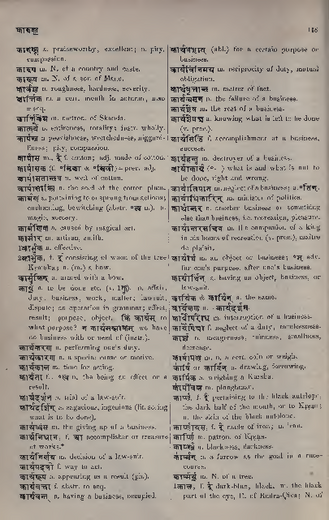
kāla ·f. ī1 dark-blue, black, m. the black part of the eye, E. of Rudra-Śiva; N. of sev. kings etc., also = kālasarpa q.v.; f. ī E. of Durga etc.
Original text · English · substantive masculine
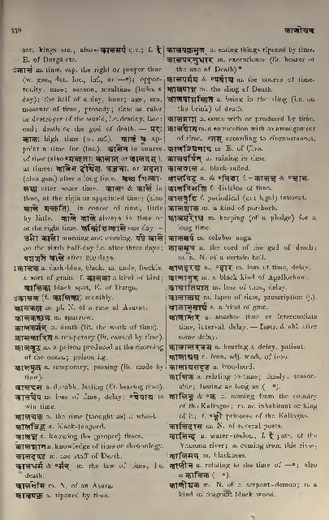
kālá2 ·m. time, esp. the right or proper time (w. gen., dat., loc., inf., or --°); opportunity, case; season, mealtime (twice a day); the half of a day, hour, age, era, measure of time, prosody; time as ruler or destroyer of the world, i.e. destiny, fate; end; death or the god of death. --paraḥ kālaḥ high time (w. inf.). kālaṃ kṛ appoint a time for (loc.). kālena in course of time (also °gacchatā; kālāt or kālatas), at times; kālena dīrgheṇa, bahunā, or mahatā (also gen.) after a long time. kasya citkālasya after some time. kāla° & kālé in time, at the right or appointed time; (also kāle gacchati) in course of time, little by little. kāle kāle always in time or at the right time. kasmiṃścitkāle one day. -- ubhau kālau morning and evening. ṣaṣṭhe kāle on the sixth half-day i.e. after three days; pancaśate kāle after 250 days.
Monier-Williams 1872 adjective · substantive masculine
Original text · English · adjective
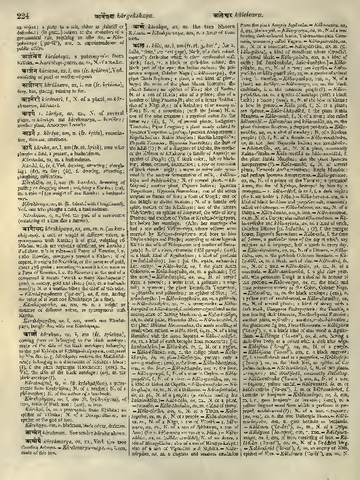
kāla 1 . kāla, as, ī, am (fr. rt. 3. kal?; for 2. kāla, ‘time,’ see next page), black, of a dark colour, especially dark-blue which is often confounded with black; (as), m. a black or dark-blue colour; the black part of the eye; the Indian cuckoo; the poi- sonous serpent, Coluber Naga (= kāla-sarpa); the plant Cassia Sophora; a plant, a red kind of plum- bago; the resin of the plant Shorea Robusta; the planet Saturn; an epithet of Śiva; also of Rudra; N. of a son of Hrada; also of a prince; also of a brother of king Prasena-jit; also of a future Buddha; also of a Nāga-rāja; of a Rakṣas; of an enemy of Śiva; N. of a mountain; (with the Jainas) N. of one of the nine treasures; a mystical name for the letter m; (ā), f., N. of several plants, Indigofera Tinctoria; Piper Longum; a plant nearly related to Ipomœa Turpethum, perhaps Ipomœa Atropurpurea; Nigella Indica; Rubia Munjista; Ruellia Longifolia; Physalis Flexuosa; Bignonia Suaveolens; the fruit of the Kālā (?); N. of a daughter of Dakṣa, the mother of the Kāleyas or Kālakeyas (a family of Asuras); an epithet of Durgā; (ī), f. black colour, ink or black- ing; abuse, censure, defamation; a row or succession of black clouds; night; a worm or animalcule gene- rated in the acetous fermentation of milk, = kṣīra- kīṭa and kṣāra-kīṭa; N. of several plants, = kā- lāñjanī; another plant, Cajanus Indicus; Ipomœa Turpethum; Bignonia Suaveolens; one of the seven tongues or flames of fire; a form of Durgā; one of the Mātṛs or divine mothers; N. of a female evil spirit, mother of the Kālakeyas; one of the sixteen Vidyādevīs; an epithet of Śatyavatī, the wife of king Śāntanu and mother of Vyāsa or Kṛṣṇa-dvaipāyana, but before her marriage. (After her marriage she had a son called Vicitra-vīrya, whose widows were married by Kṛṣṇa-dvaipāyana and bore to him Dhṛta-rāṣṭra and Pāṇḍu; according to other legends Kālī is the wife of Bhīma-sena and mother of Sarva- gata); N. of a river, otherwise kālā gaṅgā; (am), n. a black kind of Agallochum; a kind of perfume (= kakkolaka); iron; [cf. Gr. κηλίς, κελαινός Lat. caligo.]
Original text · English · substantive masculine
kāla 2 . kāla, as, m. (fr. rt. 3. kal), a fixed or right point of time, a space of time, time in general, (in the Ṛg-veda this word occurs only once, in the Brāhmaṇas oftener); the proper time or fit season for (with gen., dat., loc., pot., &c., e. g. kālaḥ pra- sthānasya or prasthānāya or prasthāne, time for departure; kriyā-kālaḥ, time for action; na ayaṃ kālo vilambitum, this is not the time to delay; kālo yad bhuñjīta bhavān, it is time for you to eat); the weather; time as leading to events, the causes of which are imperceptible to the mind of man; destiny, fate; time as destroying all things; death, time of death, often personified and repre- sented with the attributes of Yama, regent of the dead, or even identified with him, (hence kālam i or kālaṃ kṛ, to die; kāla-samāyukta, dead; kāla in this sense is frequently connected with antaka and mṛtyu, e. g. abhyadhāvata prajāḥ kāla ivāntakaḥ, he attacked the people like Time the destroyer, cf. kālāntaka below; kāla personified is also a Devarṣi in Indra's court, and a son of Dhruva); a period of time, time of the world; measure of time, prosody; a section, a part; deśa- kālau, the right place and the right time, place and time; kālaṃ kṛ, to appoint or fix a time; ubhau kālau, both times, sunrise and sunset; ṣaṣṭhe kāle 'hnaḥ, at the sixth hour of the day, at midday; ṣaṣṭhānna-kāla, one who eats only at the sixth meal-time, i. e. who passes five meals without eating and has no meal till the evening of the third day; or without anna, e. g. caturtha-kālam, at the fourth meal-time, i. e. at the evening of the second day; ṣaṣṭhe kāle, at the evening of the third day; ṛtu-kāla, the time of a woman's courses; gacchatā kālena, in the course of time, after some time; nitya-kālam, constantly, always; dīrgha-kālam, dur- ing a long time; dīrgheṇa kāleṇa, after a long time; kālena, in the course of time; dīrghasya kālasya, after a long time; kasyacit kālasya, after some time; kālāt or kālatas, in the course of time &c.; [cf. Goth. hveila; Mod. Germ. weile; Gr. καιρός, ὥρα (?); Lat. hora, calen-dœ: cf. also Gr. κήρ Hib. ceal, ‘death and everything terrible.’]
Petersburger 1855 adjective · substantive masculine · substantive neuter · Word type unspecified
Original text · German · adjective · substantive masculine · substantive neuter
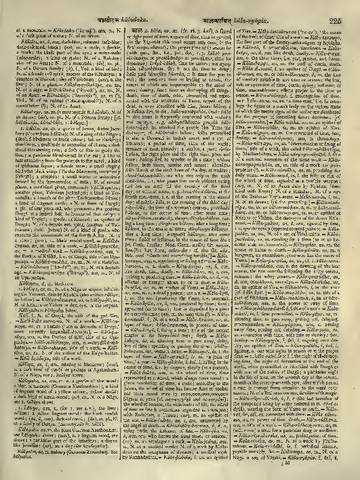
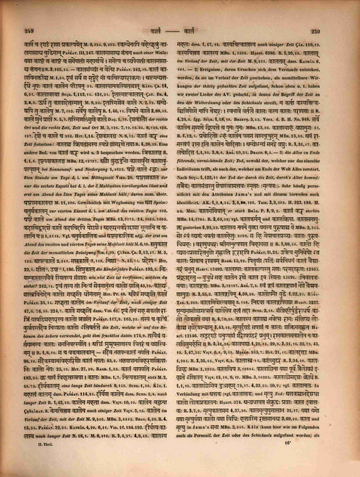
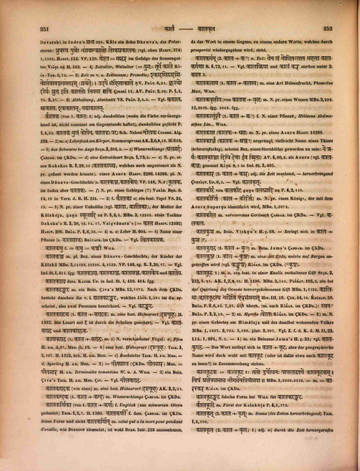
1. kāla 1〉 adj. f. ī P. 4,1,42. blauschwarz, schwarz; als m. die blauschwarze Farbe, Schwärze AK. 1,1,4,23. TRIK. 3,3,382. H. 1397. H. an. 2,478. MED. l. 7. P. 5,4,33. (rathe) kālāśvayukte R. 6,67,2. kālāḥ kāñcanasaṃnāhāstasmiṃstamasi rākṣasāḥ . samadṛśyanta R. 6,19,5. kālāni bhūtvā māṃsāni śīryante yasya dehinaḥ SUŚR. 1,299,19. kālajīmūta R. 3,55,13. kālamegha R. 4,10,26. R. 6,79,13. MBH. 1,7184. VET. 4,20. kā́labāla und kālabā́la ŚĀNT. 4,4. MBH. 1,1236. tasyāḥ — dīrdhaveṇī — dadṛśe svasitā snigdhā kālī vyālīva mūrdhani MBH. 3,16191. kālī strī pāṇḍurairdantaiḥ MBH. 16,57. timirābhyāhatāṃ kālīmaprakāśāṃ niśāmiva R. 2,114,2. pramadā R. 5,27,17. — 2〉 m. a〉 das Schwarze im Auge SUŚR. 2,336,20. Vgl. kālaka. — b〉 der indische Kuckuck RĀJAN._im_ŚKDR. — c〉 = kālasarpa VET. 16,13. — d〉 Cassia Sophora Lin. (s. kāsamarda). — e〉 eine Art Plumbago (raktacitraka). — f〉 das Harz der Shorea robusta (rāla) RĀJAN._im_ŚKDR. — g〉 der Planet Saturn (vgl. nīlavāsas) DĪPIKĀ_im_ŚKDR. — h〉 ein Bein. Śivaʼs H. an. H. ś. 45. MED.; vgl. kālakaṇṭha, mahākāla und kālī Durgā. = Rudra BHĀG. P. 3,12,12. — i〉 N. pr. eines Sohnes von Hrada HARIV. 189. eines Fürsten (kālayavana) BHĀG. P. 3,3,10. eines Bruders des Königs Prasenajit BURN. Intr. 173. eines künftigen Buddha Lot. de la b. l. 126. eines Nāgarāja VYUTP. 85. eines Rakṣas R. 6,69,12. eines Feindes von Śiva (s. kālāsuhṛd). — k〉 N. pr. eines Berges R. 4,44,21. — l〉 N. eines der 9 Schätze bei den Jaina H. 193, Sch. — m〉 myst. Bez. des Buchstabens m Ind. St. 2,316. — 3〉 f. kālā a〉 N. verschiedener Pflanzen: Indigofera tinctoria Lin. AK. 2,4,3,13. H. an. MED.; Piper longum Lin. AK. 2,4,3,15; eine der Ipomoea Turpethum nahe verwandte Pflanze, viell. Ipomoea atropurpurea Chois. AK. 2,4,3,27. H. an. MED. SUŚR. 1,131,19. SUŚR. 2,106,19. SUŚR. 2,528,16; Nigella indica Roxb. AK. 2,9,37; Rubia Munjista (mañjiṣṭhā, kālameṣikā) Roxb. H. an. (lies jiṅgyām). MED.; Ruellia longifolia (kulika) RATNAM._im_ŚKDR.; Physalis flexuosa Lin. (aśvagandhā) RĀJAN._im_ŚKDR.; Bignonia suaveolens Roxb. (pāṭalā) BHĀVAPR._im_ŚKDR. Nach dem gaṇa harītakyādi zu P. 4,3,167 ist kālā auch die Frucht der Kālā. — b〉 N. pr. einer Tochter des Dakṣa, der Mutter der Kāleya oder Kālakeya MBH. 1,2520. MBH. 1,2542. HARIV. 11521. HARIV. 11552. HARIV. 12465. PADMA-P._in_VP. 122, N. 19. Vgl. kālakā. — c〉 ein Bein. der Durgā AK. 1,1,1,32, Sch.; vgl. kālī. — 4〉 f. kālī a〉 = kālikā schwarze Farbe, Tinte H. an. MED. — b〉 Anschwärzung, üble Nachrede H. an. — c〉 Nacht RĀJAN._im_ŚKDR. — d〉 eine schwarz aufziehende Wolkenmasse H. an. HĀR. 71. — e〉 ein best. in Milch vorkommendes Thierchen, = kṣīrakīṭa H. an. = kṣārakīṭa (sic) MED. — f〉 N. verschiedener Pflanzen: α〉 = kālāñjanī; β〉 Cajanus indicus Spreng. (tuvarī); γ〉 Ipomoea Turpethum (trivṛt) RĀJAN._im_ŚKDR.; δ〉 Bignonia suaveolens Roxb. AK. 2,4,2,35, Sch. — g〉 N. einer der sieben Zungen Agniʼs JAṬĀDH._im_ŚKDR. MUṆḌ. UP. 1,2,4. GṚHYASAṂGR. 1,14. — h〉 eine Form der Durgā AK. 1,1,1,32. H. 203. H. an. MED. MBH. 4,195. HARIV. 10239. KUMĀRAS. 7,39. DEV. 9,27. itthaṃ cemau rajanidivasau dolayandvāvivākṣau kālaḥ kālyā bhuvanaphalake krīḍati prāṇiśāraiḥ BHARTṚ. 3,43. Hier wie bei kāla als Bein. von Śiva hat man mit dem Begriff der Schwärze wohl auch den der Alles zerstörenden Zeit vor Augen gehabt. Vgl. Ind. St. 1,286. Ind. St. 1,287. mahākālī und bhadrakālī. — i〉 N. einer der göttlichen Mütter H. an. MED. — k〉 N. pr. einer Unholdin (vgl. kālakā), der Mutter der Kālakeya, HARIV. 11552. — l〉 N. einer der 16 Vidyādevī H. 239. — m〉 Bein. der Satyavatī, der Gemahlin Śāntanuʼs und Mutter Kṛṣṇadvaipāyanaʼs TRIK. 2,8,10. LIA. I, 629, N. 1. MBH. 1,2209. MBH. 1,4244. BENF. Chr. 6,1. Mutter Vicitravīryaʼs, mit dessen Gemahlin Kṛṣṇadvaipāyana die drei Kinder Dhṛtarāṣṭra, Pāṇḍu und Vidura zeugt HARIV. 1825. fg. Gemahlin Bhīmasenaʼs und Mutter Sarvagataʼs BHĀG. P. 9,22,30. — n〉 mit oder ohne Beis. von gaṅgā N. eines Flusses LIA. I, 50. LIA. I,56. LIA. I,441. fg. — 4〉 n. a〉 eine dunkle Art Sandelholz (kālīyaka) ŚABDAC._im_ŚKDR. — b〉 ein best. Parfum (kakkolaka) RĀJAN._im_ŚKDR. — c〉 Eisen (vgl. kālāyasa) VĀCASP._bei_BHAR._zu_AK. ŚKDR.

Original text · German · substantive masculine
2. kālá m. 1〉 ein bestimmter oder richtiger Zeitpunkt; Zeit überh. AK. 1,1,3,1. AK. 3,4,26,196. TRIK. 1,1,103. H. 126. H. an. 2,478. MED. l. 7. Im ṚV. nur an einer Stelle: u̱ta pra̱hāmàti̱dīvyā̀ jayāti kṛ̱taṃ yacchva̱ghnī vìci̱notì kā̱le ṚV. 10,42,9. AV. 19,53 und 54 sind Lieder, welche von Macht und Wesen der Zeit handeln, deren Begriff an den der Weltordnung oder des Schicksals streift (vgl. unter 2.). Einigermaassen gebräuchlich wird das Wort (st. des alten ṛtu) erst in den BRĀHMAṆA: sa eṣa sviṣṭakṛtaḥ kālaḥ ŚAT. BR. 1,7,3,3. ŚAT. BR. 3,8,3,36. yadi kāle yadyanākāle 'thaivāśnanti ŚAT. BR. 2,4,2,4. juhoti kāla eva ŚAT. BR. 4,5,1,16. KĀTY. ŚR. 10,5,14. KĀTY. ŚR. 25,7,2. ŚVETĀŚV. UP. 4,15. M. 2,80. M. 3,105. M. 7,164. M. 7,204. N. 2,17. N. 25,1. R. 1,77,13. R. 2,40,30. R. 3,4,7. SUŚR. 1,124,3. PAÑCAT. I, 253. PAÑCAT. I,254. ŚĀK. 151. RAGH. 3,12. RAGH. 12,69. kāle kāle MBH. 1,1680. RAGH. 4,6. svakāle M. 4,93. prāpte kāle M. 9,307. kṣetre kālopapādite M. 36. kāloptāni vījāni M. 38. kālayuktaṃ vacaḥ R. 5,46,2. parjanyaḥ kālavarṣī MṚCCH. 178,10. PAÑCAT. 149,14. nainaṃ purā kālātprāṇo jahāti ŚAT. BR. 14,5,1,11 (vgl. AIT. BR. 8,25, wo āyuṣaḥ st. kālāt). kālameva pratīkṣeta M. 6,45. kālamanveṣayantau PAÑCAT. 182,24. kālavid R. 4,32,13. kālaṃ gacchati er gelangt zum Endpunkt (beim coitus) CHĀND. UP. 2,13,1. die zu Etwas bestimmte —, geeignete Zeit; die Ergänz. im gen., dat., loc., im comp. vorang., im inf. oder im potent. mit yad (P. 3,3,167. P. 3,3,168): saṃpratiṣṭhāmahe kālaḥ prasthānasya R. 2,56,2. tasya kālo 'yamāgataḥ dazu ist jetzt die Zeit gekommen VIŚV. 12,9. eṣa dvaidhībhāvasya kālaḥ PAÑCAT. 155,9. PAÑCAT. 143,12. VID. 241. nāyaṃ vaktavyasya kālaḥ PAÑCAT. 194,23. na rāma kālaḥ paridevanāya MBH. 3,10259. na kālo 'sti vilambane R. 6,8,45. dakṣiṇākāla KĀTY. ŚR. 17,2,21 (vgl. dakṣiṇānāṃ kāle ŚAT. BR. 7,2,2,21). karmakāla R. 1,65,34. kriyākāla SUŚR. 1,5,13. paṇakālamamanyata N. 7,8. VIKR. 32,15. VIKR. 64,18. nāyaṃ kālo vilambitum N. 20,11. DRAUP. 3,7. R. 6,93,23. kālo yadbhuñjīta bhavān P. 3,3,168, Sch. — kālamāsādya in Berücksichtigung der Zeitumstände: kālamāsādya kāryaṃ ca daṇḍaṃ rājā prakalpayet M. 8,324. M. 9,293. skandhenāpi vahecchatruṃ kālamāsādya buddhimān PAÑCAT. III, 247. kālamāsādya kaṃcana nach einer Weile: yathā kāṣṭhaṃ ca kāṣṭhaṃ ca sameyātāṃ mahārṇave . sametya ca vyapeyātāṃ kālamāsādya kaṃcana .. R. 2,105,24. — kālasaṃkhyāṃ na vedmi PAÑCAT. 242,19. kālaṃ kālavibhaktīśca M. 1,24. evaṃ sarvaṃ sa sṛṣṭvedaṃ māṃ cācintyaparākramaḥ . ātmanyantardadhe bhūyaḥ kālaṃ kālena pīḍayan M. 51. kālasyānavasthitatvāt KĀTY. ŚR. 18,6,31. kālāvasthā SUŚR. 1,113,14. SUŚR. 1,151,21. aitasmātkālāt ŚAT. BR. 4,2,4,5. ūrdhvaṃ tu kālādetasmāt M. 9,90. etasminneva kāle N. 2,12. anyeṣvapi tu kāleṣu M. 7,183. sarveṣu kāleṣu R. 1,46,11. viṣame kāle R. 2,88,15. kāle śubhe prāpte N. 5,1. tasminnatisukhe kāle DAŚ. 1,19. deśakālau der rechte Ort und die rechte Zeit, Zeit und Ort M. 3,126. M. 7,10. M. 7,16. M. 7,64. M. 8,126. M. 8,156. M. 8,157. deśe ca kāle ca M. 233. HIT. I, 14. deśakālajña N. 8,12. kālaṃ kar eine Zeit festsetzen: kālaśca kriyatāmasya svapne jāgaraṇe tathā R. 6,38,29. Eine andere Bed. von kālaṃ kar wird u. 3 besprochen werden. trikālajña R. 1,1,8. iṣṭapañcakālajña MBH. 12,12797. agnau juhvadubhau kālāvubhau kālāvupaspṛśan bei Sonnenauf — und Niedergang MBH. 1,4623. ṣaṣṭhe kāle 'hnaḥ zur 6ten Stunde am Tage d. i. um Mittagszeit VIKR. 20. ṣaṣṭhānnakāla der nur die sechste Esszeit hat d. i. der 5 Mahlzeiten vorübergehen lässt und erst am Abend des 3ten Tages seine Mahlzeit hält; davon nom. abstr. ṣaṣṭhānnakālatā M. 11,200. Gewöhnlich mit Weglassung von anna Speise: caturthakālam zur vierten Esszeit d. i. am Abend des zweiten Tages M. 109. ṣaṣṭhe kāle am Abend des dritten Tages MBH. 13,5175. MBH. 14,1663. MBH. 14,1665. kadāciddvādaśe kāle kadācidapi ṣoḍaśe . āhāramakarodrājā mūlāni ca phalāni ca .. MBH. 1,8118. Vgl. caturthakālika und aṣṭamakālika adjj. der erst am Abend des zweiten und vierten Tages seine Mahlzeit hält M. 6,19. ṛtukāla die Zeit der monatlichen Reinigung NIR. 1,19. ŚĀṄKH. ŚR. 3,13,47. M. 5,153. āpatkāle M. 2,241. mantrakāle M. 7,149. niśā˚ N. 15,14. pradoṣa˚ HIT. 22,1. śīta˚, uṣṇa˚ HIT. I, 186. śiśukāla die Kinderjahre PAÑCAT. 192,3. kiyānkālastavaivaṃ sthitasya saṃjātaḥ wie viel Zeit ist verflossen, seitdem du stehst? PAÑCAT. 242,14. evaṃ tasya tāṃ nityaṃ sevamānasya kālo yāti PAÑCAT. 45,10. kāvyaśāstravinodena kālo gacchati dhīmatām HIT. Pr. 48. athaivaṃ gacchati kāle PAÑCAT. 34,14. gacchatā kālena im Verlauf der Zeit, nach einiger Zeit PAÑCAT. 47,6. PAÑCAT. 76,10. PAÑCAT. 224,7. kāle gacchati dass. VID. 61. evaṃ tena saha sakalāṃ rātriṃ yāvadvigrahaparasya kālo vrajati PAÑCAT. 117,9. PAÑCAT. 163,22. tasya ca kṛṣiṃ kurvatastadaiva niṣphalaḥ kālo 'tivartate die Zeit, welche er auf das Bebauen des Ackers verwendet, geht ihm fruchtlos dahin PAÑCAT. 174,9. tasyaivaṃ vartamānasya kālaḥ samabhivartsyati . agniṃ śuśrūṣamāṇasya pitaraṃ ca yaśasvinam .. R. 1,8,10. sa ca vakabālakān — sadaiva bhakṣayankālaṃ nayati PAÑCAT. 98,10. sadaikasthānavihāriṇau kālaṃ nayataḥ PAÑCAT. 43,2. bhakṣaṇapānaviharaṇakriyābhiḥ kālo neyaḥ PAÑCAT. 25,10. HIT. 37,20. RAGH. 1,33. kālaṃ yāpayati PAÑCAT. 183,24. kva cāyaṃ vihṛtastvayā . kālaḥ MBH. 1,7. nityakālam stets M. 2,58. M. 2,73. dīrghakālam eine lange Zeit hindurch M. 8,145. SUND. 1,10. CĀT. 1. mahāntaṃ kālam dass. PAÑCAT. 114,24. dīrgheṇa kālena dass. SUND. 1,8. nach langer Zeit R. 1,45,40. kālena mahatā dass. VIŚV. 10,10. kālena bahunā ŚṚṄGĀRAT. 8. kenacittvatha kālena nach einiger Zeit VIŚV. 5,13. kālena im Verlauf der Zeit, mit der Zeit M. 9,246. MBH. 3,8843. BHAG. 4,38. R. 4,15,34. PAÑCAT. 32,24. KATHĀS. 4,20. KATHĀS. 6,21. VID. 16. VID. 184. VID. 193. dīrghasya kālasya nach langer Zeit N. 18,1. M. 8,216. R. 3,4,37. R. 4,8,49. kālasya mahataḥ dass. R. 1,17,12. kasyacitkālasya nach einiger Zeit ŚĀK. 110,15. kasyacittvatha kālasya MBH. 1,5299. HARIV. 6386. R. 1,26,25. kālāt im Verlauf der Zeit, mit der Zeit M. 8,251. kālatas dass. KATHĀS. 6,101. — 2〉 Ereignisse, deren Ursachen sich dem Verstande entziehen, werden, da sie im Verlauf der Zeit geschehen, als unmittelbare Wirkungen der thätig gedachten Zeit aufgefasst. Schon oben u. 1. haben wir zweier Lieder des AV. gedacht, in denen der Begriff der Zeit an den der Weltordnung oder des Schicksals streift. na kartā kasyacitkaścinniyoge nāpi ceśvaraḥ . svabhāve vartate kālaḥ kasya kālaḥ parāyaṇaḥ .. R. 4,24,5. fgg. SUŚR. 1,18,18. BHARTṚ. 3,43. Verz. d. B. H. No. 948. sarve kālena sṛjyante hriyante ca punaḥ punaḥ MBH. 13,56. kālasyāhaṃ vaśānugaḥ MBH. 13,51. R. 6,12,1. pracodito 'haṃ kālena pannaga tvāmacūcudam MBH. 13,50. ayaṃ rāmastvayaṃ rāma iti kālena coditāḥ . anyo 'nyaṃ samare jaghnuḥ R. 3,31,47. kālacodita R. 1,1,50. R. 3,8,8. ARJ. 10,31. DRAUP. 8,4. — 3〉 die Alles zu Ende führende, vernichtende Zeit; Tod, sowohl der, welcher nur das einzelne Individuum trifft, als auch der, welcher am Ende der Welt Alles zerstört. Nach SUŚR. 1,122,11 der Tod der durch die Zeit, durchʼs Alter kommt: tatraikaḥ kālasaṃjñastu śeṣāstvāgantavaḥ smṛtāḥ (mṛtyavaḥ). Sehr häufig personificirt mit den Attributen Yamaʼs und mit diesem bisweilen auch identificirt. AK. 1,1,1,54. AK. 3,4,26,196. TRIK. 3,3,382. H. 323. H. 184. H. an. MED. kālameyivān er starb BHĀG. P. 9,9,2. kālaṃ kar sterben MBH. 14,1784. R. 2,64,52; vgl. kālakarman und kālakriyā. kālasamāyukta gestorben R. 6,93,23. kālasya nayane yuktā yamasya puruṣāśca ye MBH. 2,343. so 'yaṃ vyaktaṃ bhavatāṃ kālahetuḥ MBH. 2,2096. sa hi meghācalaprakhyaḥ kālaḥ puruṣavigrahaḥ . varāyudhadharaḥ śrīmānutpapāta vihāyasā .. R. 5,89,45. kālo hi vyasanaprasāritabhujo gṛhṇāti dūrādapi PAÑCAT. II, 21. upetya muniveṣo 'tha kālaḥ provāca rāghavam RAGH. 15,92. pitṝṇāṃ (patiṃ) sarvanidhanaṃ kālaṃ vaiśvānaraṃ prabhum HARIV. 12492. kālāyāḥ kālakalpastu gaṇaḥ paramadāruṇaḥ HARIV. 12465. prahrādastu — yuyudhe saha kālena raṇe kāla iva sthitaḥ HARIV. 13191. (nivātakavacāḥ) kālarūpāḥ MBH. 3,12107. ARJ. 7,5. svaṃ rūpaṃ kālarūpābhaṃ bheje vaiśravaṇānujaḥ R. 3,55,3. kālarūpin R. 4,59,20. kālopamau yuddhe R. 1,22,24. RĀJA-TAR. 1,289. kālamivolvaṇam RĀJA-TAR. 5,148. nidrayā kālarūpiṇyā HARIV. 3237. śūnyamāsījjagatsarvaṃ kāleneva hataṃ tadā SUND. 2,18. saṃjihīrṣurdurādharṣaṃ kālo lokakṣaye yathā R. 6,70,35. kālasya kālaśca bhavetsa rāmaḥ saṃkṣipya lokāṃśca sṛjedathānyān R. 3,43,42. mṛtyurdaṇḍaṃ sapāśaṃ ca kālaḥ śaktimagṛhṇata HARIV. 12146. khaḍgadaṇḍaṃ dhanuṣpāśaṃ śaraughajaṭharaṃ prabhum . rāmakālamakālena na kālayitumarhasi .. R. 3,41,26. kālapāśa R. 1,21,13. R. 1,29,9. R. 3,31,16. R. 3,35,73. R. 3,45,19. R. 5,47,35. VIŚV. 6,8. VIŚV. 9,18. MṚCCH. 163,7. HIT. 21,11. kāladaṇḍa MBH. 1,984. R. 3,35,43. VIŚV. 6,2. kālāstra VIŚV. 6,11. kālamudgara R. 3,54,10. kālajihva MBH. 1,2932. kālaviṣa MBH. 3,10884. kālāgninā yathā pūrvaṃ trailokyaṃ dahyate 'khilam VIŚV. 15,16. VIŚV. 6,19. MBH. 3,10393. kālāgnisadṛśaḥ krodhe R. 1,1,19. kālāgnimiva duḥsaham R. 74,17. R. 4,33,32. R. 50,9; vgl. kālānala. In Verbindung mit antaka (vgl. kālāntaka) und mṛtyu Tod: antakaścābhaddogdhā kālo lokaprakālanaḥ HARIV. 374. abhyadhāvata saṃkruddhaḥ prajāḥ kāla ivāntakaḥ R. 3,7,9. mṛtyukālasama R. 4,37,20. kālamṛtyuyugāntābha R. 3,31,17. yathā yamo yathā mṛtyuryathā kālo yathā vidhiḥ hantāsmi rākṣasānadya R. 3,69,20. kāla und mṛtyu in Yamaʼs sabhā MBH. 2,340. Kāla (kann hier wie im Folgenden auch als Personif. der Zeit oder des Schicksals aufgefasst werden) als Devarṣi in Indraʼs sabhā MBH. 2,295. Kāla ein Sohn Dhruvaʼs, des Polarsterns: dhruvasya putro bhagavānkālo lokaprakālanaḥ (vgl. oben HARIV. 374) MBH. 1,2585. HARIV. 154. VP. 120. kāla = māṭhara im Gefolge des Sonnengottes VYĀḌI_zu_H. 103. — 4〉 Zeitalter, Weltalter (= yuga): tūrye kāle RĀJA-TAR. 5,73. — 5〉 Zeit so v. a. Zeitmaass; Prosodie: ekādaśidvādaśinorlaghāvaṣṭamamakṣaram (plabate) . udaye saṃhitākāle ṚV. PRĀT. 8,21. hrasvo dīrghaḥ pluta iti kālato niyamā ṛci ŚIKṢĀ 11. AV. PRĀT. 2,39. P. 1,1,70. P. 1,2,27. — 6〉 Abtheilung, Abschnitt VS. PRĀT. 3,4. VS. PRĀT. 3,5. — Vgl. akāla, ākāla, ekakālam, yathākālam.
Original text · German · Word type unspecified
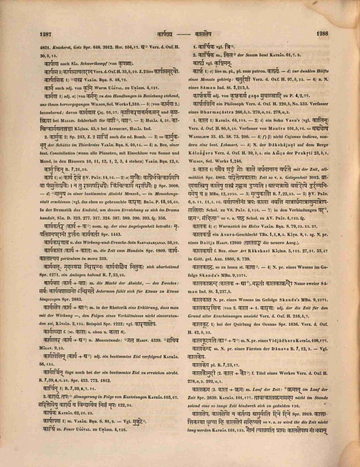
1. kāla 1〉 KATHĀS. 64,118. — 2〉i〉 ein Sohn Vasuʼs (vgl. kālin) Verz. d. Oxf. H. 80,b,40. Verfasser von Mantra Verz. d. Oxf. H. 101,b,16. = aśvaghoṣa WASSILJEW 35. WASSILJEW 45. WASSILJEW 58. WASSILJEW 75. WASSILJEW 200. — 4〉f〉β〉 nicht Cajanus indicus, sondern eine best. Lehmart. — h〉 N. der Dākṣāyaṇī auf dem Berge Kālañjara Verz. d. Oxf. H. 39,b,4. ein Aṃśa der Prakṛti Verz. d. Oxf. H. 23,b,1. WILSON, Sel. Works 1,246.
Original text · German · Word type unspecified
2. kāla 1〉 yathaiva śṛṅgaṃ goḥ kāle vardhamānasya vardhate mit der Zeit, allmählich Spr. 4802. paritoṣakālāḥ Zeit so v. a. Gelegenheit Spr. 3012. brāhmaṇastriṣu kāleṣu śastraṃ gṛhṇanna duṣyati . ātmatrāṇe varṇadoṣe durdamyaniyameṣu ca .. MBH. 12,2950. — 3〉 mṛtyukālau R. 7,22,22. — 5〉 ṚV. PRĀT. 6,9. ṚV. PRĀT. 6,11. ṚV. PRĀT. 11,1. ṚV. PRĀT. 11,16. varṇāpattīnāṃ trayaḥ kālā bhavanti mātrārdhamātrāṇumātropalakṣitāḥ Schol. zu VS. PRĀT. 4,146. — 7〉 in den Verbindungen pada˚, krama˚, saṃhitā˚ so v. a. pāṭha Schol. zu AV. PRĀT. 4,123. fg.
Original text · German · Word type unspecified
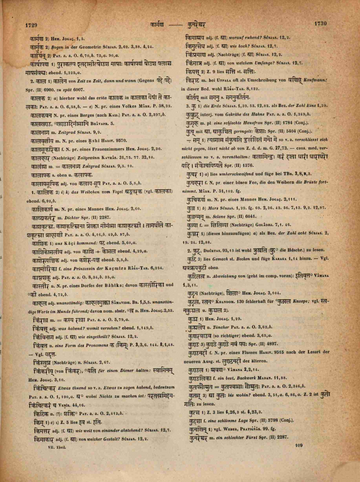
2. kāla 1〉 kālena von Zeit zu Zeit, dann und wann (Gegens. pade pade) Spr. (II) 6900. zu spät Spr. (II) 6007.
Böhtlingk 1879 adjective · substantive masculine · substantive neuter · Word type unspecified
Original text · German · adjective · substantive masculine · substantive neuter
1. kāla — 1〉 Adj. (f. ī) blauschwarz, schwarz. — 2〉 m. — a〉 das Schwarze im Auge. — b〉 *der indische Kuckuck. — c〉 Coluber naga. — d〉 *Cassia sophera. — e〉 *ein best. Strauch (raktacitraka). — f〉 *das Harz der Shorea robusta. — g〉 der Planet Saturn. — h〉 Bein. Rudra-Śivaʼs. — i〉 mystische Bez. des Lautes m. — k〉 N. pr. — α〉 verschiedener Männer, insbes. Fürsten. — β〉 eines zukünftigen Buddha. — γ〉 eines Daitya. — δ〉 eines Rakṣas. — ε〉 *eines Schlangendämons. — ζ〉 eines Berges. KĀRAṆḌ. 91,13. — η〉 *eines best. Schatzes bei den Jaina. — 3〉 f. ā — a〉 wohl Ipomoea atropurpurea. — b〉 *Indigofera tinctoria. — c〉 *Piper longum. — d〉 *Nigella indica. — e〉 *Rubia munjista. — f〉 *Physalis flexuosa. — g〉 *Bignonia suaveolens. — h〉 eine best. Śakti HEMĀDRI 1,611,5. — i〉 *Bein. der Durgā. — k〉 N. pr. einer Tochter Dakṣaʼs. — 4〉 f. ī — a〉 *schwarze Farbe, Tinte. — b〉 *Anschwärzung, üble Nachrede. — c〉 *Nacht. — d〉 *eine schwarz aufziehende Wolkenmasse. — e〉 *ein best. Insect. — f〉 *ein best. Strauch (kālāñjanī). — g〉 *Ipomoea turpethum. — h〉 *Bignonia suaveolens. — i〉 *eine best. Lehmart. — k〉 eine der sieben Zungen Agniʼs. — l〉 ein best. Theilchen der Prakṛti. — m〉 eine Form der Durgā. — n〉 Name der Dākṣāyaṇī auf dem Berge Kālañjara. — o〉 Bein. der Satyavatī. — p〉 N. pr. — α〉 der Gattin Bhīmasenaʼs. — β〉 *einer der göttlichen Mütter. — γ〉 *einer Vidyādevī. — δ〉 einer Unholdin. — ε〉 eines Fluses. — 5〉 *n. — a〉 eine Art Sandelholz. — b〉 ein best. wohlriechender Stoff. — c〉 Eisen.
Original text · German · substantive masculine
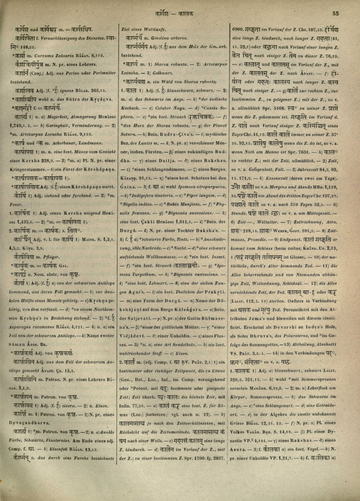
2. kālá m. (adj. Comp. f. ā ṚV. PRĀT. 2,1) — 1〉 ein bestimmter oder richtiger Zeitpunct, die zu Etwas (Gen., Dat., Loc., Inf., im Comp. vorangehend oder *Potent. mit yad) bestimmte oder geeignete Zeit; Zeit überh. paraḥ kālaḥ die höchste Zeit, mit Infin. Chr. 77,28. — a〉 kālaṃ kar eine best. Z. für Etwas (Loc.) festsetzen; vgl. auch u. 12〉. — b〉 kālamāsādya je nach den Zeitverhältnissen, mit Rücksicht auf die Zeitumstände. kālamāsādya kaṃcana nach einer Weile. — c〉 mahāntaṃ kālam eine lange Z. hindurch. — d〉 kālena im Verlauf der Z., mit der Z.; zu einer bestimmten Z. Spr. 1700. fg. Spr. 2857. [Page2-055-c] Spr. 6900 gacchatā im Verlauf der Z. Chr. 107,23. dīrgheṇa eine lange Z. hindurch, nach langer Z. mahatā (Chr. 41,41. Chr. 52,1) oder bahunā nach Verlauf einer langen Z. kena cit nach einiger Z. tena zu dieser Z. Chr. 76,32. — e〉 kālāt und kālatas im Verlauf der Z., mit der Z. kālatas der Z. nach ĀPAST. — f〉 dīrghasya oder mahataḥ kālasya nach langer Z. kasyacit nach einiger Z. — g〉 kālé zur rechter Z., zur bestimmten Z., zu gelegener Z.; mit der Z., so v. a. allmählich Spr. 5168. sva˚ zu seiner Z. prāpte wenn die Z. gekommen ist. gacchati im Verlauf d. Z. yāte nach Verlauf einiger Z. kasmiṃścit eines Tages Chr. 41,19. kāle kāle immer zu seiner Z. Chr. 57,26. Chr. 92,15. prāpteṣu kāleṣu wenn die Z. da ist, so v. a. wenn Noth am Manne ist Spr. 7651. — h〉 kāla˚ zu rechter Z.; mit der Zeit, allmählich. — 2〉 Zeit, so v. a. Gelegenheit, Fall. — 3〉 Jahreszeit Chr. 84,5. Chr. 93,15. Chr. 171,9. — 4〉 Essenszeit (deren zwei am Tage). ubhau kālau so v. a. Morgens und Abends MBH. 1,119,33. ṣaṣṭhe kāle am Abend des dritten Tages Chr. 107,27. pañcaśate kāle so v. a. nach 250 Tagen Chr. 52,5. — 5〉 Stunde. ṣaṣṭhe kāle 'hnaḥ so v. a. um Mittagszeit. — 6〉 Zeit-, Weltalter. — 7〉 Zeitrechnung, Aera. śaka˚ Chr. 218,18. śāka˚ WEBER, JYOT. 101,3. — 8〉 Zeitmaass, Prosodie. — 9〉 Endpunct. kālaṃ gacchati er kommt zum Schluss (beim coitus) CHĀND. UP. 2,13,1 (pāraṃ gacchati tannidhanam ist Glosse). — 10〉 der natürliche, durchʼs Alter kommende Tod. — 11〉 die Alles beherrschende und von Niemanden abhängige Zeit, Weltordnung, Schicksal. — 12〉 die Alles vernichtende Zeit, der Tod. kālam ā-i oder kar (LALIT. 112,5. 10) sterben. Oefters in Verbindung mit antaka und mṛtyu Tod. Personificirt mit den Attributen Yamaʼs und bisweilen mit diesem identificirt. Erscheint als Devarṣi an Indraʼs Hofe, als Sohn Dhruvaʼs, der Polarsterns, und *im Gefolge des Sonnengottes. — 13〉 Abtheilung, Abschnitt VS. PRĀT. 3,3,4. — 14〉 in den Verbindungen pada˚, krama˚, saṃhitā˚ so v. a. pāṭha.
Original text · German · Word type unspecified
2. kāla II. S. 55, Sp. 3, Z. 3 lies 14 st. 41. kālena kālam von Zeit zu Zei DIVYĀVAD. 10,27. [Nachtrag, Band 7]
Apte 1890 adjective · substantive masculine · substantive neuter
Original text · English · adjective · substantive masculine · substantive neuter
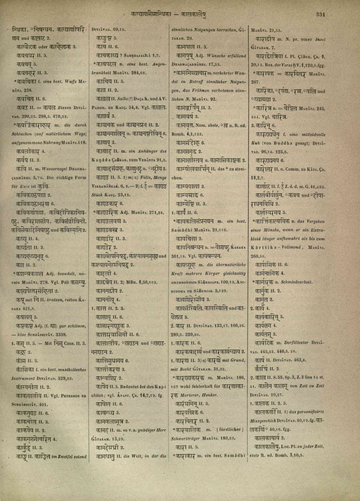
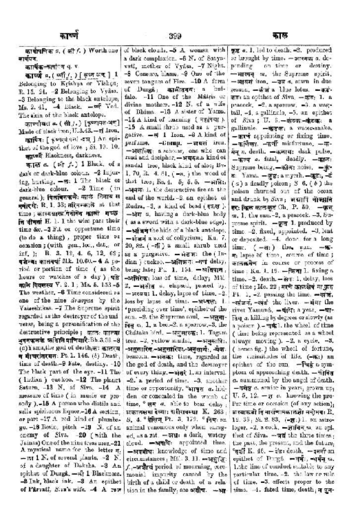
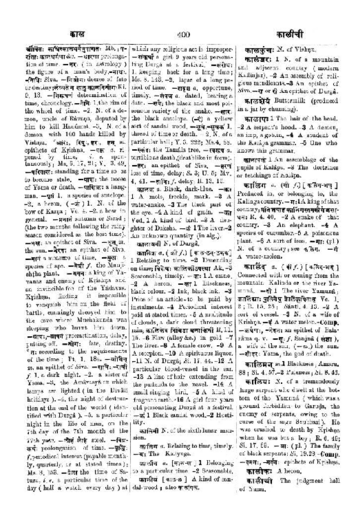
kāla a. (lī f.) 1 Black, of a dark or dark-blue colour. 2 Injuring, hurting. — laḥ 1 The black or dark-blue colour. 2 Time (in general); vilaṃbitaphalaiḥ kālaṃ nināya sa manorathaiḥ R. 1. 33; tasminkāle at that time; kāvyaśāstravinodena kālo gacchati dhīmatāṃ H. 1. the wise pass their time &c. 3 Fit or opportune time (to do a thing), proper time or occasion; (with gen., loc., dat., or inf.); R. 3. 12, R. 4. 6, R. 12. 69; parjanyaḥ kālavarṣī Mk. 10. 60. 4 A period or portion of time (as the hours or watches of a day); ṣaṣṭhe kāle divasasya V. 2. 1; Ms. 5. 153. 5 The weather. 6 Time considered as one of the nine dravyas by the Vaiśeṣikas. 7 The Supreme spirit regarded as the destroyer of the universe, being a personification of the destructive principle; kālaḥ kālyā bhuvanaphalake kraḍiti prāṇiśāraiḥ Bh. 3. 39. 8 (a) Yama, the god of death; kaḥ kālasya na gocarāṃtaragataḥ Pt. 1. 146. (b) Death, time of death. 9 Fate, destiny. 10 The black part of the eye. 11 The (Indian) cuckoo. 12 The planet Saturn. 13 N. of Śiva. 14 A measure of time (in music or prosody). 15 A person who distils and sells spirituous liquor. 16 A section, or part 17 A red kind of plumbago. 18 Resin, pitch 19 N. of an enemy of Śiva. 20 (with the Jainas) One of the nine treasures. 21 A mystical name for the letter m. — lā 1 N. of several plants. 2 N. of a daughter of Dakṣa. 3 An epithet of Durgā. — lī 1 Blackness. 2 Ink, black ink. 3 An epithet of Pārvatī, Śiva's wife. 4 A row ([Page 0399-b]) of black clouds. 5 A woman with a dark complexion. 6 N. of Satyavatī, mother of Vyāsa. 7 Night. 8 Censure, blame. 9 One of the seven tongues of Fire. 10 A form of Durgā; kālītanayaḥ a buffalo. 11 One of the Mātṛs or divine mothers. 12 N. of a wife of Bhīma. 13 A sister of Yama. 14 A kind of learning (mahāviḍyā). 15 A small shrub used as a purgative. — laṃ 1 Iron. 2 A kind of perfume. Comp. — ayasaṃ iron. — akṣarikaḥ a scholar, one who can read and decipher. — agaru n. a kind of sandal tree, black kind of aloe; Bv. 1. 70, R. 4. 81. ( — n.) the wood of that tree; Rs. 4. 5; Rs. 5. 5. — agniḥ, — analaḥ 1 the destructive fire at the end of the world. 2 an epithet of Rudra. 3 a kind of bead (rudrākṣa). — aṃga a. having a dark-blue body (as a sword with a dark-blue edge). — ajinaṃ the hide of a black antelope. — aṃjanaṃ a sort of collyrium; Ku. 7. 20, Ku. 7. 82. — (nī) a small shrub used as a purgative. — aṃḍajaḥ the (Indian) cuckoo. — atikramaḥ -maṇaṃ delay, being late; Pt. 1. 154. — atipātaḥ, — atirekaḥ loss of time, delay; Māl 2 — atīta a. elapsed, passed by. — atyayaḥ 1 delay, lapse of time. 2 loss by lapse of time. — adhyakṣaḥ 1 ‘presiding over time’, epithet of the sun. 2 the Supreme soul. — anunādin m. 1 a bee. 2 a sparrow. 3 the Cātaka bird. — anusārakaḥ 1 Tagara tree. 2 yellow sandal. — anusāriḥ, — anusārin, -anusārivā, -anusāryaḥ, -ryakaḥ benzoin. — aṃtakaḥ time, regarded as the god of death, and the destroyer of every thing. — aṃtaraṃ 1 an interval. 2 a period of time. 3 another time or opportunity. ˚āvṛta a. hidden or concealed in the womb of time. ˚kṣama a. able to bear delay; akālakṣamā devyāḥ śarīrāvasthā K. 263; Ś. 4. ˚prekṣin Pt. 3. 172. ˚viṣaḥ an animal venomous only when enraged, as a rat. — abhraḥ a dark, watery cloud. — avadhiḥ appointed time. — avabodhaḥ knowledge of time and circumstances; Māl. 3. 11. — aśuddhiḥ f., — aśaucaṃ period of mourning, ceremonial impurity caused by the birth of a child or death of a relation in the family; see aśauca. ([Page 0399-c]) — ākṛṣṭa a. 1 led to death. 2 produced or brought by time. — ātmaka a. depending on time or destiny. — ātman m. the Supreme spirit. — āyasaṃ iron. — upta a. sown in due season. — kaṃjaṃ a blue lotus. — kaṭaṃkaṭaḥ an epithet of Śiva. — kaṃṭhaḥ 1 a peacock. 2 a sparrow. 3 a wagtail. 4 a gallinule. 5 an epithet of Śiva; U. 6. — kaṃṭhakaḥ -kaṃṭakaḥ a gallinule. — kaṃḍakaḥ a water-snake. — karaṇaṃ appointing or fixing time. — karṇikā, -karṇī misfortune. — karman n. death. — kalāyaḥ dark pulse. — kalpa a. fatal, deadly. — kālaḥ Supreme being. — kīlaḥ noise. — kuṃṭhaḥ Yama. — kuṣṭhaḥ a myrrh. — kūṭaḥ, -ṭaṃ (a) a deadly poison; Ś. 6. (b) the poison churned out of the ocean and drunk by Śiva; adyāpi nojjhati haraḥ kila kālakūṭaṃ Ch. P. 50. — kṛt m. 1 the sun. 2 a peacock. 3 Supreme spirit. — kṛta 1 produced by time. 2 fixed, appointed. 3 lent or deposited. 4 done for a long time. — (taḥ) the sun. — kramaḥ lapse of time, course of time; kālakrameṇa in course or process of time; Ku. 1. 19. — kriyā 1 fixing a time. 2 death. — kṣepaḥ 1 delay, loss of time; Me. 22; maraṇe kālakṣepaṃ mākuru Pt. 1. 2 passing the time. — khaṃjaṃ, — khaṃjanaṃ, -khaṃḍaṃ the liver. — gaṃgā the river Yamunā. — grāṃthiḥ a year. — ghātin a. killing by degrees or slowly (as a poison) — cakraṃ 1 the wheel of time (time being represented as a wheel always moving). 2 a cycle. 3 (hence fig.) the wheel of fortune, the vicissitudes of life. — (kraḥ) an epithet of the sun. — cihnaṃ a symptom of approaching death. codita a. summoned by the angel of death. — jyeṣṭha a. senior in years, grown up; U. 5. 12. — jña a. knowing the proPer time or occasion (of any action); atyārūḍho hi nārīṇāmakālajño manobhavaḥ R. 12. 33; Śi. 2. 83. — (jñaḥ) 1 an astrologer. 2 a cock. — jñānin m. an epithet of Śiva. — trayaṃ the three times; the past, the present, and the future; ˚darśī K. 46. — daṃḍaḥ death. — damanī an epithet of Durgā. — dharmaḥ, -dharman m. 1 the line of conduct suitable to any particular time. 2 the law or rule of time. 3 effects proper to the time. 4 fated time, death; na ([Page 0400-a]) punarjīvitaḥ kaścitkāladharmamupāgataḥ Mb.; parītāḥ kāladharmaṇā &c. — dhāraṇā prolongation of time. — naraḥ (in astrology) the figure of a man's body. — nāthaḥ, — nidhiḥ Śiva. — niyogaḥ decree of fate or destiny; laṃdhyatena khalu kālaniyogaḥ Ki. 9. 13. — nirūpaṇaṃ determination of time, chronology. — nemiḥ 1 the rim of the wheel of time. 2 N. of a demon, uncle of Rāvaṇa, deputed by him to kill Hanūmat. 3 N. of a demon with 100 hands killed by Viṣṇu. ˚ariḥ, ripuḥ, haraḥ, han m. epithets of Kṛṣṇa. — pakva a. ripened by time, i. e. spontaneously; Ms. 6. 17, Ms. 6. 21; Y. 3. 49. — parivāsaḥ standing for a time so as to become stale. — pāśaḥ the noose of Yama or death. — pāśikaḥ a hangman. — pṛṣṭhaṃ 1 a species of antelope. 2 a heron. — (kaṃ) 1 N. of the bow of Karṇa; Ve. 4. 2 a bow in general. — prabhātaṃ autumn or Śarad; (the two months following the rainy season considered as the best time). — bhakṣaḥ an epithet of Śiva. — bhṛt m. the sun. — bhairavaḥ an epithet of Śiva. — mānaṃ a measure of time. — mukhaḥ a species of ape. — meṣī f. the Manjiṣṭha plant. — yavanaḥ a king of Yavanas and enemy of Kṛṣṇa and an invincible foe of the Yādavas. Kṛṣṇa, finding it impossible to vanquish him on the field of battle, cunningly decoyed him to the cave where Mucukunda was sleeping who burnt him down. — yāpaḥ, -yāpanaṃ procrastination, delay, putting off. — yogaḥ fate, destiny. ˚taḥ according to the requirements of the time; Pt. 1. 184. — yogin m. an epithet of Śiva. — rātriḥ, -rātrī f. 1 a dark night. 2 a sister of Yama. 3 the Amāvasyā on which lamps are lighted (in the Divālī holidays). 4 the night of destruction at the end of the world (identified with Durgā). 5 a particular night in the life of man, on the 7th day of the 7th month of the 77th year. — lohaṃ -lauhaṃ steel. — viprakarṣaḥ prolongation of time. — vṛddhiḥ f. periodical interest (payable monthly, quarterly, or at stated times); Ms. 8. 153. — velā the time of Saturn, i. e. a particular time of the day (half a watch every day) at ([Page 0400-b]) which any religious act is improper. — saṃkarṣā a girl 9 years old personating Durgā at a festival. — saṃrodhaḥ 1 keeping back for a long time; Ms. 8. 143. 2 lapse of a long period of time. — sadṛśa a. opportune, timely. — saṃpanna a. dated, bearing a date. — sarpaḥ the black and most poisonous variety of the snake. — sāraḥ the black antelope. — (raṃ) a yellow sort of sandal wood. — sūtraṃ, -sūtrakaṃ 1 thread of time or death. 2 N. of a particular hell; Y. 3. 222; Ms. 4. 88. — skaṃdaḥ the Tamāla tree. — svarūpa a. terrible as death, (deathlike in form). — haraḥ an epithet of Śiva. — haraṇaṃ loss of time, delay; Ś. 3; U. 5; Mv. 4. 41. — hāniḥ f. delay; R. 13. 16.
Cappeller 1887 substantive masculine · Word type unspecified
Original text · German · substantive masculine
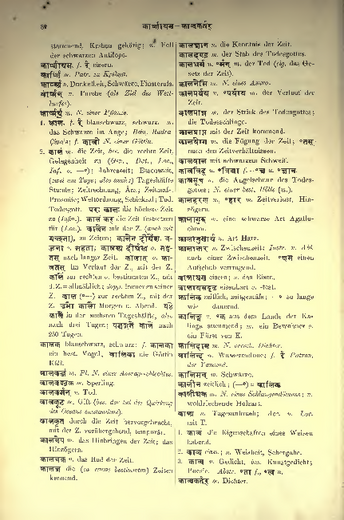
2. kālá m. die Zeit, bes. die rechte Zeit, Gelegenheit zu (Gen., Dat., Loc. Inf. o. —˚); Jahreszeit; Essenszeit, (zwei am Tage; also auch:) Tageshälfte Stunde; Zeitrechnung, Ära; Zeitmaß, Prosodie; Weltordnung, Schicksal; Tod, Todesgott. paraḥ kālaḥ die höchste Zeit zu (Infin.). kālaṃ kar die Zeit festsetzen für (Loc.) kālena mit der Z. (auch mit gacchatā), zu Zeiten; kālena dīrgheṇa, ba hunā o. mahatā; kālasya dīrghasya o. mahatas nach langer Zeit. kālāt o. kAlatas im Verlauf der Z., mit der Z. kalé zur rechten o. bestimmten Z., mit d. Z. = allmählich; dopp. immer zu seiner Z. kala (˚—) zur rechten Z., mit der Z. ubhau kālau Morgen u. Abend. ṣaṣṭhe kale in der sechsten Tageshälfte, also nach drei Tagen; pan!caśate kale nach 250 Tagen.
Original text · German · Word type unspecified
1. kāla f. ī blauschwarz, schwarz. m. das Schwarze im Auge; Bein. RudraŚiva's; f. kālī N. einer Göttin.
Burnouf 1866 adjective · substantive masculine
Original text · French · adjective
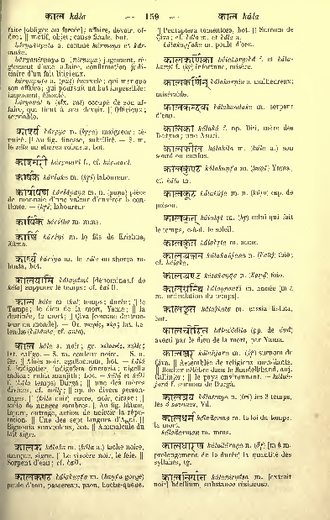
kāla kāla a. noir; gr. ϰελαινός, ϰηλίς; lat. caligo. — S. m. couleur noire. — S. n. fer. Aloès noir, agallochum, bot. — kālā f. indigotier, indigofera tinctoria; nigella indica; rubia manjith; bot. — kālā et kālī f. (kāla temps) Durgā; une des mères divines, cf. mātṛ; np. de divers personnages. (kāla noir) encre, noir, cirage; suite de nuages sombres. Au fig. blâme, injure, outrage, action de noircir la réputation. Une des sept langues d'Agni. Bignonia suaveolens, bot. Animalcule du lait aigri.
Original text · French · substantive masculine
kāla kāla m. (kal) temps; durée; le Temps; le dieu de la mort, Yama; la destinée, la mort; Śiva [comme destructeur du monde]. — Gr. ϰαιρός, ϰήρ; lat. kalendæ (kālānta, cf. anta).
Occurrences in source texts (73)
DYS 6 occurrences
GoS 3 occurrences
HP 18 occurrences
9 more source pages
HP 3.94-3.102*1: Śakti Cālana 2 occurrences
Direct occurrences
HP 3.103-3.107*2: Conclusion of the Mudrā Teaching 1 occurrence
Direct occurrences
-
HP 3.107*2 Segment 15
HP 4.11*5-4.11*14: Khecarī in Space 2 occurrences
Direct occurrences
-
HP 4.11*12 Segment 12
-
HP 4.11*13 Segment 14
HTK 6 occurrences
HTK 10.26–29*1: Cakra, Śaṅkha, Vāmāvartta, Vartmagati and Gadā 1 occurrence
Direct occurrences
-
HTK 10.27 Segment 23
HTK 10.30–33*1: Nāḍī-viśudhy-ākhyaka-kumbha and Nāḍīśuddhi 1 occurrence
Direct occurrences
-
HTK 10.33*1 Segment 3
HTK 10.42–43: Meru: Three stages of breath retention 1 occurrence
Direct occurrences
-
HTK 10.42 Segment 5
MandUp 1 occurrence
PYS 5 occurrences
SiSa 17 occurrences
SiSa 3.21-3.31: Nāḍī-Reinigung 2 occurrences
Direct occurrences
SiSa 3.34-3.38: Förderliche Mittel 2 occurrences
Direct occurrences
SiSa 3.41-3.48: Atemkraft und Hindernisse 2 occurrences
Direct occurrences
8 more source pages
SVU 12 occurrences
SVU 1.1-1.3: The Search for the Cause 2 occurrences
Direct occurrences
SVU 6.1–6.6: Lord of Cosmic Unfolding 6 occurrences
Direct occurrences
VBT 5 occurrences
Continue with AYI Free
Image source: AYI archive.