

amṛta अमृत – unsterblich; todlos
Adjektiv · Substantiv Maskulin · Substantiv Neutrum · Worttyp nicht bestimmt
Wörterbuchquellen
AYI Wörterbuch Adjektiv · Substantiv Neutrum
Adjektiv
unsterblich; todlos
Substantiv Neutrum
Nektar; Unsterblichkeitstrank; Unsterblichkeit
Cappeller 1891 Substantiv Maskulin
Originaltext · Englisch · Substantiv Maskulin
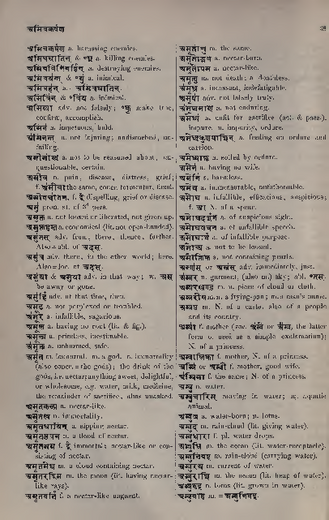
amṛ́ta ·m. immortal. m. a god. n. immortality (also concr. = the gods); the drink of the gods, i.e. nectar; anything sweet, delightful, or wholesome, e.g. water, milk, medicine, the remainder of sacrifice, alms unasked.
Monier-Williams 1872 Adjektiv
Originaltext · Englisch · Adjektiv
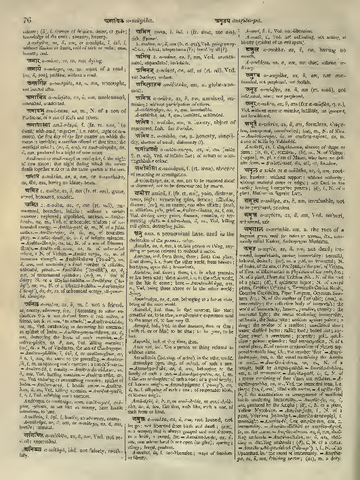
amṛta a-mṛta, as, ā, am, not dead; im- mortal, imperishable, causing immortality; beautiful, beloved, desired; (as), m. a god, an immortal; N. of Indra, of the sun, of Prajāpati, of the soul, of Viṣṇu, of Śiva, of Dhanvantari as physician of the gods, &c.; N. of a plant, Phaseolus Trilobus Ait.; N. of the root of a plant; (ā), f. spirituous liquor; N. of several plants, Emblica Officinalis, Terminalia Citrina Roxb., Cocculus Cordifolius, Piper Longum, Ocymum Sanc- tum, &c.; N. of the mother of Parīkṣit; (am), n. immortality; the collective body of immortals; the world of immortality, heaven, paradise, eternity; the immortal light; the nectar conferring immortality, ambrosia; the Soma juice; antidote against poison; a drug; the residue of a sacrifice; unsolicited alms; water; clarified butter; milk; food; boiled rice; any- thing sweet, a sweetmeat; property; gold, quick- silver; poison; splendour; final emancipation; N. of a sacred place; N. of various conjunctions of planets sup- posed to confer long life; the number ‘four.’
Petersburger 1855 Adjektiv · Substantiv Maskulin · Substantiv Neutrum · Worttyp nicht bestimmt
Originaltext · Deutsch · Adjektiv · Substantiv Maskulin · Substantiv Neutrum
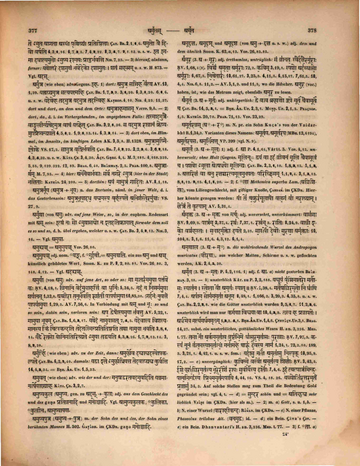
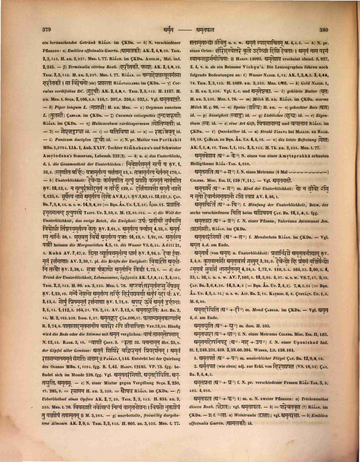
amṛ́ta (3. a + mṛta) P. 6,2,116. 1〉 adj. f. ā. a〉 nicht gestorben BRĀHMAṆ. 3,18. — b〉 unsterblich Kār. zu P. 3,2,188. yadyū̱yaṃ pṛ̀śnimātaro̱ martā̀sa̱ḥ syātàna . sto̱tā vò a̱mṛtàḥ syāt .. ṚV. 1,38,4. martèṣva̱gnira̱mṛto̱ ni dhā̀yi ṚV. 7,4,4. apā̀ma̱ somàma̱mṛtā̀ abhūma ṚV. 8,48,1. ṚV. 1,166,3. ṚV. 3,20,3. ṚV. 4,35,8. u. s. w. ŚAT. BR. 2,2,2,8. wie die Götter unsterblich wurden ŚAT. BR. 9,5,1,7. ŚAT. BR. 11,2,3,6. unsterblich wird man nur karmaṇā vidyayā vā ŚAT. BR. 10,4,3,9. tasya ha prajāpateḥ . ardhameva martyamardhamamṛtam ŚAT. BR. 1,3,2. ŚAT. BR. 4,1. BṚH. ĀR. UP. 1,4,6. ŚVETĀŚV. UP. 3,1. BHAG. 14,27. subst. ein unsterbliches, gottähnliches Wesen H. an. 3,236. MED. t. 77. tamā nò a̱rkama̱mṛtā̀ya̱ juṣṭàmi̱me dhā̀sura̱mṛtā̀saḥ purā̱jāḥ ṚV. 7,97,5. kasyà nū̱naṃ kàta̱masyā̱mṛtā̀nā̱ṃ manā̀mahe̱ cārù de̱vasya̱ nāmà ṚV. 1,24,1. ṚV. 1,72,2. ṚV. 1,24,10. ṚV. 1,189,3. ṚV. 3,21,1. ṚV. 4,42,1. u. s. w. fem.: yadā̀su̱ martò a̱mṛtā̀su ni̱spṛk ṚV. 10,95,9. ṚV. 10,17,2. — c〉 unvergänglich: ku̱vinme̱ vasvò a̱mṛtàsya̱ śikṣā̀ḥ ṚV. 3,43,5. īśe̱ hya1̱̀gnira̱mṛtàsya̱ bhūre̱rīśè rā̱yaḥ su̱vīryàsya̱ dātòḥ ṚV. 7,4,6. i̱daṃ tyatpātràmindra̱pāna̱mindràsya pri̱yama̱mṛtàmapāyi ṚV. 6,44,16. VS. 4,18. VS. 4,26. yajjyotìra̱ntara̱mṛtàṃ pra̱jāsù VS. 34,3. Auf solche Stellen mag zum Theil die Bedeutung Gold gegründet sein; vgl. VS. 4,1. — d〉 = sundara schön und = atihṛdya sehr lieblich VYĀḌI_im_ŚKDR. (hier als m.). — 2〉 m. a〉 Gott, s. u. 1,b. — b〉 N. einer Wurzel (vārāhīkanda) RĀJAN._im_ŚKDR. — c〉 N. einer Pflanze, Phaseolus trilobus Ait. (vanamudga) id. — d〉 ein Bein. Śivaʼs ŚIV. — e〉 ein Bein. Dhanvantariʼs H. an. 3,236. MED. t. 77. — 3〉 f. ˚tā. a〉 ein berauschendes Getränk RĀJAN._im_ŚKDR. — b〉 N. verschiedener Pflanzen: α〉 Emblica officinalis Gaertn. (āmalakī) AK. 2,4,2,38. TRIK. 3,3,143. H. an. 3,237. MED. t. 77. RĀJAN._im_ŚKDR. AINSLIE, Mat. ind. 2,245. — β〉 Terminalia citrina Roxb. (harītakī, pathyā) AK. 2,4,2,39. TRIK. 3,3,143. H. an. 3,237. MED. t. 77. RĀJAN. = campādeśajasthūlamāṃsā harītakī . sā virecano (sic) praśastā RĀJAVALLABHA_im_ŚKDR. — γ〉 Cocculus cordifolius DC. (guḍūcī) AK. 2,4,3,1. TRIK. 3,3,143. H. 1157. H. an. MED. t. SUŚR. 2,106,2. SUŚR. 2,106,8. SUŚR. 2,116,7. SUŚR. 2,207,8. SUŚR. 2,256,3. SUŚR. 2,522,4. Vgl. amṛtavallī. — δ〉 Piper longum L. (māgadhī) H. an. MED. — ε〉 Ocymum sanctum L. (tulasī) ŚABDAM._im_ŚKDR. — ζ〉 Cucumis colocynthis (indravāruṇī) RĀJAN._im_ŚKDR. — η〉 Halicacabum cardiospermum (jyotiṣmatī) id. — ϑ〉 = gorakṣadugdhā id. — ι〉 = ativiṣā id. — ϰ〉 = raktatrivṛt id. — λ〉 Panicum dactylon (dūrvā) id. — c〉 N. pr. Mutter von Parīkṣit MBH. 1,3794. LIA. I, Anh. XXIV. Tochter Siṃhahanuʼs und Schwester Amṛtodanaʼs SCHIEFNER, Lebensb. 233 (3). — 4〉 n. a〉 das Unsterbliche, d. i. die Gesammtheit der Unsterblichen: ni̱ve̱śayànna̱mṛta̱ṃ martyàṃ ca ṚV. 1,35,2. (stṛṇīta barhiḥ) yatrā̱mṛtàsya̱ cakṣàṇam ṚV. 1,13,5. tatrā̱mṛtàsya̱ cetànam ṚV. 1,170,4. — b〉 Unsterblichkeit: de̱vebhya̱ḥ kamàvṛṇīta mṛ̱tyuṃ pra̱jāyai̱ kama̱mṛta̱ṃ nāvṛ̀ṇīta ṚV. 10,13,4. na mṛ̱tyurā̀sīda̱mṛta̱ṃ na tarhì ṚV. 10,129,2. dakṣìṇāvanto a̱mṛtàṃ bhajante ṚV. 1,125,6. sūryàsya bhā̱ge a̱mṛtàsya lo̱ke AV. 8,1,1. ṚV. 1,83,15. ṚV. 10,121,2. ŚAT. BR. 7,3,1,46. u. s. w. ŚAT. BR. 14,9,1,30 (= BṚH. ĀR. UP. 1,3,28). ĪŚOP. 11. prajātiramṛtamānanda ityupasthe TAITT. UP. 3,10,3. M. 12,85. M. 12,104. — c〉 die Welt der Unsterblichkeit, das ewige Reich, die Ewigkeit: uṣàḥ pratī̱cī bhuvànāni̱ viśvo̱rdhvā tìṣṭhasya̱mṛtàsya ke̱tuḥ ṚV. 3,61,3. a̱mṛtàsya̱ panthā̀m ṚV. 4,35,3. a̱mṛtàsya̱ nābhìḥ ṚV. 4,58,1. śṛ̱ṇvantu̱ viśvè a̱mṛtàsya pu̱trāḥ ṚV. 10,13,1. ṚV. 1,91,18. a̱mṛtàsya̱ patnī̀ heissen die Morgenröthen ṚV. 4,5,13. die Wasser VS. 6,34. Aditi VS. 21,5. Kuhū AV. 7,47,2. dvi̱tā vyū̱rṇvanna̱mṛtàsya̱ dhāmà ṚV. 9,94,2. de̱vā ìvā̱mṛta̱ṃ rakṣàmāṇāḥ AV. 3,30,7. pl. die Kräfte der Ewigkeit: vi̱śvarū̀po a̱mṛtā̀ni tasthau ṚV. 3,38,4. sa̱trā càkrā̱ṇo a̱mṛtā̀ni̱ viśvā̀ ṚV. 1,72,1. — d〉 der Trank der Unsterblichkeit, Lebensessenz, ἀμβροσία AK. 1,1,1,44. AK. 1,3,4,104. TRIK. 3,3,143. H. 89. H. an. 3,235. MED. t. 76. a̱psva1̱̀ntara̱mṛtàma̱psu bhèṣa̱jam ṚV. 1,23,19. manyè bhejā̱no a̱mṛtàsya tarhi̱ hiràṇyavarṇā̱ atṛ̀paṃ ya̱dā vàḥ AV. 3,13,6. goṣù pri̱yama̱mṛta̱ṃ rakṣàmāṇā ṚV. 1,71,9. a̱pā̱ra ū̱rve a̱mṛta̱ṃ duhā̀nāḥ ṚV. 3,1,14. ṚV. 1,112,3. ṚV. 1,164,21. VS. 2,34. AV. 3,12,8. amṛtāhutiḥ AIT. BR. 2,14. M. 2,162. M. 2,239. INDR. 1,27. amṛtahrada ŚĀK. 100,17. phalānyamṛtakalpāni R. 5,74,6. pātālādamṛtamānīya catvāro 'pi jīvāpitāḥ VET. 33,20. Häufig wird die Rede oder die Stimme mit amṛta verglichen: vācaṃ tāmamṛtopamām N. 12,42. RAGH. 3,16. ˚vāṇī ŚRUT. 5. ˚rutā ŚRUT. 35. vacanāmṛta HIT. 25,2. der Gipfel aller Genüsse: amṛtaṃ śiśire vahniramṛtaṃ priyadarśanam . amṛtaṃ rājasanmānamamṛtaṃ saṃgatiḥ satām .. PAÑCAT. I, 144. Entsteht bei der Quirlung des Oceans MBH. 1,1094. fgg. R. 1,45. HARIV. 12185. VP. 75. fgg. befindet sich im Monde VP. 238. fgg. Vgl. amṛtataraṃgiṇī, amṛtadīdhiti, amṛtadyuti, amṛtasū. — e〉 N. einer Mixtur gegen Vergiftung SUŚR. 2,250,17. SUŚR. 2,285,9. = rasāyana H. an. 3,236. = auṣadha RĀJAN._im_ŚKDR. — f〉 Ueberbleibsel eines Opfers AK. 2,7,28. TRIK. 3,3,143. H. 834. H. an. 3,235. MED. t. 76. vighasāśī bhavennityaṃ nityaṃ vāmṛtabhojanaḥ . vighaso bhuktaśeṣaṃ tu yajñaśeṣaṃ tathāmṛtam .. M. 3,285. — g〉 unerbettelte, freiwillig dargebotene Almosen AK. 2,9,3. TRIK. 3,3,143. H. 866. H. an. 3,235. MED. t. 77. ṛtāmṛtābhyāṃ jīvettu u. s. w. amṛtaṃ syādayācitam M. 4,4. M. 4,5. — h〉 N. pr. eines Ortes: kṣīrodasyottare kūle udīcyāṃ diśi devatāḥ . amṛtaṃ nāma paramaṃ sthānamāhurmanīṣiṇaḥ .. HARIV. 14095. amṛteśaya erscheint ebend. S. 927, Z. 4, v. u. als ein Beiname Viṣṇuʼs. Die Lexicographen führen noch folgende Bedeutungen an: i〉 Wasser NAIGH. 1,12. AK. 1,2,3,3. AK. 3,4,14,78. TRIK. 3,3,143. H. 1069. H. an. 3,235. MED. t. 76. — k〉 Gold NAIGH. 1,2. H. an. 3,236. Vgl. 1,c. und amṛteṣṭakā. — l〉 geklärte Butter (ghṛta) H. an. 3,236. MED. t. 76. — m〉 Milch H. an. RĀJAN._im_ŚKDR. warme Milch H. ś. 98. — n〉 Speise (jagdhi) H. an. — o〉 gekochter Reis (anna) id. — p〉 Süssigkeit (svādu) id. — q〉 Liebliches (hṛdya) id. — r〉 Eigenthum (sva) id. — s〉 eine Art Gift, viṣasāmānya und vatsanābha RĀJAN._im_ŚKDR. — t〉 Quecksilber id. — u〉 Strahl YĀDAVA_bei_MALLIN._zu_RAGH. 10,59. ŚAṂK._zu_BṚH. ĀR. UP. 4,4,16. — v〉 die letzte Befreiung (mokṣa) AK. 1,1,4,15. TRIK. 1,1,134. TRIK. 3,3,143. H. 74. H. an. 3,235. MED. t. 77.
Originaltext · Deutsch · Worttyp nicht bestimmt
amṛta 1〉a〉 hatvā cainaṃ nāmṛtaḥ syādayaṃ me MBH. 13,23. — b〉 *Z. 3 lies 8,48,3 st. 8,48,1. subst. ein unsterbliches Wesen, ein Gott Spr. 4302. — 3〉b〉λ〉 sarvauṣadhīnāmamṛtā (= dūrvā Schol.) pradhānā Spr. 5208. — d〉 Bein. der Dākṣāyaṇī Verz. d. Oxf. H. 39,b,19. Verz. d. Oxf. H. 39,b,31. — e〉 N. der ersten Kalā des Mondes Verz. d. Oxf. H. 18,b,24. — 4〉b〉 Spr. 3561. Spr. 4302. Spr. 4331. — e〉 ein best. Heilmittel ŚIŚ. 9,36. Arzenei überh. WASSILJEW 199. — p〉 yathāmṛtaghaṭaṃ daṃśāḥ (viśanti) R. 7,7,3. amṛta = kṣaudra Schol. — u〉 saurībhiriva nāḍībhiramṛtākhyābhiḥ RAGH. 10,59. — v〉 Verz. d. Oxf. H. 258,b,10. — w〉 ein Metrum von 4×54 Silben ṚV. PRĀT. 17,4. Ind. St. 8,107. Ind. St. 8,111.
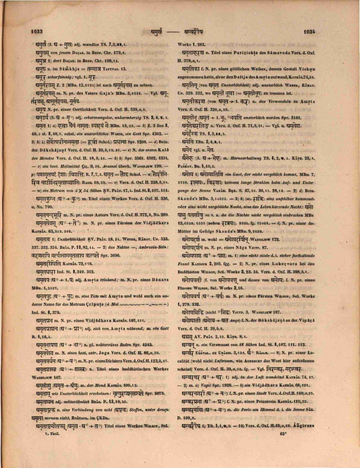
Originaltext · Deutsch · Worttyp nicht bestimmt
amṛta 4〉m〉 Spr. (II) 2986.
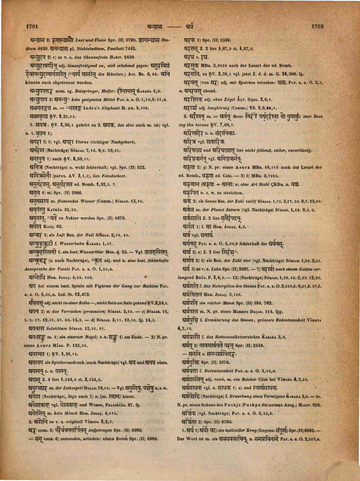
Böhtlingk 1879 Adjektiv · Substantiv Maskulin · Substantiv Neutrum · Worttyp nicht bestimmt
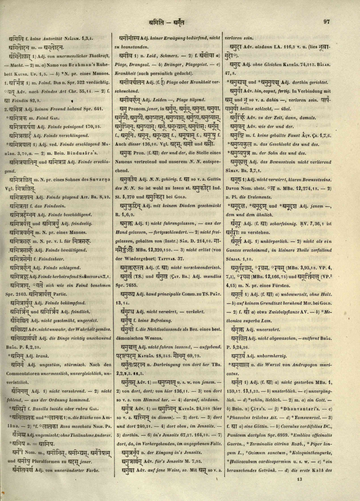
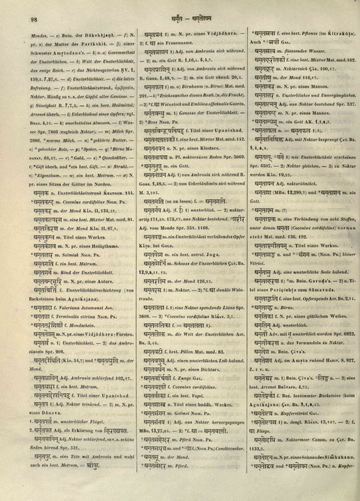
Originaltext · Deutsch · Adjektiv · Substantiv Maskulin · Substantiv Neutrum
amṛ́ta — 1〉 Adj. (f. ā) — a〉 nicht gestorben MBH. 1,159,17. MBH. 13,1,23. — b〉 unsterblich. — c〉 unvergänglich. — d〉 *schön, lieblich. — 2〉 m. — a〉 ein Gott. — b〉 Bein. — α〉 Śivaʼs. — β〉 *Dhanvantariʼs. — c〉 *Phaseolus trilobus Ait. — d〉 *Yamswurzel. — 3〉 f. ā — a〉 eine Göttin. — b〉 Cocculus cordifolius DC., Panicum dactylon Spr. 6959. *Emblica officinalis Gaertn., *Terminalia citrina Roxb., *Piper longum L., *Ocimum sanctum, *Koloquinthengurke, *Cardiospermum halicacabum u. s. w. — c〉 *ein berauschendes Getränk. — d〉 die erste Kalā des [Page1-098-a] Mondes. — e〉 Bein. der Dākṣāyaṇī. — f〉 N. pr. — α〉 der Mutter des Parīkṣit. — β〉 einer Schwester Amṛtodanaʼs. — 4〉 n. — a〉 Gesammtheit der Unsterblichen. — b〉 Welt der Unsterblichkeit, das ewige Reich. — c〉 das Nichtwegsterben ṚV. 1,159,2. 7,57,6. — d〉 Unsterblichkeit. — e〉 die letzte Befreiung. — f〉 Unsterblichkeitstrank, ἀμβροσία, Nektar. Häufig so v. a. der Gipfel aller Genüsse. — g〉 Süssigkeit R. 7,7,3. — h〉 ein best. Heilmittel; Arzenei überh. — i〉 Ueberbleibsel eines Opfers; vgl. BHAG. 4,31. — k〉 unerbetteltes Almosen. — l〉 Wasser Spr. 7806. (zugleich Nektar). — m〉 Milch Spr. 2986. *warme Milch. — n〉 *geklärte Butter. — o〉 *gekochter Reis. — p〉 *Speise. — q〉 *Birne MADANAV. 68,57. — r〉 Gold. — s〉 *Quecksilber. — t〉 *Gift überh. und *ein best. Gift. — u〉 Strahl. — v〉 *Eigenthum. — w〉 ein best. Metrum. — x〉 N. pr. eines Sitzes der Götter im Norden.
Originaltext · Deutsch · Substantiv Maskulin
amṛta m. N. pr. eines Prākrit-Dichters HĀLA 43. [Nachtrag, Band 2]
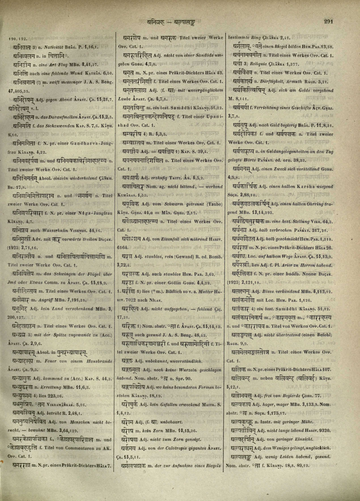
Originaltext · Deutsch · Worttyp nicht bestimmt
amṛta 3〉f〉γ〉 eines Flusses HEMĀDRI 1,314,12. [Nachtrag, Band 1]
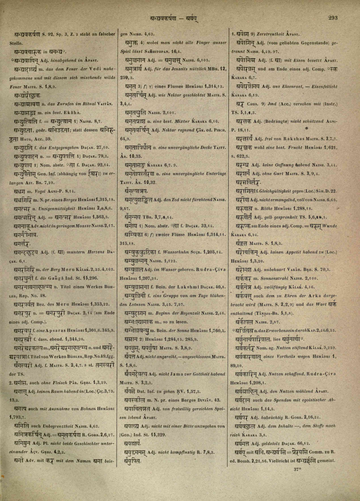
Originaltext · Deutsch · Worttyp nicht bestimmt
amṛta I. 1. 2. m. *N. pr. eines Schlangendämons MAHĀVY. 168. [Nachtrag, Band 7]
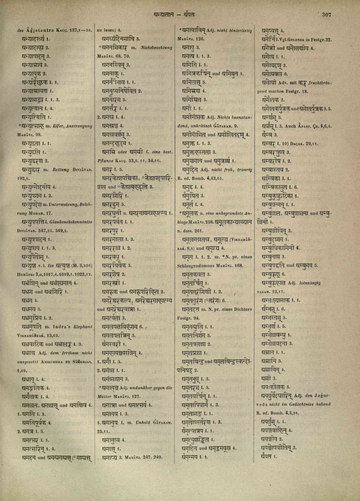
Apte 1890 Adjektiv · Substantiv Maskulin · Substantiv Neutrum
Originaltext · Englisch · Adjektiv · Substantiv Maskulin · Substantiv Neutrum
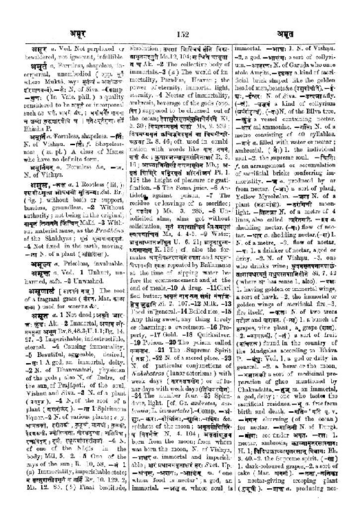
amṛta a. 1 Not dead; amṛte jārajaḥ kuṃḍaḥ Ak. 2 Immortal; apāma somamamṛtā abhūma Rv. 8. 48. 3; U. 1. 1; Bg. 14. 27. 3 Imperishable, indestructible, eternal. 4 Causing immortality. 5 Beautiful, agreeable, desired. — taḥ 1 A god, an immortal, deity. 2 N. of Dhanvantari, physician of the gods; also N. of Indra, of the sun, of Prajāpati, of the soul, Viṣṇu and Śiva. 3 N. of a plant (vanamudga). 4 N. of the root of a plant (vārāhīkaṃda). — tā 1 Spirituous liquor. 2 N. of various plants; e. g. āmalakī, harītakī, guḍūcī; māgadhī; tulasī, iṃdravāruṇī, jyotiṣmatī, gorakṣadugdhā; ativiṣā; raktatrivṛt; dūrvā, sthūlamāṃsaharītakī. 3 N. of one of the Nāḍīs in the body; Māl. 5. 2. 4 One of the rays of the sun; R. 10. 58. — taṃ 1 (a) Immortality, imperishable state; na mṛtyurāsīdamṛtaṃ na tarhi Rv. 10. 129. 2; Ms. 12. 85. (b) Final beatitude, ([Page 0152-b]) absolution; tapasā kilbiṣaṃ haṃti vidyayāmṛtamaśnute Ms. 12. 104; sa śriye cāmṛtāya ca Ak. 2 The collective body of immortals. 3 (a) The world of immortality, Paradise, Heaven; the power of eternity, immortal light, eternity. 4 Nectar of immortality, ambrosia, beverage of the gods (opp. viṣa) supposed to be churned out of the ocean; devāsurairamṛtamaṃbunidhirmamaṃthe Ki. 5. 30; viṣādaṣyamṛtaṃ grāhyaṃ Ms. 2. 239; viṣamapyamṛtaṃ kvacidbhavedamṛtaṃ vā viṣamīśvarecchayā R. 8. 46; oft. used in combination with words like vāc, vacanaṃ, vāṇī &c; kumārajanmāmṛtasaṃmitākṣaraṃ R. 3. 16; āpyāyitosau vacanāmṛtena Mb.; amṛtaṃ śiśire vahniramṛtaṃ kṣīrabhojanaṃ Pt. 1. 128 the height of pleasure or gratification. 5 The Soma juice. 6 Antidote against poison. 7 The residue or leavings of a sacrifice; (yajñaśeṣa) Ms. 3. 285. 8 Unsolicited alms, alms got without solicitation; mṛtaṃ syādyācitaṃ bhaikṣyamamṛtaṃ syādayācitaṃ Ms. 4. 4-5. 9 Water; amṛtādhmātajīmūta U. 6. 21; amṛtādunmathyamānāt K. 136; cf. also the formulas amṛtopastaraṇamasi svāhā and amṛtāpidhānamasi svāhā repeated by Brāhmaṇas at the time of sipping water before the commencement and at the end of meals. 10 A drug. 11 Clari fied butter; amṛtaṃ nāma yat saṃto maṃtrajihveṣu juhvati Śi. 2. 107. 12 Milk. 13 Food in general. 14 Boiled rice. 15 Any thing sweet, any thing lovely or charming; a sweetmeat. 16 Property. 17 Gold. 18 Quicksilver. 19 Poison. 20 The poison called vatsanābha. 21 The Supreme Spirit (brahma). 22 N. of a sacred place. 23 N. of particular conjunctions of Nakṣatras (lunar asterisms) with week days (vāranakṣatrayoga) or of lunar days with week days (tithivārayoga). 24 The number four. 25 Splendour, light. [cf. Gr. ambrotos, ambrosia; L. immortalis]. Comp. — aṃśuḥ, -karaḥ, -dīdhitiḥ, -dyutiḥ, -raśmiḥ &c. epithets of the moon; amṛtadīdhitireṣa vidarbhaje N. 4. 104; amṛtāṃśūdbhava born from the moon; from whom was born the moon, N. of Viṣṇu. — akṣara a. immortal and imperishable; kṣaraṃ pradhānamamṛtākṣaraṃ haraḥ Śvet. Up. — aṃdhas, -aśanaḥ, -āśin m. ‘one whose food is nectar’; a god, an immortal. — asu a. whose soul is ([Page 0152-c]) immortal. — āśaḥ 1 N. of Viṣṇu. 2 a god. — āsaṃgaḥ a sort of collyrium. — āharaṇaḥ N. of Garuḍa who once stole Amṛta. — iṣṭakā a kind of sacrificial brick shaped like the golden head of men, beasts &c. (paśuśīrṣāṇi). — īśaḥ, -īśvaraḥ N. of Śiva. — utpannā a fly. (-nnaṃ), -udbhavaṃ a kind of collyrium (kharparītutthaṃ). — (vaḥ) N. of the Bilva tree. — kuṃḍaṃ a vessel containing nectar. — kṣāraṃ sal ammoniac. — gatiḥ N. of a metre consisting of 40 syllables. — garbha a. filled with water or nectar; ambrosial. — (rbhaḥ) 1 the individual soul 2 the supreme soul. — citiḥ f. an arrangement or accumulation of sacrificial bricks conferring immortality. — ja a. produced by or from nectar. — (jaḥ) a sort of plant, Yellow Myrobalan. — jaṭā N. of a plant (jaṭāmāṃsī). — taraṃgiṇī moonlight. — tilakā N. of a metre of 4 lines, also called tvaritagati. — drava a. shedding nectar. — (vaḥ) flow of nectar. — dhāra a. shedding nectar. — (rā) 1 N. of a metre. 2 flow of nectar. — paḥ 1 a drinker of nectar, a god or deity. 2 N. of Viṣṇu. 3 one who drinks wine; bhruvamamṛtapanāmavāchaṃyāsāvadharamamuṃ madhupastavājihīte Śi. 7. 42 (where a˚ has sense 1. also). — pakṣaḥ 1 having golden or immortal wings, a sort of hawk. 2 the immortal or golden wings of sacrificial fire. 3 fire itself. — phalaḥ N. of two trees paṭola and pārāvata. — (lā) 1 a bunch of grapes, vine plant, a grape (drākṣā). 2 = āmalakī. — (laṃ) a sort of fruit (ruciphala) found in the country of the Mudgalas according to Bhāva P. — baṃdhuḥ Ved. 1 a god or deity in general. 2 a horse or the moon. — bhallātakī a sort of medicinal preparation of ghee mentioned by Cakradatta. — bhuj m. an immortal, a god, deity; one who tastes the sacrificial residues. — bhū a. free from birth and death. — mati = ˚gati q. v. — maṃthanaṃ churning (of the ocean) for nectar. — mālinī N. of Durgā. — yogaḥ see under amṛta. — rasaḥ 1 nectar, ambrosia; kāvyāmṛtarasāsvādaḥ H. 1; vividhakāvyāmṛtarasān pibāmaḥ Bh. 3. 40. 2 the Supreme spirit. — (sā) 1 dark-coloured grapes. 2 a sort of cake (Mar. anarsā). — latā, -latikā a nectar-giving creeping plant (guḍūcī). — vāka a. producing ([Page 0153-a]) nectar-like sweet words. — saṃyāvaṃ a sort of dish mentioned in Bhāva P. — sāra a. ambrosial; ˚rāṇi prajñānāni U. 7. — (raḥ) 1 clarified butter. 2 a sort of ayaḥ pāka. ˚jaḥ raw sugar, molasses (guḍa). — sūḥ, -sūtiḥ 1 the moon (distilling nectar). 2 mother of the gods. — sodaraḥ 1 ‘brother of nectar,’ the horse called uccaiḥśravas. 2 a horse in general. — sravaḥ flow of nectar. — (vā) N. of a plant and tree (rudaṃtī). — srut a. shedding or distilling nectar; Ku. 1. 45.

Cappeller 1887 Worttyp nicht bestimmt
Originaltext · Deutsch · Worttyp nicht bestimmt
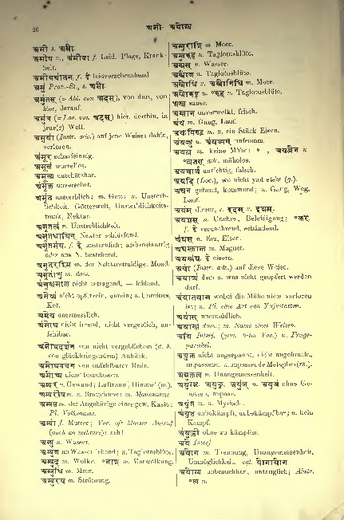
amṛ́ta unsterblich ; m. Gott; n. Unsterblichkeit, Götterwelt, Unsterblichkeitstrank, Nektar.
Burnouf 1866 Adjektiv
Originaltext · Französisch · Adjektiv
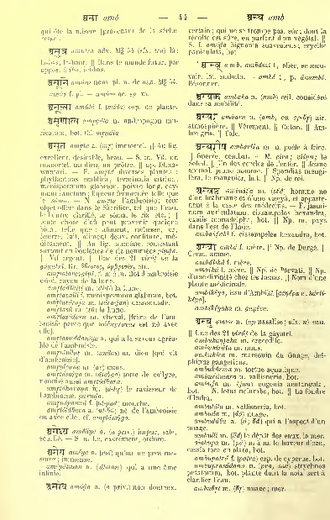
amṛta amṛta a. (mṛ) immortel. Au fig. excellent, désirable, beau. — S. m. Vd. un immortel, un dieu, un prêtre. np. Dhanvantari. — F. amṛtā diverses plantes: phyllanthus emblica, terminalia citrina, menispermum glabrum, poivre long, ocymum sanctum; liqueur fermentée telle que le soma. — N. amṛta l'ambroisie; tout objet offert dans le Sacrifice, tel que l'eau, le beurre clarifié, le soma, le riz, etc.; toute chose d'où peut provenir quelque bien, telle que: aliment, richesse, or, beurre, lait, aliment doux, confiture, médicament. Au fig. aumône, consistant surtout en boulettes de riz nommées piṇḍa. Vif argent. Une des 21 virāṭ de la gāyatrī. Gr. ἄϐροτος, ἀμβροσὶα, etc. amṛtataraṅgiṇī, f. m à m. flot d'ambroisie c-à-d. rayon de la lune. amṛtadīdhiti m. (dīdhi) la Lune. amṛtavallī f. menispermum glabrum, bot. amṛtasāraja m. (sāra-jan) cassonade. amṛtasū m. (sū) la Lune. amṛtasodara m. cheval, [frère de l'ambroisie parce que ucchaiśravas est né avec elle]. amṛtasvādanīya a. qui a la saveur agréable de l'ambroisie. amṛtāndhas m. (andhas) un dieu [qui vit d'ambroisie]. amṛtāśana m. (aś) mms. amṛtāsaṅga m. (āsaṅga) sorte de collyre, nommé aussi amṛtodbhava. amṛtāharaṇa m. (ā-hṛ) le ravisseur de l'ambroisie, garuḍa. amṛtotpannā f. (ut-pad) mouche. amṛtotdbhava a. (ut-bhū) né de l'ambroisie ou avec elle; cf. amṛtāsaṅga.
Quelltextfundstellen (44)
DYS 4 Fundstellen
HP 9 Fundstellen
Weitere 3 Quelltextseiten
HTK 1 Fundstelle
IVU 3 Fundstellen
MAN 3 Fundstellen
SiSa 8 Fundstellen
SiSa 4.1-4.8: Yonimudrā-Kreislauf 2 Fundstellen
Direkt belegt
SiSa 5.132-5.143: Innere Vārāṇasī 2 Fundstellen
Direkt belegt
-
SiSa 5.136 Segment 10
-
SiSa 5.137 Segment 1
SVU 13 Fundstellen
Weitere 5 Quelltextseiten
SVU 4.17-4.22: Erkenntnis und Schutz 2 Fundstellen
Direkt belegt
SVU 5.1-5.6: Der Herr der Weltursprünge 2 Fundstellen
Direkt belegt
Mit AYI Free weitermachen
Bildquelle: AYI Archiv.