

vāyu वायु – wind; breath; vital force
adjective · substantive masculine · Word type unspecified
Dictionary sources
AYI dictionary substantive masculine
wind; breath; vital force
Cappeller 1891 adjective · substantive masculine
Original text · English · substantive masculine
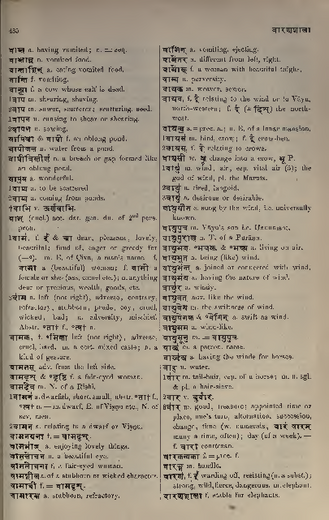
vāyú1 ·m. wind, air, esp. vital air (5); the god of wind, pl. the Maruts.
Original text · English · adjective
vāyú2 ·a. tired, languid.
Original text · English · adjective
vāyú3 ·a. desirous or desirable.
Monier-Williams 1872 substantive masculine
Original text · English · substantive masculine
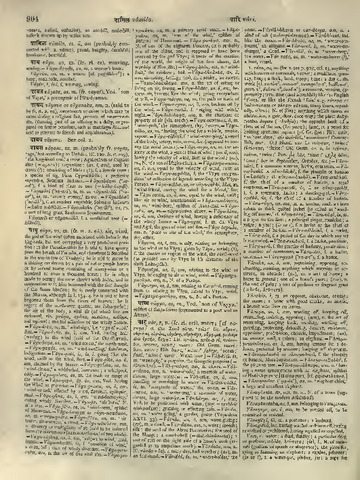
vāyu vāyu, us, m. (fr. rt. 2. vā), air, wind, the god of the wind (often associated with Indra in the Ṛg-veda, but not occupying a very prominent posi- tion; in the Puruṣa-sūkta he is said to have sprung from the breath of Puruṣa, and elsewhere is described as the son-in-law of Tvaṣṭṛ; he is said to move in a shining car drawn by a pair of red or purple horses or by several teams consisting of ninety-nine or a hundred or even a thousand horses; he is often made to occupy the same chariot with Indra, and in conjunction with him honoured with the first draught of the Soma libation; he is rarely connected with the Maruts, although in 1. 134, 4. he is said to have begotten them from the rivers of heaven; he is regent of the north-west quarter, see loka-pāla); the air of the body, a vital air (of which five are reckoned, viz. prāṇa, apāna, samāna, udāna, and vyāna); morbid affection of the windy humor.
Petersburger 1855 adjective · substantive masculine
Original text · German · adjective
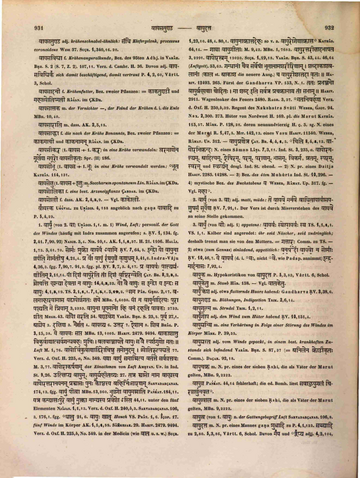
2. vāyú (von 3. vā) adj. matt, müde: te vā̱yave̱ manàve bādhi̱tāyāvā̀sayannu̱ṣasa̱ṃ sūryèṇa ṚV. 7,91,1. Der Vers ist durch Missverstehen des vāyave an seine Stelle gekommen.
Original text · German · adjective
3. vāyú (von vī) adj. 1〉 appetens: vā̱yavàḥ sthopā̱yavàḥ stha TS. 1,1,1,1. VS. 1,1. Kälber sind angeredet: ihr seid Näscher, seid zudringlich; deshalb trennt man sie von den Müttern. = gantāraḥ Comm. zu TS. — 2〉 etwa (zum Genuss) einladend, appetitlich: va̱na̱rṣadò vā̱yavo̱ na somā̀ḥ ṚV. 10,46,7. ye vā̱yavà (d. i. ˚vaḥ, nicht ˚ve, wie Padapāṭha padap. annimmt) indra̱mādànāsaḥ ṚV. 7,92,4.
Original text · German · substantive masculine
1. vāyú (von 2. vā) UṆĀDIS. 1,1. m. 1〉 Wind, Luft; personif. der Gott des Windes (häufig mit Indra zusammen angerufen; s. ṚV. 1,134. fg. ṚV. 2,41. ṚV. 7,90. fg. ṚV. 7,92) NAIGH. 5,4. NIR. 10,1. AK. 1,1,1,57. H. 21. H. 1106. HALĀY. 1,75. HALĀY. 5,61. HALĀY. 5,70. somàḥ śu̱kro vā̱yavè 'yāmi ṚV. 7,64,5. indro̱ yo vā̱yunā̱ jayàti̱ gomàtīṣu ṚV. 4,21,4. pra vò vā̱yuṃ ràtha̱yujàṃ kṛṇudhvam ṚV. 5,41,6. Indra-Vāyu ? ṚV. 4,36,3. fgg. ṚV. 7,90,7. fgg. ṚV. 7,91,2. fgg. pl. ṚV. 8,7,3. ṚV. 8,4,17. pra vā̱yavàḥ pā̱ntyagràṇītim ṚV. 2,11,14. yāṃ diśaṃ vāyureti tāṃ diśaṃ vṛṣṭiranveti ŚAT. BR. 8,2,3,5. mlocanti hyanyā devatā na vāyuḥ ŚAT. BR. 14,4,3,33. yo vai vāyuḥ sa indro ya indraḥ sa vāyuḥ ŚAT. BR. 4,1,3,19. TS. 2,1,1,1. TS. 7,1,5,1. TS. 7,5,19,2. ˚sama PĀR. GṚHY. 2,17. balamāhārayāmāsa yadvāyorjagataḥ kṣaye MBH. 1,6030. yāṃ na vāyurnādityaḥ purā paśyati me priyām MBH. 3,2353. vāyunā dhūyamāno hi vanaṃ dahati pāvakaḥ MBH. 3,2733. śīta MEGH. 43. vāyau sarati MEGH. 54. caṇḍavega VARĀH. BṚH. S. 25,5. pūrva VARĀH. BṚH. S. 27,1. āgneya VARĀH. BṚH. S. 2. dakṣiṇa VARĀH. BṚH. S. 3. nairṛta VARĀH. BṚH. S. 4. vāyavya VARĀH. BṚH. S. 6. uttara VARĀH. BṚH. S. 7. aiśāna VARĀH. BṚH. S. 8. śiva BHĀG. P. 3,15,38. ye vāyavaḥ sapta MBH. 13,1005. HARIV. 2479. HARIV. 9494. ākāśāttu vikurvāṇātsarvagandhavahaḥ śuciḥ . balavāñjāyate vāyuḥ sa vai sparśaguṇo mataḥ .. Luft M. 1,76. vāyorvikurvāṇādvirociṣṇu tamonudam . jyotirutpadyate M. 77. Verz. d. Oxf. H. 225,a, No. 549. yathā vāyuṃ samāśritya vartante sarvajantavaḥ M. 3,77. vāyorākarṣaṇam das Einathmen von Luft AMṚTAN. UP._in_Ind. St. 9,26. utkṣipya vāyum, vāyurgrahītavyaḥ Ind. St. 27. tatra śvāso nāma bāhyasya vāyorantarānayanam praśvāsaḥ punaḥ kauṣṭhasya bahirniḥsāraṇam SARVADARŚANAS. 174,13. fgg. vāyuṃ pītvā MBH. 13,360. bhujago vāyumaśnāti PAÑCAT. 184,11. yatra kanyāntaḥpure vāyuṃ muktvā nānyasya praveśo 'sti PAÑCAT. 44,11. unter den fünf Elementen NYĀYAS. 1,1,13. Verz. d. Oxf. H. 240,b,3. SARVADARŚANAS. 106,3. SARVADARŚANAS. 176,1. fgg. ˚dhātu SARVADARŚANAS. 21,6. vāyuḥ khāt Hauch VS. PRĀT. 1,6. ĪŚOP. 17. fünf Winde in Körper AK. 1,1,1,59. SĀṂKHYAK. 29. HARIV. 2479. HARIV. 9494. Verz. d. Oxf. H. 225,b, No. 549. in der Medicin (wie vāta u. s. w.) SUŚR. 1,23,10. SUŚR. 1,48,4. SUŚR. 1,80,1. vāyunākrāntadehaḥ so v. a. vāyurogeṇākrānta˚ KATHĀS. 64,14. — gāthā vāyugītāḥ M. 9,42. MBH. 1,7682. vāyurantarīkṣādabhāṣata MBH. 3,2991. vāyorastram MBH. 3,12020. SUŚR. 1,19,18. VARĀH. BṚH. S. 43,44. VARĀH. BṚH. S. 46,64 (Luftgott). VARĀH. BṚH. S. 53,63. gandhānāṃ caiva sarveṣāṃ bhūtānāmaśarīriṇām . śabdākāśavalānāṃ (kāla st. ākāśa die neuere Ausg.) ca vāyurīśastadā kṛtaḥ .. HARIV. 12493. HARIV. 265. Fürst der Gandharva VP. 153, N. 1. tataḥ prabhañjano vāyurbrahmaṇā coditaḥ . mā śabda iti sarvatra pracakrāmātha tāṃ sabhām .. HARIV. 2911. Wagenlenker des Feuers HARIV. 2480. RAGH. 3,37. ˚matanibarhaṇa Verz. d. Oxf. H. 250,b,39. Regent des Nakṣatra Svāti WEBER, JYOT. 94. Nax. 2,300. Nax. 2,373. Hüter von Nordwest H. 169. pl. die Marut KATHĀS. 115,57. MĀRK. P. 128,28. deren neunundvierzig H. ś. 5. sg. N. eines der Marut R. 1,47,5. MIT. 142,12. eines Vasu HARIV. 11540. WEBER, RĀMAT. UP. 312. — vāyupraṇetra ŚAT. BR. 4,4,1,5. ˚citi ŚAT. BR. 8,4,4,12. vāyorabhikrandaḥ N. eines Sāman LĀṬY. 7,3,11. Ind. St. 3,235,a. vāyoranantyam, ādityam, aiṣiram, param, parāṇam, bhāsam, vikarma, vratam, sparam, svaram und svargyam desgl. Ind. St. ebend. — 2〉 N. pr. eines Daitya HARIV. 2285. HARIV. 14288. — 3〉 Bez. des 4ten Muhūrta Ind. St. 10,296. — 4〉 mystische Bez. des Buchstabens ya WEBER, RĀMAT. UP. 317. fg. — Vgl. mahā˚.
Böhtlingk 1879 adjective · substantive masculine
Original text · German · adjective
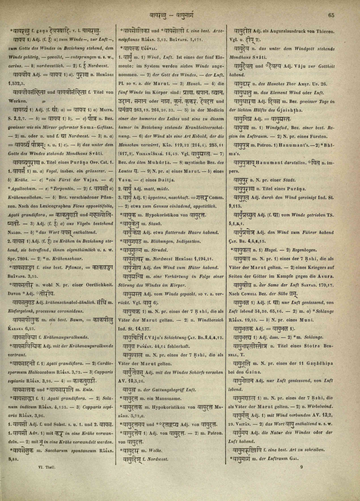
2. vāyú Adj. matt, müde.
Original text · German · adjective
3. vāyú Adj. — 1〉 appetens, naschhaft = gantar Comm. — 2〉 etwa zum Genuss einladend, appetitlich.
Original text · German · substantive masculine
1. vāyú m. — 1〉 Wind, Luft. Ist eines der fünf Elemente; im System werden sieben Winde angenommen. — 2〉 der Gott des Windes, — der Luft, Pl. so v. a. die Marut. — 3〉 Hauch. — 4〉 die fünf Winde im Körper sind: prāṇa, apāna, vyāna, udāna, samāna oder nāga, kūrma, kṛkara, devadatta und dhanaṃjaya Chr. 263,10. Chr. 264,20. Chr. 264,33. — 5〉 in der Medicin einer der humores des Leibes und eine zu diesem humor in Beziehung stehende Krankheitserscheinung. — 6〉 der Wind als eine Art Kobold, der die Menschen verwirrt, KĀD. 119,22 (214,4). KĀD. 255,11 (417,9). VIKRAMĀṄKAC. 14,49. Vgl. vāyugrasta. — 7〉 Bez. des 4ten Muhūrta. — 8〉 mystische Bez. des Lautes ya. — 9〉 N. pr. — a〉 eines Marut. — b〉 eines Vasu. — c〉 eines Daitya.
Apte 1890 substantive masculine
Original text · English · substantive masculine
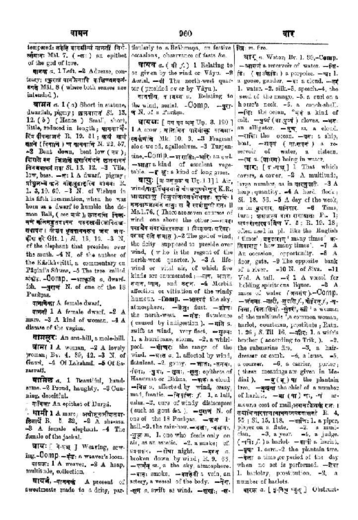
vāyuḥ [vā-uṇ yuka ca Uṇ. 1. 1] 1 Air, wind; vāyurvidhunayati caṃpakapuṣpareṇūn K.R.; ākāśāttu vikurvāṇātsarvagaṃdhavahaḥ śuciḥ . balavāñjāyate vāyuḥ sa vai sparśaguṇo mataḥ .. Ms. 1. 76. (There are seven courses of wind one above the other: — āvahaḥ pravahaścaiva saṃvahaścodvahastathā . vivahākhyaḥ parivahaḥ parāvaha iti kramāt). 2 The god of wind, the deity supposed to preside over wind, (who is the regent of the north-west quarter.). 3 A lifewind or vital air, of which five kinds are enumerated: — prāṇa, apāna, samāna, vyāna, and udāna. 4 Morbid affection or vitiation of the windy humour. Comp. — āspadaṃ the sky, atmosphere. — ketuḥ dust. — koṇaḥ the north-west. — gaṃḍaḥ flatulence (caused by indigestion). — gati a. swift as wind, very fleet. — gulmaḥ 1 a hurricane, storm. 2 a whirlpool. — gocaraḥ the range of the wind. — grasta a. 1 affected by wind, flatulent. 2 gouty. — jātaḥ, -tanayaḥ, naṃdanaḥ, -putraḥ, -sutaḥ, -sūnuḥ epithets of Hanumat or Bhīma. — dāruḥ a cloud. — nighna a. affected by wind, crazy, mad, frantic. — nivṛttiḥ f. 1 a lull, calm. 2 cure of windy distempers (such as gout &c.). — purāṇaṃ N. of one of the 18 Purāṇas. — phalaṃ 1 hail. 2 the rainbow. — bhakṣaḥ, -bhakṣaṇaḥ, — bhuj m. 1 one who feeds only on air, as an ascetic. 2 a snake; cf. pavanāśana. — roṣā night. — rugṇa a. broken down by wind; R. 9. 63. — vartman m., n. the sky, atmosphere. — vāhaḥ smoke. — vāhinī a vein, an artery, a vessel of the body. — vega, sama a. swift as wind. — sakhaḥ, ([Page 0960-c]) — sakhiḥ m. fire.
Cappeller 1887 substantive masculine · Word type unspecified
Original text · German · substantive masculine
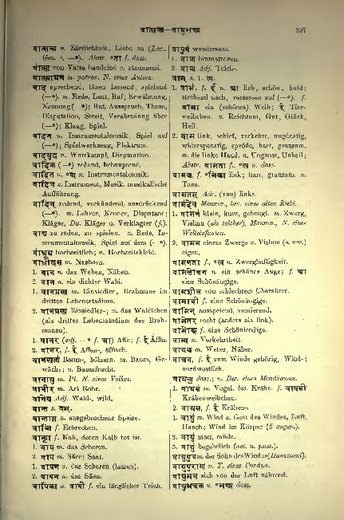
1. vāyú m. Wind u. Gott des Windes, Luft, Hauch; Wind im Körper (5 angen.).
Original text · German · Word type unspecified
2. vāyú matt, müde.
Original text · German · Word type unspecified
3. vāyú begehrlich (act. u. pass.).
Burnouf 1866 substantive masculine
Original text · French · substantive masculine
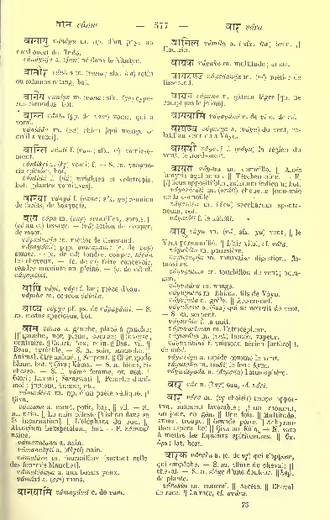
vāyu vāyu m. (vā; sfx. yu) vent, le Vent personnifié. L'air vital, cf. vāta. vāyuketu m. poussière. vāyugaṇḍa m. mauvaise digestion, flatuosités. vāyugulma m. tourbillon de vent; ouragan. vāyudāru m. nuage. vāyuputra m. Bhīma, fils de Vāyu. vāyuphala n. grêle. Arc-en-ciel. vāyubhakṣa a. (bhakṣ) qui se nourrit de vent. — S. m. serpent. vāyuroṣā f. la nuit. vāyuvartman m. l'atmosphère. vāyuvāha m. (vah) fumée, vapeur. vāyuvāhinī f. vaisseau aérien [artère] t. de méd. vāyuvega a. rapide comme le vent. vāyusakha m. (sakhi) le feu; Agni. vāyvāspada n. (āspada) l'atmosphère.
Occurrences in source texts (118)
DYS 17 occurrences
DYS 73–78: Kevala Kumbhaka 3 occurrences
Direct occurrences
DYS 112–121: Five Elements 6 occurrences
Direct occurrences
GoS 9 occurrences
GoS 34–41: Sun, Sound and Cooling 2 occurrences
Direct occurrences
GoS 50–63: Three Locks 3 occurrences
Direct occurrences
HP 30 occurrences
HP 2.1-2.6: Introduction to Prāṇāyāma 3 occurrences
Direct occurrences
HP 2.15-2.20: Correct Practice 3 occurrences
Direct occurrences
10 more source pages
HP 4.0*1-4.0*14: Samādhi and Laya 2 occurrences
Direct occurrences
HP 4.11*15-4.11*28: Space and Laya 3 occurrences
Direct occurrences
-
HP 4.11*16 Segment 2
-
HP 4.11*17 Segment 3
-
HP 4.11*17 Segment 10
HTK 7 occurrences
HTK 10.14*2–17*1: Śītalī and Antaraṅgaka-kumbha 3 occurrences
Direct occurrences
HTK 10.26–29*1: Cakra, Śaṅkha, Vāmāvartta, Vartmagati and Gadā 1 occurrence
Direct occurrences
-
HTK 10.28 Segment 3
HTK 10.34*2–38*1: Asvaṅgaśṛṅkhalā and Kumbhāntaraśṛṅkhalā 1 occurrence
Direct occurrences
-
HTK 10.37 Segment 6
IVU 1 occurrence
SiSa 50 occurrences
SiSa 1.71-1.81: Avidyā und Elemente 6 occurrences
Direct occurrences
SiSa 3.1-3.10: Herzlotus und Prāṇa 2 occurrences
Direct occurrences
SiSa 3.21-3.31: Nāḍī-Reinigung 3 occurrences
Direct occurrences
22 more source pages
SiSa 3.39-3.40: Kumbhaka-Kraft 2 occurrences
Direct occurrences
SiSa 3.55-3.60: Ghaṭāvasthā 4 occurrences
Direct occurrences
SiSa 3.68-3.80: Vāyusādhana 5 occurrences
Direct occurrences
SiSa 4.43-4.50: Mahāvedha 4 occurrences
Direct occurrences
SiSa 5.48-5.71: Innere Meditation 2 occurrences
Direct occurrences
SiSa 5.74-5.76: Nāḍī-Zirkulation 2 occurrences
Direct occurrences
SiSa 5.94-5.101: Mūlādhāra-Siddhis 2 occurrences
Direct occurrences
-
SiSa 5.100 Segment 10
-
SiSa 5.101 Segment 5
SVU 2 occurrences
Continue with AYI Free
Image source: AYI archive.