

viśva विश्व – ganze Welt; All; sämtliche; alle Formen umfassend; alle
Adjektiv · Pronomen · Pronomen quant · Substantiv Maskulin · Substantiv Neutrum · Worttyp nicht bestimmt
Wörterbuchquellen
AYI Wörterbuch Adjektiv · Pronomen quant · Substantiv Neutrum
Adjektiv
ganze Welt; All; sämtliche; alle Formen umfassend; alle
Pronomen quant
sämtliche; insgesamt; umfassend; alle; All
Substantiv Neutrum
Welt-; Alls
Cappeller 1891 Adjektiv
Originaltext · Englisch · Adjektiv
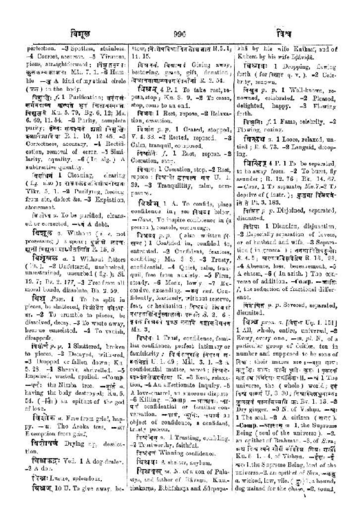
víśva ·a. all, every (n. every one); entire, whole, universal, pervading all (Viṣṇu, the intellect, etc.); pl. viśve (±devās) all the gods or the All-gods (as a class). m. the intellect (ph.); n. the All or Universe.
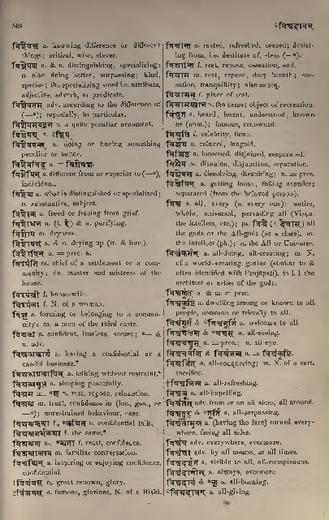
Monier-Williams 1872 Adjektiv
Originaltext · Englisch · Adjektiv
viśva viśva, as, ā, am (in Uṇādi-s. I. 151. said to be fr. rt. 1. viś, ‘to pervade;’ according to some connected with rt. śvi with vi; declined as a pro- nominal, like sarva, nom. pl. masc. viśve, see Gram. 238; cf. śaśvat, śāśvata), all, every, every one, (viśvasmād Indra uttaraḥ, Indra is higher than all, Ṛg-veda X. 86, 1), entire, whole, universal; (as), m., N. of a kind of deity belonging to a class of ten (forming one of the nine Gaṇas or classes enumerated under Gaṇa-devatā, q. v.: in Ṛg-veda X. 130, 5. they are associated with the Jagatī metre, and called Viśve devāḥ, which may have originally denoted ‘all the gods collectively,’ though the intro- duction of the Viśvas under the name viśva-devāḥ or viśve-devāḥ, as a separate troop or Gaṇa of deities, seems to have taken place at an early period: accord- ing to the Viṣṇu and other Purāṇas they were sons of Viśvā, daughter of Dakṣa, and their names are given as follow, 1. Vasu, 2. Satya, 3. Kratu, 4. Dakṣa, 5. Kāla, 6. Kāma, 7. Dhṛti, 8. Kuru, 9. Purū-ravas, 10. Mādravas; two others are added by some authorities, viz. 11. Rocaka or Locana, 12. Dhvani [also written Dhūri ?]: they are particularly worshipped at the Śrāddhas or funeral obsequies in honour of deceased ancestors: moreover, according to Manu III. 90, 121, offerings should be made to them daily, — these privileges having been bestowed on them, it is said, by Brahmā and the Pitṛs, as a reward for certain severe austerities they had per- formed on the Himālaya: sometimes, however, it is difficult to decide whether the expression viśve devāḥ refers to all the gods or to the particular troop of deities described above); N. of Intellect in the Ve- dānta philosophy, or (according to some) the faculty which perceives Singleness, (perhaps translatable by ‘the Pervader;’ according to a commentator = sthūla-śarīra-vyaṣṭy-upahita-caitanya, ‘intel- lect located in the distributive aggregate of material bodies’); N. of a well known lexicon, = viśva-pra- kāśa, q. v.; (ā), f., N. of a daughter of Dakṣa and wife of Dharma; the plant Aconitum Ferox; a tree used for dying red (commonly called Atis = Betula); the shrub Asparagus Racemosus (= śatāvarī); another plant (= pippalī); dry ginger; (am), n. the whole world, universe, whole creation; dry ginger.
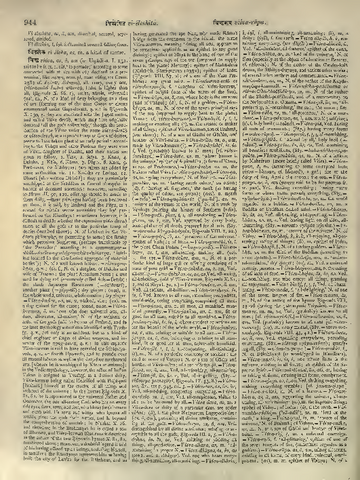
Petersburger 1855 Adjektiv · Substantiv Maskulin · Substantiv Neutrum
Originaltext · Deutsch · Adjektiv · Substantiv Maskulin · Substantiv Neutrum
víśva UṆĀDIS. 1,151. VS. PRĀT. 2,39. ŚĀNT. 2,6. 1〉 adj. (f. ā) pronom. Declin. gaṇa sarvādi zu P. 1,1,27. VOP. 3,9. a〉 jeder, alle, sämmtlich, ganz (in den BRĀHMAṆA und später durch sarva ersetzt) NAIGH. 3,1. AK. 3,2,14. TRIK. 3,3,421. H. 1433. H. an. 2,537. MED. v. 23. fg. HALĀY. 4,28. jagàt ṚV. 4,13,3. bhuvana ṚV. 4,14,2. viśàḥ ṚV. 5,17,4. draviṇa ṚV. 5,28,2. ma̱rutàḥ ṚV. 5,31,10. viśvàsya ja̱ntoḥ ṚV. 5,32,7. tvama̱sya kṣàyasi̱ yaddha̱ viśvàm ṚV. 4,5,11. dū̱to viśvèṣām ṚV. 4,9,2. viśvàsya dū̱tam ṚV. 7,16,1. e̱tā viśvā̀ cakṛ̱vām̐ ìndra̱ bhūrì ṚV. 5,29,14. ojas ṚV. 5,32,10. du̱ri̱tā ṚV. 7,16,1. rū̱pāṇì ṚV. 7,55,1. śa̱kra èṇaṃ pīpaya̱dviśvàyā dhi̱yā ṚV. 8,1,19. pibā̱ tva1̱̀syāndhàsa̱ indra̱ viśvā̀su (nämlich dikṣu nach SĀY., eher vikṣu) ṚV. 8,84,2. AV. 1,32,4. AV. 15,3,11. yasye̱mā viśvā̱ bhuvànāni̱ sarvā̀ TBR. 3,1,1,1. viśvasya jagataḥ MBH. 3,14145. viśve jagati R. 4,11,10. ˚viśvaṃbharā Verz. d. Oxf. H. 139,b,3. tvayā sṛṣṭamidaṃ viśvaṃ dhātarguṇavisarjanam BHĀG. P. 10,16,57. ˚lokeṣu Spr. 5023. — b〉 viśvè de̱vāḥ sowohl alle Götter als die so benannte Götterklasse; s. u. 1. deva 2〉(b) In Stellen wie viśvā̀nde̱vānhàvāmahe ma̱ruta̱ḥ somàpītaye die göttlichen Marut insgesammt ṚV. 1,23,10. ṚV. 1,19,3 hat man nicht nöthig eine besondere Benennung der Marut anzunehmen. ai̱ndrā̱gnaṃ varma̱ viśvè de̱vā nāti̱vidhyànti̱ sarvè alle Götter insgesammt AV. 8,5,19. Als eine best. Götterklasse ŚAT. BR. 14,4,2,24. WEBER, JYOT. 94. Nax. 2,300. Nax. 2,374. MBH. 12,7540. HARIV. 14171. Ind. St. 8,257. fg. VARĀH. BṚH. S. 43,47. viśveṣāṃ devānāmudvaṃśīyam und vi˚ de˚ vratam Namen von Sāman Ind. St. 3,237,a. Auch viśve allein ohne devāḥ AK. 1,1,1,5. H. an. (viśve sureṣu zu lesen). MED. BHAG. 11,22. MBH. 2,303. MBH. 3,1768. HARIV. 441. HARIV. 7573. HARIV. 11849. VARĀH. BṚH. S. 98,5. VARĀH. BṚH. S. 99,1. BHĀG. P. 6,6,15. ādityaviśve BHĀG. P. 3,14. pitṛviśvasomāḥ VARĀH. BṚH. S. 8,23. Sie werden für Kinder der Viśvā, einer Tochter Dakṣaʼs und Gattin Dharmaʼs, angesehen HARIV. 147. HARIV. 11541. HARIV. 12479. ŚAṂK._zu_BṚH. ĀR. UP. S. 240. VP. 120. BHĀG. P. 6,6,7. Bez. der Zahl dreizehn GOLĀDHY. 11,23. GAṆIT. SPAṢṬĀDH. 8. GAṆIT. SPAṢṬĀDH. 12. — c〉 Alles in sich enthaltend oder Alles durchdringend, überall seiend: Viṣṇu (Kṛṣṇa) MBH. 6,2945. WEBER, KṚṢṆAJ. 289. WEBER, KṚṢṆAJ. 294. Seele, Intellect u. s. w. MAITRYUP. 2,5. NṚS. TĀP. UP._in_Ind. St. 9,125. Ind. St. 9,133. WEBER, RĀMAT. UP. 293. WEBER, RĀMAT. UP. 340. WEBER, RĀMAT. UP. 360. BHĀG. P. 7,15,54. VEDĀNTAS. (Allah.) No. 73. fg. — 2〉 m. a〉 N. pr. eines Fürsten MBH. 1,2672. eines gañjādhipa RĀJA-TAR. 8,2477. — b〉 Bez. einer Klasse von Manen MĀRK. P. 96,43. — c〉 = viśvaprakāśa Verz. d. Oxf. H. 126,a,20. Verz. d. Oxf. H. 136,a, No. 259. Verz. d. Oxf. H. 182,b,48. Verz. d. Oxf. H. 195,b,7. — 3〉 f. ā a〉 die Erde H. 935. — b〉 eine best. Pflanze, = ativiṣā, viṣā AK. 2,4,3,18. H. an. MED. = śatāvarī RĀJAN._im_ŚKDR. = pippalī ŚABDAC. ebend. — c〉 trockener Ingwer AK. 2,9,38. H. 420. MED. HALĀY. 2,460. SUŚR. 2,207,9. ŚĀRṄG. SAṂH. 2,2,17. ŚĀRṄG. SAṂH. 2,2,76. — d〉 Bez. einer der Zungen des Feuergottes MĀRK. P. 99,58. — e〉 ein best. Gewicht, = viṃśapala JYOTIṢMATĪ_im_ŚKDR.; nach ŚKDR. masc., aber das Citat lautet viśvā viṃśapalaṃ proktam. — f〉 N. pr. einer Tochter Dakṣaʼs, Gattin Dharmaʼs und Mutter der Viśve Devāḥ MBH. 1,2520. HARIV. 146. fg. HARIV. 11525. HARIV. 11541. fg. HARIV. 12450. fg. HARIV. 12479. VP. 119. fg. BHĀG. P. 6,6,4. BHĀG. P. 6,6,7. wird in Viśveśvara verehrt Verz. d. Oxf. H. 39,a,36. — g〉 N. pr. eines Flusses BHĀG. P. 5,19,18. — 4〉 n. a〉 das All, Weltall H. 1365. H. an. MED. AV. 9,7,4. ŚAT. BR. 14,9,3,5. MAITRYUP. 5,1. viśvasya kartā MUṆḌ. UP. 1,1,1. viśvasya mātaraḥ VARĀH. BṚH. S. 48,68. ŚĀK. 1. PRAB. 3,8. VOP. 5,10. BHĀG. P. 3,10,12. BHĀG. P. 4,7,21. BHĀG. P. 8,3,26. ˚saṃplava BHĀG. P. 3,17,15. idaṃ viśvam BHĀG. P. 2,1,24. BHĀG. P. 2,4,6. BHĀG. P. 3,22,20. asya viśvasya VARĀH. BṚH. S. 1,7. KATHĀS. 22,90. viśvamadaḥ KATHĀS. 240. viśvatrayeṇa yo mitraṃ kartuṃ na śakitaḥ purā (zur Erklärung des Namens Viśvāmitra) die drei Welten MĀRK. P. 8,234. — b〉 trockener Ingwer AK. 2,9,38. H. an. MED. RATNAM. 92. SUŚR. 2,481,21. SUŚR. 2,504,9. — c〉 Myrrhe DHANV._in_NIGH. PR. und RĀJAN._im_ŚKDR. — d〉 mystische Bez. des Vocals o WEBER, RĀMAT. UP. 317. fgg. — Wir vermuthen einen Zusammenhang von viśva mit viṣu.
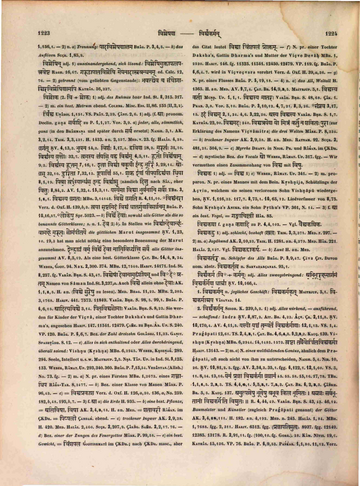
Böhtlingk 1879 Adjektiv · Substantiv Maskulin · Substantiv Neutrum
Originaltext · Deutsch · Adjektiv · Substantiv Maskulin · Substantiv Neutrum
víśva — 1〉 Adj. (f. ā) — a〉 jeder, all, sämmtlich, ganz; m. Jedermann Chr. 166,16. — b〉 víśve devā́ḥ alle Götter und auch eine best. Götterklasse. Auch viśve ohne devāḥ und viśva im Comp. — c〉 Alles in sich enthaltend oder Alles durchdringend, überall seiend (Viṣṇu-Kṛṣṇa. Seele, Intellect u. s. w.). Als m. der durch das Einzelding bedingte Intellect Chr. 269,3. — 2〉 m. — a〉 Pl. eine best. Götterklasse; s. u. 1〉b〉. — b〉 Bez. der Zahl dreizehn. — c〉 eine best. Gruppe von Manen. — d〉 abgekürzt für viśvaprakāśa. — e〉 N. pr. eines Fürsten. — 3〉 f. ā — a〉 Loc. Pl. etwa in allen Ansiedelungen, überall ṚV. 8,95,2. — b〉 *die Erde. — c〉 trockener Ingwer. — d〉 *Piper longum. — e〉 *Asparagus racemosus RĀJAN. 4,121. — f〉 *= ativiṣā und viṣā. — g〉 Bez. einer der Zungen des Feuergottes. — h〉 ein best. Gewicht. — i〉 N. pr. — α〉 einer Tochter Dakṣaʼs, Gattin Dharmaʼs und Mutter der Viśve Devās. — β〉 eines Flusses. — 4〉 n. — a〉 das All, Weltall, Welt überh. — b〉 trockener Ingwer. — c〉 *Myrrhe RĀJAN. 6,117. [Page6-127-b] — d〉 mystische Bez. des Lautes o.
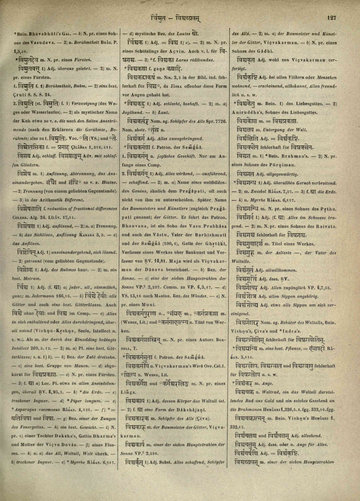
Apte 1890 Pronomen · Substantiv Maskulin · Substantiv Neutrum
Originaltext · Englisch · Pronomen · Substantiv Maskulin · Substantiv Neutrum
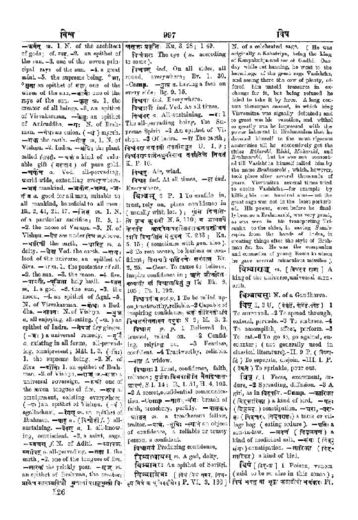
viśva pron. a. [viś-va Uṇ. 1. 151] 1 All, whole, entire, universal. 2 Every, every one. — m. pl. N. of a particular group of deities, ten in number and supposed to be sons of viśvā; their names are: — vasuḥ satyaḥ kraturdakṣaḥ kālaḥ kāmo dhṛtiḥ kuruḥ . purūravā mādrāyāśca viśvedevāḥ prakīrtitāḥ ... — śvaṃ 1 The universe, the (whole) world; idaṃ viśvaṃ pālyaṃ U. 3. 30; viśvasminnadhunānyaḥ kulavrataṃ pālayiṣyati kaḥ Bv. 1. 13. 2 Dry ginger. 3 N. of Viṣṇu. — śvaḥ 1 The soul. 2 A citizen (nāgara). Comp. — ātman m. 1 the Supreme Being (soul of the universe). 2 an epithet of Brahman. 3 of Śiva; atha viśva tmane gaurī saṃdideśa mithaḥ sakhīṃ Ku. 6. 1. 4 of Viṣṇu. — īśaḥ -ī śvaraḥ 1 the Supreme Being, lord of the universe. 2 an epithet of Śiva. — kadru a. wicked, low, vile. — (druḥ) 1 a hound, dog trained for the chase. 2 sound. ([Page 0997-a]) — karman m. 1 N. of the architect of gods; cf. tvaṣṭṛ. 2 an epithet of the sun. 3 one of the seven principal rays of the sun. 4 a great saint. 5 the supreme being. ˚jā, ˚sutā an epithet of saṃjñā, one of the wives of the sun. — kāryaḥ one of the rays of the sun. — kṛt m. 1 the creator of all beings. 2 an epithet of Viśvakarman. — ketuḥ an epithet of Aniruddha. — gaḥ N. of Brahman. — gaṃdhaḥ an onion. — (dhaṃ) myrrh. — gaṃdhā the earth. — goptṛ m. 1 N. of Viṣṇu. 2 Indra. — graṃthiḥ the plant called haṃsapadī. — cakraṃ a kind of valuable gift (mahādāna) of pure gold. — carṣaṇi a. Ved. all-pervading, world-wide, extending everywhere. — janaṃ mankind. — janīna, -janya, — janīya a. good for all men, suitable to all mankind, beneficial to all men; Bk. 2. 41, Bk. 21. 17. — jit m. 1 N. of a particular sacrifice; R. 5. 1. 2 the noose of Varuṇa. 3 N. of Viṣṇu. — deva see under viśva m. above. — dhāriṇī the earth. — dhārin m. a deity. — dhenā Ved. the earth. — nāthaḥ lord of the universe, an epithet of Śiva. — mā m. 1 the protector of all. 2 the sun. 3 the moon. 4 fire. — pāvanī, -pūjitā holy basil. — psan m. 1 a god. 2 the sun. 3 the moon. 4 an epithet of Agni. 5 N. of Viśvakarman. — bodhaḥ a Buddha. — bhāvanaḥ N. of Viṣṇu. — bhuja a. all enjoying, all-eating. ( — m.) an epithet of Indra. — bheṣajaṃ dry ginger. — (jaḥ) a universal remedy. — mūrti a. existing in all forms, all-pervading, omnipresent; Māl. 1. 3. — (rtiḥ) 1 the supreme being. 2 N. of Śiva — yoniḥ 1 an epithet of Brahman. 2 of Viṣṇu. — rāj m. — rājaḥ a universal sovereign. — rucī one of the seven tongues of fire. — rūpa a. omnipresent, existing everywhere. — (paḥ) an epithet of Viṣṇu. — (paṃ) agallochum. — retas m. an epithet of Brahman. — vāh a. (viśvauhī f.) allsustaining. — vedas a. 1 all-knowing, omniscient. 2 a saint, sage. — vyacas f. N. of Aditi. — vyāpaka, vyapin a. all-pervading. — sahā 1 the earth. 2 one of the tongues of fire. — sārakaṃ the prickly pear. — sṛj m. an epithet of Brahman, the creator; prāyeṇa sāmagryavidhau guṇānāṃ parāṅmukhī ([Page 0997-b]) viśvasṛjaḥ pravṛttiḥ Ku. 3. 28; Ku. 1. 49.
Cappeller 1887 Worttyp nicht bestimmt
Originaltext · Deutsch · Worttyp nicht bestimmt
víśva jeder, ganz; alles durchdringend (Viṣṇu); Pl. alle, víśve (devā́s) alle Götter o. die Allgötter (eine best. Klasse der G.). m. der durch das Einzelding bedingte Intellekt (Ph.). n. alles, das All, die Welt.

Burnouf 1866 Adjektiv
Originaltext · Französisch · Adjektiv
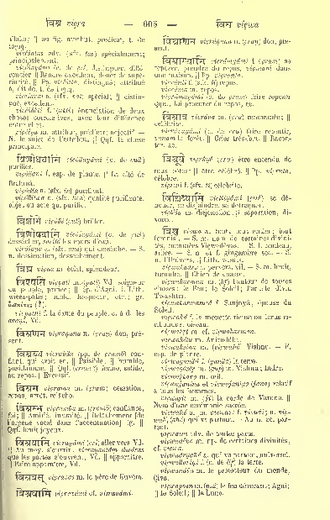
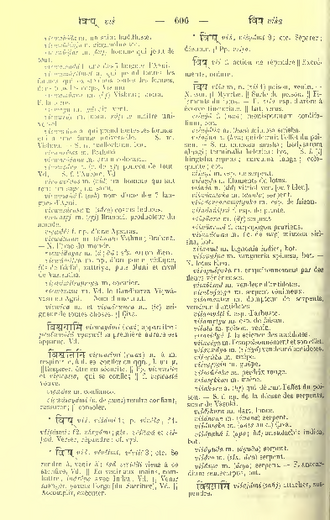
viśva viśva a. tout, tout entier; tout [omnis]. — S. m. nom de certaines divinités, nommées Viśvadevas. — S. f. bouleau, arbre. — S. n. et f. gingembre sec. — S. n. l'Univers. Lith. wissas. viśvakadru a. pervers, vil. — S. m. bruit, tumulte. Chien de chasse. viśvakarman m. (kṛ) l'auteur de toutes choses: le Feu; le Soleil; l'artiste divin Twashtri. viśvakarmasutā f. Saṃjñā, épouse du Soleil. viśvakā f. la mouette rieuse ou larus riribundus, oiseau. viśvakṛt m. cf. viśvakarman. viśvaketu m. Aniruddha. viśvaksena m. (viśvañc) Viṣṇu. — F. esp. de plante. viśvagandhā f. (gandha) la terre. viśvagoptṛ m. (gup) m. Viṣṇu; Indra. viśvaṅkara m. œil. viśvajanīna et viśvajanīya (jana) relatif à tous les hommes. viśvajit m. (jī) la corde de Varuṇa. Nom d'une cérémonie sacrée. viśvañc a. [m. viśvaṅ; f. viśucī; n. viśvak] (añc) qui va partout. — Au n. ac. partout. viśvatas adv. de toutes parts. viśvadeva m. np. de certaines divinités, cf. viśva. viśvadryañc a. qui va partout, universel. viśvadhāriṇī f. (c. de dhṛ) la terre. viśvanātha m. le protecteur du monde, Śiva. viśvapsan m. (psā) le feu dévorant; Agni; le Soleil; la Lune. [Page606-1] viśvabodha m. un saint buddhiste. viśvabheṣaja n. gingembre sec. viśvabhojas m. (bhuj) homme qui jouit de tout. viśvamadā f. une des 7 langues d'Agni. viśvamūrtimat a. qui prend toutes les formes, qui existe dans toutes les formes, dans tous les corps, Viṣṇu. viśvambhara m. (bhṛ) Viṣṇu; Indra. — F. la terre. viśvayu m. (yā) air, vent. viśvarāj m. (nom. rāṭ) le maître universel. viśvarūpa a. qui prend toutes les formes, qui a une forme universelle. — S. m. Viṣṇu. — S. n. agallochum, bot. viśvaretas m. Brahmā. viśvarocana m. arum colocasia. viśvavāra a. (c. de vṛ) pourvu de tout, Vd. — S. f. l'Aurore, Vd. viśvavedas m. (vid) un homme qui sait tout, un sage, un saint. viśvasahā f. (sah) nom d'une des 7 langues d'Agni. viśvasāraka n. (sāra) costus indicus. viśvasṛj m. (sṛj) Brahmā, producteur du monde. viśvācī f. np. d'une Apsaras. viśvātman m. (ātman) Viṣṇu; Brahmā. — N. l'âme du monde. viśvādhāyas m. (ā; dhā; sfx. as) un dieu. viśvāmitra m. np. d'un poète védique, fils de Gādhi, kṣatriya, puis Muni et rival de Vasiṣṭha. viśvāmitrapriya m. cocotier. viśvāvasu m. Vd. le Gandharva Viśvāvasu ou Agni. — Nom d'une nuit. viśveśa m. et viśveśvara m. (īś) seigneur de toutes choses. Śiva.
Abgeleitete Wörter
Weitere Ableitungen (1)
Quelltextfundstellen (62)
IVU 1 Fundstelle
MAN 3 Fundstellen
MandUp 2 Fundstellen
PJH 5 Fundstellen
PJH 1-2: Beschreibung des universellen oder göttlichen Bewusstseins 2 Fundstellen
Direkt belegt
PJH 3-4: Wahrnehmender und Wahrgenommenes; Mikrokosmos und Makrokosmos 1 Fundstelle
Direkt belegt
-
PJH 4 Segment 7
PJH 15-16: Erlangung der Kraft, Freude des Bewusstseins (cidānanda) und Befreiung zu Lebzeiten (jīvanmukti) 1 Fundstelle
Direkt belegt
-
PJH 15 Segment 3
SiSa 12 Fundstellen
SiSa 1.51-1.64: Selbst als Licht 3 Fundstellen
Direkt belegt
SiSa 1.65-1.70: Māyā-Aufhebung 4 Fundstellen
Direkt belegt
1 weitere Quelltextseite
SS 3 Fundstellen
SVU 30 Fundstellen
SVU 1.7-1.12: Dreiheit und Freiheit 4 Fundstellen
Direkt belegt
Weitere 9 Quelltextseiten
SVU 4.1-4.5: Der Eine in allen Formen 2 Fundstellen
Direkt belegt
SVU 4.11-4.16: Der verborgene Schöpfer 5 Fundstellen
Direkt belegt
SVU 5.1-5.6: Der Herr der Weltursprünge 3 Fundstellen
Direkt belegt
SVU 5.12-5.14: Erkenntnis und Freiheit 2 Fundstellen
Direkt belegt
SVU 6.1-6.6: Herr der Weltentfaltung 2 Fundstellen
Direkt belegt
VBT 6 Fundstellen
VBT 57–64: Zwischenräume und Gleichheit 2 Fundstellen
Direkt belegt
Mit AYI Free weitermachen
Bildquelle: AYI Archiv.