

rūpa रूप – shaped like; having the form of
adjective · substantive masculine · substantive neuter · Word type unspecified
Dictionary sources
AYI dictionary adjective · substantive neuter
adjective
shaped like; having the form of
substantive neuter
form; shape; appearance
Cappeller 1891 substantive neuter
Original text · English · substantive neuter
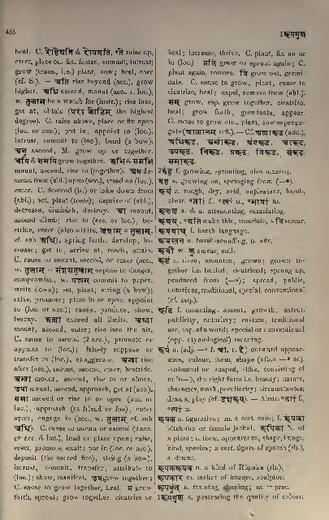
rūpá ·n. (adj. --° f. ā, r. ī) outward appearance, colour, form, shape (often --° adj. -coloured or -shaped, -like, consisting of or in--), the right form i.e. beauty; nature, character, mark, peculiarity; circumstances; drama, play (cf. daśarūpa). -- Abstr. °tāÅ f., °tvaÅ n.
Monier-Williams 1872 substantive neuter
Original text · English · substantive neuter
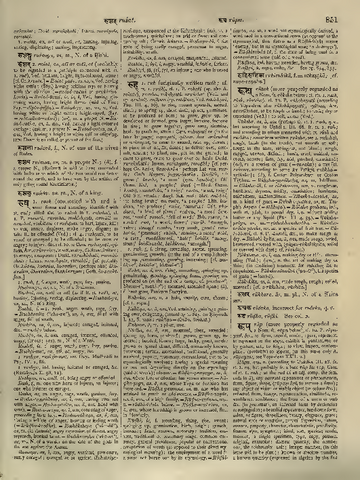
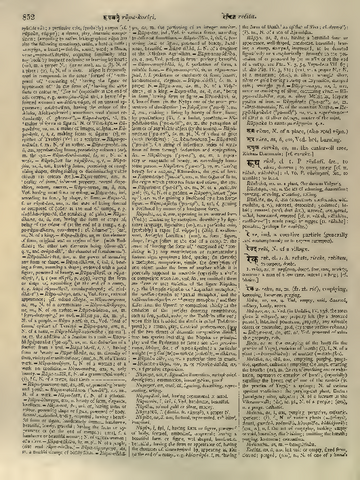
Rūpa, am, n. (according to Uṇādi-s. III. 28. fr. rt. 1. ru, but probably fr. a base rūp for rop, Caus. of rt. 1. ruh; at the end of an adj. comp. the fem. ends in ā), any outward appearance or phenomenon, form, figure, shape, (rūpaṃ kṛ, to assume a form); any object of vision or visible object (as colour &c.); reflected form, image, representation, similitude, re- semblance, semblance; the form of a noun or verb &c. (in grammar), an inflected form by declension or conjugation; a beautiful appearance, handsome form, mien, or figure, shapeliness, beauty, elegance, grace; natural state or condition, natural disposition, nature, essence, property, character, characteristic, peculiarity, feature, sign, symptom; kind, sort, species; mode, manner; a single specimen, type, copy, pattern, original, exemplar; discrete quantity, the number one, the arithmetical unit; integer number, (in this sense said to be plur.); known or absolute number, a known quantity (expressed in algebra by the first syllable rū); a particular coin, (probably) a rupee [cf. rūpaka, rūpya]; a drama, play, dramatic compo- sition; (according to native lexicographers rūpa has also the following meanings), cattle, a herd of cattle; = mṛga, a beast; = śabda, sound, word; a Śloka, verse; = granthāvṛtti, acquiring familiarity with any book by frequent recitation or learning by heart; (as), m. a proper N.; (as or am), m. n. (?) , N. of a place; (ā), f., N. of a river. Rūpa is frequently used in compounds in the sense ‘formed of,’ ‘com- posed of,’ ‘consisting of,’ ‘having the figure or appearance of,’ ‘in the form of,’ ‘having the same form or colour as,’ ‘like to’ (especially at the end of adj. comps., e. g. manojña-rūpā strī, a beautifully- formed woman; an-ācāra-rūpa, of an unusual ap- pearance; aśoka-rūpa, having the colour of the Aśoka, Aśoka-coloured; sometimes used almost re- dundantly, cf. ghora-r˚).
Petersburger 1855 substantive masculine · substantive neuter
Original text · German · substantive masculine · substantive neuter
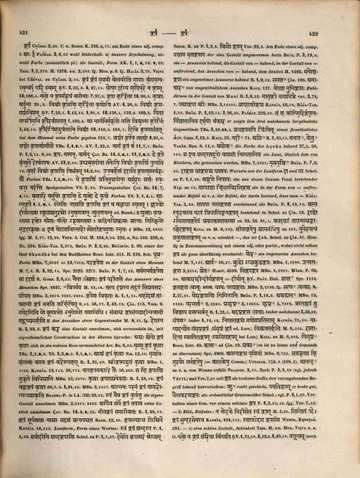
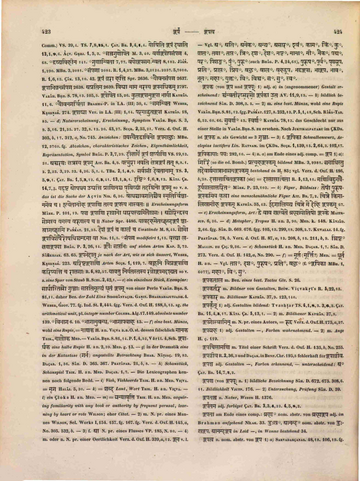
rūpá UṆĀDIS. 3,28. 1〉 n. SIDDH. K. 249,a,11. am Ende eines adj. comp. f. ā; ī PAÑCAR. 2,6,23 wohl fehlerhaft. a〉 äussere Erscheinung, sowohl Farbe (namentlich pl.) als Gestalt, Form AK. 1,1,4,16. AK. 1,1,7,38 TRIK. 3,3,278. H. 1376. H. an. 2,298. fg. MED. p. 9. fg. HALĀY. 5,79. VIŚVA_bei_UJJVAL._zu_UṆĀDIS. 3,28. rū̱paṃ rū̀paṃ ma̱ghavā̀ bobhavīti mā̱yāḥ kṛ̀ṇvā̱nasta̱nvaṃ1̱̀ pari̱ svām ṚV. 3,53,8. ṚV. 6,47,18. ghoṣā̱ idàsya śṛṇvi̱re na rū̱pam ṚV. 10,168,4. nabho̱ na rū̱pamàru̱ṣaṃ vasā̀nāḥ ṚV. 7,97,6. rū̱pā harìtā ṚV. 10,96,3. kṛṣṇā, arjunā ṚV. 10,21,3. viśvā̀ rū̱pāṇi̱ harìtā kṛṇoṣi AV. 6,20,3. viśvā̀ rū̱pāṇyā̀vi̱śan ṚV. 7,55,1. ṚV. 8,15,13. ṚV. 5,81,2. ṚV. 10,136,4. ṚV. 10,139,3. ṚV. 10,169,3. pi̱tā yatsī̀ma̱bhi rū̱pairavā̀sayat ṚV. 1,160,2. ā nāmàbhirma̱rutò vakṣi̱ viśvā̱nā rū̱pebhìḥ ṚV. 5,43,10. rū̱pairàpiṃśa̱dbhuvànāni̱ viśvā̀ ṚV. 10,110,9. ṚV. 10,184,1. di̱vi rū̱pamāsàjat hat dem Himmel seine Farbe gegeben ṚV. 10,124,7. tvaṣṭā̀ rū̱peva̱ takṣyā̀ ṚV. 8,91,8. tvaṣṭā̀ rū̱pāṇā̀mīśe TBR. 1,4,7,1. AV. 1,22,3. nāmà rū̱paṃ cà AV. 11,7,1. BHĀG. P. 1,5,14. BHĀG. P. 1,8,38. rūpa, nāman, karman ŚAT. BR. 14,4,4,1. ŚAT. BR. 11,2,3,3. dve rū̱pe kṛ̀ṇute̱ rocàmānaḥ AV. 13,2,28. u̱dyanra̱śmīnā tànoṣi̱ viśvā̀ rū̱pāṇì puṣyasi AV. 13,2,10. va̱hyaṃ viśvā̀ rū̱pāṇi̱ bibhràtam AV. 14,2,30. u̱pa̱barhàṇaṃ dadāti rū̱pāṇā̱mavàruddhyai Farben TBR. 1,1,6,10. ye rū̱pāṇì pratimu̱ñcamā̀nā̱ asùrā̱ḥ santàḥ sva̱dhayā̱ carànti Spukgestalten VS. 2,30. Traumgestalten ŚAT. BR. 14,7,1,14. ca̱tvāri̱ cakṣùṣo rū̱pāṇi̱ dve śu̱kle dve kṛ̱ṣṇe Farben TS. 5,3,1,4. ā̱tma̱rūpe TS. 6,1,6,1. jyotiḥ paśyati rūpāṇi rūpaṃ ca bahudhā smṛtam . hrasvo dīrghastathā sthūlaścaturasro 'nuvṛttavān (ṇuvṛttavān ed. Bomb.) .. śuklaḥ kṛṣṇastathā rakto nīlaḥ pīto 'ruṇastathā . kaṭhinaścikkaṇaḥ ślakṣṇaḥ picchilo mṛdudāruṇaḥ .. evaṃ ṣoḍaśavistāro jyotīrūpaguṇaḥ smṛtaḥ . MBH. 12,6853. fgg. M. 1,77. M. 12,98. Verz. d. Oxf. H. 104,b,30. Verz. d. Oxf. H. 225,a, No. 549. Verz. d. Oxf. H. 226,a, No. 554. RĀJA-TAR. 5,375. BHĀG. P. 2,2,29. BHĀṢĀP. 2. BHĀṢĀP. 99. einer der fünf Skandha bei den Buddhisten BURN. Intr. 511. H. 233. Sch. dhūmra˚ Farbe MBH. 7,9621 = MBH. 13,7510. nararūpeṇa in der Gestalt eines Mannes M. 7,8. R. 3,52,14. Spr. 2525. Spr. 3271. BHĀG. P. 1,7,45. arthamanartharūpeṇa sā dadarśa R. GORR. 2,8,33. naitā (striyaḥ) rūpaṃ parīkṣante das Aeussere eines Menschen Spr. 1647. ˚viparyaya M. 11,48. tasya daṣṭasya tadrūpaṃ kṣipramantaradhīyata MBH. 3,2619. MBH. 3,2621. MBH. 3,2804. rūpeṇa vikṛtaḥ R. 1,1,54. nahīdṛśaṃ tāpasānāṃ rūpaṃ bhavati karhicit R. 9,45. R. 56,17. R. 2,42,12. ŚĀK. 115. VIKR. 9. mamedamiti yo brūyātso 'nuyojyo yathāvidhi . saṃvādya rūpasaṃkhyādīnsvāmī taddravyamarhati .. das Aussehen eines Gegenstandes M. 8,31. fg. deśasya R. 2,93,6. rūpaṃ kar eine Gestalt annehmen, sich verwandeln in, mit eigenthümlicher Construction in der älteren Sprache: aśvaḥ śveto rūpaṃ kṛtvā sich in ein weisses Ross verwandelnd AIT. BR. 6,35. ā̱khū rū̱paṃ kṛ̱tvā TBR. 1,1,3,3. TS. 5,2,6,5. TS. 6,1,3,1. āśvaṃ rūpaṃ kṛtvā NIR. 12,10. mṛgavihaṃgānāṃ kasya rūpaṃ karomyaham R. 5,35,29. strīrūpamadbhutaṃ kṛtvā MBH. 1,1156. KATHĀS. 13,143. KATHĀS. 39,175. nalarūpamakāri taiḥ KATHĀS. 56,269. sa hi rūpāṇi kurute vividhāni MBH. 13,2270. kṛtvā rūpāṇyanekaśaḥ R. 1,28,18. rūpaṃ bahurūpaṃ kṛtvā R. 64,7. R. 1,8. R. 5,31,28. MBH. 3,2557. ātmanaḥ paramaṃ rūpaṃ cākaronmanmathākṛti BRAHMA-P. in LA. (III) 53,22. svaṃ caiva rūpaṃ kurvantu die eigene Gestalt annehmen MBH. 3,2211. MBH. 3,2839. asyaiva sarve rūpaṃ bhavāma seine Gestalt annehmen ŚAT. BR. 14,4,3,32. bhīmarūpaṃ samāsthitaḥ R. 5,50,18. rūpaṃ śūrpaṇakhā nāmnā sadṛśaṃ pratyapadyata RAGH. 12,38. rūpamanyatsa śiśriye KATHĀS. 18,243. Lautform, Form eines Wortes: svaṃ rūpaṃ śabdasya P. 1,1,68. sarvādīni śabdarūpāṇi Schol. zu P. 1,1,27. debheti rūpāntaraṃ bodhyam SIDDH. K._zu_P. 1,2,6. kimo rūpam VOP. 25,5. Am Ende eines adj. comp. yajñāya dhṛtarūpāya der eine Gestalt angenommen hatte BHĀG. P. 3,19,3. ein — Aeusseres habend, die Gestalt von — habend, in der Gestalt von — auftretend, das Aussehen von — habend, dem ähnlich H. 1462. manojñarūpā ein angenehmes Aeusseres habend R. 1,9,52. samakṣa˚ ŚĀK. 190. anācāra˚ von ungewöhnlichem Aussehen KAUŚ. 117. veśyā munirūpāḥ Buhldirnen in der Gestalt von Muni R. 1,8,23. mātṛrūṣe mamāmitre voc. R. 2,74,7. padmārūpā śrīḥ MBH. 3,14404. brāhmaṇīrūpā KATHĀS. 16,10. RĀJA-TAR. 1,35. BHĀG. P. 1,19,14. BHĀG. P. 5,26,20. PAÑCAT. 258,23. taṃ ha trīngi̱rirū̀pā̱navìjñātāniva darśa̱yāṃ càkāra er zeigte ihm drei unbekannte bergähnliche Gegenstände TBR. 3,10,11,4. plavarūpamapi kiṃcit etwas flossähnliches ĀŚV. GṚHY. 1,12,6. KAUŚ. 53. nadī˚ KAUŚ. 71. agni˚ R. 1,65,15. anala˚, ketu˚ VARĀH. BṚH. S. 11,3. aśoka˚ die Farbe des Aśoka habend VARĀH. BṚH. S. 37,2. VARĀH. BṚH. S. 54,110. sa eva śabdastadrūpo vāsasāṃ nijyatāmiva ein Laut, ähnlich dem von Kleidern, die gewaschen werden, MBH. 7,8531. mṛgatṛṣṇi˚ BHĀG. P. 7,9. BHĀG. P. 7,25. dārūṣā dhārūpāśca dhātavaḥ Wurzeln von der Lautform dā und dhā Schol. zu P. 1,1,20. ajrūpo nipātaḥ ein aus einem blossen Vocal bestehender Nip. zu 14. tasyājñā hiṃsāviratirūpā ein in der Form von — auftretender Befehl so v. a. der Befehl, der darin bestand, dass man — RĀJA-TAR. 3,80. māyayā nāmarūpayā erscheinend als BHĀG. P. 8,14,10. asya sphuraṇasya phalaṃ priyāliṅganarūpam bestehend in Schol. zu ŚĀK. 15. rājño 'bhilāṣarūpeyaṃ prathamakāmāvasthā zu ŚĀK. 22. ŚĀK. 26. ŚĀK. 81,4. vadhadaṇḍaṃ tāḍanādyaṅgācchedarūpam KULL._zu_M. 8,129. sīmārūpeṣu grāmasaṃdhiṣu zu M. 261. munerapatyaṃ śakuntalārūpam so v. a. nämlich —, das ist Śak. Schol. zu ŚĀK. 41. Häufig in Zusammensetzung mit einem adj. oder partic., wobei nicht selten rūpa als ganz überflüssig erscheint: ghora˚ ein imposantes Aussehen habend M. 7,121. ārya˚ M. 10,57. kruddho 'pyakruddharūpaḥ MBH. 1,5596. unmattarūpā MBH. 3,2514. preta˚ HARIV. 4549. virūparūpa MBH. 1,5931. MĀRK. P. 69,30. ākārādīndīrgharūpān = dīrghān ṚV. PRĀT. Einl. śānta˚ Spr. 1114. rūkṣarūpā (vāc) Spr. 4698. vācaḥ pathyarūpāḥ MBH. 2,2196. fg. satya˚, (vākya) R. 2,57,21. ghorarūpāṇi nimittāni BHĀG. P. 1,14,2. aśraddhāna˚ MBH. 13,1130. paramārta˚ MBH. 2,2250. prahṛṣṭa˚ MBH. 3,15654. hṛṣṭa˚ MBH. 5,7519. trastarūpaṃ tu vijñāya jagatsarvam R. 1,23,5. adṛṣṭarūpā (latā) bisher unbekannt R. 2,55,29. saṃpanna˚ lecker R. 5,14,45. nikhātarūpāṃ gaṇeśapratimām KATHĀS. 71,60. nānyadanyena saṃsṛṣṭarūpaṃ (saṃsṛṣṭaṃ rūpaṃ ed. LOIS.) vikrayamarhati M. 8,203. rāgādinā sthāpitarūpam (sthagitarūpam bei LOIS.) KULL._zu_M. 8,203. vimṛṣṭa BURN. Intr. 49. kānta˚ ad ŚĀK. 19. śakya˚ (so ist zu lesen und demnach zu übersetzen) Spr. 4908. agamyarūpā pṛthivī MBH. 9,722. sakaruṇā hi guravo garbharūpeṣu (= bālakeṣu Comm.) UTTARAR. 124,8 (168,3). ānanda˚ so v. a. von Wonne erfüllt PRAŚNOP. 2,10. Nach P. 5,3,66 (vgl. jedoch Vārtt.) und VOP. 7,50 soll rūpa als tonloses Suffix den vorangehenden Begriff lobend hervorheben: paṭu˚ recht geschickt, pacatirūpam er kocht gut, vaiyākaraṇarūpaḥ ein ordentlicher Grammatiker Schol.; vgl. P. 8,1,57. Verhalten eines fem. vor einem solchen rūpa P. 6,3,35. P. 6,3,43. fgg. VOP. 7,49. — b〉 Bild, Bildniss: na codake nirīkṣeta svaṃ rūpam M. 4,38. likhitaṃ paṭe . rūpaṃ sundarasenasya KATHĀS. 101,101. sthāpayeddaśa rūpāṇi WEBER, KṚṢṆAJ. 284. — c〉 eine schöne Gestalt, Schönheit TRIK. H. an. MED. VIŚVA a. a. O. nabho̱ na rū̱paṃ jàri̱mā mìnāti ṚV. 1,71,10. ṚV. 2,13,3. ṚV. 9,65,18. paśūnām (nach Comm.) VS. 39,4. TS. 7,8,25,1. ŚAT. BR. 9,4,1,4. yoṣiti rūpaṃ dadhāti ŚAT. BR. 13,1,9,6. ĀŚV. GṚHY. 1,5,3. ˚sattvaguṇopeta M. 3,40. varṇarūpopasaṃpanna M. 4,68. ˚dravyavihīna M. 141. ˚guṇānvitā M. 7,77. vayorūpasamanvita M. 8,182. YĀJÑ. 1,290. MBH. 3,2081. ˚saṃpannā MBH. 3,2084. R. 1,4,27. MBH. 3,2124. MBH. 3,2357. MBH. 5,7010. R. 1,6,13. ŚĀK. 13,10. ŚĀK. 13,42. rūpaṃ jarā hanti Spr. 2636. ˚yauvanasaṃpanna Spr. 2637. rūpābhijanasaṃpanna Spr. 2638. apratima Spr. 2639. vidyā nāma narasya rūpamadhikam Spr. 2797. VARĀH. BṚH. S. 78,13. VARĀH. BṚH. S. 105,5. rūpopeta VARĀH. BṚH. S. 15,26. kularūpānurūpā bhāryā KATHĀS. 11,6. ˚yauvanagarvitā BRAHMA-P. in LA. (III) 50,4. ˚samanvita WEBER, KṚṢṆAJ. 274. rūpāḍhyā VET. in LA. (III) 1,14. paramādbhutarūpā KATHĀS. 18,85. — d〉 Naturerscheinung, Erscheinung, Symptom VARĀH. BṚH. S. 3,9. VARĀH. BṚH. S. 5,16. VARĀH. BṚH. S. 21,35. VARĀH. BṚH. S. 21,37. VARĀH. BṚH. S. 32,8. VARĀH. BṚH. S. 32,12. VARĀH. BṚH. S. 32,20. VARĀH. BṚH. S. 43,27. SUŚR. 2,55,21. Verz. d. Oxf. H. 305,b,17. Verz. d. Oxf. H. 312,a, No. 745. Anzeichen: jayasyaitadbhāvino rūpamāhuḥ MBH. 12,3760. fg. Abzeichen, charakteristisches Zeichen, Eigenthümlichkeit, Repräsentation, Symbol BHĀG. P. 3,7,29. dī̱kṣāyaì rū̱paṃ śaṣpā̀ṇi VS. 19,13. VS. 19,31. aśvarathaḥ kṣatrasya rūpam AIT. BR. 4,9. yatsurā bhavati kṣatrarūpaṃ tat AIT. BR. 8,8. AIT. BR. 8,1. AIT. BR. 8,2. AIT. BR. 2,23. AIT. BR. 3,29. AIT. BR. 3,32. AIT. BR. 4,26. AIT. BR. 5,1. AIT. BR. 5,4. TBR. 2,1,4,9. sarvāsāṃ devatānām TS. 3,5,9,1. ŚAT. BR. 1,5,3,12. ŚAT. BR. 1,6,3,41. ŚAT. BR. 13,1,5,1. iṣṭi˚ ŚAT. BR. 1,6,2,12. KĀTY. ŚR. 14,7,3. yadvṛṣṭa oṣadhaya udyanti prāṇinaśca pṛthivyāṃ tadaśvino rūpam so v. a. das ist die Sache der Aśvin NIR. 6,36. bodhaścāvagatiścaiva smṛtirvijñānameva ca . ityetānīha rūpāṇi tasya rūpasya bhāsvataḥ .. Erscheinungsform MĀRK. P. 101,19. pañca rūpāṇi rājāno dhārayantyamitaujasaḥ . agnerindrasya somasya yamasya varuṇasya ca .. Natur Spr. 4486. yāvadahametacchabdarūpaṃ jñātvāgacchāmi PAÑCAT. 21,25. deśaṃ rūpaṃ ca kālaṃ ca Umstände M. 8,45. somo rūpaviśeṣairoṣadhiścandramā vā NIR. 11,5. ˚saṃpanna modificirt NIR. 1,15. vṛttyā lakṣaṇarūpayā BHĀG. P. 3,26,14. rūpaiḥ saptabhiḥ auf sieben Arten KAP. 3,73. SĀṂKHYAK. 63. SĀṂKHYAK. 65. rūpabhedāt je nach der Art, wie es sich äussert, WEBER, KṚṢṆAJ. 223. ariṣṭarūpāṇi Arten SUŚR. 1,119,7. bahūni vighnarūpāṇi kariṣyanti ca rākṣasāḥ R. 6,82,57. yāvattu niryatastasya rajorūpamadṛśyata so v. a. eine Spur von Staub R. SCHL. 2,42,1. — e〉 ein einzelnes Stück, Exemplar: sārdhāstisro guñjāḥ saptatimūlyaṃ dhṛtaṃ rūpam von einer Perle VARĀH. BṚH. S. 81,11. daher Bez. der Zahl Eins SIDDHĀNTAŚIR. GAṆIT. BHAGRAHAYUTYADH. 4. WEBER, JYOT. 77. fg. Ind. St. 8,444. fgg. Verz. d. Oxf. H. 188,b,13. sg. the arithmetical unit, pl. integer number COLEBR. Alg. 17. COLEBR. Alg. 149. absolute number COLEBR. Alg. 139. ˚vibhāga COLEBR. Alg. 6. COLEBR. Alg. 10. ˚bhāgānubandha, ˚bhāgāpavāha COLEBR. Alg. 15. — f〉 eine best. Münze, wohl eine Rupie, = nāṇaka H. an. VIŚVA a. a. O. st. dessen fälschlich mānaka TRIK., nāloka MED. — VARĀH. BṚH. S. 81,14. P. 1,4,52, Vārtt. 4, Sch. rūpārdhaka eine halbe Rupie H. an. 2,39. MED. g. 13. — g〉 in der Dramatik eine in der Katastase (garbha) angestellte Betrachtung BHAR. NĀṬYAŚ. 19,83. DAŚAR. 1,36. SĀH. D. 365. SĀH. D. 367. PRATĀPAR. 21,b,8. — h〉 Schaustück, Schauspiel TRIK. H. an. MED. DAŚAR. 1,7. — Die Lexicographen kennen noch folgende Bedd. — i〉 Vieh, Viehheerde TRIK. H. an. MED. VIŚVA. = mṛga HALĀY. 5,30. — k〉 = śabda Laut, Wort TRIK. H. an. VIŚVA. — l〉 ein Śloka H. an. MED. — m〉 = granthāvṛtti TRIK. H. an. MED. acquiring familiarity with any book or authority by frequent perusal, learning by heart or rote WILSON; eher Citat. — 2〉 m. N. pr. eines Mannes WILSON, Sel. Works I, 154. fg. WILSON, Sel. Works I,157. fg. WILSON, Sel. Works I,167. fg. Verz. d. Oxf. H. 145,a, No. 305. Verz. d. Oxf. H. 145,532,b. — 3〉 f. ā N. pr. eines Flusses VP. 185, N. 80. — 4〉 m. oder n. N. pr. einer Oertlichkeit Verz. d. Oxf. H. 339,a,12. rūma v. l. — Vgl. a˚, ati˚, aneka˚, anya˚, asāra˚, evaṃ˚, kāma˚, kiṃ˚, ku˚, jāta˚, tathā˚, tapta˚, tri˚, daśa˚, deśa˚, naṣṭa˚, nānā˚, nī˚, naika˚, padma˚, para˚, piśaṅga˚, puṃ˚, puru˚ (auch BHĀG. P. 4,24,61), puruṣa˚, pūrva˚, pṛthagrūpa, prati˚, prāpta˚, priya˚, bahu˚, bāla˚, bṛhadrūpa, bhadrarūpā, bhārūpa, bhāva˚, bhūta˚, mahā˚, yukta˚, vi˚, viśva˚, sa˚, su˚, sva˚.
Böhtlingk 1879 substantive masculine · substantive neuter · Word type unspecified
Original text · German · substantive masculine · substantive neuter
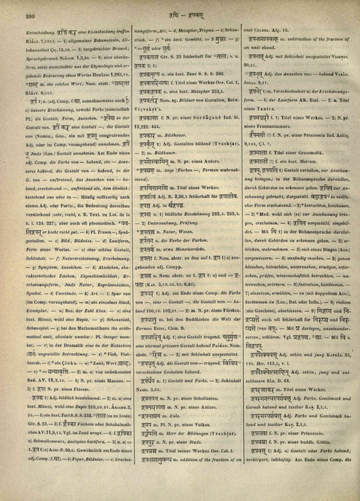
rūpá — 1〉 n. (adj. Comp. f. ā, ausnahmsweise auch ī) — a〉 äussere Erscheinung, sowohl Farbe (namentlich Pl.) als Gestalt, Form, Aussehen. ˚rūpeṇa in der Gestalt von. rūpaṃ kar eine Gestalt —, die Gestalt von (Nomin., Gen., ein mit rūpam) congruirendes Adj. oder im Comp. vorangehend annehmen. rūpáṃ bhū Jmds (Gen.) Gestalt annehmen. Am Ende eines adj. Comp. die Farbe von — habend, ein — Aeusseres habend, die Gestalt von — habend, in der G. von — auftretend, das Aussehen von — habend, erscheinend —, auftretend als, dem ähnlich; bestehend aus oder in. — Häufig suffixartig nach einem Adj. oder Partic. die Bedeutung derselben verstärkend (sehr, recht, z. B. Text zu Lot. de la b. l. 124. 227), aber auch oft pleonastisch. *pavatirūpam er kocht recht gut. — b〉 Pl. Traum-, Spukgestalten. — c〉 Bild, Bildniss. — d〉 Lautform, Form eines Wortes. — e〉 eine schöne Gestalt, Schönheit. — f〉 Naturerscheinung, Erscheinung. — g〉 Symptom, Anzeichen. — h〉 Anzeichen, charakteristisches Zeichen, Eigenthümlichkeit, Erscheinungsform, Jmds Natur, Repräsentation, Symbol. — i〉 Umstände. — k〉 Art. — l〉 Spur von (im Comp. vorangehend). — m〉 ein einzelnes Stück, Exemplar. — n〉 Bez. der Zahl Eins. — o〉 eine best. Münze. wohl eine Rupie. — p〉 Schaustück, Schauspiel. — q〉 bei den Mathematikern the arithmetical unit, absolute number; Pl. integer number. — r〉 in der Dramatik eine in der Katastase garbha angestellte Betrachtung. — s〉 *Vieh, Viehheerde. — t〉 *ein Śloka. — u〉 *Laut, Wort śabda. — v〉 *= granthāvṛtti — 2〉 m. — a〉 von unbekannter Bed. AV. 13,3,40. — b〉 N. pr. eines Mannes. — 3〉 f. rūpā N. pr. eines Flusses.
Original text · German · Word type unspecified
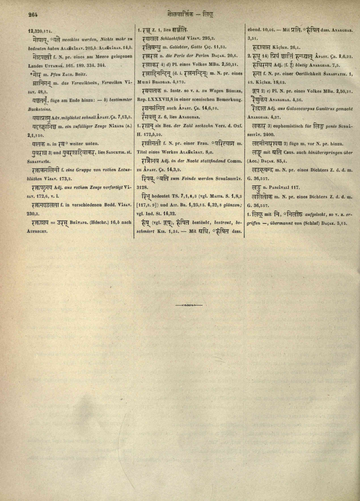
rūpa 2〉c〉 Pl. N. pr. eines Volkes MBH. 2,50,21. [Nachtrag, Band 5]
Original text · German · Word type unspecified
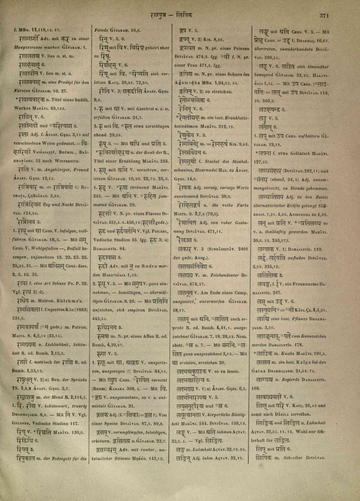
rūpa V. 5. [Nachtrag, Band 7]
Apte 1890 substantive neuter
Original text · English · substantive neuter
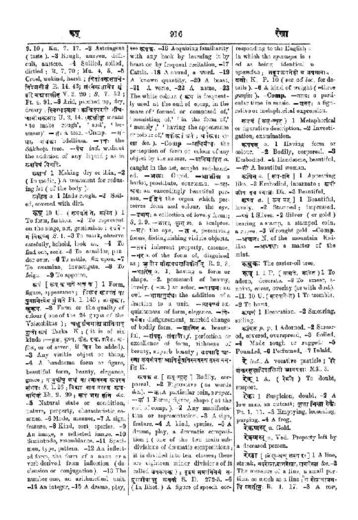
rūpaṃ [rūp-ka bhāve ac vā] 1 Form, figure, appearance; virūpaṃ rūpavaṃtaṃ vā pumānityeva bhuṃjate Pt. 1. 143; so surūpa, kurūpa. 2 Form or the quality of colour (one of the 24 guṇas of the Vaiśeṣikas); cakṣurtātragrāhyajātimān guṇo rūpaṃ Tarka K; (it is of six kinds: -śukla, kṛṣṇa, pīta, rakta, harita, kapila, or of seven, if citra be added). 3 Any visible object or thing. 4 A handsome form or figure, beautiful form, beauty, elegance, grace; mānupīṣu kathaṃ vā syādasya rūpasya saṃbhavaḥ Ś. 1. 26; vidyā nāma narasya rūpamadhikaṃ Bh. 2. 20; rūpaṃ jarā haṃti &c. 5 Natural state or condition, nature, property, characteristic, essence. 6 Mode, manner. 7 A sign, feature. 8 Kind, sort, species 9 An image, a reflected image. 10 Similitude, resemblance. 11 Specimen, type, pattern. 12 An inflected form, the form of a noun or a verb derived from inflection (declension or conjugation). 13 The number one, an arithmetical unit. 14 An integer. 15 A drama, play, ([Page 0916-b]) see rūpaka. 16 Acquiring familiarity with any book by learning it by heart or by frequent recitation. 17 Cattle. 18 A sound, a word. 19 A known quantity. 20 A beast. 21 A verse. 22 A name. 23 The white colour. (rūpa is frequently used at the end of comp. in the sense of ‘formed or composed of,’ ‘consisting of,’ ‘in the form of,’ ‘namely;’ ‘having the appearance or colour of,’ taporūpaṃ dhanaṃ; dharmarūpaḥ sakhā &c.). Comp. — adhibodhaḥ the perception of form or colour of any object by the senses. — abhigrāhita a. caught in the act, caught red-handed. — asraḥ Cupid. — ājīvā a harlot, prostitute, courtezan. — āśrayaḥ an exceedingly beautiful person. — iṃdriyaṃ the organ which perceives form and colour, the eye. — uccayaḥ a collection of lovely forms; Ś. 2. 9. — kāraḥ, -kṛt m. a sculptor. — grahaḥ the eye. — jña a. perceiving forms, distinguishing visible objects. — tattvaṃ inherent property, essence. — dhara a. of the form of, disguised as; jugopa gorūpadharāmivormīm R. 2. 3. — dhārin a. 1 having a form or shape. 2 possessed of beauty, lovely. ( — m.) an actor. — nāśanaḥ an owl. — bhāgānubaṃdhaḥ the addition of a fraction to a unit. — lāvaṇyaṃ exquisiteness of form, elegance. — viparyayaḥ disfigurement, morbid change of bodily form. — śālin a. beautiful. — saṃpad, -saṃpattiḥ f. perfection or excellence of form, richness of beauty, superb beauty; udapādi cāsyā rūpasaṃpadā āvirbhūtavismayasya tasya manasi K.
Cappeller 1887 substantive neuter
Original text · German · substantive neuter
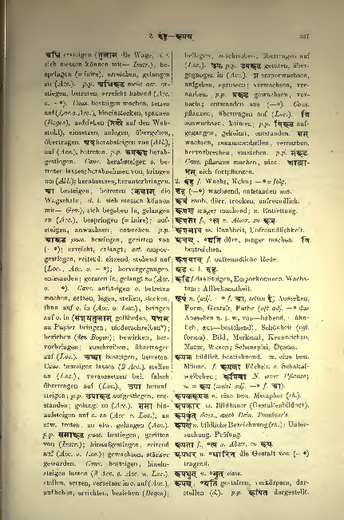
rūpá n. (adj.) —˚ f. ā, selten ī) Aussehen, Form, Gestalt, Farbe oft adj. —ähnlich, aus—bestehend), Schönheit (vgl. forma), Bild, Merkmal, Kennzeichen, Natur, Wesen; Schauspiel, Drama.
Burnouf 1866 substantive neuter
Original text · French · substantive neuter
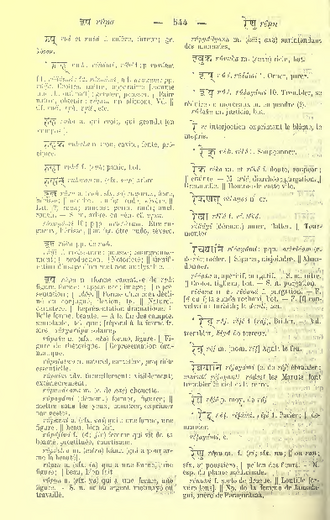
rūpa rūpa n. (forme causative de ruh) figure, forme; apparence; image; représentation; idée. Forme d'un mot décliné ou conjugué, flexion, tg. Naturel, caractère. Représentation dramatique. Belle forme, beauté. — À la fin des compos. semblable, tel que; [répond à la forme fr. aire: sūryarūpa solaire]. rūpaka n. (sfx. aka) forme, figure. Figure de rhétorique. Représentation dramatique. rūpatatva n. naturel, caractère, propriété essentielle. rūpatas adv. formellement; visiblement; extérieurement. rūpanāśana m. (c. de naś) chouette. rūpayāmi (dénom.) former, figurer; mettre sous les yeux, montrer, exprimer par gestes. rūpavat a. (sfx. vat) qui a une forme, une figure; beau, bien fait. rūpājīvā f. (ā; jīv) femme qui vit de sa beauté, prostituée, courtisane. rūpāstra m. (astra) Kāma [qui a pour arme la beauté]. rūpin a. (sfx. in) qui a une forme, une figure; beau, bien fait. rūpya a. (sfx. ya) qui a une forme, une figure. — S. n. or ou argent monnayé ou travaillé. [Page544-2] rūpyādhyakṣa m. (adhi; akṣa) surintendant des monnaies.
Derived words
Occurrences in source texts (117)
DYS 6 occurrences
DYS 1–1*1: Viṣṇu and Nṛsiṃha 3 occurrences
Direct occurrences
-
DYS 1 Segment 14
Occurrences through derived words
GoS 12 occurrences
GoS 89–94: Body, Names and Reality 6 occurrences
Direct occurrences
HP 7 occurrences
HTK 2 occurrences
HTK 10.6*2–9*1: Ujjāyī / Ujjāyikā and Sūryabheda 1 occurrence
Direct occurrences
-
HTK 10.9 Segment 11
HTK 10.47*2: Kumbhaka: Names, forms and effects 1 occurrence
Occurrences through derived words
-
HTK 10.47*2 Segment 9
IVU 1 occurrence
PJH 2 occurrences
PYS 14 occurrences
PYS 2.23–26: From Avidyā to Kaivalya 1 occurrence
Occurrences through derived words
-
PYS 2.23 Segment 4
7 more source pages
PYS 3.44–46: Mastery over the Elements 2 occurrences
Direct occurrences
-
PYS 3.46 Segment 1
Occurrences through derived words
-
PYS 3.44 Segment 2
PYS 3.47–48: Mastery over the Senses 1 occurrence
Occurrences through derived words
-
PYS 3.47 Segment 2
PYS 4.9–11: Continuity of Saṃskāras 1 occurrence
Occurrences through derived words
-
PYS 4.9 Segment 9
PYS 4.12–14: Real Objects in Transformation 1 occurrence
Occurrences through derived words
-
PYS 4.12 Segment 3
SiSa 40 occurrences
SiSa 1.71-1.81: Avidyā und Elemente 3 occurrences
Direct occurrences
SiSa 1.82-1.90: Guṇas und Gegenstände 9 occurrences
Direct occurrences
Occurrences through derived words
SiSa 2.13-2.20: Suṣumṇā und Citrā 3 occurrences
Direct occurrences
-
SiSa 2.19 Segment 11
Occurrences through derived words
13 more source pages
SiSa 4.9-4.20: Yonimudrā-Geheimnis 2 occurrences
Direct occurrences
SiSa 5.6-5.9: Dharma-Hindernisse 3 occurrences
Direct occurrences
SiSa 5.10-5.14: Subtile Hindernisse 5 occurrences
Direct occurrences
SiSa 5.48-5.71: Innere Meditation 1 occurrence
Occurrences through derived words
-
SiSa 5.54 Segment 5
SiSa 5.132-5.143: Innere Vārāṇasī 2 occurrences
Direct occurrences
-
SiSa 5.137 Segment 6
-
SiSa 5.142 Segment 6
SiSa 5.191-5.207: Kailāsa und Mahāśūnya 2 occurrences
Direct occurrences
-
SiSa 5.191 Segment 4
Occurrences through derived words
-
SiSa 5.200 Segment 14
SVU 13 occurrences
4 more source pages
SVU 5.7–5.11: The Wandering Self 3 occurrences
Direct occurrences
SVU 5.12–5.14: Knowledge and Freedom 2 occurrences
Direct occurrences
VBT 20 occurrences
Continue with AYI Free
Image source: AYI archive.