

dvi द्वि – zwei
Adjektiv · Zahlwort · Substantiv Neutrum · Worttyp nicht bestimmt
Wörterbuchquellen
AYI Wörterbuch Zahlwort
zwei
Cappeller 1891 Worttyp nicht bestimmt
Originaltext · Englisch · Worttyp nicht bestimmt
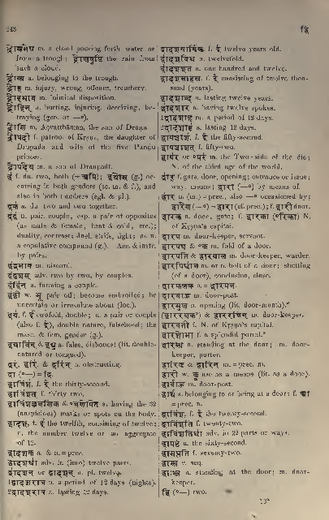
dvi ·(°--) two.
Monier-Williams 1872 Worttyp nicht bestimmt
Originaltext · Englisch · Worttyp nicht bestimmt
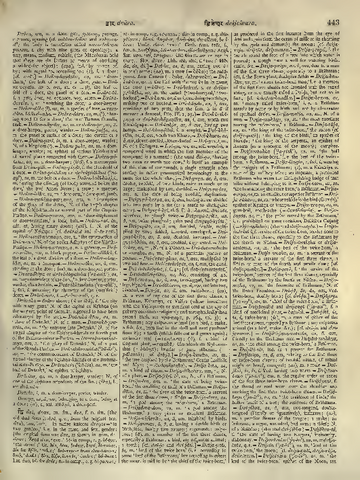
dvi dvi, dvau, m. du., dve, f. n. du. (the old dual form is dvā, q. v., from the original base dva), two, both. In native lexicons dvayos = ‘in two genders,’ i. e. in the masc. and fem. gender; [the original form was dva, as shown in nom. du. dvau: Zend dva, ‘two;’ bi- in comp., e. g. bi-tya, ‘the second:’ Gr. δύο, δύω, δυάκις, δοιοί, δί-τυλος, δίς for δϝίς, ‘twice;’ δεύ-τερο-ς from dva-tara-s; δοιή, ‘doubt;’ δί-α, δίζω, δισσός, ‘double;’ δώ-δεκα: Lat. duo, bis for dvis; bi- in comp., e. g. bi-farius; vē- in comp., e. g. vē-sanus; dis- in comp., e. g. dis- plicere; bi-ni, du-plex, du-b-ius, du-ellum, be-l- lum: Umbr. du-r, ‘two:’ Goth. tvai, tvōs, f., tva, n., tweiflyan, tvi-standan, dis-dailyan: Angl. Sax. twa, twi, tweogan: Old Germ. zer or zar in comp.: Slav. dŭva: Lith. dù, dvi, f. ‘two:’ Hib. da, do, di.]
Petersburger 1855 Worttyp nicht bestimmt
Originaltext · Deutsch · Worttyp nicht bestimmt
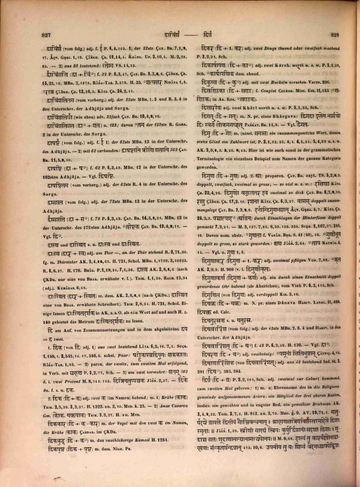
dvi am Anf. von Zusammensetzungen und in dem abgeleiteten dvaya = dva zwei.
Originaltext · Deutsch · Worttyp nicht bestimmt
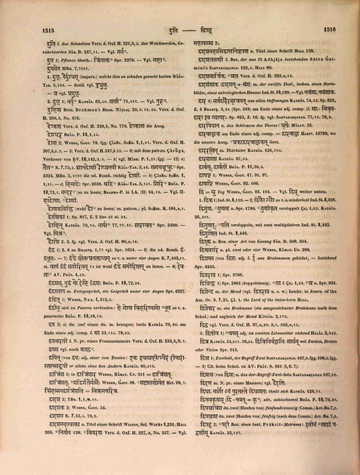
dvi = dyu Tag WEBER, JYOT. 93. WEBER, JYOT. 104. — Vgl. dvis weiter unten.
Böhtlingk 1879 Substantiv Neutrum · Worttyp nicht bestimmt
Originaltext · Deutsch · Substantiv Neutrum
2. dvi (!) n. Sg. Tage.
Originaltext · Deutsch · Worttyp nicht bestimmt
1. dvi˚ zwei.
Apte 1890 Worttyp nicht bestimmt
Originaltext · Englisch · Worttyp nicht bestimmt
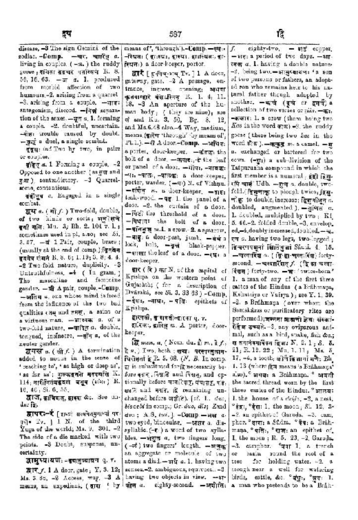
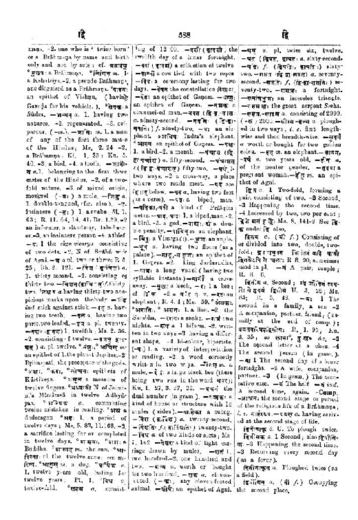
dvi num. a. (Nom. du. dvau m., dve f., dve n.) Two, both; sadyaḥ parasparatulāmadhirohatāṃ dve R. 5. 68. (N. B. In comp. dvā is substituted for dvi necessarily before daśan, viṃśati and triṃśat, and optionally before catvāriṃśat, paṃcāśat, ṣaṣṭi, saptati and navati, dvi remaining unchanged before aśīti). [cf. L. duo, bis or bi in comp.; Gr. duo, dis; Zend dva; A. S. twi.]. Comp. — akṣa a. two-eyed, binocular. — akṣara a. dissyllabic. — (raḥ) a word of two syllables. — aṃgula a. two fingers long. — (laṃ) two fingers’ length. — aṇuka an aggregate or molecule of two atoms a diad. — artha a. 1 having two senses. 2 ambiguous, equivocal. 3 having two objects in view. — aśīta a. eighty-second. — aśītiḥ ([Page 0587-c]) f. eighty-two. — aṣṭaṃ copper. — ahaḥ a period of two days. — ātmaka a. 1 having a double nature. 2 being two. — āmuṣyāyaṇaḥ ‘a son of two persons or fathers, an adopted son who remains heir to his natural father though adopted by another. — ṛcaṃ (dvṛcaṃ or dvyarcaṃ) a collection of two verses or ṛks. — kaḥ, — kakāraḥ 1 a crow (there being two Kas in the word kāka). 2 the ruddy goose (there being two kas in the word koka). — kakud m. a camel. — gu a. exchanged or bartered for two cows. — (guḥ) a sub-division of the Tatpuruṣa compound in which the first member is a numeral; dvaṃdvo dvigurapi cāhaṃ Udb. — guṇa a. double, twofold. (dviguṇākṛ to plough twice; dviguṇīkṛ to double, increase; dviguṇībhūta a. doubled, augmented). — guṇita a. 1 doubled, multiplied by two; Ki. 5. 46. 2 folded double. 3 enveloped. 4 doubly increased, doubled. — caraṇa a. having two legs, two-legged; dvicaraṇapaśūnāṃ kṣitibhujāṃ Śānti. 4. 15. — catvāriṃśa a. (dvi-dvā-catvāriṃśa) fortysecond. — catvāriṃśat f. (dvi-dvā-catvāriṃśat) forty-two. — jaḥ ‘twice-born’ 1 a man of any of the first three castes of the Hiṇdus (a Brāhmaṇa, Kṣatriya or Vaiśya); see Y. 1. 39. 2 a Brāhmaṇa (over whom the Saṃskāras or purificatory rites are performed); janmanā brāhmaṇo jñeyaḥ saṃskārairdvija ucyate. 3 any oviparous animal, such as a bird, snake, fish &c.; sa tamānaṃdamaviṃdata dvijaḥ N. 2. 1; Ś. 5. 21; R. 12. 22; Mu. 1. 11; Ms. 5. 17. 4 a tooth; kīrṇaṃ dvijānāṃ gaṇaiḥ Bh. 1. 13 (where dvija means ‘a Brāhmaṇa’ also). ˚agryaḥ a Brāhmaṇa. ˚ayanī the sacred thread worn by the first three castes of the Hindus. ˚ālayaḥ 1 the house of a dvija. 2 a nest. ˚iṃdraḥ, ˚īśaḥ 1 the moon; Śi. 12. 3. 2 an epithet of Garuḍa. 3 cam. phor. ˚dāsaḥ a Śūdra. ˚devaḥ a Brāhmaṇa. ˚patiḥ, ˚rājaḥ an epithet off 1 the moon; R. 5. 23. 2 Garuḍa. 3 camphor. ˚prapā 1 a trench or basin round the root of a tree for holding water. 2 a trough near a well for watering birds, cattle, &c. ˚baṃdhuḥ, ˚bruvaḥ 1 a man who pretends to be a ([Page 0588-a]) Brāhmaṇa. 2 one who is ‘twice-born’ or a Brāhmaṇa by name and birth only and not by acts; cf. brahmabaṃghu ˚mukhyaḥ a Brāhmaṇa. ˚liṃgin m. 1 a Kṣatriya. 2 a pseudo-Brāhmaṇa, one disguised as a Brāhmaṇa. ˚vāhanaḥ an epithet of Viṣṇu, (having Garuḍa for his vehicle.). ˚sevakaḥ a Śūdra. — janman a. 1 having two natures. 2 regenerated. 3 oviparous. ( — m.), — jātiḥ m. 1 a man of any of the first three castes of the Hindus; Ms. 2. 24 2 a Brāhmaṇa; Ki. 1. 39; Ku. 5. 40. 3 a bird. 4 a tooth. — jātīya a. 1 belonging to the first three castes of the Hindus. 2 of a twofold nature. 3 of mixed origin, mongrel. — (yaḥ) a mule. — jihva a. 1 double-tongued, (fig. also). 2 insincere — (hvaḥ) 1 a snake; Śi. 1. 63; R. 11. 64, R. 14. 41; Bv. 1. 20. 2 an informer, a slanderer, tale-bearer. 3 an insincere person 4 a thief — ṭhaḥ 1 the sign visarga consisting of two dots. 2 N. of Svāhā wife of Agni. — tra a. pl. two or three: R. 5. 25; Bh. 2. 121. — triṃśa (dvātriṃśa) a. 1 thirty second. 2 consisting of thirty two. — triṃśat (dvātriṃśat) f. thirtytwo. ˚lakṣaṇa a. having thirty-two auspicious marks upon the body. — daṃḍi ind. stick against stick. — dat a. having two teeth. — dala a. having two parts, two leafed. — daśa a. pl. twenty. — daśa a. (dvādaśa) 1 twelfth; Ms. 2. 36. 2 consisting of twelve. — daśan ( dvādaśam) a. pl. twelve. ˚aṃśuḥ, ˚arcis m. an epithet of 1 the planet Jupiter. 2 Bṛhaspati, the preceptor of the gods. ˚akṣaḥ, ˚karaḥ, ˚locanaḥ epithets of Kārtikeya. ˚aṃgulaṃ a measure of twelve fingers. ˚adhyāyī N of Jaimini's Mīmāṃsā in twelve Adhyāyas. ˚anyika a. committing twelve mistakes in reading. ˚asraṃ a dodecagon. ˚ahaḥ 1 a period of twelve days; Ms. 5. 83, Ms. 11. 168. 2 a sacrifice lasting for or completed in twelve days. ˚ākhyaḥ, ˚akṣaḥ a Buddha. ˚ātman m. the sun. ˚ādityāḥ pl. the twelve suns; see āditya. ˚āyus m. a dog. ˚vārṣika a. 1 twelve years old, lasting for twelve years; Pt. 1. ˚vidha a. twelve-fold. ˚sahasra a. ([Page 0588-b]) consisting of 12000. — daśī (dvādaśī) the twelfth day of a lunar fortnight. — daśaṃ (dvādaśaṃ) a collection of twelve. — dāmnī a cow tied with two ropes. — divaḥ a ceremony lasting for two days. — devataṃ the constellation viśākhā. — dehaḥ an epithet of Gaṇeśa. — dhātuḥ an epithet of Gaṇeśa. — nagnakaḥ a circumcised man. — navata (dvi-dvā-navata) a. ninety-second. — navatiḥ (dvi-dvā-navatiḥ) f. ninety-two. — paḥ an elephant. ˚adhipaḥ Indra's elephant. ˚āsyaḥ an epithet of Gaṇeśa. — pakṣaḥ 1 a bird. 2 a month. — paṃcāśa ( dvidvā-pacāṃśa) a. fifty-second. — paṃcāśat f. (dvi-dvā-paṃcāśat) fifty-two. — pathaṃ 1 two ways. 2 a cross-way, a place where two roads meet. — pad see dvipād below. — pada a. having two feet (as a verse). — padaḥ a biped, man. — padikā, -padī a kind of Prākṛta metre. — pād, -pādaḥ 1 a biped, man. 2 a bird. 3 a god. — pādyaḥ, -dyaṃ a double penalty. — pāyin m. an elephant. — biṃduḥ a Visarga(:) — bhujaḥ an angle. — bhūma a. having two floors (as a palace). — mātṛ, -mātṛjaḥ an epithet of 1 Gaṇeśa. 2 king Jarāsaṃdha. — mātraḥ a long vowel (having two syllabic instants.) — mārgī a crossaway. — mukhā a leech. — raḥ 1 a bee; cf. dvirepha. 2 = barvara q. v. — radaḥ an elephant; R. 4. 4; Me. 59. ˚aṃtakaḥ, ˚arātiḥ, ˚aśanaḥ 1 a lion. 2 the Śarabha. — rasanaḥ a snake. — rātraṃ two nights. — rūpa a. 1 biform. 2 written in two ways. 3 having a different shape. 4 bi-colour, bipartite. — (paḥ) 1 a variety of interpretation or reading. 2 a word correctly written in two ways. — retas m. a mule. — rekaḥ a large black bee (there being two ras in the word bhramara); Ku. 1. 27, Ku. 3. 27, Ku. 3. 36. — vacanaṃ the dual number (in gram.). — vajrakaḥ a kind of house or structure with 16 angles (sides). — vāhikā a swing. — viṃśa (dvāviṃśa) a. twenty-second. — viṃśatiḥ f. (dvātriṃśatiḥ) twenty-two. — vidha a. of two kinds or sorts; Ms. 7. 162 — veśarā a kind of light carriage drawn by mules. — śataṃ 1 two hundred. 2 one hundred and two. — śatya a. worth or bought for two hundred. — śapha a. clovenfooted. — (phaḥ) any cloven-footed animal. — śīrṣaḥ an epithet of Agni. ([Page 0588-c]) — ṣaṣ a. pl. twice six, twelve. — ṣaṣṭa (dviṣaṣṭa, dvāṣaṣṭa) a. sixty-second. — ṣaṣṭiḥ f. (dviṣaṣṭiḥ, dvāṣaṣṭiḥ) sixtytwo. — saptata (dvi-dvā-saptata) a. seventysecond. — sraptatiḥ f. (dvi-dvā-saptatiḥ) seventy-two. — saptāhaḥ a fortnight. — samatribhujaḥ an isosceles triangle. — sahasrākṣaḥ the great serpent Śeṣa. — sahasra, -sāhasra a. consisting of 2000. — (sraṃ) 2000. — sītya, -halya a. ploughed in two ways, i. e. first lengthwise and then breadth-wise. — suvarṇa a. worth or bought for two golden coins. — han m. an elephant. — hāyana, — varṣa a. two years old. — hīna a. of the neuter gender. — hṛdayā a pregnant woman. — hotṛ m. an epithet of Agni.
Cappeller 1887 Worttyp nicht bestimmt
Originaltext · Deutsch · Worttyp nicht bestimmt
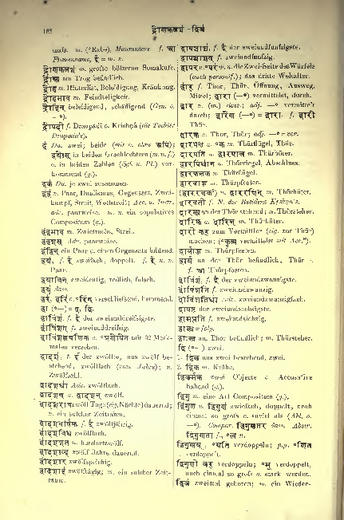
dvi (˚—) zwei.
Burnouf 1866 Adjektiv
Originaltext · Französisch · Adjektiv
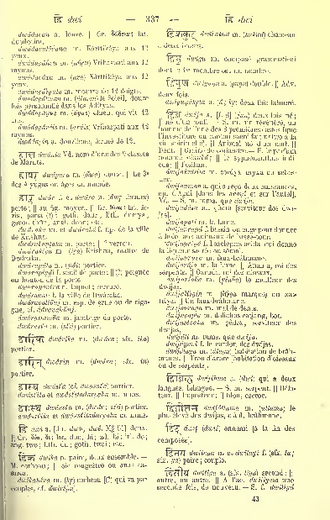
dvi dvi a. [du. dvau, dve. M§ 51] deux. Gr. δύο, δι; lat. duo, bi; zd. bi; irl. do; ang. two; lith. du; goth. twai; etc.
Abgeleitete Wörter
Weitere Ableitungen (1)
Quelltextfundstellen (57)
DYS 2 Fundstellen
GoS 6 Fundstellen
HP 17 Fundstellen
Weitere 7 Quelltextseiten
HP 3.94-3.102*1: Śakti-Cālana 2 Fundstellen
Direkt belegt
-
HP 3.102*1 Segment 1
Über Ableitungen belegt
-
HP 3.98 Segment 2
HP 4.0*1-4.0*14: Samādhi und Laya 2 Fundstellen
Direkt belegt
-
HP 4.0*4 Segment 3
Über Ableitungen belegt
-
HP 4.0*12 Segment 17
HP 4.11*5-4.11*14: Khecarī im Raum 2 Fundstellen
Über Ableitungen belegt
-
HP 4.11*9 Segment 3
-
HP 4.11*14 Segment 3
HTK 4 Fundstellen
HTK 10.26–29*1: Cakra, Śaṅkha, Vāmāvartta, Vartmagati und Gadā 1 Fundstelle
Direkt belegt
-
HTK 10.27*1 Segment 15
HTK 10.30–33*1: Nāḍī-viśudhy-ākhyaka-kumbha und Nāḍīśuddhi 1 Fundstelle
Über Ableitungen belegt
-
HTK 10.30 Segment 4
MAN 1 Fundstelle
PJH 1 Fundstelle
PJH 7-8: Tantrische Kosmologie und Offenbarung des göttlichen Bewusstseins 1 Fundstelle
Direkt belegt
-
PJH 7 Segment 4
SiSa 16 Fundstellen
SiSa 1.20-1.31: Karma und Erkenntnis 4 Fundstellen
Direkt belegt
Über Ableitungen belegt
-
SiSa 1.31 Segment 11
SiSa 2.21-2.24: Ādhāra und Kuṇḍalī 2 Fundstellen
Direkt belegt
Weitere 6 Quelltextseiten
SVU 6 Fundstellen
VBT 4 Fundstellen
Mit AYI Free weitermachen
Bildquelle: AYI Archiv.