

parama परम – höchster; größter; äußerster
Adjektiv · Substantiv Maskulin · Substantiv Neutrum · Worttyp nicht bestimmt
Wörterbuchquellen
AYI Wörterbuch Adjektiv
höchster; größter; äußerster
Herkunft
Cappeller 1891 Adjektiv
Originaltext · Englisch · Adjektiv
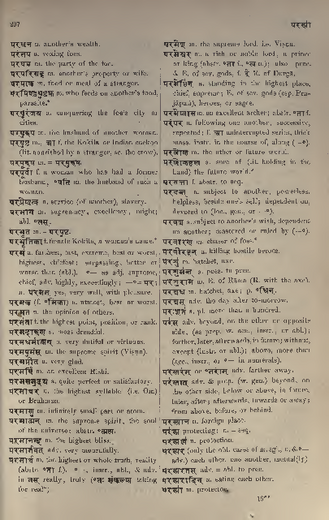
paramá ·a. farthest, last, extreme, best or worst, highest, chiefest; surpassing, better or worse than (abl.). °-- as adj. supreme, chief, adv. highly, exceedingly; --° = para; n. paramam yes, very well, with pleasure.
Monier-Williams 1872 Adjektiv
Originaltext · Englisch · Adjektiv
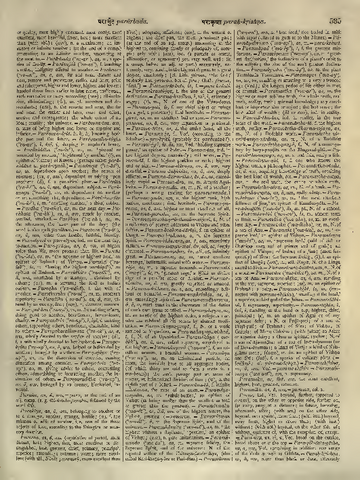
Parama, as, ā, am (superlative of para), most distant, last; highest, first, most excellent or dis- tinguished, best, greatest, chief, primary, principal, superior; exceeding; extreme; worst; more excel- lent (with abl. Śivāt paramaḥ, more excellent than Śiva); adequate, sufficient; (am), n. the utmost or highest; the chief part, the most prominent part; (at the end of an adj. comp.) amounting at the highest to, consisting chiefly or principally of, occu- pied only with; (am), ind. (a particle of assent, affirmation, or agreement) yes, very well, well; (in a comp. before an adj. or part.) excessively, ex- tremely, very, much, in the highest degree, to a great degree, excellently; [cf. Lith. pirma, ‘the first;’ probably Lat. prīmu-s, but cf. pra; Goth. fruma, ‘first.’]
Petersburger 1855 Adjektiv · Substantiv Neutrum · Worttyp nicht bestimmt
Originaltext · Deutsch · Adjektiv · Substantiv Neutrum
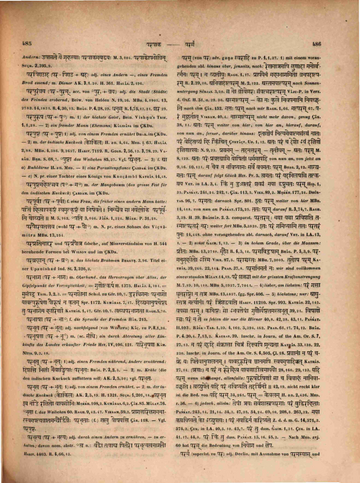
paramá (superlat. zu para) adj. Declin. mit Ausnahme von paramasyās und paramasyām. 1〉 adj. f. ā a〉 der fernste, äusserste, letzte: parāvat ṚV. 4,50,3. ṚV. 10,95,14. VS. 11,72. etaddha paramaṃ dūraṃ yatsahasrayojanam ŚAT. BR. 9,1,1,28. parèṇaitu pa̱thā vṛkàḥ para̱meṇo̱ta taskàraḥ AV. 4,3,2. agnirvai devānāmavamo viṣṇuḥ paramaḥ der fernste und höchste AIT. BR. 1,1. avama, madhyama, parama ṚV. 1,108,9. ṚV. 1,108,10. ṚV. 1,27,5. sadhastha ṚV. 108,8. ṚV. 8,11,7. pada ṚV. 1,22,20. ṚV. 1,72,2. vyoman ṚV. 7,5,7. ṚV. 5,63,1. rajas ṚV. 7,99,1. ṚV. 3,30,2. janman ṚV. 2,9,3. saṃ pàra̱mānsamàva̱mānatho̱ saṃ dyā̀miva madhya̱mān AV. 6,103,2. mātrā ŚAT. BR. 10,2,2,8. ŚAT. BR. 11,1,6,16. gati ŚAT. BR. 2,6,4,9. sa paramaṃ lokamajayat AIT. BR. 1,21. ŚAT. BR. 14,7,1,31. imaṃ ca lokaṃ paramaṃ (= paraṃ) ca vindati KĀM. NĪTIS. 3,37. pāda ṚV. PRĀT. 16,36. paramaprakṛti das äusserste, letzte, erste Thema Schol. zu P. 4,1,155. — b〉 der vorzüglichste, ausgezeichnetste, höchste, beste, grösste, ärgste, summus; = para H. an. 3,469. MED. m. 47. = agresara, prathama H. an. = pradhāna, ādya VIŚVA_im_ŚKDR. paśu VS. 4,26. paramo 'śvaḥ paśūnām ŚAT. BR. 13,3,3,1. gāvaḥ ṚV. 5,47,4. ṚV. 4,23,10. ūti ṚV. 6,25,1. vasu ṚV. 7,32,16. dhi̱yā pàra̱mayā̀ ṚV. 6,38,3. a̱gnirī̀śe̱ vājàsya para̱masyà rā̱yaḥ ṚV. 4,12,3. ṚV. 7,60,11. nidhi ṚV. 2,24,6. brahman ŚAT. BR. 14,6,10,6. ŚAT. BR. 14,7,1,31. ŚAT. BR. 14,6,10,32. etadu paramamannaṃ yaddadhi madhu dhṛtam ŚAT. BR. 9,2,2,12. daivata M. 9,319. vapus N. 13,27. dharma M. 1,108. N. 26,7. HIT. 19,22. gati M. 4,14. M. 6,88. M. 6,93. M. 6,96. M. 8,420. R. 1,57,21. siddhi M. 7,1. mantra 58. pramāṇa M. 2,13. tapas M. 167. M. 229. M. 6,70. R. 1,57,2. medhā MBH. 3,14008. prīti N. 13,39. mud N. 24,46. dyuti N. 12,52. dharme paramā sthitiḥ N. 5,37. vismaya N. 19,23. R. 1,2,1. bala N. 20,5. yatna M. 8,302. M. 9,16. vaiṣamya N. 9,20. vaiklavya N. 23,21. duḥkha, jvara BRĀHMAṆ. 1,15. parameṇa cetasā so v. a. mit ganzem Herzen: tathā hi rāmaṃ vanavāsaniścitam — parameṇa cetasā R. 2,24,36. Mit seinem subst. (das seinem Ton bewahrt) componirt P. 2,1,61. gaṇa kāṣṭhādi zu P. 8,1,67. ˚cikitsaká ŚAT. BR. 11,5,7,1. ˚saugata KATHĀS. 27,12. ˚vaiṣṇava KATHĀS. 36,10. Inschr. in Journ. of the Am. Or. S. 6,542. ˚māheśvara Journ. of the Am. Or. S. 6,539. ˚brahmaṇya Journ. of the Am. Or. S. 6,539. Journ. of the Am. Or. S. 6,542. ˚bhāgavata BHĀG. P. 5,1,6. paramāṅganā N. 3,15. N. 12,44. R. 2,25,26. paramāpsaras R. 1,63,4. ˚vāri DAŚ. 2,3. pūruṣa BHĀG. P. 1,7,7. paramāyana BHĀG. P. 2,6,2. paramotsava INDR. 5,23. paramākulatā VID. 157. paramaujasā R. 1,54,5. paramakaṇṭhena krośet so v. a. aus vollem Halse LĀṬY. 9,8,15. parama, wie para mit einem ablat. verbunden, vorzüglicher, grösser, ärger: ko 'nyo 'sti paramaḥ śivāt MBH. 13,793. kiṃ nvataḥ (so ist zu lesen) paramaṃ duḥkhaṃ yat MBH. 1,6196. yasmānna paramaṃ bhūtaṃ vānareṣviha vidyate R. 6,3,17. R. 6,3,22 — 2〉 n. am Ende eines adj. comp. (f. ā) das äusserste —, höchste Maass: sahasraparamāṃ bhṛtim höchstens 1000 betragend MBH. 2,2080. saptadaśāvarāḥ, caturviṃśatiparamāḥ höchstens 24 Schol. zu KĀTY. ŚR. 103,24. Hauptbestandtheil, das Vorwiegende: āḍhyānāṃ māṃsaparamaṃ madhyānāṃ gorasottaram . tailottaraṃ daridrāṇāṃ bhojanam vorzugsweise aus Fleisch bestehend MBH. 5,1143. svakārya˚ ganz mit seinen Obliegenheiten beschäftigt M. 6. M. 96. kāmopabhoga˚ BHAG. 16. BHAG. 11. cintā˚ MBH. 1,5774. niḥśvāsa˚ nichts als seufzend N. 2,2. MBH. 1,4613. MĀRK. P. 62,7. — 3〉 paramam adv. a〉 Partikel der Bejahung, Einwilligung, ja wohl, schön, gut AK. 3,5,12. H. 1540. H. an. MED. api tuṣyati te putri brāhmaṇaḥ paricaryayā . taṃ sā paramamityeva pratyuvāca MBH. 3,17056. fg. paramaṃ saumyamityuktaṃ tābhyām MBH. 12,1056. tataḥ paramamityuktvā pratasthe KUMĀRAS. 6,35. — b〉 im comp., vor einem adj. oder partic. mit abgeworfener Flexionsendung, in hohem Grade, überaus, sehr: ˚śobhana MBH. 3,2798. N. 5,26. ˚manyumant N. 9,5. paramātmavant R. 1,46,18. R. 1,57,9. R. 1,58,12. ˚saṃmata BRĀHMAṆ. 2,25. ˚saṃhṛṣṭa N. 13,48. ˚prīti ARJ. 2,11. R. 1,1,41. R. 1,52,1. ˚saṃtuṣṭa R. 1,1,84. ˚duḥkhita N. 22,28. ˚kruddha R. 1,54,19. BRAHMAP._in_LA. 49,2. LA. 51,10. LA. 53,4. VID. 17. Spr. 1233.
Originaltext · Deutsch · Worttyp nicht bestimmt
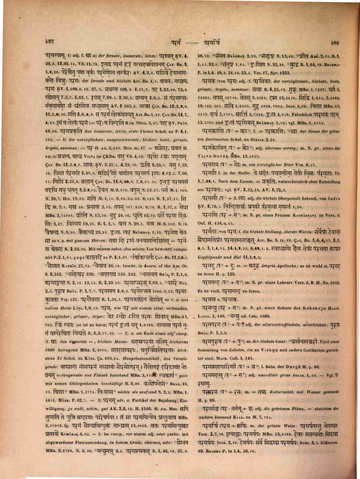
parama 1〉b〉 Z. 7 lies yaddadhi madhu ghṛtam 9,2,1,12; am Schluss hinzuzufügen Spr. 3020.
Böhtlingk 1879 Adjektiv · Substantiv Maskulin
Originaltext · Deutsch · Adjektiv · Substantiv Maskulin
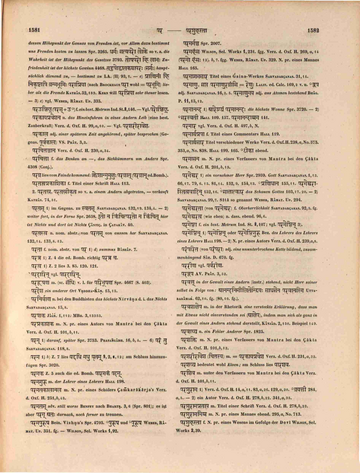
paramá — 1〉 Adj. (f. ā) — a〉 der fernste, äusserste, letzte. — b〉 der vorzüglichste, ausgezeichnetste, höchste, beste, grösste, ärgste, summus. parameṇa cetasā (vgl. paramātman 1〉) so v. a. mit ganzem Herzen, paramakaṇṭhena so v. a. aus vollem Halse. — c〉 vorzüglicher —, grösser —, ärger als (Abl.). — 2〉 am Ende eines adj. Comp. (f. ā) — α〉 Höhepunct, [Page4-031-a] die äusserste Grenze. caturviṃśati˚ höchstens 24. — β〉 Hauptbestandtheil, das Vorwiegende, Hauptziel, Hauptzweck, Hauptsache. Wiederzugeben durch ganz beschäftigt mit, ganz aufgehend in, nur bedacht auf. — 3〉 paramam Adv. ja wohl, schön, gut (als Bejahung, Einwilligung). — 4〉 parama˚ Adv. in hohem Grade, überaus, sehr (als Bejahung, Einwilligung). — 5〉 m. N. pr. eines Sohnes des Manu Auttami VP. 3,1,15.
Apte 1890 Adjektiv · Substantiv Neutrum
Originaltext · Englisch · Adjektiv · Substantiv Neutrum
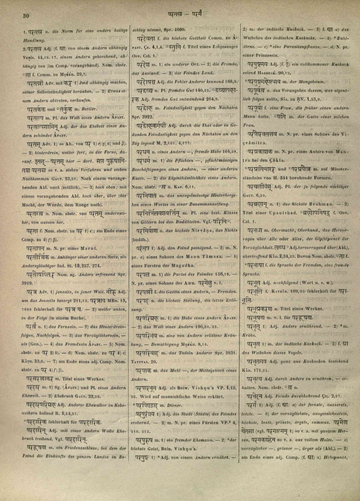
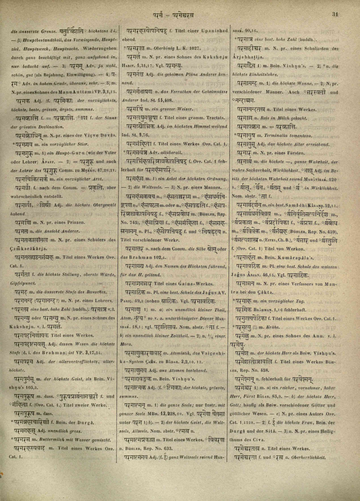
parama a. [paraṃ paratvaṃ māti-ka Tv.] 1 Most distant, last. 2 Highest, best, most excellent, greatest; prāpnoti paramāṃ gatiṃ Ms. 4. 14; Ms. 7. 1, Ms. 2. 13. 3 Chief, principal, primary, supreme; Ms. 8. 302, Ms. 9. 319. 4 Exceeding, extreme. 5 Adequate sufficient. 6 Worst. 7 Higher than, superior to; Pt. 1. 11. — maṃ The utmost or highest; the chief or prominent part; (at the end of comp.) consisting principally of, solely occupied with; kāmopabhogaparamā etāvaditi niścitāḥ Bg. 16. 11; Ms. 6. 96. — maṃ ind. 1 A particle of assent, acceptance or agreement (well, very well, yes, be it so); tataḥ paramāmityuktvā pratasthe munimaṃḍalaṃ Ku. 6. 35. 2 Exceedingly, very much; paramakruddhaḥ &c. Comp. — aṃganā an excellent woman. — aṇuḥ an infinitesimal particle, an atom; R. 15. 22; paraguṇaparamāṇūn parvatīkṛtya nityaṃ Bh. 2. 78; pṛthvī nityā paramāṇurūpā T. S.; (a paramāṇu is thus defined: -jālāṃtarasthasūryāṃśau yatsūkṣmaṃ dṛśyate rajaḥ . bhāgastasya ca ṣaṣṭho yaḥ paramāṇuḥ sa ucyate .. Tarka K.; or less accurately: -jālāṃtaragate raśmau yatsūkṣmaṃ dṛśyate rajaḥ . tasya triṃśattamo bhāgaḥ paramāṇuḥ sa ucyate ...) ˚aṃgakaḥ an epithet of Viṣṇu. — advaitaṃ 1 the Supreme spirit. 2 pure unitarianism. — annaṃ rice boiled in milk. — apamaḥ the inclination of a planet's orbit to the ecliptic. — arthaḥ 1 the highest or most sublime truth, true spiritual knowledge, knowledge ([Page 0668-a]) about Brahman or the Supreme spirit; R. 8. 22; Mv. 7. 2. 2 truth, reality, earnestness; parihāsavijalpitaṃ sakhe paramārthena na gṛhyatāṃ vacaḥ Ś. 2. 18; oft in comp. in the sense of ‘true’ or ‘real’; ˚matsyāḥ R. 7. 40. Mv. 4. 30. 3 any excellent or important object. 4 the best sense. 5 the best kind of wealth. ˚vid a philosopher. — arthataḥ ind. truly, really, exactly, accurately; vikāraṃ khalu paramārthato'jñātvānāraṃbhaḥ pratīkārasya Ś. 4; uvāca cainaṃ paramārthato haraṃ na vetsi nūnaṃ yata evamāttha māṃ Ku. 5. 75; Pt. 1. 136. — ahaḥ an excellent day. — ātman m. the Supreme spirit or Brahman; R. 8. 22. — ānaṃdaḥ ‘supreme felicity’, Supreme spirit. — āpad f. the greatest calamity or misfortune. — riśaḥ an epithet of Viṣṇu. — īśvaraḥ 1 an epithet of Viṣṇu. 2 of Indra. 3 of Śiva. 4 the Almighty god, the Supreme Being. 5 N. of Brahman. 6 a universal monarch, sovereign of the world; see cakravartin. — ṛṣiḥ a great sage. — aiśvaryaṃ supremacy. — gatiḥ f. 1 any chief object or refuge (as a god). 2 final beatitude, emancipation. — gavaḥ an excellent bull or cow. — padaṃ 1 the best position, highest rank. 2 final beatitude. — puruṣaḥ, -pūruṣaḥ the Supreme spirit. — prakhya a. celebrated, renowned. — brahman n. the Supreme spirit. — rasaḥ butter-milk mixed with water. — haṃsaḥ an ascetic of the highest order, one who has controlled and subdued all his senses by abstract meditation; cf. kuṭīcaka.
Cappeller 1887 Worttyp nicht bestimmt
Originaltext · Deutsch · Worttyp nicht bestimmt
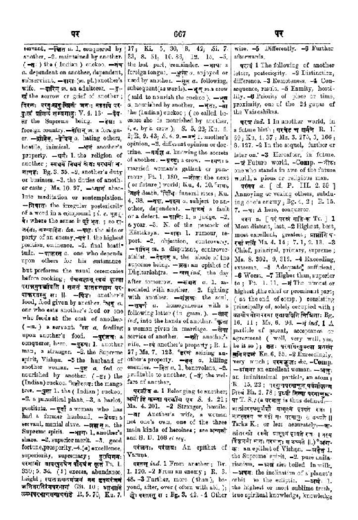
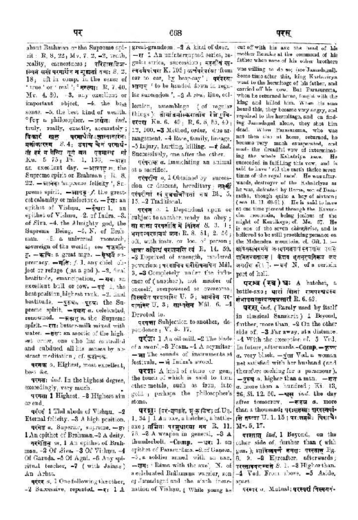
paramá der fernste, letzte, äußerste, höchste, beste, schlimmste, auch compar. höher, besser, schlimmer als (Abl.). parama (˚—) höchster, Haupt-; adv. in hohem Grade, sehr. n. = para (auch adj.—˚), adv. paramam ja wohl, gut.
Burnouf 1866 Adjektiv
Originaltext · Französisch · Adjektiv
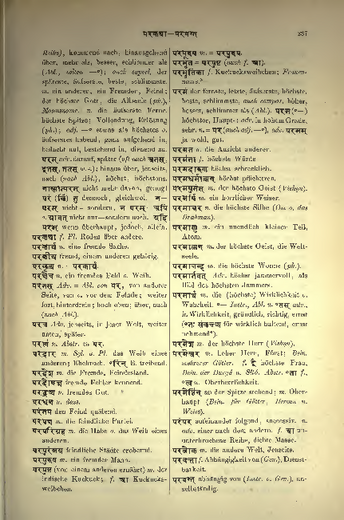
parama a. (sfx. ma) suprême; excellent; le meilleur; principal. À la fin des composés, cf. para. paramam certes, oui.
Abgeleitete Wörter
Quelltextfundstellen (63)
DYS 2 Fundstellen
GoS 1 Fundstelle
HP 12 Fundstellen
PJH 1 Fundstelle
PYS 3 Fundstellen
SiSa 25 Fundstellen
Weitere 13 Quelltextseiten
SiSa 5.48-5.71: Innere Meditation 2 Fundstellen
Direkt belegt
SiSa 5.191-5.207: Kailāsa und Mahāśūnya 2 Fundstellen
Direkt belegt
-
SiSa 5.198 Segment 14
Über Ableitungen belegt
-
SiSa 5.195 Segment 7
SiSa 5.234-5.252: Tripurā-Mantra 2 Fundstellen
Direkt belegt
-
SiSa 5.251 Segment 6
-
SiSa 5.252 Segment 6
SVU 7 Fundstellen
SVU 6.7-6.13: Der Herr aller Herren 3 Fundstellen
Direkt belegt
VBT 12 Fundstellen
Mit AYI Free weitermachen
Bildquelle: AYI Archiv.