

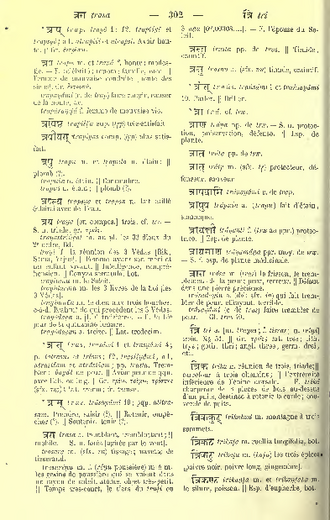
tri त्रि – drei
Adjektiv · Zahlwort · Substantiv Maskulin · Substantiv Neutrum · Worttyp nicht bestimmt
Wörterbuchquellen
AYI Wörterbuch Zahlwort
drei
Cappeller 1891 Substantiv Maskulin · Substantiv Neutrum
Originaltext · Englisch · Substantiv Maskulin · Substantiv Neutrum
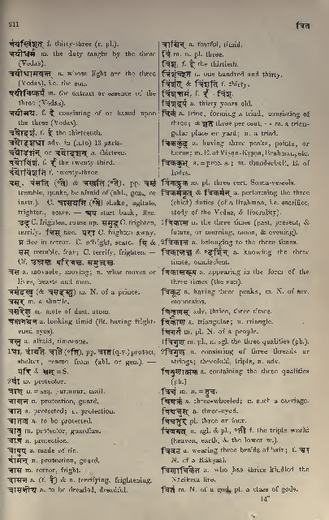
trí ·m. n. pl. three.
Monier-Williams 1872 Worttyp nicht bestimmt
Originaltext · Englisch · Worttyp nicht bestimmt
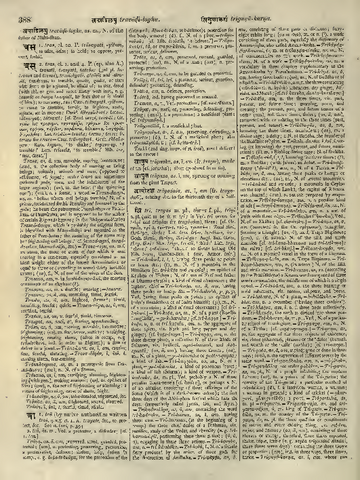
tri tri, trayas m. pl., tisras f. pl., trīṇi n. pl. (said to be fr. rt. tṝ; in Ved. trī occurs for trīṇi and trīṇām for trayāṇām), three; [cf. Gr. τρεῖς, τρί-α, τρί-το-ς, τρί-ς, τρισσό-ς: Zend thri, thri-tya, thris: Lat. tres, tri-a, ter-tiu-s, ter: Goth. threis, thriya, thri-dya: Angl. Sax. threo, thry, thri: Slav. triye, tre-tii, ‘third:’ Lith. trýs, ‘three;’ tré-cza-s, ‘third:’ to tisras belong Old Hib. teora, Cambro-Brit. f. tair, Armor. teir.]
Petersburger 1855 Worttyp nicht bestimmt
Originaltext · Deutsch · Worttyp nicht bestimmt
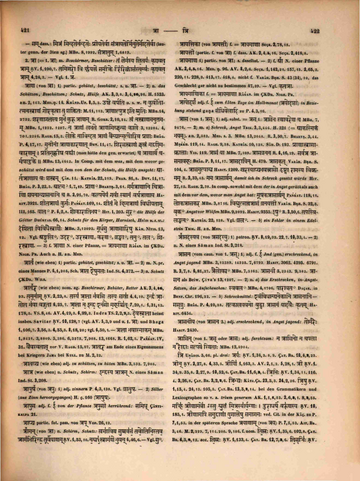
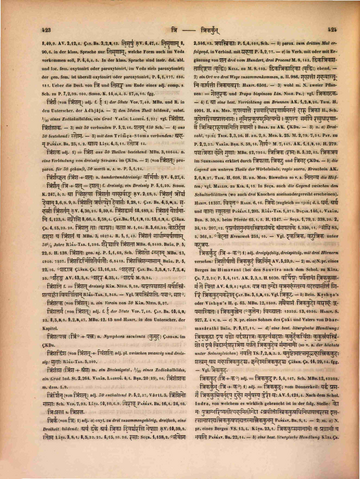
tri UṆĀDIS. 5,66. pl. drei: trayàḥ ṚV. 1,34,2. ṚV. 1,34,8. ṚV. 1,34,9. ŚAT. BR. 10,4,2,25. trīn ṚV. 2,27,8. ṚV. 4,33,5. trīṇì ṚV. 1,163,3. AV. 2,1,2. AV. 5,28,1. trī ṚV. 1,34,9. ṚV. 1,35,8. ṚV. 2,27,9. ṚV. 10,52,6. ŚAT. BR. 11,6,3,4. tri̱bhiḥ ṚV. 1,34,11. ṚV. 1,34,116. ṚV. 1,34,4. ṚV. 3,26,8. ŚAT. BR. 3,2,7,6. tri̱bhyaḥ KĀTY. ŚR. 23,5,3. KĀTY. ŚR. 24,2,26. tri̱ṣu ṚV. 1,15,4. ṚV. 1,24,13. ṚV. 1,105,5. ŚAT. BR. 13,5,2,14. bei den Grammatikern und Lexicographen so v. a. trium generum AK. 1,1,1,53. AK. 2,6,3,1. AK. 2,8,2,55. mahì trī̱ṇāmavò 'stu dyu̱kṣaṃ mi̱trasyā̀rya̱mṇaḥ . du̱rā̱dharṣa̱ṃ varùṇasya ṚV. 10,185,1. trīṇāmapi samudrāṇāṃ yugānteṣu samāgamaḥ ved. Cit. in der KĀŚ._zu_P. 7,1,53. in der späteren Sprache trayāṇām (von traya) P. 7,1,53. AIT. BR. 3,46. M. 2,229. M. 7,114. M. 7,200. M. 9,186. f. nom. ti̱sraḥ ṚV. 1,35,6. ṚV. 1,102,8. ŚAT. BR. 4,5,8,12. acc. ti̱sraḥ ṚV. 1,133,4. ŚAT. BR. 12,7,3,6. ti̱sṛbhìḥ ṚV. 8,49,9. AV. 2,12,4. ŚAT. BR. 3,2,2,13. ti̱sṛṣù ṚV. 6,47,4. ti̱sṝ̱ṇām ṚV. 8,90,6. in der klass. Sprache nur tisṛṇām, welche Form auch im Veda vorkommen soll, P. 6,4,4. P. 6,4,5. In der klass. Sprache sind instr. dat. abl. und loc. fem. oxytonirt oder paroxytonirt, im Veda stets paroxytonirt; der gen. fem. ist überall oxytonirt oder paroxytonirt, P. 6,1,177. P. 6,1,180. P. 6,1,181. Ueber die Decl. von tri und tisar am Ende eines adj. comp. s. Sch. zu P. 7,2,99. P. 7,2,100. SIDDH. K. 14,a,4. SIDDH. K. 14,a,5. SIDDH. K. 17,a,10. fgg.
Originaltext · Deutsch · Worttyp nicht bestimmt
tri [vgl. [3:423]] Z. 2. tisṛṇām ṚV. 5,69,2 (Ausg. v. MÜLLER). (revision)
Originaltext · Deutsch · Worttyp nicht bestimmt
tri Sp. 423, Z. 2. fg. ti̱sṛ̱ṇām ṚV. 5,69,2.
Böhtlingk 1879 Adjektiv
Originaltext · Deutsch · Adjektiv
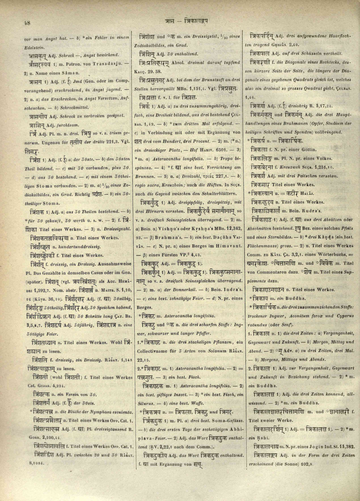
trí Adj. Pl. m. n. drei. triṣu so v. a. trium generum. Ungenau für tṛtīya der dritte Chr. 221,3. Vgl. tisar.
Apte 1890 Worttyp nicht bestimmt
Originaltext · Englisch · Worttyp nicht bestimmt
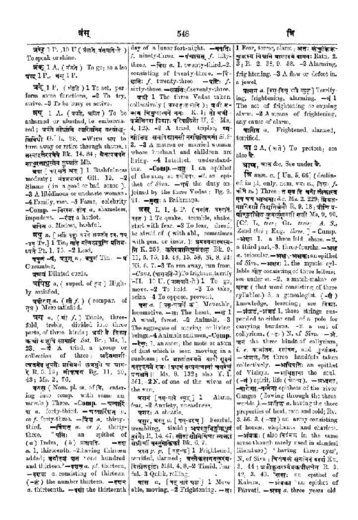
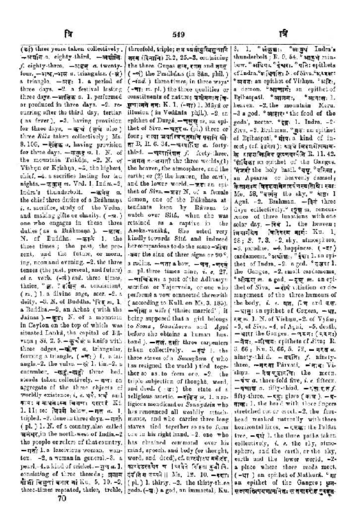
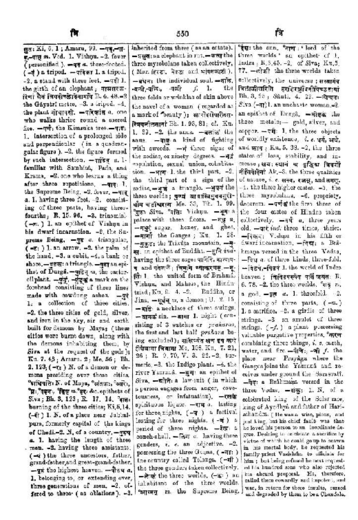
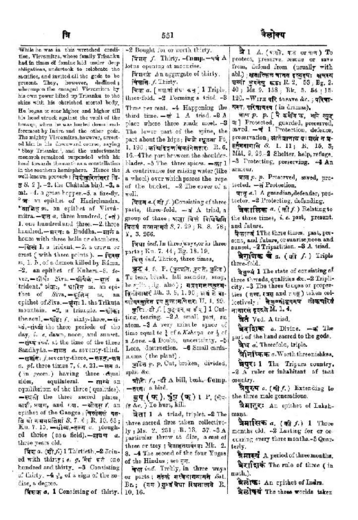
tri num. a. [Uṇ. 5. 66] (declined in pl. only, nom. trayaḥ m., tisraḥ f. trīṇi n.) Three; ta eva hi trayo lokāsta eva traya āśramāḥ &c. Ms. 2. 229; priyatamābhirasau tisṛbhirbabhau R. 9. 18; trīrṇi varṣāṇyudīkṣeta kumāryutṛmatī satī Ms. 9. 90. [Cf. L. tres; Gr. treis; A. S., Zend thri; Eng. three.] Comp. — aṃśaḥ 1 a three-fold share. 2 a third part. 3 three-fourths. — akṣa a. triocular. — akṣaḥ, -akṣakaḥ an epithet of Śiva. — akṣaraḥ 1 the mystic syllable om consisting of three letters; see under a. 2 a match-maker or ghaṭaka (that word consisting of three syllables.) 3 a genealogist. — (rī) knowledge, learning; see vidyā. — aṃkaṭaṃ, -aṃgaṭaṃ 1 three strings suspended to either end of a pole for carrying burdens. 2 a sort of collyrium. — (ṭaḥ) N. of Śiva. — aṃjanaṃ the three kinds of collyrium; i. e. kālāṃjana, rasāṃjana, and puṣpāṃjana. — aṃjalaṃ, -li three handfuls taken collectively. — adhipatiḥ an epithet of Viṣṇu. — adhiṣṭhānaḥ the soul. — (naṃ) spirit, life (catanya). — adhvagā, — mārgagā, -vartmagā epithets of the river. Ganges (flowing through the three worlds). — anīka a. having the three properties of heat, rain and cold; Rv. 3. 56. 3. — (kā) an army consisting of horses, elephants and chariots. — aṃbakaḥ (also triyaṃbaka in the same sense though rarely used in classical literature) ‘having three eyes’, N. of Śiva; triyaṃbakaṃ saṃyaminaṃ dadarśa Ku. 3. 44; jaḍīkṛtastryaṃbakavīkṣaṇena R. 2. 42, R. 3. 49. ˚sakhaḥ an epithet of Kubera. — aṃbakā an epithet of Pārvatī. — abda a. three years old. ([Page 0549-a]) (bdaṃ) three years taken collectively. — aśīta a. eighty-third. — aśītiḥ f. eighty-three. — aṣṭan a. twentyfour. — aśra, -asra a. triangular. — (sraṃ) a triangle. — ahaḥ 1 a period of three days. 2 a festival lasting three days. — āhika a. 1 performed or produced in three days. 2 recurring after the third day, tertian (as fever). 3 having provision for three days. — ṛcaṃ (tṛcaṃ also) three Ṛks taken collectively; Ms. 8. 106. — aihika a. having provision for three days. — kakud m. 1 N. of the mountain Trikūṭa. 2 N. of Viṣṇu or Kṛṣṇa. 3 the highest, chief. 4 a sacrifice lasting for ten nights. — kakbh m. Ved. 1 Indra. 2 Indra's thunderbolt. — karman n. the chief three duties of a Brāhmaṇa i. e. sacrifice, study of the Vedas, and making gifts or charity. ( — m.) one who engages in these three duties (as a Brāhmaṇa). — kāyaḥ N. of Buddha. — kālaṃ 1 the three times; the past, the present, and the future, or morning, noon and evening. 2 the three tenses (the past, present, and future) of a verb. — (laṃ) ind. three times, thrice. ˚jña, ˚darśin a. omniscient. (m.) 1 a divine sage, seer. 2 a deity. 3 N. of Buddha. ˚vid m. 1 a Buddha. 2 an Arhat (with the Jainas). — kūṭaḥ N. of a mountain in Ceylon on the top of which was situated Laṅkā, the capital of Rāvaṇa; Śi. 2. 5. — kūrcakaṃ a knife with three edges. — koṇa a. triangular, forming a triangle. — (ṇaḥ) 1 a triangle. 2 the vulva — khaṃ 1 tin. 2 a cucumber. — khaṭvaṃ, -khadvī three bedsteads taken collectively. — gaṇaḥ an aggregate of the three objects of worldly existence; i. e. dharbha, artha and kāma; na bādhataṃ'sya trigaṇaḥ parasparaṃ Ki. 1. 11; see trivarga below. — gata a. 1 tripled. 2 done in three days. — gartāḥ (pl.) 1 N. of a country, also called jalaṃdhara, in the north-west of India. 2 the people or rulers of that country. — gartā 1 a lascivious woman, wanton. 2 a woman in general. 3 a pearl. 4 a kind of cricket. — guṇa a. 1 consisting of three threads; vratāya mauṃjīṃ triguṇāṃ babhāra yāṃ Ku. 5. 10. 2 three-times repeated, thrice, treble, ([Page 0549-b]) threefold, triple; sapta vyatīyustriguṇāni tasya (dināni) R. 2. 25. 3 containing the three Guṇas satva, rajasa and tamas — (ṇaṃ) the Pradhāna (in Sān. phil.) ( — ind.) three times; in three ways' ( — ṇāḥ m. pl.) the three qualities or constituents of nature; trayīmayāyatriguṇātmana namaḥ K. 1. — (ṇā) 1 Māyā or illusion (in Vedānta phil.). 2 an epithet of Durgā — cakṣus m. an epithet of Śiva. — catura a. (pl.) three or four; gatvā javāttracaturāṇi padāni sī tā B. R. 6. 34. — catvāriṃśa a. forty third. — catvāriṃśat f. forty-three. — jagat n. — jagatī the three worlds, (1) the heaven, the atmosphere, and the earth; or (2) the heaven, the earth, and the lower world. — jaṭaḥ an epithet of Śiva. — jaṭā N. of a female demon, one of the Rākṣasa attendants kept by Rāvaṇa to watch over Sītā, when she was retained as a captive in the Aśoka-vanikā. She acted very kindly towards Sītā and induced her companions to do the same — jīdā — jyā the sine of three signs or 90°, a radius. — ṇatā a bow. — ṇava, -ṇavan a. pl. three times nine, i. e. 27. — ṇāciketaḥ a part of the Adhvaryu sacrifice or Yajurveda, or one who performs a vow connected therewith (according to Kull. on Ms. 3. 185). — ṇītā a wife (‘thrice married’; it being supposed that a girl belongs to Soma, Gandharva and Agni before she obtains a human husband). — takṣaṃ, takṣī three carpenters taken collectively. — daḍaṃ 1 the three staves of a Saṃnyāsin (who has resigned the world) tied together so as to form one. 2 the triple subjection of thought. word, and deed. — (ḍaḥ) the state of a religious ascetic. — daṃḍin m. 1 areligious mendicant or Saṃnyāsin who has renounced all worldly attachments, and who carries three long staves tied together so as to form one in his right hand. 2 one who has obtained command over his mind, speech, and body (or thought, word, and deed), cf. vāgdaṃḍo'tha manodaṃḍaḥ kāyadaṃḍastathaiva ca . yasyaite nihitā buddhau vidaṃḍīti sa ucyate .. Ms. 12. 10. — daśāḥ (pl.) 1 thirty. 2 the thirty-three gods. — (śaḥ) a god, an immortal; ([Page 0549-c]) Ku. 3. 1. ˚aṃkuśaḥ, ˚āyudhaṃ Indra's thunderbolt; R. 9. 54. ˚āyudhaṃ rainbow. ˚adhipaḥ, ˚īśvaraḥ, ˚patiḥ epithets of Indra. ˚adhipatiḥ N. of Śiva. ˚adhyakṣaḥ ˚ayanaḥ an epithet of Viṣṇu. ˚ariḥ, a demon. ˚ācāryaḥ an epithet of Bṛhaspati. ˚ālayaḥ, ˚āvāsaḥ 1 heaven. 2 the mountain Meru. 3 a god. ˚āhāraḥ ‘the food of the gods’, nectar. ˚iṃdraḥ 1 Indra. 2 Śiva. 3 Brahman. ˚guruḥ an epithet of Bṛhaspati, ˚gopaḥ a kind of insect; (cf. iṃdragopa); śraddadhe tridaśagopamātrake dāhaśaktimiva kṛṣṇavartmani R. 11. 42. ˚dīrghikā an epithet of the Ganges. ˚maṃjarī the holy basil. ˚vadhū, ˚vanitā, an Apsaras or heavenly damsel; kailāsasya tridaśavanitādarpaṇasyatithiḥ rayāḥ Me. 58. ˚vartman the sky. ˚śraṃṣṭhaḥ 1 Agni. 2 Brahman. — vinaṃ three days collectively. ˚spṛś m. concurrence of three lunations with one solar day. — divaṃ 1 the heaven; trimārgayeva tridivaraya mārgaḥ Ku. 1. 28; Ś. 7. 3. 2 sky, atmosphere. 3 paradise. 4 happiness. — (vā) cardamoms. ˚adhīśaḥ, ˚īśaḥ 1 an epithet of Indra. 2 a god. ˚udbhavā 1 the Ganges. 2 small cardamoms. ˚okas m. a god. — dṛś m. an epithet of Śiva. — doṣaṃ vitiation or derangement of the three humours of the body, i. e. vāta, pitta and vapha. — dhātuḥ an epithet of Gaṇeśa. — dhāman m. 1 N. of Viṣṇu. 2 of Vyāsa; 3 of Śiva. 4 of Agni. 5 death. — dhārā the Ganges. — ṇayanaḥ (nayanaḥ) — netraḥ, -locanaḥ epithets of Śiva; R. 3. 66; Ku. 3. 66, Ku. 5. 72. — navata a. ninety-third. — navatiḥ f. ninetythree. — nayanā Pārvatī. — nābhaḥ Viṣṇu. — netracūmaṇiḥ the moon. — paṃca a. three-fold five, i. e. fifteen. — paṃcāśa a. fifty-third. — paṃcāśat f. fifty-three. — paṭuḥ glass (kāca). — patākaḥ 1 the hand with three fingers stretched out or erect. 2 the forehead marked naturally with three horizontal lines. — patrakaḥ the Palāśa tree. — pathaṃ 1 the three paths taken collectively, i. e. the sky, atmosphere, and the earth, or the sky, earth and the lower world. 2 a place where three reads meet. — (thā) an epithet of Mathurā. ˚gā an epithet of the Ganges; dhṛtasatpathastripathagāmabhitaḥ sa tamāruroha ([Page 0550-a]) puruhūtasutaḥ Ki. 6. 1; Amaru. 99. — pad, — pād, -pāt m. Ved. 1 Viṣṇu. 2 fever (personified). — pada a. three-footed. — (daṃ) a tripod. — padikā 1 a tripod. 2 a stand with three feet. — padī 1 the girth of an elephant; nāsrasatkariṇāṃ graivaṃ tripadīcchedināmapi R. 4. 48. 2 the Gāyatrī metre. 3 a tripod. 4 the plant godhāpadī. — parikrāṃta a. one who walks thrice round a sacred fire. — parṇaḥ the Kiṃśuka tree. — pāṭaḥ 1 intersection of a prolonged side and perpendicular (in a quadrangular figure). 2 the figure formed by such intersection. — pāṭhin a. 1 familiar with Saṃhitā, Pada, and Krama. 2 one who learns a thing after three repetitions. — pādaḥ 1 the Supreme Being. 2 fever. — pād a. 1 having three feet. 2 consisting of three parts, having threefourths; R. 15. 96. 3 trinomial. ( — m.) 1 an epithet of Viṣṇu in his dwarf incarnation. 2 the Supreme Being. — puṭa a. triangular. — (ṭaḥ) 1 an arrow. 2 the palm of the hand. 3 a cubit. 4 a bank or shore. — puṭakaḥ a triangle. — puṭā an epithet of Durgā. — puṭin m. the castoroil plant. — puṃḍraṃ, -puṃḍrakaṃ a mark on the forehead consisting of three lines made with cowdung ashes. — puraṃ 1 a collection of three cities. 2 the three cities of gold, silver, and iron in the sky, air and earth built for demons by Maya; (these cities were burnt down, along with the demons inhabiting them, by Śiva at the request of the gods); Ku. 7. 48; Amaru. 2; Me. 56; Bh. 2. 123; — (raḥ) N. of a demon or demons presiding over these cities. ˚adhipatiḥ N. of Maya, ˚aṃtakaḥ, ˚ariḥ, ˚ghnaḥ, ˚dahanaḥ, ˚dviṣ m. ˚haraḥ &c. epithets of Śiva; Bh. 3. 123; R. 17. 14. ˚dāhaḥ burning of the three cities; Ki. 5. 14. — (rī) 1 N. of a place near Jabbalpura, formerly capital of the kings of Cedi. 2 N. of a country. — puruṣa a. 1 having the length of three men. 2 having three assistants. — (ṣaṃ) the three ancestors, father, grand-father, and great-grand-father. — pṛṣṭhaṃ the highest heaven. — pauruṣa a. 1 belonging to, or extending over, three generations of men. 2 offered to three (as oblations). 3 ([Page 0550-b]) inherited from three (as an estate). — prasrutaḥ an elephant in rut. — phalā the three myrobalans taken collectively, (Mar. hiraḍā, behaḍā and āṃvaḻakāṭhī). — baṃdhanaḥ the individual soul. — bali, — balī, -valiḥ, -valī f. 1 the three folds or wrinkles of skin above the navel of a woman (regarded as a mark of beauty); kṣāmodaroparilasattrivalīlatānāṃ Bh. 1. 93, Bh. 1. 81; cf. Ku. 1. 39. 2 the anus. — balīkaṃ the anus. — bāhuḥ a kind of fighting with swords. — bhaṃ three signs of the zodiac, or ninety degrees. — bhadraṃ copulation, sexual union, cohabitation. — bhāgaḥ 1 the third part. 2 the third part of a sign of the zodiac. — bhujaṃ a triangle. — bhuvanaṃ the three worlds; puṇyaṃ yāyāstribhuvamagurordhāma caṃḍīśvarasya Me. 33, Bh. 1. 99. ˚guruḥ Śiva. ˚patiḥ Viṣṇu. — bhūmaḥ a palace with three floors. — madhu n. — madhuraṃ sugar, honey, and ghee. — mārgā the Ganges; Ku. 1. 28. — mukuṭaḥ the Trikūṭa mountain. — mukhaḥ an epithet of Buddha. — muni ind. having the three sages pāṇini, kātyāyana and pataṃjali; trimuni vyākaraṇam. — mūrtiḥ 1 the united form of Brahmā, Viṣṇu, and Maheśa, the Hindu triad; Ku. 2. 4. 2 Buddha, or Jina. — mūrdhan m. a demon; U. 2. 15. — yaṣṭiḥ a necklace of three strings. — yāmakaṃ sin. — yāmā 1 night (consisting of 3 watches or praharas, the first and last half prahara being excluded); saṃkṣipyeta kṣaṇa iva kathaṃ dīrghayāmā triyāmā Me. 108, Ku. 7. 21, Ku. 7. 26; R. 9. 70, V. 3. 22. 2 turmeric. 3 the Indigo plant. 4 the river Yamunā. — yugaḥ an epithet of Śiva. — yoniḥ a law-suit (in which a person engages from anger, covetousness, or infatuation). — rasakaṃ spirituous liquor. — rātra a. lasting for three nights. — (traḥ) a festival lasting for three nights. — (traṃ) a period of three nights. — rekhaḥ a conch-shell. — liṃga a. having three genders, i. e. an adjective. 2 possessing the three Guṇas. — (gāḥ) the country called Telanga. — (gī) the three genders taken collectively. — lokaṃ the three worlds. — (kaḥ) an inhabitant of the three worlds. ˚ātman m. the Supreme Being. ([Page 0550-c]) ˚īśaḥ the sun. ˚nāyaḥ ‘lord of the three worlds’ an epithet of 1 Indra; R. 3. 45. 2 of Śiva; Ku. 5. 77. — lokī the three worlds taken collectively, the universe; satvāmeva trilokīsariti haraśiraścuṃbinīvicchaṭāyāṃ Bh. 3. 95; Śānti. 4. 22. — locanaḥ Śiva. — (nā) 1 an unchaste woman. 2 an epithet of Durgā. — lohakaṃ the three metals:-gold, silver, and copper. — vargaḥ 1 the three objects of worldly existence, i. e. dharma, artha, and kāma; Ku. 5. 38. 2 the three states of loss, stability, and increase; kṣayaḥ sthānaṃ ca vṛddhiśca trivargo nītivedināṃ Ak. 3 the three qualities of nature, i. e. sattva, rajas, and tamas. 4 the three higher castes. 5 the three myrobalans. 6 propriety, decorum. — varṇakaṃ the first three of the four castes of Hindus taken collectively. — varṣa a. three years old. — vāraṃ ind. three times, thrice. — vikramaḥ Viṣṇu in his fifth or dwarf incarnation. — vidyaḥ a Brāhmaṇa versed in the three Vedas. — vidha a. of three kinds, three-fold. — viṣṭapaṃ, -piṣṭapaṃ 1 the world of Indra heaven; triviṣṭapasyeva patiṃ jayaṃtaḥ R. 6. 78. 2 the three worlds. ˚sad m. a god. — vṛt a. 1 threefold. 2 consisting of three parts. ( — m.) 1 a sacrifice. 2 a girdle of three strings. 3 an amulet of three strings. ( — f.) a plant possessing valuable purgative properties. ˚karaṇa combining three things, i. e. earth, water, and fire. — veṇiḥ, -ṇī f. the place near Prayāga where the Ganges joins the Yamunā and receives under ground the Sarasvatī. — vedaḥ a Brāhmaṇa versed in the three Vedas. — śaṃkuḥ 1 N. of a celebrated king of the Solar race, king of Ayodhyā and father of Hariśchandra. [He was a wise, pious, and just king, but his chief fault was that he loved his person to an inordinate degree. Desiring to celebrate a sacrifice by virtue of which he could go up to heaven in his mortal body, he requested his family-priest Vasiṣṭha to officiate for him; but being refused he next requested his hundred sons who also rejected his absurd proposal. He, therefore, called them cowardly and impotent, and was, in return for these insults, cursed and degraded by them to be a Cāṇḍāla. ([Page 0551-a]) While he was in this wretched condition, Viśvāmitra, whose family Triśaṅku had in times of famine laid under deep obligations, undertook to celebrate the sacrifice, and invited all the gods to be present. They, however, declined; whereupon the enraged Viśvāmitra by his own power lifted up Triśaṅku to the skies with his cherished mortal body. He began to soar higher and higher till his head struck against the vault of the heaven, when he was hurled down headforemost by Indra and the other gods. The mighty Viśvāmitra, however, arrested him in his downward course, saying ‘Stay Triśaṅku’, and the unfortunate monarch remained suspended with his head towards the earth as a constellation in the southern hemisphere. Hence the well-known proverb; triśaṃkurivāṃtarā tiṣṭha Ś. 2]. 2 the Cātaka bird. 3 a cat. 4 a grass-hopper. 5 a fire-fly. ˚jaḥ an epithet of Hariścandra. ˚yājin m. an epithet of Viśvāmitra. — śata a. three hundred. — (taṃ) 1 one hundred and three. 2 three hundred. — śaraṇaḥ a Buddha. — śālaṃ a house with three halls or chambers. — śikhaṃ 1 a trident. 2 a crown or crest (with three points). — śiras m. 1 N. of a demon killed by Rāma. 2 an epithet of Kubera. 3 fever. — śīrṣaḥ Śiva. — śīrṣakaṃ, -śūlaṃ a trident. ˚aṃkaḥ, ˚dhārin m. an epithet of Śiva. — śūlin m. an epithet of Śiva. — śṛṃgaḥ 1 the Trikūṭa mountain. 2 a triangle. — śokaḥ the soul. — ṣaṣṭiḥ f. sixty-three. — saṃdhyaṃ, -saṃdhyī the three periods of the day, i. e. dawn, noon, and sunset. — saṃdhyaṃ ind. at the time of the three Saṃdhyās. — saptata a. seventy-third. — saptatiḥ f. seventy-three. — saptan, -sapta a. pl. three times 7, i. e. 21. — sama a. (in geom.) having three equal sides, equilateral. — sāmyaṃ an equilibrium of the three (qualities). — sthalī the three sacred places, kāśī, prayāga, and gayā. — srotas f. an epithet of the Ganges; trisrotasaṃ vahati yo gaganapratiṣṭhāṃ Ś. 7. 6; R. 10. 63; Ku. 7. 15. — sītya, -halya a. ploughed thrice (as a field). — hāyaṇa a. three years old.
Cappeller 1887 Worttyp nicht bestimmt
Originaltext · Deutsch · Worttyp nicht bestimmt
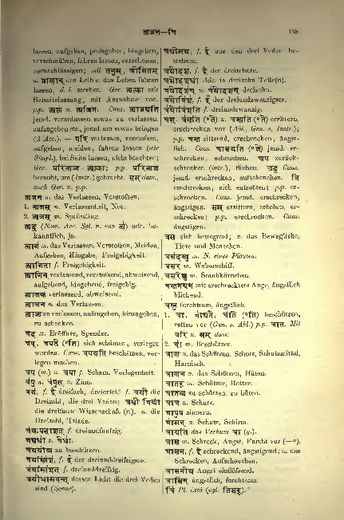
trí Pl. drei (vgl. tisar).
Burnouf 1866 Adjektiv
Originaltext · Französisch · Adjektiv
tri tri a. [m. trayas; f. tisras; n. trīṇi] trois. M§ 51. Gr. τρεῖς; lat. tres; lith. trys; goth. thri; angl. three; germ. drei; etc.
Abgeleitete Wörter
Quelltextfundstellen (58)
AsFu 2 Fundstellen
AsS1 1 Fundstelle
Tryaṅga Mukhaika Pāda Paścimottānāsana 1 Fundstelle
Direkt belegt
DYS 4 Fundstellen
GoS 3 Fundstellen
HP 5 Fundstellen
HTK 5 Fundstellen
HTK 10.30–33*1: Nāḍī-viśudhy-ākhyaka-kumbha und Nāḍīśuddhi 1 Fundstelle
Direkt belegt
-
HTK 10.33 Segment 13
HTK 10.42–43: Meru: Drei Stufen des Atemanhaltens 2 Fundstellen
Direkt belegt
MAN 1 Fundstelle
MandUp 3 Fundstellen
PJH 1 Fundstelle
PJH 7-8: Tantrische Kosmologie und Offenbarung des göttlichen Bewusstseins 1 Fundstelle
Direkt belegt
-
PJH 7 Segment 6
SiSa 20 Fundstellen
SiSa 2.13-2.20: Suṣumṇā und Citrā 2 Fundstellen
Direkt belegt
SiSa 2.21-2.24: Ādhāra und Kuṇḍalī 2 Fundstellen
Direkt belegt
Weitere 9 Quelltextseiten
SiSa 5.156-5.181: Sahasrāra 3 Fundstellen
Direkt belegt
-
SiSa 5.172 Segment 1
-
SiSa 5.176 Segment 5
-
SiSa 5.177 Segment 5
SiSa 5.234-5.252: Tripurā-Mantra 2 Fundstellen
Direkt belegt
-
SiSa 5.244 Segment 1
-
SiSa 5.246 Segment 1
SS 2 Fundstellen
SVU 7 Fundstellen
Mit AYI Free weitermachen
Bildquelle: AYI Archiv.