

sukha सुख – easeful; easy; comfortable
adjective · substantive masculine · substantive neuter · Word type unspecified
Dictionary sources
AYI dictionary adjective · substantive neuter
adjective
easeful; easy; comfortable
Derived from
substantive neuter
happiness; ease; pleasure
Derived from
Cappeller 1891 adjective
Original text · English · adjective
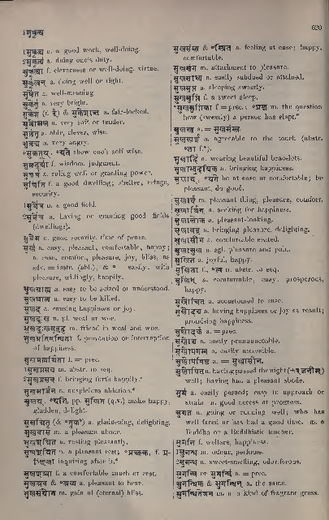
sukhá ·a. easy, pleasant, comfortable, happy; n. ease, comfort, pleasure, joy, bliss, as adv. = instr. (abl.), & °-- easily, with pleasure, willingly, happily.
Monier-Williams 1872 substantive neuter · Word type unspecified
Original text · English · substantive neuter
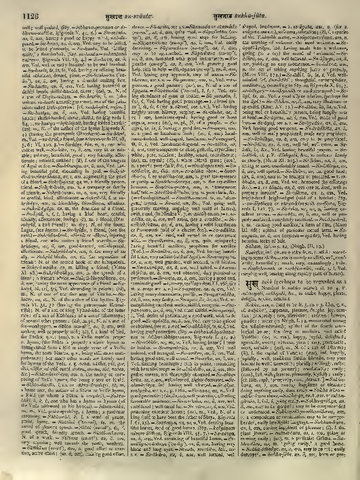
Sukha, am, n. (said to be fr. 5. su + 3. kha, q. v., cf. duḥkha), happiness, pleasure, delight, joy, com- fort; prosperity; ease, alleviation; easiness; heaven, paradise; water (in Naigh. I. 12. enumerated among the udaka-nāmāni); epithet of the fourth astro- logical house; the drug or medicinal root called Vṛddhi; (as, ā, am), happy, joyful, delighted; agreeable, sweet; virtuous, pious; easy, practicable; meet, suitable; (as), m., N. of a son of Dharma; (ā), f. the capital of Varuṇa; (am), ind. happily, joyfully; well, (sukham āstām bhavān, may your honour be well! farewell!); placidly; willingly, rather (followed by na punar); comfortably; easily; (ena), ind. with pleasure, pleasantly, joyfully; easily; [cf. Hib. sogh, ‘prosperity, ease, pleasure.’]
Original text · English · Word type unspecified
—Su-kha, &c., see sukha, s. v.
Petersburger 1855 adjective · substantive masculine · substantive neuter
Original text · German · adjective · substantive masculine · substantive neuter
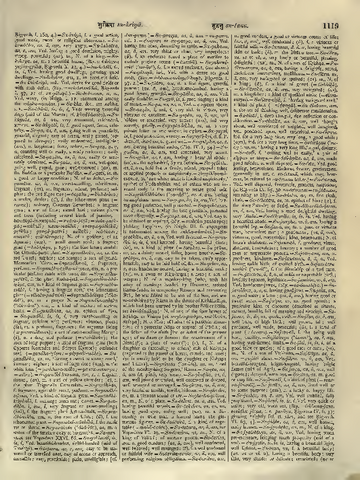
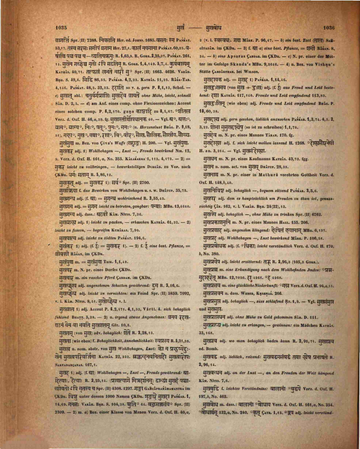
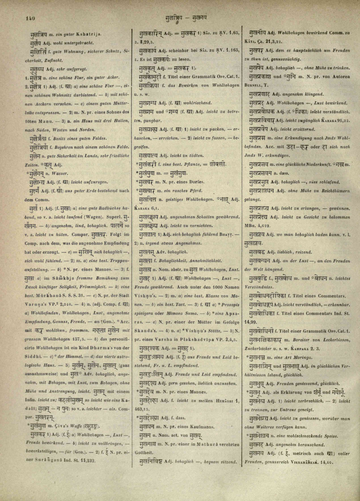
sukhá (6. su + 2. kha) ŚĀNT. 1,6. 1〉 adj. (f. ā) a〉 in der alten Sprache nur vom Wagen, der gut gebohrte Naben (kha Loch der Nabe) hat, also so v. a. leicht laufend (vgl. εὔτροχος bei HOMER) ṚV. 1,20,3. ṚV. 1,49,2. ṚV. 1,120,11. sthi̱raṃ rathàṃ su̱khami̱ndrādhì tiṣṭha ṚV. 3,35,4. ṚV. 3,41,9. ṚV. 5,5,3. ṚV. 5,60,2. ṚV. 5,63,5. aśvo̱ voḻhā̀ su̱khaṃ rathàmicchati ṚV. 9,112,4. ṚV. 10,75,9. su̱kho rathà iva vartatām AV. 5,14,5. AV. 5,14,13. AV. 8,1,6. AV. 13,1,24. Einschiebung nach VĀLAKH. 10. superl. ṚV. 1,13,4. ṚV. 1,16,2. — b〉 angenehm, lind, behaglich: (bheṣajam) su̱khaṃ (sugaṃ TS. und sonst) me̱ṣāyà me̱ṣyai VS. 3,59. ci̱trā śi̱vā svā̱tiḥ su̱kho mè astu AV. 19,7,3. Sitz, Lager ŚAT. BR. 11,5,7,4. MBH. 3,10036. R. 2,42,15. R. 2,51,2 (R. 2,48,2 GORR.). R. 55,15. R. 86,3. Spr. (II) 4772, v. l. sthāna MBH. 13,1888 (wir lesen sukhaṃ). purī R. 2,51,16 (R. 2,48,16 GORR.). nivāsa R. 2,54,31. Wind R. 2,44,9. RAGH. 3,14. MĀRK. P. 59,20. sparśa Spr. (II) 3420. sukhāṃ pṛṣṭvā ca śarvarīm MBH. 12,1916. R. 2,89,8 (R. 2,97,13 GORR.). divasāḥ R. 3,22,10. pradoṣāḥ ṚT. 6,2. atisukhe kāle R. 2,63,19. īhā dhanasya na sukhā Spr. (II) 1156. ete mama sukhāḥ saumyā mṛgāḥ sarve pradakṣiṇāḥ R. 3,78,12. kiṃ syātsukhataraṃ tataḥ R. 3,30,16 (SCHL. 3,30,14 SCHL.). pālane na ca te (arthāḥ) sukhāḥ so v. a. leicht zu hüten Spr. (II) 2630. śreyāṃsi labdhumasukhāni vināntarāyaiḥ KIR. 5,49. in comp. mit seinem subst.: sukhālepa SUŚR. 2,346,10. ˚yoganidrā KĀM. NĪTIS. 15,44. sukhānila adj. (kāla) R. 3,79,3. ˚śītoṣṇamārutā (rātri) MBH. 5,6007. Am Ende eines comp.; voran geht α〉 was die angenehme Empfindung u. s. w. hat P. 2,1,36. das vorangehende Wort bewahrt seinen Accent P. 6,2,15. fg. nakhapada˚ MEGH. 36. śruti˚ R. 1,20,24 (R. 1,21,23 GORR.). RAGH. 9,45. BHĀG. P. 7,9,25. karṇa˚ R. 2,103,13. R. 5,11,9. śrotra˚ R. SCHL. 2,91,28. RAGH. 7,16. VARĀH. BṚH. S. 77,34. śrotrāśaya˚ R. 1,4,30. manaḥkarṇa˚ R. GORR. 2,5,14. — β〉 was die angenehme Empfindung u. s. w. erzeugt: rathena — anudghātasukhena RAGH. 2,72. asbubhirayācitasukhaiḥ Spr. (II) 1637. suhṛtsamāgamasukhā divasāḥ KATHĀS. 22,158. sparśagandha˚ (matsya; es ist mit MATSYOP. 24 ˚sukhaśca zu lesen) MBH. 3,12770. — c〉 = sukhin sich behaglich —, wohl fühlend: drakṣyāmi tvāṃ sukhaṃ (könnte auch adv. sein) vatsa susthitaṃ rājavartmani R. 2,25,39. sukhā (sukhaṃ adv.?) dharmaṃ cariṣyanti munayaḥ R. 3,35,113. — 2〉 m. a〉 (sc. daṇḍa) Bez. einer best. Truppenaufstellung KĀM. NĪTIS. 19,45. — b〉 N. pr. eines Mannes gaṇa śivādi zu P. 4,1,112. — 3〉 f. ā TRIK. 3,5,20. a〉 im Sāṃkhya fromme Bemühung zum Zweck künftiger Seligkeit, Frömmigkeit TATTVAS. 31. — b〉 Bez. der Stadt Varuṇaʼs H. an. 2,28. MED. kh. 8. — 4〉 n. AK. 3,6,3,23. TRIK. a〉 Wohlbefinden, Wohlbehagen, Lust, angenehme Empfindung, Genuss, Freude AK. 1,1,4,3. AK. 3,4,3,24. H. 1370. H. an. MED. HALĀY. 1,123. HALĀY. 5,61. mit dat. der Person (āśiṣi) P. 2,3,73. su̱khaṃ cà me̱ śayànaṃ ca me (vgl. jedoch sukhe śayane ŚAT. BR. 11,5,7,4) VS. 18,6. ˚nāmāni NAIGH. 3,6. NIR. 8,9. ˚duḥkhe KAUṢ. UP. 2,15. dvaṃdvaiḥ sukhaduḥkhādibhiḥ M. 1,26. ananta M. 4,149. akṣayya M. 229. atyanta M. 5,46. śāśvata M. 6,80. anuttama M. 2,9. M. 8,343. YOGAS. 2,42. sukhaṃ cehecchatā M. 3,79. sukhasya nityaṃ dāteha M. 5,153. yena vedayate sarvaṃ sukhaṃ duḥkhaṃ ca janmasu M. 12,13. svarge sukhamaśnute 20. sukhamāpnuhi MBH. 3,15635. MBH. 12,4294. māturno na bhavetsukham R. 2,31,17. R. 2,34,44. sukhāni labdhum R. 51,9. R. 72,6. R. 86,10. SUŚR. 1,130,8. SUŚR. 1,153,5. SUŚR. 2,411,19. sukhamanvabhūt RAGH. 1,21. śarīrayogajaiḥ sukhaiḥ RAGH. 3,26. anena spṛṣṭasya gātreṣu sukhaṃ mama ŚĀK. 178. vanādanyatkutaḥ sukham Spr. (II) 169. ṣaḍjīvalokasya sukhāni Spr. (II) 600. Spr. (II) 1013. sapta Spr. (II) 7225. nālaṃ sukhāya suhṛdaḥ, sukhebhyaḥ Spr. (II) 3651. Spr. (II) 3680. Spr. (II) 4241. Spr. (II) 4604. sarvamātmavaśaṃ sukham Spr. (II) 5272. Spr. (II) 6087. Spr. (II) 6136. Spr. (II) 7063. fgg. Spr. (II) 7072. fgg. Spr. (II) 7079. fgg. sukhe vartamānaḥ Spr. (II) 7091. sukhadhanairviyutaḥ VARĀH. BṚH. S. 12,15. sukhayaśo'rthavṛddhikara VARĀH. BṚH. S. 48,82. VARĀH. BṚH. S. 53,66. sukheṣvekāntatatparaḥ KATHĀS. 11,2. sukhāya karmāṇi karoti lokaḥ BHĀG. P. 3,5,2. ŚUK. in LA. (III) 33,16. sukhameva puruṣārthaḥ SARVADARŚANAS. 2,13. SARVADARŚANAS. 20,14. SARVADARŚANAS. 41,3. sarveṣāmanukūlavedanīyaṃ sukham TARKAS. 53. manasaḥ R. 2,28,3. rathacaryākṛta, vanavāsakṛta R. 2,52,47. viṣayāṇām R. 1,9,3. kāvyasya Freude an R. 2,4,8. ˚saṃyoga M. 6,64. sukhāsvāda Spr. (II) 7090. sukhādara RĀJA-TAR. 4,387. ˚lava VARĀH. BṚH. S. 74,3. sukhārha MBH. 3,2675. ˚para VARĀH. BṚH. 24 (22), 13. ˚parihīna BṚH. S. 68,26. sukhānvita 17. sukhaduḥkhasamanvita M. 1,49. manobhava˚ VARĀH. BṚH. S. 75,1. vanya˚ PAÑCAT. 216,10. manaḥ˚ BHĀG. P. 9,18,51. lokāntara˚ RAGH. 1,69. darśana˚ ŚĀK. 148. rājya˚ VARĀH. BṚH. S. 77,4. am Ende eines adj. comp. (f. ā): anirdeśya˚ VIKR. 59. tulya˚ RĀJA-TAR. 4,691 (zu lesen ˚sukhānai˚). labdhanidrā˚ MEGH. 95. vighnitasamāgama˚ Spr. (II) 3310. sukhaṃ kar wohlthun, frommen: sukhaṃ karotyauṣadhapānam P. 5,4,63, Schol. — b〉 personificirt ist das Wohlbehagen u. s. w. ein Kind Dharmaʼs von der Siddhi VP. 55. MĀRK. P. 50,28. — c〉 Himmel H. an. MED. — d〉 Bez. des 4ten astrologischen Hauses VARĀH. BṚH. 2,15. VARĀH. BṚH. 4,10. VARĀH. BṚH. 5,17. LAGHUJ. 2,16. Verz. d. B. H. No. 878. Verz. d. Oxf. H. 330,a,36. Verz. d. Oxf. H. 331,a,14. fg. — 5〉 adverbial in der Bed. behaglich, angenehm, mit Behagen, mit Lust, zum Behagen; ohne Mühe und Anstrengung, leicht. a〉 sukham acc. Einfluss auf den Ton eines verbi finiti gaṇa kāṣṭhādi zu P. 8,1,68. priyā jāyā patiṃ sukhaṃ śivamupaspṛśatyā visrasaḥ AIT. BR. 8,20. paripaspṛśire cainaṃ pīnairurasijaiḥ sukham R. 1,9,38. (anilaḥ) vavau sukhaṃ śivaḥ R. 2,91,24. svapiti ŚAT. BR. 11,5,7,1. M. 1,54. SUŚR. 2,383,16. Spr. (II) 7078. KATHĀS. 18,115. vi — śram KATHĀS. 49,235. śī KAṬHOP. 1,11. Spr. (II) 25. Spr. (II) 3083. Spr. (II) 5731. Spr. (II) 6521. Spr. (II) 6892. Spr. (II) 7417. samud — sthā 25. prati — budh, car Spr. (II) 6892. jīv Spr. (II) 2296, v. l. Spr. (II) 5473. Spr. (II) 7069. fgg. HARIV. 7209. SARVADARŚANAS. 1,16. ās R. 2,52,97. Spr. (II) 614. Spr. (II) 1241. VIKR. 65,17. sthā Spr. (II) 1956. KATHĀS. 32,145. edh M. 7,113. MBH. 1,5591. Spr. (II) 225. Spr. (II) 1387. vas M. 6,95. MBH. 3,1737. MBH. 3,2332. MBH. 3,2711. MBH. 3,3024. R. 2,54,21. Spr. (II) 6304. ni — vas R. 2,27,12. HIT. 38,8. HIT. 80,14. BHĀG. P. 8,24,18. pra — vas R. 2,36,8. gatvā R. 2,54,8. āgamiṣyāmi MBH. 3,1816. snātum Spr. (II) 4983. sukhaṃ pareṣāṃ vyasaneṣu kathyate Spr. (II) 2404. bhaja māṃ sukham KATHĀS. 19,37. sukhaṃ tapaścariṣyāmaḥ R. 1,61,3. sukhaṃ saṃtāritau mayā R. 2,86,21. sukhaṃ yojanapañcāśatkrameyam R. 5,1,45. (mama) niścairairadhvabhirviśataḥ sukham RĀJA-TAR. 6,46. sukhamarthaḥ samāsena mahānapyupalabhyate ohne Mühe, leicht Verz. d. Oxf. H. 50,a,12. sukhaṃ bandhātpramucyate BHAG. 5,3. sukhamārādhyaḥ, sukhataramārādhyate Spr. (II) 105. sukham — na punaḥ leichter — als Spr. (II) 5824. mit einem infin. leicht zu: (saḥ) bhaviṣyati sukhaṃ hantum MBH. 5,220. kartum BHAG. 9,2. rathaṃ ciccheda kadalīsukham so leicht wie eine Kadalī RAGH. 12,96. adhika˚ überaus angenehm: nītvā dinam KATHĀS. 45,331. — b〉 sukhena instr. P. 8,1,13. SIDDH. K. 37,a,1. kaccitsukhena rajanī vyuṣṭā te MBH. 12,1939. jāgarti Spr. (II) 7388. nivasati HIT. ed. JOHNS. 1685. vasataḥ sma PAÑCAT. 53,17. tasya sarasaḥ samīpaṃ jagāma HIT. 27,1. kālaṃ nayamānā PAÑCAT. 60,25. varṣāṇi pañca pañca ca — vyaticakramuḥ R. 1,63,9. R. GORR. 2,25,37. PAÑCAT. 261,14. sukhena gacchecca mṛto 'pi sadgatim R. GORR. 1,4,149. R. GORR. 5,7,4. kurvanrājyam KATHĀS. 40,71. tatphalaṃ labhate nārī su˚ Spr. (II) 1663. Spr. (II) 4626. VARĀH. BṚH. S. 49,6. siddhi VARĀH. BṚH. S. 86,55. PAÑCAR. 4,2,22. KATHĀS. 11,25. RĀJA-TAR. 4,146. PAÑCAT. 48,2. PAÑCAT. 52,23. dadāti so v. a. gern P. 8,1,13, Schol. — c〉 sukhāt abl.: caturvargaprāptiḥ sukhādeva jāyate ohne Mühe, leicht, schnell SĀH. D. 2,5. — d〉 am Anf. eines comp. ohne Flexionszeichen; Accent eines solchen comp. P. 6,2,170. gaṇa kāṣṭhādi zu P. 8,1,67. ˚śītala Verz. d. Oxf. H. 46,a,39. fg. sukhāstīrṇopadhānaka 40. — Vgl. a˚, antaḥ˚, grāma˚, grāmya˚, niḥ˚, pat˚, punaḥ˚, manaḥ˚ (n. Herzenslust BHĀG. P. 9,18,51), mahā˚, mukha˚, yathā˚, rāja˚, vi˚, vīra˚, saukha, saukhika, saukhīya, saukhya.
Böhtlingk 1879 adjective · substantive masculine · substantive neuter
Original text · German · adjective · substantive masculine · substantive neuter
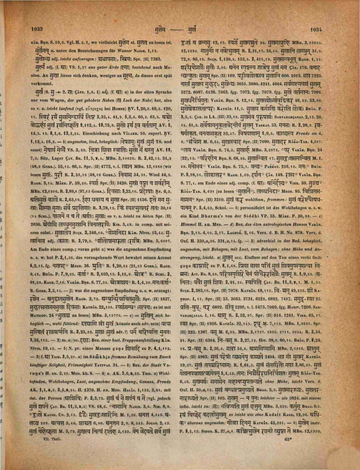
sukhá — 1〉 Adj. (f. sukhā) — a〉 eine gute Radbüchse habend, so v. a. leicht laufend (Wagen). Superl. sukhatama. — b〉 angenehm, lind, behaglich. pālane so v. a. leicht zu hüten. Compar. sukhatara. Folgt im Comp. nach dem, was die angenehme Empfindung hat oder erzeugt. — c〉 = sukhin sich behaglich —, sich wohl fühlend. — 2〉 m. — a〉 eine best. Truppenaufstellung. — b〉 *N. pr. eines Mannes. — 3〉 f. sukhā — a〉 im Sāṃkhya fromme Bemühung zum Zweck künftiger Seligkeit, Frömmigkeit. — b〉 eine best. Mūrchanā S. S. S. 31. — c〉 N. pr. der Stadt Varuṇaʼs VP.² 2,240. — 4〉 n. (adj. Comp. f. ā) — a〉 Wohlbefinden, Wohlbehagen, Lust, angenehme Empfindung, Genuss, Freude — an (Gen.). *Acc. mit kar wohlthun, frommen. mahatā sukhena mit grossen Wohlbehagen Chr. 157,5. — b〉 das personificirte Wohlbehagen ist ein Kind Dharmaʼs von der Siddhi. — c〉 *der Himmel. — d〉 das vierte astrologische Haus. — 5〉 sukhám, sukhena, sukhāt (ganz ausnahmsweise) und sukha˚ Adv. behaglich, angenehm, mit Behagen, mit Lust, zum Behagen, ohne Mühe und Anstrengung, leicht. sukham mit einem Infin. leicht zu; kadalīsukham mit einem Infin. leicht zu; kadalīsukham so leicht wie eine Kadalī; sukham — na punaḥ so v. a. leichter — als. Compar. sukhataram.
Apte 1890 substantive neuter
Original text · English · substantive neuter
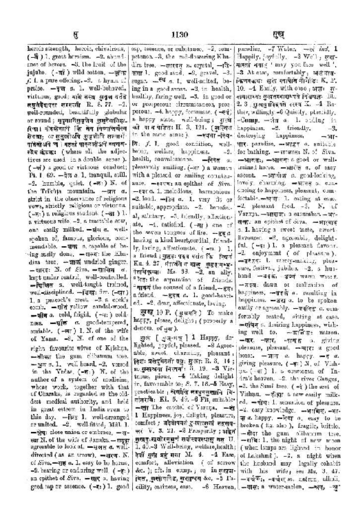
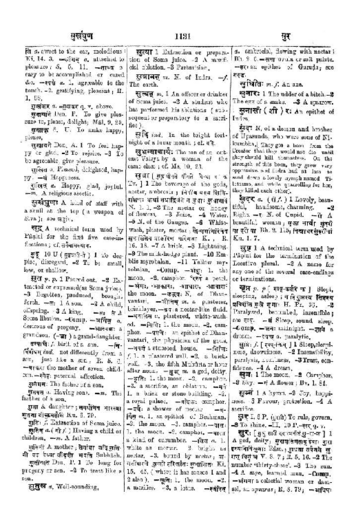
sukha [sukh-ac] 1 Happy, delighted, joyful, pleased. 2 Agreeable, sweet, charming, pleasant; diśaḥ prasedurmaruto vavuḥ sukhāḥ R. 3. 14; so mukhaśravā nisvanāḥ R. 3. 19. 3 Virtuous, pious. 4 Taking delight in, favourable to; Ś. 7. 18. 5 Easy, practicable; śreyāṃsi labdhumasukhāni vināṃtarāyaiḥ Ki. 5. 49. 6 Fit, suitable. — khā The capital of Varuṇa. — khaṃ 1 Happiness, joy, delight, pleasure, comfort; yadevopanataṃ duḥkhātsukhaṃ tadrasavattaraṃ V. 3. 21. 2 Prosperity; advaitaṃ sukhaduḥkhayoranuguṇaṃ sarvāsvavasthāsu yat U. 1. 40. 3 Well-being, welfare, health; devīṃ sukhaṃ praṣṭuṃ gatā M. 4. 4 Ease, comfort, alleviation (of sorrow &c.); oft. in comp.; as in sukhaśayita, sukhopaviṣṭa, sukhāśraya &c. 5 Facility, easiness, ease. 6 Heaven, ([Page 1130-c]) paradise. 7 Water. — khaṃ ind. 1 Happily, joyfully. 2 Well; sukhamāstāṃ bhavāt ‘may you fare well’. 3 At ease, comfortably; asaṃjātakiṇaskaṃdhaḥ sukhaṃ svapiti gaurgaḍiḥ K. P. 10. 4 Easily, with ease; ajñaḥ sukhamārādhyaḥ sukhataramārādhyate viśeṣajñaḥ Bh. 2. 3; sukhamupadiśyate parasya K. 5 Rather, willingly. 6 Quietly, placidly. Comp. — aṃta a. 1 ending in happiness. 2 friendly. 3 destroying happiness. — ādhāraḥ paradise. — āplava a. suitable for bathing. — ājātaḥ N. of Śiva. — āyataḥ, -āyanaḥ a good or welltrained horse. — āroha a. of easy ascent. — āloka a. good-looking, lovely, charming. — āvaha a. conducing to happiness, pleasant, comfortable. — āśaḥ 1 eating at ease. 2 pleasant food. 3 N. of Varuṇa. — āśakaḥ a cucumber. — āsaktaḥ an epithet of Śiva. — āsvāda a. 1 having a sweet taste, sweetflavoured. 2 agreeable, delightful. — (daḥ) 1 a pleasant flavour. 2 enjoyment (of pleasure). — utsavaḥ 1 merry-making, pleasure, festival, jubilee. 2 a husband. — udakaṃ, -uṣṇaṃ warm water. — udayaḥ dawn or realization of happiness. — udarka a. resulting in happiness. — udya a. to be spoken easily or agreeably. — upaviṣṭa a. comfortably seated, sitting at ease. — eṣin a. desiring happiness, wishing well to. — ūrjikaḥ natron. — kara, -kāra, -dāyaka a. giving pleasure, pleasant. — cāraḥ a good horse. — jāta a. happy. — da a. giving pleasure. — (daḥ) N. of Viṣṇu. — (dā) 1 a courtezan of Indra's heaven. 2 the river Ganges. 3 the Śamī tree. — (daṃ) the seat of Viṣṇu. — dohyā a cow easily milked. — bodhaḥ 1 sensation of pleasure. 2 easy knowledge. — bhāgin, — bhāj a. happy. — bhedya a. easy to be broken (fig. also), fragile, brittle. — modā the gum olibanum tree. — rātriḥ 1 the night of new moon (when lamps are lighted in honor of Lakṣmī). 2 a night when the husband may legally cohabit with his wife; see Ms. 3. 47. — varcakaḥ, -varcas m. natron, alkali. — vāsaḥ a water-melon. — śrava, ([Page 1131-a]) — śruti a. sweet to the ear, melodious; Ki. 14. 3. — saṃgin a. attached to pleasure; Ś. 5. 11. — sādhya a. easy to be accomplished or cured &c. — sparśa a. 1 agreeable to the touch. 2 gratifying, pleasant; R. 1. 38.
Cappeller 1887 Word type unspecified
Original text · German · Word type unspecified
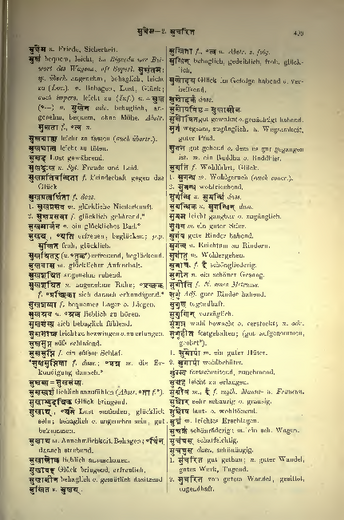
sukhá bequem, leicht, im Rigveda nur Beiwort des Wagens, oft Superl. sukhátama; sp. überh. = angenehm, behaglich, leicht zu (Loc.). n. Behagen, Lust, Glück; auch impers. leicht zu (Inf.). u. = sukha (˚—) u. sukhena adv. behaglich, angenehm, bequem, ohne Mühe. Abstr. sukhatā f., ˚tva n.
Burnouf 1866 adjective
Original text · French · adjective
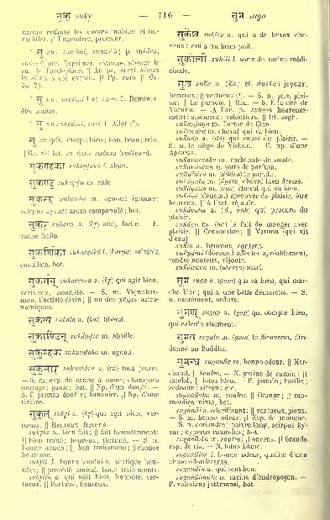
sukha sukha a. (kha; cf. duḥkha) joyeux, heureux; vertueux (?). — S. n. joie, plaisir. Le paradis. Eau. — S. f. la cité de Varuṇa. — A. l'ac. n. sukham heureusement; aisément; volontiers. Irl. sogh. sukhaṅghuṇa m. l'arme de Śiva. sukhacāra m. cheval qui va bien. sukhada a. (dā) qui cause du plaisir. — S. n. le siège de Viṣṇu. — F. np. d'une Apsaras. sukhavarcaka m. carbonate de soude. sukhavāsana n. sorte de parfum. sukhādhāra m. (ādhāra) de paradis. sukhāyata m. (āyata) cheval bien dressé. sukhāyana m. (aya) cheval qui va bien. sukhāye (dénom.) éprouver du plaisir, être heureux. A l'act. réjouir. sukhāvaha a. (ā; vah) qui procure du plaisir. sukhāśa m. (aś) le fait de manger avec plaisir. Concombre; Varuṇa [qui vit d'eau]. sukhin a. heureux, content. sukhyāmi (dénom.) affecter agréablement, rendre heureux, réjouir. sukhotsava m. (utsava) mari.
Derived words
Occurrences in source texts (66)
DYS 9 occurrences
DYS 154–167: Vajrolī for the Male Yogi 2 occurrences
Direct occurrences
GoS 4 occurrences
HP 10 occurrences
HP 2.69-2.71: Three Kumbhakas 2 occurrences
Direct occurrences
HTK 2 occurrences
MAN 1 occurrence
PJH 1 occurrence
PYS 5 occurrences
SiSa 20 occurrences
SiSa 1.20-1.31: Karma und Erkenntnis 3 occurrences
Direct occurrences
SiSa 1.51-1.64: Selbst als Licht 3 occurrences
Direct occurrences
7 more source pages
SiSa 3.95-3.97: Svastikāsana 2 occurrences
Direct occurrences
SiSa 4.91-4.94: Vajrolī-Siddhi 2 occurrences
Direct occurrences
SiSa 5.223-5.233: Praxis im Leben 2 occurrences
Direct occurrences
-
SiSa 5.232 Segment 9
-
SiSa 5.233 Segment 15
SS 4 occurrences
SS 3.16–3.19: Depth and the Powers of Sound 1 occurrence
Occurrences through derived words
-
SS 3.16 Segment 3
SVU 2 occurrences
VBT 8 occurrences
VBT 65–74: Joy and Enjoyment 5 occurrences
Direct occurrences
Continue with AYI Free
Image source: AYI archive.