

su सु – good; well
adjective · adverb · particle · previx · verbal root · Word type unspecified · verb
Dictionary sources
AYI dictionary previx
good; well
Cappeller 1891 Word type unspecified · verb
Original text · English · verb
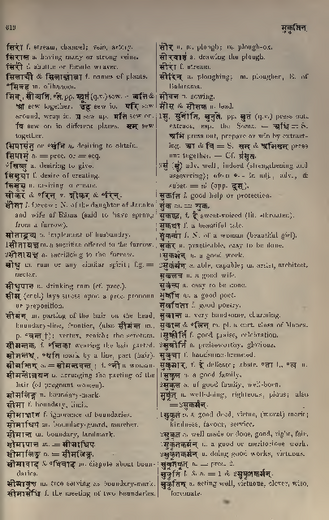
su sunóti sunute ·v pp. sutá1 (q.v.) press out, extract, esp. the Soma. --adhi = S. abhi press out, prepare or win by extracting. ā & vi = S. sam & abhisam press out together. -- Cf. prásuta.
Original text · English · Word type unspecified
sú2 ·(sū́) adv. well, indeed (strengthening and assevering); often °-- in adj., adv., & subst. = Gr. 'eu (opp. dus).
Monier-Williams 1872 particle · Word type unspecified · verb
Original text · English · particle
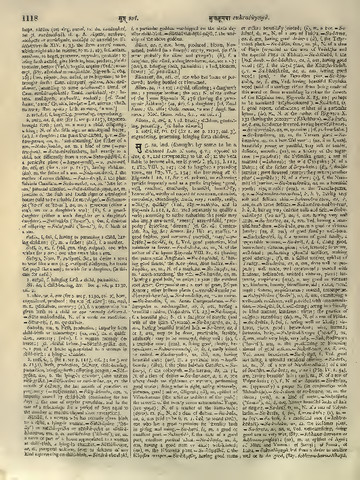
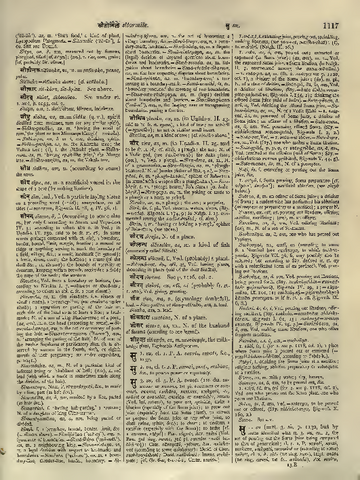
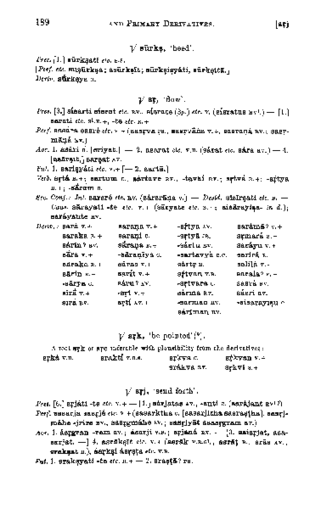
su 5 . su, ind. (thought by some to be a shortened form of vasu, q. v.; opposed to dus, q. v., and corresponding to Gr. εὖ; in the Veda liable to become ṣu, see Ṛg-veda I. 36, 13, I. 112, 1, Pāṇ. VIII. 3, 107; and to lengthen a preceding vowel, see Pāṇ. VI. 3, 134; also becoming sū in Ṛg-veda I. 10, 11, &c.; cf. sukam), an enhancing particle frequently used as a prefix implying ‘good, well, excellent, excellently, beautiful, beautifully, honourable, worthy of respect or reverence, excessive, excessively, exceedingly, much, very; readily, easily, willingly, quickly’ (Ved., Sāy. = suṣṭhu, and in Ṛg-veda I. 112, 1, &c. used separately to qualify a verb); according to native authorities this prefix may also imply anu-mati, ‘assent;’ sam-ṛddhi, ‘pros- perity;’ kṛcchra, ‘distress;’ [cf. Gr. εὖ: Cambro- Brit. hu, hy, he: Armor. he: Hib. so, soailce, ‘a good fashion, good manners;’ sucridh, ‘easy,’ = su- kṛta.]
Original text · English · Word type unspecified
su 4 . su (= rt. 3. sū, p. 1130, but by some identified with rt. 3. su, col. 2, the act of pouring out the Soma juice being compared to that of generation); cl. 1. 2. P. savati, sauti, suṣāva, soṣyati, asauṣīt or (according to some) asāvīt, cl. 2. A. sūte (1st sing. suve), Impf. asūta (1st sing. asuvi, 1st du. asūvahi), Pot. suvīta, Impv. sūtām (1st sing. suvai, 1st du. suvāvahai, 1st pl. suvāmahai), cl. 4. A. sūyate, suṣuve, soṣyate or saviṣyate, asoṣṭa or asaviṣṭa, (in Atharva-veda XIV. 1, 33. the form suvāti occurs, which might also be referred to rt. 1. sū), Inf. sotum, savitum, to beget, procreate, engender, generate; to bring forth a child, give birth to, bear, produce, yield; to confer, bestow (Ved.); to gain, acquire (Ved.); to ac- cept, (Sāy. sāviṣat = anujānātu, Ṛg-veda I. 164, 26): Pass. sūyate, Aor. asāvi, to be begotten; to be brought forth: Caus. sāvayati, -yitum, Aor. asū- ṣavat, (according to some asīṣavat): Desid. of Caus. suṣāvayiṣati: Desid. susūṣati, -te: In- tens. soṣūyate, soṣavīti, soṣoti; [cf. Zend hunu, ‘a son;’ Gr. υἱός, ὑατέρα = Lat. uterus; Goth. su-nu-s; Slav. sy-nu; Lith. su-nu-s, ‘a son.’]
Original text · English · verb
su 1 . su, cl. 1. P. A. savati, savate, &c., to go.
Original text · English · verb
su 2 . su, cl. 1. 2. P. savati, sauti, suṣāva, &c., to possess power or supremacy.
Original text · English · verb
su 3 . su, cl. 5. P. A. sunoti (1st du. su- nuvas or sunvas, 1st pl. sunumas or sun- mas), sunute, suṣāva, suṣuve, soṣyati, -te, asāvīt or asauṣīt, asoṣṭa or asaviṣṭa, sotum (Ved. Inf. sotave), to pour out, sprinkle, make a libation (especially of the Soma juice); to press out juice (especially from the Soma plant), to extract or prepare the Soma juice or any other juice, to distil (wine, spirits, &c.); to churn; to perform a sacrifice (especially with the Soma); to bathe [cf. 1. savana, sūtyā]: Pass. sūyate, Aor. asāvi (Ved. Pass. 3rd sing. sunve, 3rd pl. sunvire = sutā ba- bhūvuḥ): Caus. sāvayati, -yitum, Aor. asūṣa- vat (according to some asīṣavat): Desid. of Caus. suṣāvayiṣati: Desid. susūṣati: Intens. soṣū- yate; [cf. Gr. ὕ-ω, ὑ-ε-τό-ς; Umbr. savitu.]
Petersburger 1855 adjective · adverb · Word type unspecified · verb
Original text · German · adjective
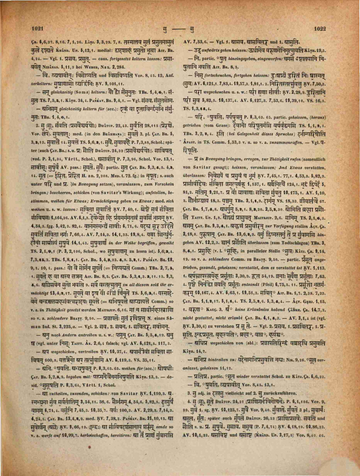
3. su adj. in dāvasu vielleicht auf 2. su zurückzuführen.
Original text · German · adverb
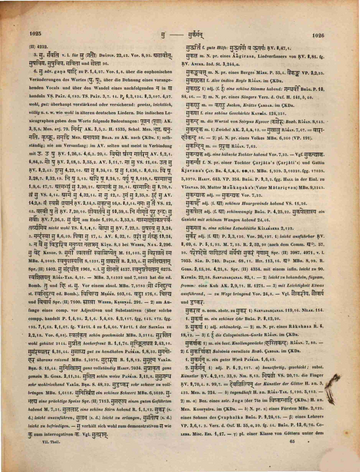
6. su adv. gaṇa cādi zu P. 1,4,57. VOP. 1,8. über die euphonischen Veränderungen des Wortes (ṣu, ṣū), über die Dehnung eines vorangehenden Vocals und über den Wandel eines nachfolgenden na in ṇa handeln VS. PRĀT. 4,183. TS. PRĀT. 3,7. TS. PRĀT. 3,14. P. 6,3,134. P. 8,3,107. P. 8,4,27. wohl, gut; überhaupt verstärkend oder versichernd: gewiss, leichtlich, völlig u. s. w. wie wohl in älteren deutschen Liedern. Die indischen Lexicographen geben dem Worte folgende Bedeutungen: pūjana (pūjā) AK. 3,5,5. MED. avy. 79. nirbhara AK. 3,5,2. H. 1535, Schol. MED. bhṛśa, anumati, kṛcchra, samṛddhi MED. anāyāsa BHAR._zu_AK. nach ŚKDR. 1〉 selbständig; nie am Versanfang; im AV. selten und meist in Verbindung mit u. u ṣu ṚV. 1,26,5. ṚV. 4,6,2. ṚV. 4,20,4. vi̱dmo ṣvàsya̱ mātàram AV. 1,2,1. AV. 6,84,3. mo ṣu ṚV. 2,18,3. ṚV. 3,55,2. AV. 5,11,7. mā su VS. 11,68. uta su ṚV. 8,2,42. itsu ṚV. 4,22,10. ā su ṚV. 8,34,12. pra su ṚV. 1,136,1. ṚV. 8,6,32. vi ṣū ṚV. 2,28,7. ṚV. 8,32,19. ni ṣu ṚV. 8,5,13. adhi̱ ṣū ṚV. 8,24,7. paryū̱ ṣū ṚV. 9,110,1. a̱smāntsu ṚV. 1,9,6. ṚV. 1,17,7. a̱smabhya̱ṃ su ṚV. 3,30,21. a̱smāka̱ṃ su ṚV. 3,31,14. a̱smābhi̱ḥ su ṚV. 8,70,8. tvaṃ su VS. 4,14. a̱sme su VS. 4,32,14. sa su VS. 12,1. i̱maṃ su VS. 2,35,2. i̱daṃ su AV. 14,2,8. yaṃ svaśnàṃ ja̱ghānà ṚV. 2,14,5. sa̱kṛtsu ṚV. 16,8. ṚV. 8,1,14. nama̱ḥ su tè VS. 12,63. vasvī̱ ṣu te ṚV. 7,20,10. jī̱vātàve̱ su ṚV. 10,59,5. ni mā̀mṛje̱ pura̱ indra̱ḥ su sarvā̀ḥ ṚV. 7,26,3. su kàm am Ende ṚV. 1,191,6. ṚV. 3,53,2. nāsmāllo̱kātsvètavyàmiva nicht wohl TS. 6,1,1,1. bodhā̱ su ṚV. 7,22,3. ju̱ṣasva̱ sū ṚV. 3,24,2. mandàsvā̱ su ṚV. 8,6,39. pibā̱ su ṚV. 8,17,4. AV. 6,32,1. ja̱rāṃ su gàccha AV. 19,24,5. na vai su viduriva manuṣyā nakṣatram KĀṬH. 8,3_bei_WEBER, Nax. 2,296. su veda KENOP. 9. sūrmī jvalantīṃ svāśliṣyet M. 11,103. su virājate sma MBH. 4,2089. svanuyāsyanti MBH. 8,1321. su śakyante R. 2,33,4. su samīkṣyatām Spr. (II) 1402. su saṃdadhīta Spr. (II) 1961, v. l. su śobhante Spr. (II) 4157. svanuṣṭhīyatām Spr. (II) 6275. svaśikṣayat RĀJA-TAR. 4,51. — MBH. 3,14392 und MBH. 7,8603 hat die ed. Bomb. tu und hi st. su. Vor einem absol. MBH. 7,5783 (so 'bhidrutya st. svabhidrutya ed. Bomb.). vicintya MṚCCH. 103,16. baddhvā MṚCCH. 176,1. cintya und vicārya Spr. (II) 7100. snātvā WEBER, KṚṢṆAJ. 291. — 2〉 am Anfange eines comp. vor Adjectiven und Substantiven (über solche compp. handelt P. 1,4,94. fgg. P. 2,1,6. P. 5,4,69. fgg. P. 6,2,117. P. 6,2,145. fgg. P. 6,2,172. P. 6,2,195. fgg. P. 7,1,68. fgg. P. 8,1,67. fg. Vārtt. 4 zu P. 1,4,60. Vārtt. 1 der SAUNĀGA_zu_P. 2,2,18. VOP. 6,88). svalaṃkṛta schön geschmückt MBH. 3,2114. surakṣita wohl gehütet MBH. 3,2144. suprīta hocherfreut R. 1,1,76. sūcchritadhvaja R. 2,43,10. susaṃrabdhatara R. 6,31,44. susādhya gut zu handhaben PAÑCAR. 1,8,33. sumanohara überaus reizend MBH. 1,5976. sudāruṇa R. 1,8,12. susūkṣma VARĀH. BṚH. S. 11,44. sunikhilam ganz vollständig HARIV. 7034. suprākṛta ganz gemein R. GORR. 2,11,24. susita schön weiss PAÑCAR. 3,11,8. susugandha sehr wohlriechend VARĀH. BṚH. S. 48,32. suduṣkara sehr schwer zu vollbringen MBH. 1,6118. sunistriṃśa ein schönes Schwert MBH. 6,5639. subhakṣya eine prächtige Speise Spr. (II) 7113. susahāya einen guten Gefährten habend M. 7,31. sulalāṭa eine schöne Stirn habend R. 1,1,12. sukara (s. d.) leicht auszuführen, sulabha (s. d.) leicht zu erlangen, susaṃtoṣa (s. d.) leicht zu befriedigen. — su verhält sich wohl zum demonstrativen sa wie ku zum interrogativen ka. Vgl. sutarām.
Original text · German · Word type unspecified
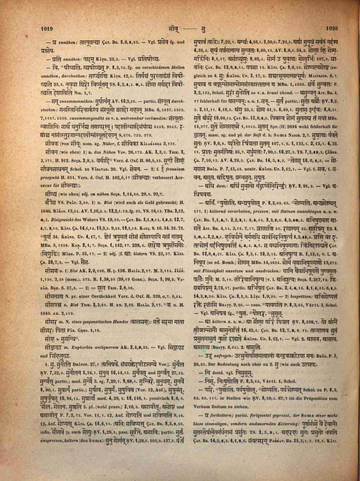
1. su , sunóti DHĀTUP. 27,1 (abhiṣave, saṃdhākledapīḍāmanthe VOP.). sunóta ṚV. 7,32,8. sunótana ṚV. 5,34,1. sunuta ṚV. 10,14,13. sunávat und sunvát ṚV. 10,27,22. sunvánt partic.; med. sunvé 3. sg. ṚV. 7,29,1. ṚV. 9,88,1. sunvire, sunudhvam, sunavai ṚV. 8,80,1. suvāná partic.; suṣā́va, suṣumá, suṣuviva (VOP. 12, Anf.), suṣuvaṃs, suṣuvúṣas VOP. 10,94,14. suṣvāṇá med. VOP. 4,29,2. VOP. 10,148,1. passivisch VOP. 9,6,8. sóta, sotana, suṣvati 3. pl. (wohl praes.) VOP. 2,16,5. asāvīt, asoṣṭa und asāvīt P. 7,2,72. VOP. 11,1. VOP. 12, Anf. soṣyati und saviṣyati VOP. 8,46. VOP. 12, Anf. soṣyant KĀTY. ŚR. 16,6,10. (abhi) saviṣyant ŚAT. BR. 9,5,1,66. infin. sótave (s. auch sotu) ṚV. 1,28,1. pass. sūyáte, asāvi; partic. sutá. auspressen, keltern (den Soma): su̱nu somàm ṚV. 1,28,6. ṚV. 1,28,101. ṚV. 1,28,9. ṚV. 1,137,1. yaṃ tè su̱ṣāvà (adriḥ) ṚV. 7,22,1. andhàḥ ṚV. 4,16,1. ṚV. 5,30,6. ṚV. 7,21,1. athā̀ sunudhva̱ṃ savàna̱ṃ madā̀ya ṚV. 4,35,4. hava̱ṃ yajàmānasya sunva̱taḥ ṚV. 6,60,15. AV. 6,6,1. AV. 6,54,3. sotā̱ hi soma̱madrìbhiḥ AV. 8,1,17. asā̀vya̱ṃśuḥ AV. 9,62,4. somà u ṣuvā̱ṇaḥ so̱tṛbhìḥ AV. 6,107,8. grāvabhiḥ ŚAT. BR. 12,8,2,14. payasā ŚAT. BR. 15. KĀTY. ŚR. 9,6,23. soṣyatyasoṣṭa (zugleich zu 4. su) CHĀND. UP. 3,17,5. śaśvatsūyamānātsūryaḥ MAITRYUP. 6,7. suṣāva ca vahūnsomānsomasaṃsthāstatāna ca MBH. 1,4695. sarve sunvantaḥ P. 3,2,132, Schol. surāṃ sunoti so v. a. braut ebend. — asunvan AIT. BR. 4,17 fehlerhaft für asanvan: s. u. 1. san. — sutá partic.: su̱to aśnaìḥ ṚV. 8,2,2. ṚV. 2,11,11. ṚV. 4,18,3. aṃśu ṚV. 4,25,3. soma ṚV. 41,3. ṚV. 6,40,1. su̱tāsa̱ indàvaḥ ṚV. 8,6,21. su̱te àdhva̱re ṚV. 10,94,14. ŚAT. BR. 12,8,1,5. pibasva somaṃ sutamadya taṃ mayā MBH. 14,277. sute somasahasre MBH. 1,8042. sutam Spr. (II) 2694 wohl fehlerhaft für hutam. masc. sg. und pl. der Saft d. h. Soma NAIGH. 2,7. su̱ṣvā̱ṇaḥ pàvate su̱taḥ ṚV. 9,6,8. parī̱to ṣìñcatā su̱tam ṚV. 107,1. ṚV. 9,2. ṚV. 1,135,1. ṚV. 2,15,1. ṚV. 4,32,11. prā̱taḥ su̱tamàpibaḥ ṚV. 4,35,7. madhùmantaḥ ṚV. 7,90,1. ṚV. 10,27,2. TS. 7,3,11,3. ŚĀṄKH. ŚR. 7,10,13. AV. 4,29,2. ŚAT. BR. 14,5,1,3. ˚tejas ŚAT. BR. 10,6,1,8. = somayāga BHĀG. P. 7,15,48. neutr. CHĀND. UP. 5,12,1. — Vgl. 1. sava, 1. savana, asuta, adriṣuta, jambhasuta, suṣuta. — adhi dass.: adhì suvā̱no nàhu̱ṣyèbhi̱rindùḥ ṚV. 9,91,2. — Vgl. adhiṣavaṇa. — abhi, ˚suṇoti, abhyaṣuṇot P. 8,3,63. P. 8,3,65. ˚soṣyati, abhyasoṣyat P. 8,3,117. 1〉 kelternd verarbeiten, pressen, mit Steinen ausschlagen u. s. w. ŚAT. BR. 1,1,4,7. ŚAT. BR. 2,2,2,1. ŚAT. BR. 2,4,4,15. ŚAT. BR. 3,3,2,6. ŚAT. BR. 4,5,10,2. abhiṣuṇvanta āsate AIT. BR. 4,14. AIT. BR. 3,15. AIT. BR. 7,17. plākṣāṇi 30. rājānam 32. ṛ̱jī̱ṣam TS. 6,1,6,4. TS. 3,2,2,1. ha̱vi̱rdhāne̱ carma̱nnadhi̱ grāvàbhirabhi̱ṣutyà TS. 6,2,11,4. ghnanti̱ vā e̱tatsoma̱ṃ yadàbhiṣu̱ṇvantì TS. 4,4,4. TS. 4,5,1. sa yadyabhiṣūyamāṇaḥ kiṃcidāpadyate ŚAT. BR. 12,6,1,21. KĀTY. ŚR. 9,5,1. KĀTY. ŚR. 10,3,12. abhiṣutya R. 1,13,5, v. l. abhiṣūya (so ed. Bomb.) somam MBH. 14,2624. some vṛthābhiṣūyamāṇe MBH. 13,372. mit Flüssigkeit ansetzen und ausdrücken: yāni caivābhiṣūyante puṣpamūlaphalaiḥ śubhaiḥ M. 5,10. kṣīreṇābhiṣutya (v. l. abhiplutya) SUŚR. 1,317,12. kiṇvapiṣṭam SUŚR. 2,73,17. partic. abhíṣuta ŚAT. BR. 2,4,4,16. ŚAT. BR. 4,1,1,15. ŚAT. BR. 4,6,1,9. ŚAT. BR. 14,3,2,30. KĀTY. ŚR. 9,1,9. LĀṬY. 1,9,20. — 2〉 bespritzen: abhisoṣyantaṃ raktai rakṣāṃsi BHAṬṬ. 9,90. — caus. ˚ṣāvayati P. 8,3,65, Vārtt. 3, Schol. — Vgl. abhiṣava fg., ˚ṣuta, ˚ṣotar, ˚susūs. — ā keltern u. s. w.: ā sòtā̱ parì ṣiñcata ṚV. 9,108,7. yo àsmai tī̱vrānsomā̀m̐ āsu̱notì ṚV. 10,42,5. ŚAT. BR. 12,7,3,6. ŚAT. BR. 12,7,3,12. tasmāttava sutaṃ prasutamāsutaṃ kule dṛśyate CHĀND. UP. 5,12,1. — Vgl. 2. āsava, āsāva, āsāvya (BHAṬṬ. 6,64), 2. āsuti. — ud aufregen: utsunoṣīkṣamāṇānāṃ kandukakrīḍayā manaḥ BHĀG. P. 3,20,35. Der Bedeutung nach eher zu 2. su (wie auch utsava). — ni desid. vgl. nisusūs. — nis, niḥṣuṇoti P. 8,3,65, Vārtt. 1, Schol. — pari, ˚ṣuṇoti, paryaṣuṇot, ˚soṣyati, paryasoṣyat Schol. zu P. 8,3,63. P. 8,3,65. P. 8,3,117. in Stellen wie ṚV. 9,10,4. ṚV. 9,87,7 ist die Präposition zum Verbum finitum zu ziehen. — pra fortkeltern; partic. fortgesetzt gepresst, der Soma einer nicht bloss einmaligen, sondern andauernden Kelterung: pū̱rṇamā̀se̱ vai de̱vānā̀ṃ su̱tasteṣā̀me̱tamàrdhamā̱saṃ prasùtaḥ TS. 2,5,5,4. aharahaḥ sutaḥ prasuto bhavati ŚAT. BR. 14,5,1,3. ŚAT. BR. 4,1,2,6. saṃvatsaram PAÑCAV. BR. 25,5,1. PAÑCAV. BR. 25,5,2. PAÑCAV. BR. 25,18,5. KĀTY. ŚR. 6,6,27. ŚR. 6,8,10. ŚR. 7,1,26. LĀṬY. 3,3,29. LĀṬY. 3,7,8. tasmāttava sutaṃ prasutamāsutaṃ kule dṛśyate CHĀND. UP. 5,12,1. medial: dvādaśāhaṃ prasuto bhūtvā AIT. BR. 4,24. — Vgl. 1. prasava, prasut. — caus. fortgesetzt keltern lassen: prasāvayet NIDĀNAS. 5,11,3_bei_WEBER, Nax. 2,284. — vi, vyaṣāvīt; visoṣyati und visaviṣyati VOP. 8,45. VOP. 12, Anf. zerkeltern: su̱ṣvā̱ṇāso̱ vyadrìbhiḥ ṚV. 9,101,11. — sam gleichzeitig (Soma) keltern: yau dvau sàṃsunu̱taḥ TBR. 1,4,6,1. saṃsuta TS. 7,5,5,1. KĀṬH. 34,4. PAÑCAV. BR. 9,4,1. — Vgl. saṃsava, saṃsutasoma. — abhisam gleichzeitig keltern für (acc.): eka̱ṃ vā e̱tāvindràma̱bhi saṃsùnutaḥ TBR. 1,4,6,1.
Original text · German · Word type unspecified
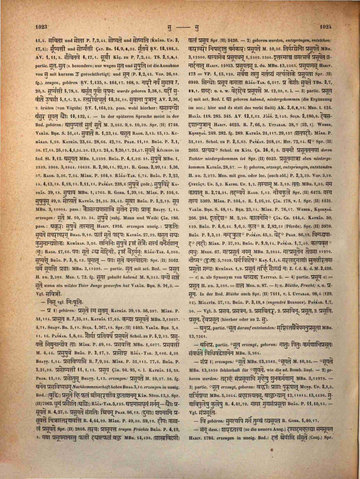
4. su (sū), sūte DHĀTUP. 24,21 (prāṇigarbhavimocane). P. 6,1,186. VOP. 9,39. suve ? 1. sg. ṚV. 10,125,7. suvai VOP. 9,40. súvāte, súvate 3 pl., suvāná; asūta, sū́ta; später auch sū́yate DHĀTUP. 26,23 (prāṇiprasave). savati und sauti s. u. pra. suṣuve, susāva, sasūva ? (P. 7,4,74) ṚV. 4,18,10. ṚV. 10,86,23. AV. 10,1,23. asaviṣṭa und asoṣṭa (CHĀND. UP. 3,17,5) VOP. 8,40. VOP. 8,46. VOP. 11,5. savitā und sotā P. 7,2,44. soṣyate und soṣyati (CHĀND. UP. 3,17,5); sū́ṣyantī und soṣyántī ŚAT. BR. 14,9,4,22. sū́tave ṚV. 10,184,3. AV. 1,11,2. sávitave AV. 6,17,1. sūtvā́ KĀŚ._zu_P. 7,2,44. TS. 2,1,5,4. partic. sūta, suta (s. besonders; nur wegen suta und suṣuti ist die Annahme von su mit kurzem u gerechtfertigt) und sūna (P. 8,2,45. VOP. 26,88. fg.). zeugen, gebären ṚV. 1,135,8. ṚV. 1,164,17. ṚV. 1,168,9. nārī̱ naryàṃ susāva ṚV. 7,20,5. sūṣyàntī ṚV. 5,78,5. asū̀ta̱ pūrvò vṛṣa̱bhaḥ wurde geboren ṚV. 3,38,5. yadī̱ṃ suvā̀te u̱ṣasā̀ ṚV. 5,1,1. ṚV. 5,2,2. sta̱rīryatsūtà ṚV. 10,31,10. su̱vā̱nā pu̱trān AV. 2,36,3. brüten (von Vögeln) ṚV. 1,164,22. pass. wohl hierher: a̱sāva̱nyo àsura sūyata̱ dyauḥ ṚV. 10,132,4. — In der späteren Sprache meist in der Bed. gebären: āyuṣmantaṃ sutaṃ sūte M. 3,263. M. 9,9. M. 10,39. Spr. (II) 1748. VARĀH. BṚH. S. 51,41. suvāte R. 1,23,14. asūta RAGH. 3,13. RAGH. 15,13. KUMĀRAS. 1,20. KATHĀS. 23,64. KATHĀS. 28,66. KATHĀS. 42,70. PRAB. 11,10. BHĀG. P. 3,1,30. BHĀG. P. 3,17,18. BHĀG. P. 3,26,19. BHĀG. P. 4,1,34. BHĀG. P. 4,1,38. BHĀG. P. 4,13,15. BHĀG. P. 4,24,8. BHĀG. P. 9,20,17. BHĀG. P. 9,24,47. sūyate CŪLIKOP._in_Ind. St. 9,12. asūyata MBH. 1,2599. BHĀG. P. 4,1,39. BHĀG. P. 4,1,51. suṣuve MBH. 1,2539. MBH. 1,5908. MBH. 3,8844. MBH. 3,16638. R. 2,90,11. R. 2,92,21. R. GORR. 2,99,14. R. GORR. 5,36,57. RAGH. 5,36. RAGH. 7,54. MĀRK. P. 104,8. RĀJA-TAR. 1,74. BHĀG. P. 3,23,48. BHĀG. P. 4,13,18. BHĀG. P. 6,18,11. BHĀG. P. 9,11,11. PAÑCAT. 238,6 (suṣūve gedr.). suṣuvire KATHĀS. 39,18. suṣāva MBH. 1,4765. R. GORR. 1,39,16. MĀRK. P. 104,6. suṣuvus MĀRK. P. 49,9. soṣyate KATHĀS. 21,35. KATHĀS. 34,43. sūtvā BHĀG. P. 5,2,19. sūya MBH. 3,10004. pass.: kausalyayāsāvi sukhena rāmaḥ prāk BHAṬṬ. 1,14. erzeugen: sūte M. 10,32. M. 10,34. suṣuve (subj. Mann und Weib) ŚĀK. 186. pass.: akrūraḥ suṣuve tasmāt HARIV. 1916. erzeugen uneig.: prakṛtiḥ sūyate sacarācaram BHAG. 9,10. phalaṃ sūte pādapaḥ KATHĀS. 27,99. asūta sadyaḥ kusumānyaśokaḥ KUMĀRAS. 3,26. khanibhiḥ suṣuve ratnaṃ kṣetraiḥ sasyaṃ vanairgajān (bhūḥ) RAGH. 17,66. payaḥ sūte 'dya medinī, ratnaṃ vaiḍūryabhūḥ RĀJA-TAR. 4,300. sūṣyant BHĀG. P. 3,8,13. dhūmāt — payaḥ sūte ghanasyodgamaḥ Spr. (II) 3162. dharmaṃ sūyanti prajāḥ MBH. 3,11298. — partic. sūta mit act. Bed. = prasūta H. an. 2,208. MED. t. 72. fg. sūtā gekalbt habend M. 8,242. vanye sattve sūte wenn ein wildes Thier Junge geworfen hat VARĀH. BṚH. S. 91,3. — Vgl. savitrī. — nis vgl. niḥṣūti. — pra 1〉 gebären: prasūte sma sutam KATHĀS. 39,19. KATHĀS. 56,287. MĀRK. P. 51,114. prāsūta R. 7,35,21. KATHĀS. 17,65. kanyā prasūyate MBH. 3,13057. MBH. 4,71. ṢAḌV. BR. 5,11. SUŚR. 1,367,18. Spr. (II) 1403. VARĀH. BṚH. 5,8. VARĀH. BṚH. 5,11. VARĀH. BṚH. 5,16. PAÑCAR. 1,8,34. gauryā prativarṣaṃ prasūyate Schol. zu P. 5,2,12. prasūyante mithunānyeva tāḥ MĀRK. P. 49,10. prasavanti MBH. 1,6077. prasavantī M. 4,44. prasuṣuve BHĀG. P. 3,17,2. prāsoṣṭa RĀJA-TAR. 3,106. RĀJA-TAR. 4,39. BHAṬṬ. 1,14. prasaviṣyasi R. 7,9,24. MĀRK. P. 51,113. MĀRK. P. 77,6. BHĀG. P. 3,21,29. prasoṣyantī BHĀG. P. 11,1,15. prasūya ŚĀK. 94. ŚĀK. 95, v. l. KATHĀS. 14,38. PRAB. 11,10. prasotum BHAṬṬ. 1,13. erzeugen: prasūyate M. 10,27. M. 10,30. fg. anena prasaviṣyadhvam Nachkommenschaft haben BHAG. 3,10. erzeugen in uneig. Bed.: (buddhiḥ) prasūte hi phalaṃ śrīmadaraṇīva hutāśanam KĀM. NĪTIS. 13,2. Spr. (II) 7062. dhūmaṃ prasauti (agniḥ) RĀJA-TAR. 5,125. aṣṭamāsadhṛtaṃ garbham — dyauḥ prasūyate R. 4,27,3. prasūyate saṃgatiḥ śriyam PRAB. 86,18. (drumāḥ) śayanāni prasūyante citrāstaraṇavanti R. 4,44,99. MĀRK. P. 49,30. MĀRK. P. 59,19. dīpaḥ kajjalaṃ prasūyate Spr. (II) 2816. taravaḥ prāsūyanta trugen Früchte BHĀG. P. 4,19,8. yathā prasūyamānastu phalī dadyātphalaṃ bahu MBH. 14,498. (śāstraviṭapī) phalaṃ prasūya Spr. (II) 5426. — 2〉 geboren werden, entspringen, entstehen: kārāvaro niṣādāttu carmakāraḥ prasūyate M. 10,36. tiryagyonau prasūyate MBH. 3,12500. asyāmeva prasūyadhvam MBH. 1,2502. MBH. 1,2504. etasmācca jagatsarvaṃ prasūyeta janārdanāt HARIV. 11053. prasūyatas 2. du. MBH. 13,2565. prasūyāmas HARIV. 173 = VP. 1,15,128. sarveṇa khalu martavyaṃ martyaloke prasūyatā Spr. (II) 6949. sindhoḥ prasūya kamalā RĀJA-TAR. 6,317. pra keśā̀ḥ suvate TBR. 2,7,17,1. śabdaḥ u. s. w. vedādeva prasūyante M. 12,98, v. l. — 3〉 partic. prasūta a〉 mit act. Bed. f. ā geboren habend, niedergekommen (die Ergänzung im acc.; hier und da statt des verbi finiti) AK. 2,6,1,16. MED. t. 124. HALĀY. 118. HALĀY. 285. HALĀY. 345. AV. 12,1,62. YĀJÑ. 2,145. SUŚR. 2,180,8. devasadṛśānputrān HARIV. 4625. R. 7,66,3. UTTARAR. 38,7 (52,1). WEBER, KṚṢṆAJ. 249. fg. WEBER, KṚṢṆAJ. 282. fg. WEBER, KṚṢṆAJ. 289. KATHĀS. 21,117. KATHĀS. 29,137 (śatapadī). MĀRK. P. 51,101. Schol. zu P. 2,1,65. PAÑCAT. 218,21. HIT. 72,14. a˚ Spr. (II) 2055. pratyagra˚ Schol. zu KĀTY. ŚR. 24,6,8. jananī prasūtatanayā deren Tochter niedergekommen ist Spr. (II) 6033. prasūtamātrā eben niedergekommen KATHĀS. 28,67. — b〉 geboren, erzeugt, entsprungen, entstanden H. an. 3,273. MED. mit gen. oder loc. (auch abl.) P. 2,3,39. VOP. 5,29. ŚVETĀŚV. UP. 5,2. KAUṢ. UP. 1,2. tasyām M. 3,19. tataḥ MBH. 1,35. mama kāyāt R. 2,74,21. tadanvaye RAGH. 1,12. nīcakule Spr. (II) 6475. yasya tasya Spr. (II) 5369. MĀRK. P. 104,8. R. 1,16,26. ŚĀK. 178, v. l. Spr. (II) 1431. VARĀH. BṚH. S. 48,11. BṚH. 23,14. MĀRK. P. 76,17. WEBER, KṚṢṆAJ. 266. WEBER, KṚṢṆAJ. 284. etaddeśa˚ M. 2,20. kālanemi˚ ŚĀK. CH. 144,4. KATHĀS. 50,139. BHĀG. P. 6,6,24. BHĀG. P. 9,6,3. kula˚ R. 2,82,31 (Pferde) Spr. (II) 5970. BHĀG. P. 9,3,21. nandakula˚ PAÑCAT. 45,2. veda˚ PRAB. 86,19. vindhyapāda˚ (nadī) MĀRK. P. 57,25. BHĀG. P. 9,9,14. PAÑCAR. 1,7,40. kalpavṛkṣa˚ (madhu) MEGH. 67. matprasūtaṃ bhayam MBH. 3,2844. matprasūtena tejasā MBH. 3,11970. bhīṣma˚ (duḥkha) MBH. 5,7029. dharmaviśeṣa˚ KAṆ. 1,1,4. saraladrumāṇāṃ srutakṣīratayā prasūto gandhaḥ KUMĀRAS. 1,9. prasūtaṃ tarhi saukhyaṃ naḥ Z. f. d. K. d. M. 2,426. — c〉 n. als Synonym von avyakta TATTVAS. 5. — 4〉 partic. prasūna a〉 = prasūta H. an. 3,388. = jāta MED. n. 87. — b〉 n. Blüthe, Frucht; s. u. prasūna. In der Bed. Blüthe auch Spr. (II) 7411, v. l. UTTARAR. 98,6 (129,12). MĀLATĪM. 57,13. BHĀG. P. 3,18,8 (engendré BURNOUF). PAÑCAR. 1,7,50. — Vgl. 3. prasava, prasavana, 2. prasavitar, 2. prasavin, prasūta, 2. prasūti, prasūna, devaprasūta (hierher oder zu 2. su). — anupra, partic. ˚sūta darauf entstanden: sṛṣṭistathaiveyamanuprasūtā MBH. 13,7361. — abhipra, partic. ˚sūta erzeugt, geboren: mātuḥ pituḥ karmaṇābhiprasūtaḥ saṃvardhate vidhivadbhojanena MBH. 5,964. — saṃpra 1〉 erzeugen: ˚sūte MBH. 13,2582. ˚sūyate M. 10,33. — ˚sūyate MBH. 13,5850 fehlerhaft für ˚ṇūyate, wie die ed. Bomb. liest. — 2〉 geboren werden: tadāhaṃ saṃprasūyāmi gṛheṣu śubhakarmaṇām MBH. 3,12978. — 3〉 partic. ˚sūta erzeugt, geboren: bahvīḥ prajāḥ puruṣāt MUṆḌ. UP. 2,1,5. śarmiṣṭhayā MBH. 5,5044. brahmāsyatas, bāhubhyām MBH. 12,11814. MBH. 13,4426. guṇavipuleṣu kuleṣu R. 4,41,79. māyā guṇasaṃprasūtā BHĀG. P. 11,10,13. — Vgl. saṃprasūti. — vi gebären: sumatyapi garbhaṃ tumbaṃ vyasūyata R. GORR. 1,40,17. — sam dass.: śāradvatasya (so die neuere Ausg.) dāyādamahalyā samasūyata HARIV. 1784. erzeugen in uneig. Bed.: dattaṃ śreyāṃsi saṃsūte (Conj.) Spr.(II) 4252.
Original text · German · Word type unspecified
5. su , sávati v. l. für sru (gatau) DHĀTUP. 22,42. VOP. 8,95. asāvīt, suṣavitha, suṣuviva, savitā und sotā 96.
Original text · German · verb
2. su (sū), sávati (prasavaiśvaryayoḥ) DHĀTUP. 22,43. suváti DHĀTUP. 28,115 (preraṇe, VOP. kṣepe). suvatāt; med. (in den BRĀHMAṆA): suvate 3. pl. ŚAT. BR. 5,3,3,13. suvāntai 14. suvante TS. 5,6,3,1. suvai, suvāvahai P. 7,3,88, Schol.; später (auch ŚAT. BR.; s. u. pra) sauti DHĀTUP. 24,32 (prasavaiśvaryayoḥ). sāviṣat (ved. P. 3,1,34, Vārtt., Schol.), asāvīt P. 7,3,96, Schol. VOP. 13,1. sāvīs; suṣuvé AV. pass.: sūyate, sūyai; partic. suta ŚAT. BR. 9,3,4,5. ŚAT. BR. 9,4,3,14. sūta (= īrita, prerita H. an. 2,208. MED. t. 72. fg.) in nṛṣūta; s. auch unter pari und pra. (in Bewegung setzen), veranlassen, zum Vorschein bringen; bescheeren, schicken (von Savitarʼs Wirkung); aufstellen, bestimmen, weihen für Etwas; Ermächtigung geben zu Etwas; med. sich weihen u. s. w. lassen: sa̱vi̱tā su̱vātì ṚV. 7,40,1. śreṣṭhàṃ sa̱vaṃ sàvi̱tā sā̀viṣannaḥ ṚV. 1,164,26. AV. 6,1,3. de̱vebhyo̱ hi pràtha̱mamàmṛta̱tvaṃ su̱vasì bhā̱gam ṚV. 4,54,2. fgg. ṚV. 5,42,3. fgg. ṚV. 5,82,4. vā̱mama̱smabhyàṃ sāvīḥ ṚV. 6,71,6. yada̱dya sūra̱ udìte su̱vatì savi̱tā bhagàḥ ṚV. 7,66,4. AV. 7,14,3. AV. 14,1,33. AV. 19,8,4. yathā̱ sindhùrna̱dīnā̱ṃ sāmrā̀jyaṃ suṣu̱ve AV. 14,1,43. suṣuvāṇá in der Weihe begriffen, geweiht TS. 2,1,9,1 (P. 3,2,106, Schol., wo suṣuvāṇam zu lesen ist). TS. 5,6,3,4. TS. 7,5,15,2. TBR. 1,8,1,1. ŚAT. BR. 5,4,3,23. ŚAT. BR. 5,4,4,8. ŚAT. BR. 5,5,2,1. PAÑCAV. BR. 18,9,1. PAÑCAV. BR. 18,10,1. pass.: yo vai somèna sū̱yatè (= niṣpadyate Comm.) TBR. 2,7,5,1. sūyate ha vā asya kṣatram AIT. BR. 8,5. ŚAT. BR. 5,3,1,3. ŚAT. BR. 5,3,3,11. ŚAT. BR. 5,3,1,15. ŚAT. BR. 9,3,4,6. agnisavena suto bhavati 9. sarvaṃ vastatsutam zu all diesem seid ihr ermächtigt ŚAT. BR. 13,4,2,17. sū̱yate̱ vā e̱ṣa yò 'gniṃ cìnu̱te TS. 5,6,3,1. yasmādeveme candraṛkṣagrahasaṃvatsarādayaḥ sūyante (= abhiṣūyante āpyāyante Comm.) so v. a. in Thätigkeit gesetzt werden MAITRYUP. 6,16. mā na sāvīrmahāstrāṇi so v. a. schleudere BHAṬṬ. 9,50. — prajāpateḥ sutaṃ rayiṣṭham N. eines Sāman Ind. St. 3,225,a. — Vgl. 2. sava, 2. savana, 1. savitar, savīman. — anu nach Andern antreiben u. s. w.: paśūn ŚAT. BR. 5,5,4,19. anu ṣva (vgl. unter nis) TAITT. ĀR. 2,6,4 falsch; vgl. AV. 6,121,4. AV. 6,117,3. — apa wegschicken, vertreiben ṚV. 10,37,4. apāmī̀vāṃ savi̱tā sāviṣat ṚV. 10,100,8. yattatraino̱ apa̱ tatsùvāmi AV. 6,119,3. VS. 35,11. — abhi, ˚ṣuvati, abhyaṣuvat P. 8,3,63. P. 8,3,65. weihen für (acc.): oṣadhīḥ ŚAT. BR. 5,2,3,9. begaben mit: pāpmanaivainamabhiṣuvati KĀṬH. 13,2. — desid. ˚susūṣati P. 8,3,64, Vārtt. 1, Schol. — ā zutheilen, zusenden, schicken: von Savitar ṚV. 1,110,3. a̱ smabhya̱mā sùva sa̱rvatā̀tim ṚV. 3,54,11. ṚV. 3,56,6. saubhàgam ṚV. 4,54,6. ṚV. 5,82,5. dā̱śuṣè vā̱mam ṚV. 6,71,4. vasū̀ni ṚV. 7,45,3. ṚV. 10,35,7. vayàḥ ? ṚV. 10,100,3. AV. 2,29,2. AV. 7,14,3. AV. 4,24,5. ŚAT. BR. 13,4,2,9. med. ṚV. 7,38,2. PAÑCAV. BR. 21,10,15. ā su̱vorjàm (agne) ṚV. 9,66,19. (indraḥ) ā sā̀viṣadarśasā̱nāya̱ śarùm sende so v. a. werfe auf ṚV. 10,99,7. herbeischaffen, hercitiren: ā tè prā̱ṇaṃ sùvāmasi AV. 7,53,6. — Vgl. 1. āsava, āsavitar und 1. āsuti. — ud aufwärts gehen heissen: ūrdhvāmeva varuṇamenimutsuvati KĀṬH. 19,5. — ni, partic. ˚ṣuta hineingegeben, eingeworfen: camase 'ṣṭātayāni niṣutāni bhavanti AIT. BR. 8,5. — nis fortscheuchen, fortgehen heissen: du̱ḥṣvapnyàṃ duri̱taṃ niḥ ṣvā̱smat (suva) AV. 6,121,1. AV. 7,83,4. AV. 19,57,2. AV. 1,81,1. AV. 1,81,2. niri̱tastatsùvantu ṚV. 7,50,3. — parā wegscheuchen u. s. w.: parā̀ ṛ̱ṇā sā̀vīḥ ṚV. 2,28,9. du̱ri̱tāni̱ parā̀ suva ṚV. 5,82,5. ṚV. 10,137,4. AV. 6,127,3. AV. 7,53,6. AV. 19,39,10. VS. 16. VS. 5. TS. 1,3,14,4. — pari, ˚ṣuvati, paryaṣuvat P. 8,3,63. P. 8,3,65. partic. geheissen, (heraus) getrieben (vom Grase): de̱vānā̀ṃ pariṣū̱tamàsi va̱rṣavṛ̀ddhamasi TS. 1,1,2,1. TBR. 3,2,2,4. iti (bei Gelegenheit dieses Spruches) darbhānpariṣauti ĀPAST._in_TS. Comm. 1,53,3 v. u. so v. a. zusammenraffen. — Vgl. pariṣūti. — pra in Bewegung bringen, erregen, zur Thätigkeit rufen (namentlich von Savitar gesagt); heissen, veranlassen; Jmd Etwas verstatten, überlassen: ni̱ve̱śayàṃ ca prasu̱vaṃ ca bhūmà ṚV. 7,45,1. ṚV. 7,77,1. ṚV. 4,53,3. ṚV. 5,82,9. prāsā̀vīdde̱vaḥ sàvi̱tā jaga̱tpṛthàk ṚV. 1,157,1. arthàmi̱tyai ṚV. 1,124,1. bha̱draṃ dvi̱padè ṚV. 5,81,2. ma̱tim ṚV. 9,21,7. pra vò grāvāṇaḥ savi̱tā sùvatu ṚV. 10,175,1. AV. 1,10,2. saubhā̀gyāya AV. 1,18,2. ya̱jñam TBR. 3,1,1,9. dānàm VS. 18,33. jī̱vātàve VS. 67. ŚAT. BR. 1,7,4,8. adhvaryum ŚAT. BR. 5,2,1. ŚAT. BR. 8,3,20. ŚAT. BR. 2,5,2,30. omiti brahmā prasauti TAITT. UP. 1,8. auṣṇyaṃ prāsuvat MAITRYUP. 2,6. sa̱nim TS. 2,1,6,3. annam ŚAT. BR. 9,3,4,1. vahvannaṃ prasuvīran zur Verfügung stellen ĀŚV. ŚR. 2,18,8. puruṣān ŚAT. BR. 13,6,2,9. yamù dvi̱ṣmastamù te̱ pra sùvāmasi hingeben AV. 12,2,3. śvāna̱ṃ prasaùti überlassen (zum Todtschlagen) TBR. 3,8,4,1. prasuhi (v. l. ˚sūhi, in paralleler Stelle ˚suva) KĀTY. ŚR. 9,14,19. so v. a. schleudere Comm. zu BHAṬṬ. 9,50. — partic. prásūta angetrieben, gesandt, geheissen; verstattet, dem es verstattet ist ṚV. 1,113,1. arṣa̱ntvāpa̱stvaye̱ha prasū̀tāḥ ṚV. 3,30,9. dūta ṚV. 3,54,19. janā̱ḥ sūryèṇa̱ prasū̀tāḥ ṚV. 7,63,4. pṛ̱ṣṭhe ninàddho jayati̱ prasū̀taḥ entsandt (Pfeil) ṚV. 6,75,5. ṚV. 6,75,11. prasū̀to bha̱kṣamàkaram ṚV. 10,167,4. AV. 6,63,1. AV. 19,51,2. savitṛ˚ AIT. BR. 1,7. AIT. BR. 2,38. AIT. BR. 7,22. ŚAT. BR. 1,1,2,17. ŚAT. BR. 5,1,1,4. TS. 2,5,2,6. TS. 5,3,4,4. — ĀŚV. GṚHY. 1,15,1. varuṇa˚ KAUŚ. 3. á˚ keine Erlaubniss habend ŚĀṄKH. ŚR. 14,7,2. nicht gestattet, nicht erlaubt ŚAT. BR. 4,1,4,3. — AV. 3,1,4 ist (vgl. ṚV. 3,30,6) zu verstehen pra sū te. — Vgl. 2. prasava, 1. prasavitar, 1. prasūti, indraprasūta, bṛhaspati˚, brahma˚, vāja˚, haryaśva˚. — adhipra wegschicken von (abl.): prajāpatirindraṃ vajrādadhi prasuvati KĀṬH. 14,7. — abhipra hintreiben zu: yadenāmabhiprasuvanti nadyaḥ NIR. 9,26. ˚sūta veranlasst, geheissen NIR. 11,12. — pratipra, partic. ˚sūta wieder verstattet Schol. zu KĀTY. ŚR. 6,6,23. — vi, ˚ṣuvati, vyaṣāvīt VOP. 8,45. VOP. 13,1.
Böhtlingk 1879 adjective · adverb · verbal root
Original text · German · adjective
3. su Adj. in dāvasu.
Original text · German · adverb
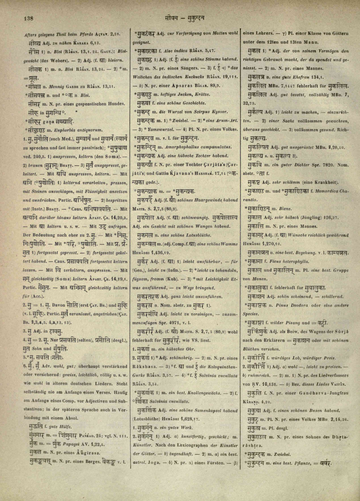
6. sú, sū́ Adv. wohl, gut; überhaupt verstärkend oder versichernd; gewiss, leichtlich, völlig u. s. w. wie wohl in älteren deutschen Liedern. Steht selbständig nie am Anfange eines Verses. Häufig am Anfange eines Comp. vor Adjectiven und Substantiven; in der späteren Sprache auch in Verbindung mit einem Absol.
Original text · German · verbal root
1. √su , sunóti (auch Med.), sunvāná und suvāná (svāná zu sprechen und fasst immer passivisch); *suṣuvāṇa ved. Chr. 240,3. — 1〉 auspressen, keltern (den Soma). — 2〉 brauen (sūrām) BHAṬṬ. — 3〉 sutá ausgepresst, gekeltert. — Mit adhi auspressen, keltern. — Mit abhi (˚ṣuṇoti) — 1〉 kelternd verarbeiten, pressen, mit Steinen ausschlagen, mit Flüssigkeit ansetzen und ausdrücken. Partic. abhíṣuta. — 2〉 bespritzen mit (Instr.) BHAṬṬ. — *Caus. abhiṣāvayati. — Mit atyabhi darüber hinaus keltern ĀPAST. ŚR. 14,20,3. — Mit ā keltern u. s. w. — Mit ud aufregen. Der Bedeutung nach eher zu 2. su. — Mit *nis, niḥṣuṇoti. — Mit *pari, ˚ṣuṇoti — Mit pra, prásuta — 1〉 fortgesetzt gepresst. — 2〉 fortgesetzt gekeltert habend. — Caus. prasāvayati fortgesetzt keltern lassen. — Mit vi zerkeltern, auspressen. — Mit sam gleichzeitig (Soma) keltern ĀPAST. ŚR. 14,19,1. Partic. sáṃsūta. — Mit abhisam gleichzeitig keltern für (Acc.).
Original text · German · verbal root
2. √su = 1. sū. Davon sauti (erst ŚAT. BR.) und suhi (v. l. sūhi). Partic. sutá veranlasst, angetrieben (ŚAT. BR. 9,3,4,5. ŚAT. BR. 9,4,3,12. ŚAT. BR. 9,4,3,13).
Original text · German · verbal root
4. √su = 2. sū. Nur prasvati (selten), prasauti (desgl.), suta Sohn und súṣuti.
Original text · German · verbal root
5. *√su , savati (gatau).
Original text · German · verbal root
1. √sū, √su , suváti (in den BRĀHMAṆA Med.) savati, sauti (erst in ŚAT. BR.); Partic. sūta und suta. — 1〉 (in Bewegung setzen) veranlassen, zum Vorschein bringen, in Thätigkeit setzen. — 2〉 bescheren, [Page7-175-a] schicken (von Savitarʼs Wirkung). — 3〉 aufstellen, bestimmen, weihen für Etwas; Med. sich weihen u. s. w. lassen. suṣuvāṇá in Weihe begriffen, geweiht. — 4〉 Ermächtigung geben zu Etwas, gestatten; Jmd (Acc.) ermächtigen. — 5〉 schleudern BHAṬṬ. — Intens. soṣavīti heftig erregen u. s. w. (von Savitar gesagt) ṚV. 3,52,7. — Mit anu nach Andern antreiben u. s. w. anuṣva TAITT. ĀR. 2,6,1 fehlerhaft für; Vgl. AV. 6,121,4. 117,3. — Mit apa wegschicken, vertreiben. — Mit abhi, ˚ṣuvati — 1〉 weihen für (Acc.). — 2〉 begaben mit (Instr.). — Desid. abhisusūṣati. — Mit ā — 1〉 schleudern auf (Dat.). — 2〉 zutheilen, zusenden, schicken (von Savitar). — 3〉 herbeischaffen, herbeicitiren. — Mit ud aufwärts gehen heissen. — Mit ni, niṣuta hinein gegeben, hineingeworfen in (Loc.). — Mit nis fort scheuchen, fortgehen heissen. — Mit parā wegscheuchen, fortschaffen. — Mit pari˚, ṣauti — 1〉 zusammenraffen ĀPAST. ŚR. 1,3,6. — 2〉 pariṣūtá geheissen, herausgetrieben (Gras). — Mitpra — 1〉 in Bewegung bringen, erregen, zur Thätigkeit rufen (von Savitar gesagt). — 2〉 heissen, veranlassen. — 3〉 Jmd Etwas verstatten, überlassen, zur Verfügung stellen. — 4〉 schleudern Comm. zu BHAṬṬ. — 5〉 prásūta — a〉 entsandt (Pfeil). — b〉 angetrieben, gesandt, geheissen GAUT. 11,13. 14. 18,5. — c〉 dem es verstattet ist. — Mit adhipra wegschicken von (Abl.). — Mit abhipra — 1〉 hintreiben zu (Acc.). — 2〉 abhiprasūta veranlasst, geheissen. — Mit pratipra, ˚suvate wieder erstatten Comm. zu ĀPAST. ŚR. 10,4,13. 15,12,12. ˚sūta wieder erstattet. — Mit vi, ˚ṣuvati.
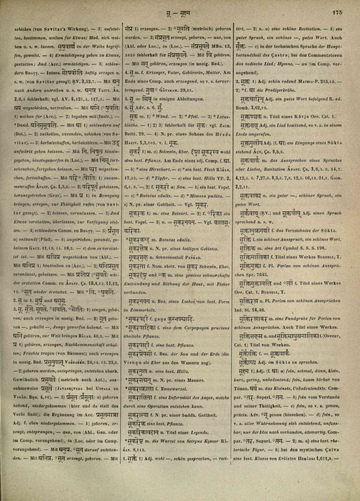
Whitney Roots 1885 verbal root
Original text · English · verbal root
su — press out
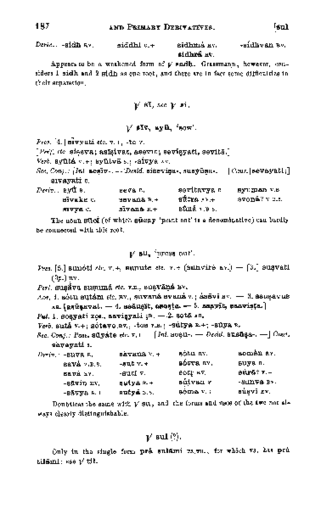
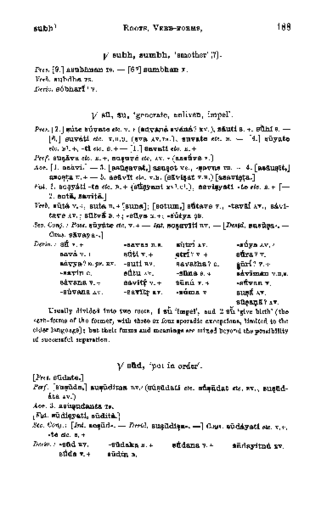
Original text · English · verbal root
sū, su — generate, enliven, impel
Apte 1890 particle · verbal root
Original text · English · particle
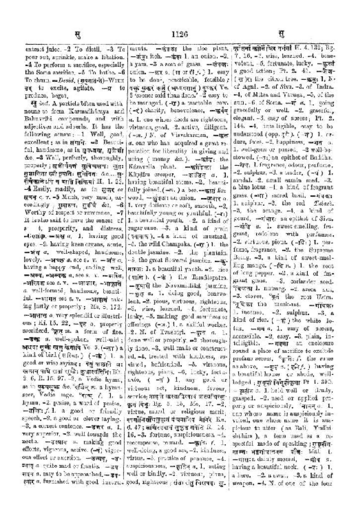
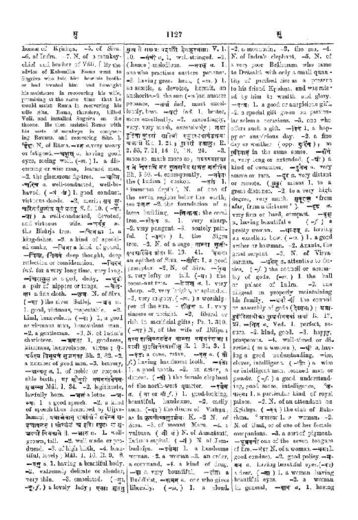
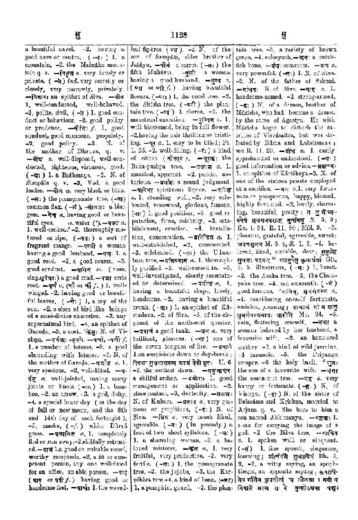
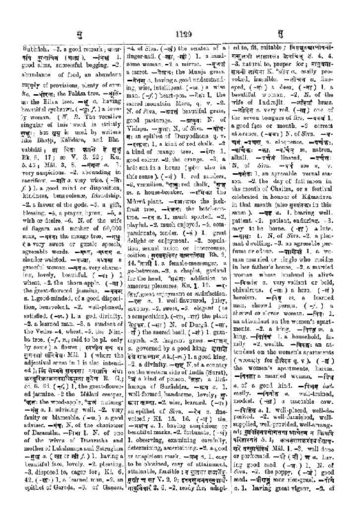
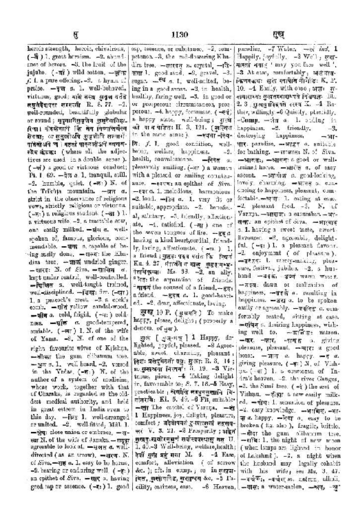
su ind. A particle often used with nouns to form Karmadhāraya and Bahuvrīhi compounds, and with adjectives and adverbs. It has the following senses: 1 Well, good, excellent; as in suṃgadhi. 2 Beautiful, handsome; as in sumadhyamā, sukeśī &c. 3 Well, perfectly, thoroughly, properly; sujīrṇamannaṃ suvicakṣaṇaḥ sutaḥ suśāsitā strī nṛpatiḥ susevitaḥ &c… sudīrghakāle'pi na yāti vikriyāṃ H. 1. 22. 4 Easily, readily, as in sukara or sulabha q. v. 5 Much, very much, exceedingly; sudāruṇa, sudīrgha &c. 6 Worthy of respect or reverence. 7 It is also said to have the senses of assent, prosperity, and distress. Comp. — akṣa a. 1 having good eyes. 2 having keen organs, acute. — aṃga a. well-shaped, handsome, lovely. — accha a. see s. v. — aṃta a. having a happy end, ending well. — alpa, -alpaka a. see s. v. — asti, — astika see s. v. — ākāra, -ākṛti a. well-formed, handsome, beautiful. — āgata see s. v. — ādānaṃ taking justly or properly; Ms. 8. 172. — ābhāsa a. very splendid or illustrious; Ki. 15. 22. — iṣṭa a. properly sacrificed. ˚kṛt m. a form of fire. — ukta a. well-spoken, well-said; athavā sūktaṃ khalu kenāpi Ve. 3. — (ktā) a kind of bird (sārikā.) — (ktaṃ) 1 a good or wise saying; netuṃ vāṃchati yaḥ khalān pathi satāṃ sūktaiḥ sudhāsyaṃdibhiḥ Bh. 2. 6, R. 15. 97. 2 a Vedic hymn, as in puruṣasūkta &c. ˚darśin m. a hymnseer, Vedic sage. ˚vāc f. 1 a hymn. 2 praise, a word of praise. — uktiḥ f. 1 a good or friendly speech. 2 a good or clever saying. 3 a correct sentence. — uttara a. 1 very superior. 2 well towards the north. — utthāna a. making good efforts, vigorous, active. — (naṃ) vigorous effort or exertion. — unmada, — unmāda a. quite mad or frantic. — upasadana a. easy to be approached. — upaskara a. furnished with good ([Page 1126-b]) instruments. — kaṃṭakā the aloe plant. — kaṃḍuḥ itch. — kaṃdaḥ 1 an onion. 2 a yam. 3 a sort of grass. — kaṃdakaḥ onion. — kara a. (rā or rī f.) 1 easy to be done, practicable, feasible; vaktuṃ sukaraṃ kartuṃ (adhyavasātuṃ) duṣkaraṃ Ve. 3 ‘sooner said than done.’ 2 easy to be managed. — (rā) a tractable cow. — (raṃ) charity, benevolence. — karman a. 1 one whose deeds are righteous, virtuous, good. 2 active, diligent. ( — m.) N. of Viśvakarman. — kala a. one who has acquired a great reputation for liberality in giving and using (money &c.). — kāṃḍaḥ the Kāravella plant. — kāṃḍikā the Kāṇḍīra creeper. — kāṃḍin a. 1 having beautiful stems. 2 beautifully joined. ( — m.) a bee. — kāṣṭhaṃ firewood. — kuṃdakaḥ an onion. — kumāra a. 1 very delicate or soft, smooth. 2 beautifully young or youthful. — (raḥ) 1 a beautiful youth. 2 a kind of sugar-cane. 3 a kind of grain (śyāmāka). 4 a kind of mustard. 5 the wild Campaka. — (rā) 1 the double jasmine. 2 the plantain. 3 the great-flowered jasmine. — kumārakaḥ 1 a beautiful youth. 2 rice (śāli). — (kaṃ) the Tamālapatra. — kumārī the Navamallikā jasmine. — kṛt a. 1 doing good, benevolent. 2 pious, virtuous, righteous. 3 wise, learned. 4 fortunate, lucky. 5 making good sacrifices or offerings ( — m.) 1 a skilful worker. 2 N. of Tvaṣṭṛ. — kṛta a. 1 done well or properly. 2 thoroughly done. 3 well-made or constructed. 4 treated with kindness, assisted, befriended. 5 virtuous, righteous, pious. 6 lucky, fortunate. — (taṃ) 1 any good or virtuous act, kindness, favour, service; nādatte kasyacitpāpaṃ kasyacitsukṛtaṃ vibhuḥ Bg. 5. 15, Me. 17. 2 virtue, moral or religious merit; svargābhisaṃdhisukṛtaṃ vaṃcanāmiva menire Ku. 6. 47; tacciṃtyamānaṃ sukṛtaṃ taveti R. 14. 16. 3 fortune, auspiciousness. 4 recompense, reward. — kṛtiḥ f. 1 well-doing, a good act. 2 kindness, virtue. 3 practice of penance. 4 auspiciousness. — kṛtin a. 1 acting well or kindly. 2 virtuous, pious, good, righteous; saṃtaḥ saṃtu nirāpadaḥ ([Page 1126-c]) sukṛtināṃ kīrtiściraṃ vardhatāṃ H. 4. 132; Bg. 7. 16. 3 wise, learned. 4 benevolent. 5 fortunate, lucky. — kṛtyaṃ a good action; Pt. 2. 41. — keśa (sa)raḥ the citron tree. — kratuḥ 1 N. of Agni. 2 of Śiva. 3 of Indra. 4 of Mitra and Varuṇa. 5 of the sun. 6 of Soma. — gaṃ a. 1 going gracefully or well. 2 graceful, elegant. 3 easy of access; Pt. 2. 144. 4 intelligible, easy to be understood (opp. durga). — (gaṃ) 1 ordure, feces. 2 happiness. — gata a. 1 well-gone or passed. 2 well-bestowed. — (taḥ) an epithet of Buddha. — gaṃdhaḥ 1 fragrance, odour, perfume. 2 sulphur. 3 a trader. — (dhaṃ) 1 sandal. 2 small cumin seed. 3 a blue lotus. 4 a kind of fragrant grass. — (dhā) sacred basil. — gaṃdhakaḥ 1 sulphur. 2 the red Tulasī. 3 the orange. 4 a kind of gourd. — gaṃdhāraḥ an epithet of Śiva. — gaṃdhi a. 1 sweet-smelling, fragrant, redolent with perfumes. 2 virtuous, pious. — (dhiḥ) 1 perfume, fragrance. 2 the Supreme Being. 3 a kind of sweet-smelling mango. ( — dhi n.) 1 the root of long pepper. 2 a kind of fragrant grass. 3 coriander seed. ˚triphalā 1 nutmeg. 2 areca nut. 3 cloves. ˚mūlaṃ the root Uśīra. ˚mūṣikā the musk-rat. — gaṃdhikaḥ 1 incense. 2 sulphur. 3 a kind of rice. — (kaṃ) the white lotus. — gama a. 1 easy of access, accessible. 2 easy. 3 plain, intelligible. — gahanā an enclosure round a place of sacrifice to exclude profane access. ˚vṛttiḥ f. the same as above. — gṛha a. (hī f.) having a beautiful house or abode, welllodged; sugṛhī nirgṛṃhīkṛtā Pt. 1. 390. — gṛhīta a. 1 held well or firmly, grasped. 2 used or applied properly or auspiciously. ˚nāman a. 1 one whose name is auspiciously invoked, one whose name it is auspicious to utter (as Bali, Yudhiṣṭhira), a term used as a respectful mode of speaking; sugṛhītanāmnaḥ bhaṭṭagopālasya pautraḥ Māl. 1. — grāsaḥ a dainty morsel. — grīva a. having a beautiful neck. — (vaḥ) 1 a hero. 2 a swan. 3 a kind of weapon. 4 N. of one of the four ([Page 1127-a]) horses of Kṛṣṇa. 5 of Śiva. 6 of Indra. 7 N. of a monkeychief and brother of Vāli. [By the advice of Kabandha Rāma went to Sugrīva who told him how his brother had treated him and besought his assistance in recovering his wife, promising at the same time that he would assist Rāma in recovering his wife Sītā. Rāma, therefore, killed Vāli, and installed Sugrīva on the throne. He then assisted Rāma with his hosts of monkeys in conquering Rāvaṇa, and recovering Sītā.]. ˚īśaḥ N. of Rāma. — gla a. very weary or fatigued. — cakṣus a. having good eyes, seeing well. ( — m.) 1 a discerning or wise man, learned man. 2 the glomerous fig-tree. — carita, caritra a. well-conducted, well-behaved. — (taṃ, -traṃ) 1 good conduct, virtuous deeds. 2 merit; tava sucaritamaṃgulīya nūnaṃ pratanu Ś. 6. 10. ( — tā, — trā) a well-conducted, devoted, and virtuous wife. — carman m. the Bhūrja tree. — citrakaḥ 1 a king-fisher. 2 a kind of speckled snake. — citrā a kind of gourd. — ciṃtā, -ciṃtanaṃ deep thought, deep reflection or consideration. — ciram ind. for a very long time, very long. — cirāyus m. a god, deity. — cūṭī a pair of nippers or tongs. — celakaḥ a fine cloth. — chatraḥ N. of Śiva. — (trā) the river Sutlej. — jana a. 1 good, virtuous, respectable. 2 kind, benevolent. — (naḥ) 1 a good or virtuous man, benevolent man. 2 a gentleman. 3 N. of Indra's charioteer. — janatā 1 goodness, kindness, benevolence, virtue; aiśvaryasya vibhūṣaṇaṃ sujanatā Bh. 2. 82. 2 a number of good men. 3 bravery, — janman a. 1 of noble or respectable birth; yā kaumudī nayanayorbhavataḥ sujanmā Māl. 1. 34. 2 legitimate, lawfully born. — jalaṃ a lotus. — jalpaḥ 1 a good speech. 2 a kind of speech thus described by Ujjvalamaṇi; yatrārjavāt sagāṃbhīryaṃ sadainyaṃ sahacāpalam . sotkaṃṭhaṃ ca hariḥ spṛṣṭaḥ sa sujalpo nigadyate ... — jāta a. 1 well grown, tall. 2 well made or produced. 3 of high birth. 4 beautiful, lovely; Māl. 1. 16, R. 3. 8. — tanu a. 1 having a beautiful body. 2 extremely delicate or slender, very thin. 3 emaciated. ( — nuḥ, — nūḥ f.) a lovely lady; etāḥ sutanu ([Page 1127-b]) mukha te sakhyaḥ paśyaṃti hemakūṭagatāḥ V. 1. 10. — taṃtrī a. 1 well-stringed. 2 (hence) melodious. — tapas a. 1 one who practises austere penance. 2 having great heat. ( — m.) 1 an ascetic, a devotee, hermit, an anchorite. 2 the sun. ( — n.) an austere penance. — tamāṃ ind. most excellently, best. — tarāṃ ind. 1 better, more excellently. 2 exceedingly, very, very much, excessively; tayā duhitrā sutarāṃ savitrī sphuratprabhāmaṃḍalayā cakāśe Ku. 1. 24; sutarāṃ dayāluḥ R. 2. 53, R. 7. 21, R. 14. 9, R. 18. 24. 3 more so, much more so; mayyapyāsthā na te cettvayi mama sutarāmeṣa rājan gatosmi Bh. 3. 30. 4 consequently. — tardanaḥ the (Indian) cuckoo. — talaṃ 1 ‘immense depth’, N. of one of the seven regions below the earth; see pātāla. 2 the foundation of a large building. — tiktakaḥ the coral tree. — tīkṣṇa a. 1 very sharp. 2 very pungent. 3 acutely painful. — (kṣṇaḥ) 1 the Śigru tree. 2 N. of a sage; nāmnā sutīkṣṇaścaritena dāṃtaḥ R. 13. 41. ˚daśanaḥ an epithet of Śiva. — tīrthaḥ 1 a good preceptor. 2 N. of Śiva. — tuṃga a. very lofty or tall. — (gaḥ) the cocoa-nut tree. — tejas a. 1 very sharp. 2 very bright, or splendid. 3 very mighty. ( — m.) a worshipper of the sun. — dakṣiṇa a. 1 very sincere or upright. 2 liberal or rich in sacrificial gifts; Pt. 1. 310. — (ṇā) N. of the wife of Dilīpa; tasya dākṣiṇyarūḍhena nāmnā magadhavaṃśajā . patnī sudakṣiṇetyāsīt R. 1. 31, R. 3. 1 — daṃḍaḥ a cane, ratan. — dat a. (tī f.) having handsome teeth. — daṃtaḥ 1 a good tooth. 2 an actor, a dancer. — (tī) the female elephant of the north-west quarter. — darśana a. (nā or nī f.) 1 good-looking, beautiful, handsome. 2 easily seen. — (naḥ) the discus of Viṣṇu; as in kṛṣṇopyasudarśanaḥ K. 2 N. of Śiva. 3 of mount Meru. 4 a vulture. — (nī -naṃ) N. of Amarāvatī, Indra's capital. — (naṃ) N. of Jambudvīpa. — darśanā 1 a handsome woman. 2 a woman. 3 an order, a command. 4 a kind of drug. — dā a. very bountiful. — dāṃtaḥ a Buddhist. — dāman a. one who gives liberally. ( — m.) 1 a cloud. ([Page 1127-c]) 2 a mountain. 3 the sea. 4 N. of Indra's elephant. 5 N. of a very poor Brāhmaṇa who came to Dvārakā with only a small quantity of parched rice as a present to his friend Kṛṣṇa, and was raised by him to wealth and glory. — dāyaḥ 1 a good or auspicious gift. 2 a special gift given on particular solemn occasions. 3 one who offers such a gift. — dinaṃ 1 a happy or auspicious day. 2 a fine day or weather (opp. durdina); so sudināhaṃ in the same sense. — dīrgha a. very long or extended. — (rghā) a kind of cucumber. — durlabha a. very scarce or rare. — dvara a. very distant or remote. (sudūraṃ means 1 to a great distance. 2 to a very high degree, very much. sudūrāt ‘from afar, from a distance’). — ṭṭaḍha a. very firm or hard, compact. — dṛś a. having beautiful eyes. ( — f.) a pretty woman. — dhanvan a. having an excellent bow. ( — m.) 1 a good archer or bowman. 2 Ananta, the great serpent. 3 N. of Viśvakarman. — dharman a. attentive to duties. ( — f.) the council or assembly of gods. ( — m.) 1 the hall or palace of Indra. 2 one diligent in properly maintaining his family. — dharmā -rmī the council or assembly of gods (devasabhā); yayāvudīritālokaḥ sudharmānavamāṃ sabhāṃ R. 17. 27. — dhita a. Ved. 1 perfect, secure. 2 kind, good. 3 happy, prosperous. 4 well-aimed or directed (as a weapon). — dhī a. having a good understanding, wise, clever, intelligent. — (dhīḥ) a wise or intelligent man, learned man or pandit. ( — f.) a good understanding, good sense, intelligence. ˚upāsyaḥ 1 a particular kind of royal palace. 2 N. of an attendant on Kṛṣṇa. — (syaṃ) the club of Balarāma. ˚upāsyā 1 a woman. 2 N. of Umā, or of one of her female companions. 3 a sort of pigment. — dhūmravarṇā one of the seven tongues of fire. — naṃdā N. of a woman. — nayaḥ 1 good conduct. 2 good policy. — nayana a. having beautiful eyes. — (naḥ) a deer. — (nā) 1 a woman having beautiful eyes. 2 a woman in general. — nābha a. 1 having ([Page 1128-a]) a beautiful navel. 2 having a good nave or centre. — (bhaḥ) 1 a mountain. 2 the Maināka mountain q. v. — nibhṛta a. very lonely or private. — (taṃ) ind. very secretly or closely, very narrowly, privately. — niścalaḥ an epithet of Śiva. — nīta 1 well-conducted, well-behaved. 2 polite, civil. — (taṃ) 1 good conduct or behaviour. 2 good policy or prudence. — nītiḥ f. 1 good conduct, good manners, propriety. 2 good policy. 3 N. of the mother of Dhruva, q. v. — nītha a. well-disposed, well-conducted, righteous, virtuous, good. — (thaḥ) 1 a Brāhmaṇa. 2 N. of Śiśupāla q. v. 3 Ved. a good leader. — nīla a. very black or blue. — (laḥ) the pomegranate tree. — (lā) common flax. (-laṃ), -nīlakaḥ a blue gem. — netra a. having good or beautiful eyes. — nau n. water (?). — pakva a. 1 well-cooked. 2 thoroughly matured or ripe. — (kvaḥ) a sort of fragrant mango. — patnī a woman having a good husband. — pathaḥ 1 a good road. 2 a good course. 3 good conduct. — pathin m. (nom. sing. supaṃthāḥ) a good road. — padmā orris root. — parṇa a. (rṇā or rṇī f.) 1 wellwinged. 2 having good or beautiful leaves. — (rṇaḥ) 1 a ray of the sun. 2 a class of bird-like beings of a semi-divine character. 3 any supernatural bird. 4 an epithet of Garuḍa. 5 a cock. ˚ketuḥ N. of Viṣṇu. — parṇakaḥ = suparṇa. — parṇā, -parṇī f. 1 a number of lotuses. 2 a pool abounding with lotuses. 3 N. of the mother of Garuḍa. — paryāpta a. 1 very spacious. 2 well-fitted. — parvan a. well-jointed, having many joints or knots. ( — m.) 1 a bamboo. 2 an arrow. 3 a god, deity. 4 a special lunar day (as the day of full or new moon, and the 8th and 14th day of each fortnight). 5 smoke. ( — f.) white Dūrvā grass. — palāyita a. 1 completely fled or run away. 2 skilfully retreated. — pātraṃ 1 a good or suitable vessel, worthy receptacle. 2 a fit or competent person, any one well-fitted for an office, an able person. — pād (pād or padī f.) having good or handsome feet. — pārśvaḥ 1 the ([Page 1128-b]) wavedleaf fig-tree (plakṣa). 2 N. of the son of Sampāti, elder brother of Jaṭāyu. — pītaṃ a carrot. — (taḥ) the fifth Muhūrta. — puṃsī a woman having a good husband. — puṣpa a. (ṣpā or ṣpī f.) having beautiful flowers. — (ṣpaḥ) 1 the coral tree. 2 the Śirīṣa tree. — (ṣpī) the plantain tree. — (ṣpaṃ) 1 cloves. 2 the menstrual excretion. — puṣpita a. 1 well blossomed, being in full flower. 2 having the hair thrilling or bristling. — pūra a. 1 easy to be filled; Pt. 1. 25. 2 well-filling. — (raḥ) a kind of citron (bījapūra). — pūrakaḥ the Baka-pushpa tree. — prakāśa a. 1 manifest, apparent. 2 public, notorious. — pratarkaḥ a sound judgment — pratibhā spirituous liquor. — pratiṣṭha a. 1 standing well. 2 very celebrated, renowned, glorious, famous. — (ṣṭhā) 1 good position. 2 good reputation, fame, celebrity. 3 establishment, erection. 4 installation, consecration. — pratiṣṭhita a. 1 well-established. 2 consecrated 3 celebrated. — (taḥ) the Udumbara tree. — pratiṣṇāta a. 1 thoroughly purified. 2 well-versed in. 3 well-investigated, clearly ascertained or determined. — pratīka a. 1 having a beautiful shape, lovely, handsome. 2 having a beautiful trunk. — (kaḥ) 1 an epithet of Kāmadeva. 2 of Śiva. 3 of the elephant of the northeast quarter. — prapāṇaṃ a good tank. — prabha a. very brilliant, glorious. — (bhā) one of the seven tongues of fire. — prabhātaṃ 1 an auspicious dawn or day-break; diṣṭyā suprabhātamadya yadayaṃ devo ṭṭaṣṭaḥ U. 6 2 the earliest dawn. — prayuktaśaraḥ a skilful archer. — prayogaḥ 1 good management or application. 2 close contact. 3 dexterity. — prasannaḥ N. of Kubera. — prasāda a. very gracious or propitious. — (daḥ) N. of Śiva. — priya a. very much liked, agreeable. — (yaḥ) (in prosody) a foot of two short syllables. — (yā) 1 a charming woman. 2 a beloved mistress. — phala a. 1 very fruitful, very productive. 2 very fertile. — (laḥ) 1 the pomegranate tree. 2 the jujube. 3 the Karṇikāra tree. 4 a kind of bean. — (lā) 1 a pumpkin, gourd. 2 the ([Page 1128-c]) plantain tree. 3 a variety of brown grape. 4 colocynth. — phenaḥ a cuttlefish bone. — baṃdhaḥ sesamum. — bala a. very powerful. — (laḥ) 1 N. of Śiva. 2 N. of the father of Śakuni. — bāṃdhavaḥ N. of Śiva. — bāhu a. 1 handsome-armed. 2 strong-armed. — (huḥ) N. of a demon, brother of Mārīca, who had become a demon by the curse of Agastya. He with Mārīca began to disturb the sacrifice of Viśvāmitra, but was defeated by Rāma and Lakṣmaṇa; see R. 11. 29. — bodha a. 1 easily apprehended or understood. — (dhaḥ) good information or advice. — brahmaṇyaḥ 1 an epithet of Kārtikeya. 2 N. of one of the sixteen priests employed at a sacrifice. — bhaga a. 1 very fortunate or prosperous, happy, blessed. highly favoured. 2 lovely, charming, beautiful, pretty; na tu grīṣmasyaivaṃ subhagamaparāddhaṃ yuvatiṣu Ś. 3. 9; Ku. 4. 34, R. 11. 80; Māl. 9. 3 pleasant, grateful, agreeable, sweet; śravaṇasubhaga M. 3. 4, Ś. 1. 3. 4 beloved, liked, amiable, dear; sumukhi subhagaḥ paśyan sa tvāmupaitu kṛtārthatāṃ Gīt. 5. 5 illustrious. — (gaḥ) 1 borax. 2 the Aśoka tree. 3 the Champaka tree. 4 red amaranth. — (gaṃ) good fortune. ˚mānin, subhagaṃmanya a. 1 considering oneself fortunate, amiable, pleasing; vācālaṃ māṃ na khalu subhagaṃmanyabhāvaḥ karoti Me. 94. 2 vain, flattering oneself. — bhagā a woman beloved by her husband, a favourite wife. 2 an honoured mother 3 a kind of wild jasmine. 4 turmeric. 5 the Priyaṅgu creeper. 6 the holy basil. ˚sutaḥ the son of a favourite wife. — bhaṃgā the cocoa-nut tree. — bhadra a. very happy or fortunate. — (draḥ) N. of Viṣṇu. — (drā) N. of the sister of Balarāma and Kṛṣṇa, married to Arjuna q. v. She bore to him a son named Abhimanyu. — bhadrakaḥ 1 a car for carrying the image of a god. 2 the Bilva tree. — bhāṣita a. 1 spoken well or eloquent. — (taṃ) 1 fine speech, eloquence, learning; jīrṇamaṃge subhāṣitaṃ Bh. 3. 2. 2 a witty saying, an apophthegm, an apposite saying; subhāṣitena gītena yuvatīnāṃ ca līlayā . mano na bhidyate yasya sa vai mukto'thavā paśuḥ ([Page 1129-a]) Subhāṣ. 3 a good remark; bālādapi subhāṣitaṃ (grāhyaṃ). — bhikṣaṃ 1 good alms, successful begging. 2 abundance of food, an abundant supply of provisions, plenty of corn &c. — bhīrakaḥ the Palāśa tree. — bhūtikaḥ the Bilva tree. — bhrū a. having beautiful eyebrows. ( — bhrūḥ f.) a lovely woman. (N. B. The vocative singular of this word is strictly subhrūḥ; but subhru is used by writers like Bhaṭṭi, Kālidāsa, and Bhavabhūti; hā pitaḥ kvāsi he subhru Bk. 6. 17; so V. 3. 22; Ku. 5. 43; Māl. 3. 8.) — maṃgala a. 1 very auspicious. 2 abounding in sacrifices. — mati a. very wise. ( — tiḥ f.) 1 a good mind or disposition, kindness, benevolence, friendship. 2 a favour of the gods. 3 a gift, blessing. 4 a prayer, hymn. 5 a wish or desire. 6 N. of the wife of Sagara and mother of 60,000 sons. — madanaḥ the mango tree. — madhuraṃ a very sweet or gentle speech, agreeable words. — madhya, -madhyama a. slender-waisted. — madhyā, -madhyamā a graceful woman. — mana a. very charming, lovely, beautiful. — (naḥ) 1 wheat. 2 the thorn-apple. — (nā) the great-flowered jasmine. — manas a. 1 good-minded, of a good disposition, benevolent. 2 well-pleased, satisfied. ( — m.) 1 a god, divinity. 2 a learned man. 3 a student of the Vedas. 4 wheat. 5 the Nimba tree. ( — f., n.; said to be pl. only by some) a flower; ramaṇīya eṣa vaḥ sumanasāṃ saṃniveśaḥ Māl. 1 (where the adjectival sense in 1 is also intended); kiṃ sevyate sumanasāṃ manasāpi gaṃdhaḥ kastūrikājananaśaktibhṛtā mṛgeṇa R. G.; Śi. 6. 66. ( — f.) 1 the great-flowered jasmine. 2 the Mālatī creeper. ˚phalaḥ the wood-apple. ˚phalaṃ nutmeg. — maṃtu a. 1 advising well. 2 very faulty or blameable. ( — m.) a good adviser. — maṃtraḥ N. of the charioteer of Daśaratha. — mitrā 1 N. of one of the wives of Daśaratha and mother of Lakṣmaṇa and Śatrughna — mukha a. (khā or khī f.) 1 having a beautiful face, lovely. 2 pleasing. 3 disposed to, eager for; Ki. 6. 42. — (khaḥ) 1 a learned man. 2 an epithet of Garuḍa. 3 of Gaṇeśa. ([Page 1129-b]) 4 of Śiva. — (khaṃ) the scratch of a fingernail. — (khā, -khī) 1 a handsome woman. 2 a mirror. — mūlakaṃ a carrot. — mekhalaḥ the Munja grass. — medhas a. having a good understanding, wise, intelligent. ( — m.) a wise man. ( — f.) heart-pea. — meruḥ 1 the sacred mountain Meru, q. v. 2 N. of Śiva. — yavasaṃ beautiful grass, good pasturage. — yāmunaḥ N. of Viṣṇu. — yuktaḥ N. of Śiva. — yodhanaḥ an epithet of Duryodhana q. v. — raktakaḥ 1 a kind of red chalk. 2 a kind of mango tree. — raṃgaḥ 1 good colour. 2 the orange. 3 a hole cut in a house (suraṃgā also in this sense). — (gaṃ) 1 red sanders. 2 vermilion. ˚dhātuḥ red chalk. ˚yuj m. a house-breaker. — raṃgikā the Mūrvā plant. — rajaḥphalaḥ the jackfruit tree. — raṃjanaḥ the betel-nuttree. — rata a. 1 much sported. 2 playful. 2 much enjoyed. 4 compassionate, tender. — (taṃ) 1 great delight or enjoyment. 2 copulation, sexual union or intercourse, coition; suratamṛditā bālavanitā Bh. 2. 44. ˚tālī 1 a female-messenger, a go-between. 2 a chaplet, garland for the head. ˚prasaṃgaḥ addiction to amorous pleasures; Ku. 1. 19. — ratiḥ f. great enjoyment or satisfaction. — rasa a. 1 well-flavoured, juicy, savoury. 2 sweet. 3 elegant (as a composition). — (saḥ, -sā) the plant siṃdhuvāra. — (sā) N. of Durgā. — (sā, -saṃ) the sacred basil. — (saṃ) 1 gummyrrh. 2 fragrant grass. — rājan a. governed by a good king; surājñi deśe rājanvān Ak. ( — m.) 1 a good king. 2 a divinity. — rāṣṭraṃ N. of a country on the western side of India (Surat). ˚jaṃ a kind of poison. ˚brahmaḥ a Brāhmaṇa of Surāṣṭra. — rūpa a. 1 well-formed, handsome, lovely; surūpā kanyā. 2 wise, learned. — (paḥ) an epithet of Śiva. — rebha a. finevoiced; Ki. 15. 16. — (bhaṃ) tin. — lakṣaṇa a. 1 having auspicious or beautiful marks. 2 fortunate. — (ṇaṃ) 1 observing, examining carefully, determining, ascertaining. 2 a good or auspicious mark. — labha a. 1 easy to be obtained, easy of attainment, attainable, feasible; na sulabhā sakaleṃdumukhī ca sā V. 2. 9; idamasulabhavastuprārthanādurnivāraṃ V. 2. 6. 2 ready for, ([Page 1129-c]) adapted to, fit, suitable; niṣṭhyūtaścaraṇopabhogasulabho lākṣārasaḥ kenacit Ś. 4. 4. 3 natural to, proper for; mānuṣatāsulabho laghimā K. ˚kopa a. easily provoked, irascible. — locana a. fineeyed. — (naḥ) a deer. — (nā) 1 a beautiful woman. 2 N. of the wife of Indrajit. — lohakaṃ brass. — lohita a. very red. — (tā) one of the seven tongues of fire. — vaktraṃ 1 a good face or mouth. 2 correct utterance. — (ktraḥ) N. of Śiva. — vacanaṃ, -vacas n. eloquence. — varcakaḥ, — varcikaḥ -kā, -varcin m. natron, alkali. — varcalaṃ linseed. — varcasaḥ N. of Śiva. — varṇa see s. v. — vasaṃtaḥ 1 an agreeable vernal season. 2 the day of full moon in the month of Chaitra, or a festival celebrated in honour of Kāmadeva in that month (also suvasaṃtakaḥ in this sense). — vaha a. 1 bearing well. patient. 2 patient, enduring. 3 easy to be borne. — (hā) a lute. — vāsaḥ 1 N. of Śiva. 2 a pleasant dwelling. 3 an agreeable perfume or odour. — vāsinī 1 a woman married or single who resides in her father's house. 2 a married woman whose husband is alive. — vikrāṃta a. very valiant or bold, chivalrous. — (taḥ) a hero. — (taṃ) heroism. — vid m. a learned man, shrewd person. ( — f.) a shrewd or clever woman. — vidaḥ 1 an attendant on the women's apartments. 2 a king. — vidat m. a king. — viditraṃ 1 a household, family 2 wealth. — vidallaḥ an attendant on the women's apartments (wrongly for sauvidalla q. v). — (llaṃ) the women's apartments, harem. — vidallā a married woman. — vidha a. of a good kind. — vidham ind. easily. — vinīta a. well-trained, modest. — (tā) a tractable cow. — vihita a. 1 well-placed, well-deposited. 2 well-furnished, wellsupplied, well-provided, well-arranged; suvihitaprayogatayā āryasya na kimapi parihāsyate Ś. 1; kalahaṃsamakaraṃdapraveśāvasare tatsuvihitaṃ Māl. 1. 3 well done or performed. — vī (bī) ja a. having good seed. — (jaḥ) 1 N. of Śiva. 2 the poppy. — (jaṃ) good seed. — vīrāmlaṃ sour rice-gruel. — vīrya a. 1 having great vigour. 2 of ([Page 1130-a]) heroic strength, heroic, chivalrous. — (ryaṃ) 1 great heroism. 2 abundance of heroes. 3 the fruit of the jujube. — (ryā) wild cotton. — bṛkti f. 1 a pure offering. 2 a hymn of praise. — vṛtta a. 1 well-behaved, virtuous, good; mayi tasya suvṛtta vartate laghusaṃdeśapadā sarasvatī R. 8. 77. 2 well-rounded, beautifully globular or round; mṛdunātisuvṛttena sumṛṣṭenātihāriṇā . modakenāpi kiṃ tena niṣpattiryasya sevayā; or sumukho'pi suvṛttopi sanmārgapatito'pi ca . mahatāṃ pādalagno'pi vyathayatyeva kaṃṭakaḥ (where all the adjectives are used in a double sense). — (ttaṃ) a good or virtuous conduct; Pt. 1. 69. — vela a. 1 tranquil, still. 2 humble, quiet. — (laḥ) N. of the Trikūṭa mountain. — vrata a. strict in the observance of religious vows, strictly religious or virtuous. — (taḥ) a religious student. — (tā) 1 a virtuous wife. 2 a tractable cow, one easily milked. — śaṃsa a. wellspoken of, famous, glorious, commendable. — śaka a. capable of being easily done. — śalyaḥ the Khadira tree. — śākaṃ undried ginger. — śāradaḥ N. of Śiva. — śāsita a. kept under control, well-controlled. — śikṣita a. well-taught trained, well-disciplined. — śikhaḥ fire. — (khā) 1 a peacock's crest. 2 a cock's comb. — śītaṃ yellow sandal-wood. — śīma a. cold, frigid. — (maḥ) coldness. — śīla a. good-tempered, amiable. — (lā) 1 N. of the wife of Yama. 2 N. of one of the eight favourite wives of Kṛṣṇa. — śrīkā the gum olibanum tree. — śruta a. 1 well heard. 2 versed in the Vedaś. — (taḥ) N. of the author of a system of medicine, whose work, together with that of Caraka, is regarded as the olddest medical authority, and held in great esteem in India even to this day. — śliṣṭa 1 well-arranged or united. 2 well-fitted; Māl. 1. — śleṣaḥ close union or embrace. — satyā N. of the wife of Janaka. — saṭṭaś agreeable to look at. — sannata a. welldirected (as an arrow). — saraṇa. N. of Śiva. — saha a. 1 easy to be borne. 2 bearing or enduring well. — (haḥ) an epithet of Śiva. — sāra a. having good sap or essence. — (raḥ) 1 good ([Page 1130-b]) sap, essence, or substance. 2 competence. 3 the red-flowering Khadira tree. — sāravat n. crystal. — sikatā 1 good sand. 2 gravel. 3 sugar. — stha a. 1 well-suited, being in a good sense. 2 in health, healthy, faring well. 3 in good or or prosperous circumstances, prosperous. 4 happy, fortunate. — (sthaṃ) a happy state, well-being; susthe ko vā na paḍitaḥ H. 3. 121. (susthita in the same sense). — sthatā, — sthitiḥ f. 1 good condition, wellbeing, welfare, happiness. 2 health, convalescence. — smita a. pleasantly smiling. — (tā) a woman with a pleased or smiling countenance. — svapanaḥ an epithet of Śiva. — svara a. 1 melodious, harmonious. 2 loud. — hita a. 1 very fit or suitable, appropriate. 2 beneficial, salutary. 3 friendly, affectionate. 4 satisfied. — (tā) one of the seven tongues of fire. — hṛda a. having a kind heart, cordial, friendly, loving, affectionate. ( — m.) 1 a friend; suhṛdaḥ paśya vasaṃta kiṃ sthitaṃ Ku. 4. 27; maṃdāyaṃte na khalu suhṛdāmabhyupetārthakṛtyāḥ Me. 38. 2 an ally. ˚bhedaḥ the separation of friends. ˚vākyaṃ the counsel of a friend. — hṛdaḥ a friend. — hṛdaya a. 1 good-hearted. 2 dear, affectionate, loving.
Original text · English · verbal root
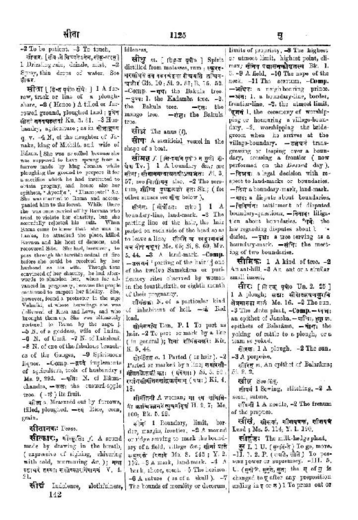
su I. 1 U. (suvati-te) To go, move. II. 1 2 P. (savati, sauti) To possess power or supremacy. III. 5 U. (sunoti, sunute, suta; the s of su is changed to ṣ after any preposition ending in i or u) 1 To press out or ([Page 1126-a]) extract juice. 2 To distil. 3 To pour out, sprinkle, make a libation. 4 To perform a sacrifice, especially the Soma sacrifice. 5 To bathe. 6 To churn. — Desid. (suṣūsati-te) -WITH ud to excite, agitate. — pra to produce, beget.
Cappeller 1887 Word type unspecified · verb
Original text · German · Word type unspecified
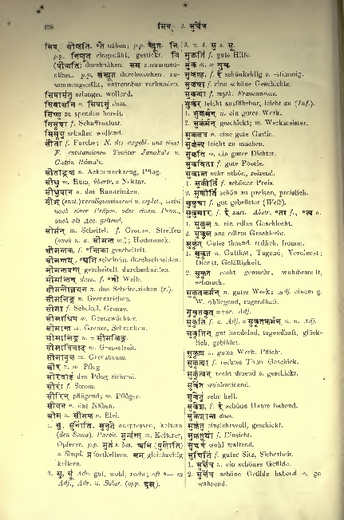
2. sú, sū́ Adv. gut, wohl,recht;oft ˚— in Adj., Adv. u. Subst. (opp. dus). [Page498-2] 3. u. 4. su s. sū.
Original text · German · verb
1. su, sunóti, sunute auspressen, keltern (den Soma). Partic. sunvánt m. Kelterer, Opferer. p. p. sutá s. bes. abhi (ṣuṇoti) = Simpl. pra fortkeltern. sam gleichzeitig keltern.
Burnouf 1866 verbal root · Word type unspecified
Original text · French · verbal root
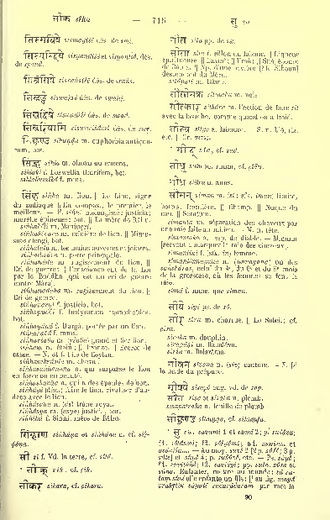
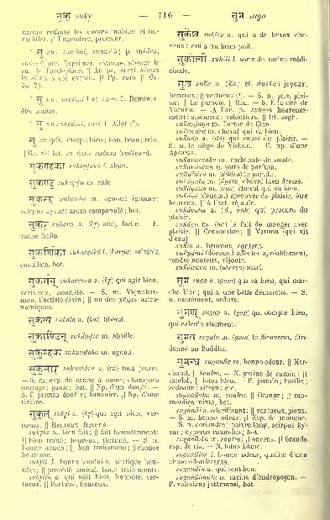
*su su. savami 1 et saumi 2; p. suṣāva; f1. sotāsmi; f2. soṣyāmi; a1. asauṣam et asāviṣam. — Au moy. suve 2 [2p. sūṣe; 3p. sūte] et sūye 4; p. suṣūve, etc. — Ps. sūye; f1. savitāhe; f2. saviṣye; pp. suta, sūta et sūna. Enfanter, mettre au monde: sā sutaṃ sūte elle enfante un fils; au fig. mayā prakṛtis sūyate sacarācaram par moi la [Page716-1] nature enfante les choses mobiles et immobiles. Engendrer, procréer.
Original text · French · verbal root
*su su. sunomi, sunve 5; p. suṣāva, suṣuve; etc. Exprimer, extraire, somam le suc de l'asclépiade. Au ps. asāvi somas le soma a été extrait. Pp. suta. Gr. ὕω (?).
Original text · French · verbal root
*su su. savāmi 1 et saumi 2. Dominer, être maître.
Original text · French · verbal root
*su su. savāmi, save 1. Aller (?).
Original text · French · Word type unspecified
su su (pfx. insép.) bien; bon, beau; très. Gr. εὐ; lat. su dans sudum (sudivam).
Derived words
Occurrences in source texts (120)
DYS 13 occurrences
DYS 54–59: The Yogi’s Hut 3 occurrences
Direct occurrences
DYS 154–167: Vajrolī for the Male Yogi 2 occurrences
Occurrences through derived words
GoS 7 occurrences
GoS 29–33: Four Forms of Breath Retention 1 occurrence
Occurrences through derived words
-
GoS 33 Segment 10
HP 23 occurrences
HP 1.12-1.14: Place of Practice 2 occurrences
Direct occurrences
HP 1.50–54: Siṃhāsana and Bhadrāsana 2 occurrences
Direct occurrences
-
HP 1.50–52 Segment 32
-
HP 1.53–54 Segment 15
12 more source pages
HP 2.37-2.43: Path to Manonmanī 2 occurrences
Direct occurrences
-
HP 2.42 Segment 10
Occurrences through derived words
-
HP 2.41 Segment 11
HP 2.69-2.71: Three Kumbhakas 2 occurrences
Occurrences through derived words
HP 3.87-3.93*7: Sahajolī and Amarolī 1 occurrence
Occurrences through derived words
-
HP 3.89 Segment 2
HP 4.0*1-4.0*14: Samādhi and Laya 1 occurrence
Occurrences through derived words
-
HP 4.0*2 Segment 10
HP 4.27*1-4.35: Rājayoga and Haṭha 1 occurrence
Occurrences through derived words
-
HP 4.27*1 Segment 5
HTK 11 occurrences
HTK 10.11*2–14*1: Bhastrikā: Breath like a bellows 1 occurrence
Direct occurrences
-
HTK 10.12 Segment 12
HTK 10.19*2–21*1: Plāvanī: Supported on water 1 occurrence
Occurrences through derived words
-
HTK 10.20 Segment 14
HTK 10.24–25*2: Karṣaka and Sahaja 2 occurrences
Direct occurrences
-
HTK 10.25 Segment 5
Occurrences through derived words
-
HTK 10.25 Segment 6
HTK 10.30–33*1: Nāḍī-viśudhy-ākhyaka-kumbha and Nāḍīśuddhi 2 occurrences
Direct occurrences
HTK 10.34*2–38*1: Asvaṅgaśṛṅkhalā and Kumbhāntaraśṛṅkhalā 2 occurrences
Direct occurrences
IVU 1 occurrence
IVU 17-18: Breath, Memory, and the Good Path 1 occurrence
Occurrences through derived words
-
IVU 18 Segment 3
MAN 6 occurrences
Bhadram-Śānti-Mantra 4 occurrences
Occurrences through derived words
-
MAN BS 3.1 Segment 1
-
MAN BS 3.2 Segment 1
-
MAN BS 4.1 Segment 1
-
MAN BS 4.2 Segment 1
PJH 1 occurrence
PJH 21: Epilogue and Closing Blessing 1 occurrence
Occurrences through derived words
-
PJH 21.1 Segment 3
PYS 5 occurrences
PYS 2.3–9: Five Kleśas 2 occurrences
Occurrences through derived words
PYS 2.46–48: Āsana as a Seated Posture 1 occurrence
Occurrences through derived words
-
PYS 2.46 Segment 2
SiSa 37 occurrences
SiSa 1.17-1.19: Geheime Yoga-Lehre 2 occurrences
Direct occurrences
SiSa 1.20-1.31: Karma und Erkenntnis 3 occurrences
Occurrences through derived words
SiSa 1.51-1.64: Selbst als Licht 3 occurrences
Occurrences through derived words
SiSa 1.82-1.90: Guṇas und Gegenstände 1 occurrence
Occurrences through derived words
-
SiSa 1.82 Segment 6
19 more source pages
SiSa 1.93-1.99: Karmische Verkörperung 1 occurrence
Occurrences through derived words
-
SiSa 1.95 Segment 12
SiSa 3.95-3.97: Svastikāsana 2 occurrences
Occurrences through derived words
SiSa 4.91-4.94: Vajrolī-Siddhi 2 occurrences
Occurrences through derived words
SiSa 5.48-5.71: Innere Meditation 2 occurrences
Direct occurrences
-
SiSa 5.49 Segment 10
Occurrences through derived words
-
SiSa 5.54 Segment 4
SiSa 5.108-5.112: Maṇipūra 2 occurrences
Direct occurrences
-
SiSa 5.108 Segment 16
Occurrences through derived words
-
SiSa 5.110 Segment 13
SiSa 5.208-5.222: Rājayoga 2 occurrences
Direct occurrences
-
SiSa 5.209 Segment 5
-
SiSa 5.219 Segment 7
SiSa 5.223-5.233: Praxis im Leben 2 occurrences
Occurrences through derived words
-
SiSa 5.232 Segment 9
-
SiSa 5.233 Segment 15
SS 4 occurrences
SVU 4 occurrences
SVU 1.1-1.3: The Search for the Cause 1 occurrence
Occurrences through derived words
-
SVU 1.2 Segment 21
VBT 8 occurrences
VBT 65–74: Joy and Enjoyment 5 occurrences
Occurrences through derived words
VBT 101–109: Śiva-Identity 2 occurrences
Occurrences through derived words
Continue with AYI Free
Image source: AYI archive.