

kha ख – cavity; space
substantive masculine · substantive neuter · Word type unspecified
Dictionary sources
AYI dictionary substantive neuter
cavity; space
Cappeller 1891 substantive neuter
Original text · English · substantive neuter
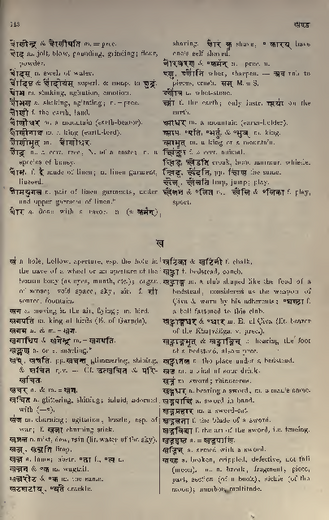
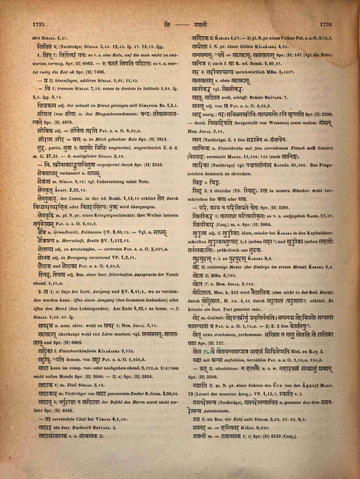
khá ·n. hole, hollow, aperture, esp. the hole in the nave of a wheel or an aperture of the human body (as eyes, mouth, etc.); organ of sense; void space, sky, air. f. khā́ source, fountain.
Monier-Williams 1872 substantive masculine · substantive neuter · Word type unspecified
Original text · English · substantive masculine
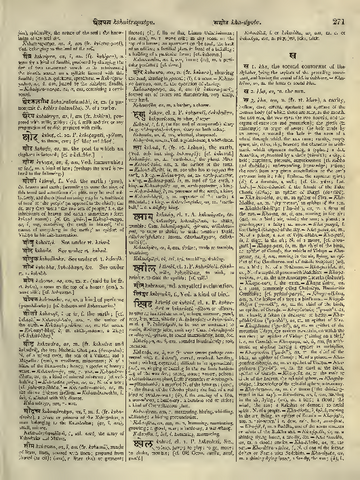
kha 2 . kha, as, m. the sun.
Original text · English · substantive neuter
kha 3 . kha, am, n. (fr. rt. khan), a cavity, hollow, cave, cavern, aperture; an aperture of the human body (of which there are nine, as the mouth, the two ears, the two eyes, the two nostrils, and the organs of excretion and generation); the glottis (in anatomy); an organ of sense; the hole made by an arrow, a wound; the hole in the nave of a wheel through which the axis runs; vacuity, empty space, air, ether, sky, heaven; the character in arith- metic which expresses nothing, a cypher; a dot, Anusvāra, represented by a circle (vindu); a city, a field; happiness, pleasure, auspiciousness [cf. sukha and duḥkha]; understanding, knowledge; action; the tenth from any given constellation or the sun's entrance into it; talc; Brahma, the supreme spirit; (ā), f. a fountain, a well; [cf. Gr. χάος; Lat. halo.]
Original text · English · Word type unspecified
kha 1 . kha, the second consonant of the alphabet, being the aspirate of the preceding conso- nant, and having the sound of kh in inkhorn.
Petersburger 1855 substantive masculine · substantive neuter · Word type unspecified
Original text · German · substantive masculine
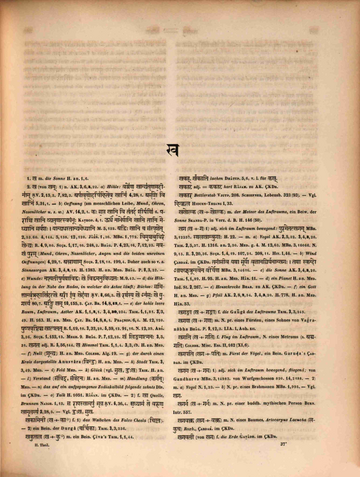
1. kha m. die Sonne H. an. 1,6.
Original text · German · substantive neuter
2. kha (von khan) 1〉 n. AK. 3,6,3,22. a〉 Höhle: vajrèṇa̱ khānyàtṛṇanna̱dīnā̀m ṚV. 2,15,3. ṚV. 7,82,3. apā̀vṛṇo̱dapìhiteva̱ khānì ṚV. 4,28,1. asṛ̀jo̱ vi khānì ṚV. 5,31,1. — b〉 Oeffnung (am menschlichen Leibe, Mund, Ohren, Nasenlöcher u. s. w.) AV. 14,2,1. kaḥ sa̱pta khāni̱ vi tàtarda śī̱rṣaṇì AV. 14,2,6. parāñci khāni vyatṛṇatsvayaṃbhūḥ KAṬHOP. 4,1. ūrdhvaṃ nābheryāni khāni tāni medhyāni sarvaśaḥ . yānyadhastānyamedhyāni M. 5,132. adbhiḥ khāni ca saṃspṛśet M. 2,53. M. 2,60. M. 4,144. M. 5,138. M. 12,120. YĀJÑ. 1,20. MBH. 1,772. vimuñcanrudhiraṃ khebhyaḥ R. 4,9,80. SUŚR. 1,17,10. SUŚR. 1,248,2. BHĀG. P. 4,23,16. BHĀG. P. 7,12,25. navakhaṃ puram (Mund, Ohren, Nasenlöcher, Augen und die beiden unreinen Oeffnungen) BHĀG. P. 4,29,7. antrāṇām SUŚR. 2,18,18. SUŚR. 2,199,4. Daher auch so v. a. Sinnesorgan AK. 3,4,2,19. H. 1383. H. an. MED. BHĀG. P. 8,3,23. — c〉 Wunde: naśyatīṣuryathāviddhaḥ khe viddhamanuvidhyataḥ M. 9,43. — d〉 die Höhlung in der Nabe des Rades, in welcher die Achse läuft; Büchse: samittānvṛ̀tra̱hākhìda̱tkhe a̱rām̐ ìva̱ khedàyā ṚV. 8,66,3. khe rathàsya̱ khe 'nàsa̱ḥ khe yu̱gasyà ṚV. 8,80,7. a̱ṅdhi kham ṚV. 10,155,3. ŚAT. BR. 14,8,12,1. — e〉 der hohle leere Raum, Luftraum, Aether AK. 1,1,2,1. AK. 3,4,30,234. TRIK. 1,1,81. TRIK. 3,3,49. H. 163. H. an. MED. ŚAT. BR. 14,8,1,1. PRAŚNOP. 6,4. M. 12,120. ṣuṣpavṛṣṭiśca khātpatat R. 1,19,10. R. 3,32,28. R. 5,59,12. R. 5,91,16. N. 12,39. ARJ. 3,36. SUŚR. 1,152,13. MEGH. 9. BHĀG. P. 7,12,25. khaṃ liṅgamātmanaḥ BHĀG. P. 3,5,31. khagata adj. R. 5,56,144. kha Himmel TRIK. 1,1,4. TRIK. 3,3,49. H. an. MED. — f〉 Null (śūnya) H. an. MED. COLEBR. Alg. 19. — g〉 der durch einen Kreis dargestellte Anusvāra (vindu) H. an. MED. — h〉 Stadt TRIK. 3,3,49. MED. — i〉 Feld MED. — k〉 Glück (vgl. sukha, duḥkha) TRIK. H. an. — l〉 Verstand (saṃvid, saṃvedana) H. an. MED. — m〉 Handlung (karman) MED. — n〉 das auf ein aufgegangenes Zodiakalbild folgende zehnte DĪP._im_ŚKDR. — o〉 Talk H. 1051. RĀJAN._im_ŚKDR. — 2〉 f. khā Quelle, Brunnen NAIGH. 1,13. sa rā̱yaskhāmapù sṛja ṚV. 6,36,4. ṛ̱dhyāmà te varuṇa̱khāmṛ̱tasyà ṚV. 2,28,5. — Vgl. duḥkha, sukha.
Original text · German · Word type unspecified
2. kha 1〉b〉 kaṇṭhasya khe vivṛte saṃvṛte vā ṚV. PRĀT. 13,1. TAITT. PRĀT. 2,10. vāyuḥ khāt VS. PRĀT. 1,6 hierher (nach WEBER) oder zu e〉 (nach dem Schol.). — f〉 SĀH. D. 264. — n〉 Bez. des 10ten astrologischen Hauses VARĀH. BṚH. 11,6. VARĀH. BṚH. 11,17. VARĀH. BṚH. 12,4. VARĀH. BṚH. 20,3. VARĀH. BṚH. 23,6. — 2〉 Z. 2 lies khāmupà st. khāmapù.
Original text · German · Word type unspecified
2. kha 1〉a〉 füge bei Loch, Ausgang und ṚV. 4,11,2, wo es verstanden werden kann: öffne einen Ausgang (den frommen Gedanken) oder öffne den Mund (den Lobsingenden). Am Ende ṚV. 5,32,1. zu lesen. — f〉 SŪRYAS. 1,29. SŪRYAS. 1,31. fg.
Böhtlingk 1879 substantive masculine · substantive neuter
Original text · German · substantive masculine
1. *kha m. die Sonne.
Original text · German · substantive neuter
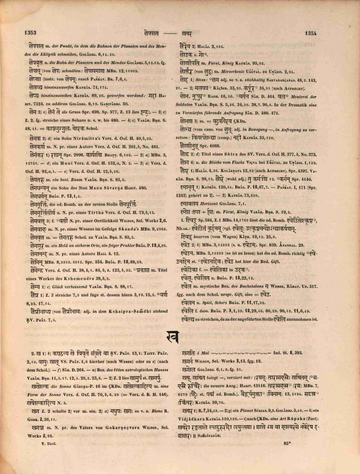
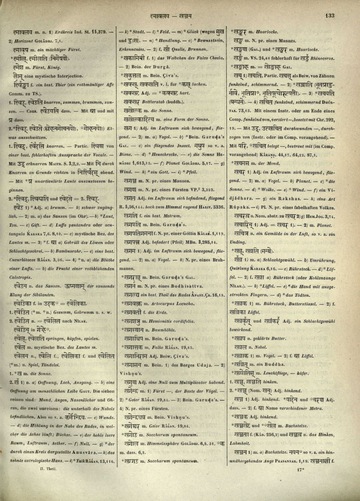
2. khá — 1〉 n. — a〉 Oeffnung, Loch, Ausgang. — b〉 eine Oeffnung am menschlichen Leibe GAUT. Die sieben reinen sind: Mund, Augen, Nasenlöcher und Ohren, die zwei unreinen: die unterhalb des Nabels befindlichen. Also so v. a. karmendriya. — c〉 Wunde. — d〉 die Höhlung in der Nabe des Rades, in welcher die Achse läuft; Büchse. — e〉 der hohle leere Raum, Luftraum, Aether. — f〉 Null. — g〉 *der durch einen Kreis dargestellte Anusvāra. — h〉 das zehnte astrologische Haus. — i〉 *Talk RĀJAN. 13,116. [Page2-133-b] — k〉 *Stadt. — l〉 *Feld. — m〉 *Glück (wegen sukha und duḥkha). — n〉 *Handlung. — o〉 *Bewusstsein, Erkenntniss. — 2〉 f. khā́ Quelle, Brunnen.
Apte 1890 substantive masculine · substantive neuter
Original text · English · substantive masculine · substantive neuter
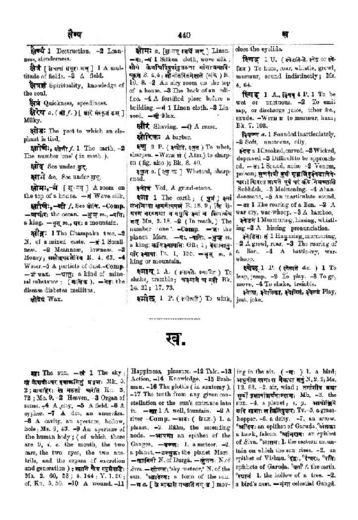
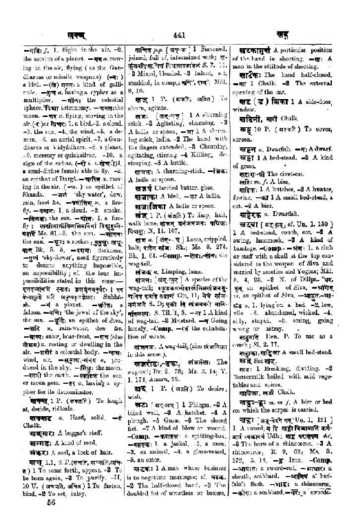
khaḥ The sun. — khaṃ 1 The sky; khaṃ keśavo'para ivākramituṃ pravṛttaḥ Mk. 5. 2; yāvadriraḥ khe marutāṃ caraṃti Ku. 3. 72; Me. 9. 2 Heaven. 3 Organ of sense. 4 A city. 5 A field. 6 A cypher. 7 A dot, an anusvāra. 8 A cavity, an aperture, hollow, hole; Ms. 9. 43. 9 An aperture of the human body; (of which there are 9, i. e. the mouth, the two ears, the two eyes, the two nostrils, and the organs of excretion and generation); khāni caiva spṛśedādbhiḥ Ms. 2. 60, Ms. 2. 53; Ms. 4. 144; Y. 1. 20; cf. Ku. 3. 50. 10 A wound. 11 ([Page 0440-1b]) Happiness, pleasure. 12 Talc. 13 Action. 14 Knowledge. 15 Brahman. 16 The glottis (in anatomy). 17 The tenth from any given constellation or the sun's entrance into it. — khā 1 A well, fountain. 2 A river Comp. — aṭaḥ (khe'ṭaḥ) 1 a planet. 2 Rāhu, the ascending node. — āpagā an epithet of the Ganges. — ulkaḥ 1 a meteor. 2 a planet. — ulmukaḥ the planet Mars. — kāminī N. of Durgā. — kuṃtalaḥ N. of Śiva. — kholkaḥ ‘sky meteor,’ N. of the sun. ˚ādityaḥ a form of the sun. — ga a. [khe ākāśe gacchati gam-ḍa] ([Page 0440-1c]) moving in the air. — (gaḥ) 1 a bird; adhunīta khagaḥ sa naikadhā tanuṃ N. 2. 2; Ms. 12. 63. 2 air, wind; tamāṃsīva yathā sūryo vṛkṣānagnirghanānkhagaḥ Mb. 3 the sun. 4 a planet; e. g. āpoklime yadi khagāḥ sa kileṃduvāraḥ Tv. 5 a grasshopper. 6 a deity. 7 an arrow. ˚adhipaḥ an epithet of Garuḍa. ˚aṃtakaḥ a hawk, falcon. ˚abhirāmaḥ an epithet of Śiva. ˚āsanaḥ 1 the eastern mountain on which the sun rises. 2 an epithet of Viṣṇu. ˚iṃdraḥ, ˚īśvaraḥ, ˚patiḥ epithets of Garuḍa. ˚vatī f. the earth. ˚sthānaṃ 1 the hollow of a tree. 2 a bird's nest. — gaṃgā celestial Gaṅgā. ([Page 0441-a]) — gatiḥ f. 1 flight in the air. 2 the motion of a planet. — gama a. moving in the air, flying (as the Gandharvas or missile weapons). — (maḥ) a bird. — (khe) gamanaḥ a kind of gallinule. — guṇa a. having a cypher as a multiplier. — golaḥ the celestial sphere. ˚vidyā astronomy. — camasaḥ the moon. — cara a. flying, moving in the air. — (raḥ) or khecaraḥ 1 a bird. 2 a cloud. 3 the sun. 4 the wind. 5 a demon. 6 an aerial spirit. 7 a Gandharva or Vidyādhara. 8 a planet. 9 mercury or quicksilver. 10 a sign of the zodiac. ( — rī i. e. khecarī) 1 a semi-divine female able to fly. 2 an epithet of Durgā. — cārin a. moving in the air. ( — m.) an epithet of Skanda. — jalaṃ ‘sky-water’, dew, rain, frost &c. — jyotis m. a firefly. — tamālaḥ 1 a cloud. 2 smoke. — tilakaḥ the sun. — dyotaḥ 1 a firefly; khadyotālīvilasitanibhāṃ vidyudunmeṣadṛṣṭiṃ Me. 81. 2 the sun. — dyātanaḥ the sun. — dhūpaḥ a rocket; mumucuḥ khadhūpān Bk. 3. 5. — parāgaḥ darkness. — puṣpaṃ ‘sky-flower’, used figuratively to denote anything impossible, an impossibility; cf. the four impossibilities stated in this verse: -mṛgatṛṣṇāṃbhasi snātaḥ śaśaśṛṃgadhanurdharaḥ . eṣa vaṃdhyāsuto yati khapuṣpakṛtaśekharaḥ Subhāṣ. — bhaṃ a planet. — bhrāṃtiḥ a falcon. — maṇiḥ ‘the jewel of the sky’, the sun. — mūrtiḥ an epithet of Śiva. — vāri n. rain-water, dew &c. — bāṣpaḥ snow, hoar-frost. — śaya (also kheśaya) a. resting or dwelling in the air. — śarīraṃ a celestial body. — śvāsaḥ wind, air. — samuttha, -saṃbhava a. produced in the sky. — siṃdhuḥ the moon. — stanī the earth. — sphaṭikaṃ the sun or moon gem. — hara a. having a cypher for its denominator.
Cappeller 1887 substantive neuter
Original text · German · substantive neuter
khá n. Öffnung, Loch (bes. am menschlichen Leibe); Achsenloch (am Wagen); Luft. f. khá Quelle.
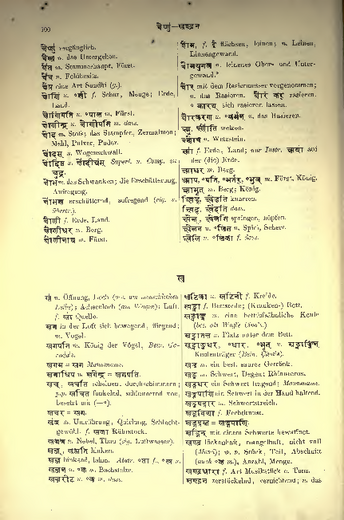
Burnouf 1866 substantive neuter · Word type unspecified
Original text · French · substantive neuter
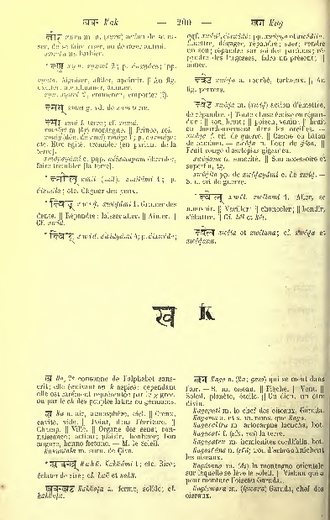
kha kha n. air, atmosphère, ciel. Creux, cavité, vide. Point, dans l'écriture. Champ. Ville. Organe des sens; connaissance; action; plaisir, bonheur; bon augure, bonne fortune. — M. le Soleil. khakuntala m. surn. de Śiva.
Original text · French · Word type unspecified
kha kha, 2ᵉ consonne de l'alphabet sanscrit; elle équivaut au k aspiré; cependant elle est rarement représentée par le kṣ grec, ou par le ch des peuples latins ou germains.
Derived words
Occurrences in source texts (82)
DYS 11 occurrences
DYS 154–167: Vajrolī for the Male Yogi 2 occurrences
Occurrences through derived words
GoS 4 occurrences
HP 17 occurrences
HP 2.69-2.71: Three Kumbhakas 2 occurrences
Occurrences through derived words
6 more source pages
HP 3.33-3.48*1: Khecarī and Soma 2 occurrences
Direct occurrences
HP 3.87-3.93*7: Sahajolī and Amarolī 1 occurrence
Occurrences through derived words
-
HP 3.89 Segment 2
HP 4.0*1-4.0*14: Samādhi and Laya 1 occurrence
Occurrences through derived words
-
HP 4.0*2 Segment 10
HP 4.11*15-4.11*28: Space and Laya 4 occurrences
Direct occurrences
-
HP 4.11*16 Segment 5
-
HP 4.11*20 Segment 1
-
HP 4.11*20 Segment 9
-
HP 4.11*20 Segment 13
HP 4.27*1-4.35: Rājayoga and Haṭha 1 occurrence
Occurrences through derived words
-
HP 4.27*1 Segment 5
HTK 2 occurrences
MAN 1 occurrence
PJH 1 occurrence
PJH 21: Epilogue and Closing Blessing 1 occurrence
Occurrences through derived words
-
PJH 21.1 Segment 3
PYS 5 occurrences
PYS 2.3–9: Five Kleśas 2 occurrences
Occurrences through derived words
PYS 2.46–48: Āsana as a Seated Posture 1 occurrence
Occurrences through derived words
-
PYS 2.46 Segment 2
SiSa 25 occurrences
SiSa 1.20-1.31: Karma und Erkenntnis 3 occurrences
Occurrences through derived words
SiSa 1.51-1.64: Selbst als Licht 4 occurrences
Direct occurrences
-
SiSa 1.62 Segment 2
Occurrences through derived words
SiSa 1.71-1.81: Avidyā und Elemente 2 occurrences
Direct occurrences
SiSa 1.82-1.90: Guṇas und Gegenstände 1 occurrence
Occurrences through derived words
-
SiSa 1.82 Segment 6
SiSa 1.93-1.99: Karmische Verkörperung 1 occurrence
Occurrences through derived words
-
SiSa 1.95 Segment 12
10 more source pages
SiSa 3.95-3.97: Svastikāsana 2 occurrences
Occurrences through derived words
SiSa 4.91-4.94: Vajrolī-Siddhi 2 occurrences
Occurrences through derived words
SiSa 5.48-5.71: Innere Meditation 1 occurrence
Occurrences through derived words
-
SiSa 5.54 Segment 4
SiSa 5.223-5.233: Praxis im Leben 2 occurrences
Occurrences through derived words
-
SiSa 5.232 Segment 9
-
SiSa 5.233 Segment 15
SS 4 occurrences
SVU 4 occurrences
SVU 1.1-1.3: The Search for the Cause 1 occurrence
Occurrences through derived words
-
SVU 1.2 Segment 21
VBT 8 occurrences
VBT 65–74: Joy and Enjoyment 5 occurrences
Occurrences through derived words
VBT 101–109: Śiva-Identity 2 occurrences
Occurrences through derived words
Continue with AYI Free
Image source: AYI archive.