

deva देव – Gott; Gottheit
Adjektiv · Substantiv Maskulin · Substantiv Neutrum · Worttyp nicht bestimmt
Wörterbuchquellen
AYI Wörterbuch Substantiv Maskulin
Gott; Gottheit
Cappeller 1891 Worttyp nicht bestimmt
Originaltext · Englisch · Worttyp nicht bestimmt
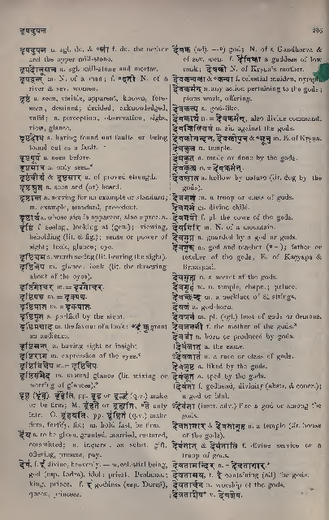
devá ·f. ī́ divine, heavenly. --m. celestial being, god (esp. Indra), idol; priest, Brahman; king, prince. f. ī́ goddess (esp. Durgā), queen, princess.
Monier-Williams 1872 Adjektiv
Originaltext · Englisch · Adjektiv
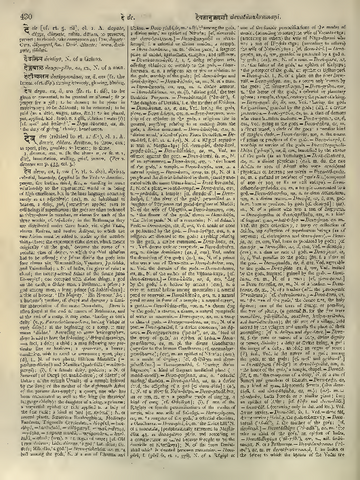
deva deva, as, ī, am (fr. rt. 2. div), divine, celestial, heavenly, (applied in the Veda to devotion, prayer, the human mind, &c., as standing in some relationship to the supernatural world or as being of high excellence, but in the later language occurring rarely as an adjective); (as), m. an inhabitant of heaven, a deity, god, (sometimes applied even to evil beings if superhuman; the gods are often reckoned as thirty-three in number, or eleven for each of the three worlds, cf. tri-daśa; in the Brāhmaṇas they are distributed under three heads, viz. eight Vasus, eleven Rudras, and twelve Ādityas, to which the two Aśvins must be added to make up the number thirty-three; the expression viśve devās, which meant originally ‘all the gods,’ became the name of a peculiar class of deities, to which the third oblation had to be offered; the Jainas divide the gods into four classes, viz. Bhavanādhīśa, Vyantara, Jyotiṣka, and Vaimānika); a N. of Indra, the giver of rain; a cloud; the twenty-second Arhat of the future Jaina Ut-sarpiṇī; one occupied with divine things, a god on the earth, a divine man, a Brāhman, a priest; a god among men, a king, prince [cf. kṣiti-deva]; a title of honour, ‘His Majesty,’ ‘His Honour,’ &c.; a husband's brother, cf. devṛ and devara; a fami- liar abbreviation of the name Deva-datta. Deva is often found at the end of names of Brāhmans, and at the end of a comp. it may mean ‘having as one's deity’ (e. g. Puruṣottama-deva, having Viṣṇu as one's deity); at the beginning of a comp. it may mean ‘divine.’ According to some lexicographers, deva is said to have the following additional meanings, — a fool, a dolt; a child; a man following any par- ticular line or business; a spear-man, a lancer; emulation, wish to excel or overcome; sport, play; (ā), f., N. of two plants, Hibiscus Mutabilis (= padma-cāriṇī) and Marsilea Quadrifolia (= aśana- parṇī); (ī), f. a female deity, goddess; a N. of Sarasvatī; of Durgā [cf. mahā-deva]; of Sāvitrī; of Uṣas; of the nymph Urvaśī; of a nymph beloved by the Sun; of the mother of the eighteenth Arhat of the present Ava-sarpiṇī; a queen, one who has been consecrated as well as the king (in theatrical language chiefly); the daughter of a king, a princess; a respectful epithet or title applied to a lady of the first rank; a kind of bird [cf. śyāmā]; N. of several plants, Sanseviera Roxburghiana, Medicago Esculenta, Trigonella Corniculata, = liṅginī, = ban- dhyā, = karkoṭakī, = śāli-parṇī, = mahā-droṇī, = pāṭhā, = nāgara-mustā, = mṛgervāru, = harī- takī, = atasī; (am), n. an organ of sense; [cf. Old Pruss. deiwas; Lith. diewas, ‘a god;’ Lat. deus; Gr. θεός; Hib. dia, ‘a god.’]
Petersburger 1855 Adjektiv · Substantiv Maskulin · Substantiv Neutrum
Originaltext · Deutsch · Adjektiv · Substantiv Maskulin · Substantiv Neutrum
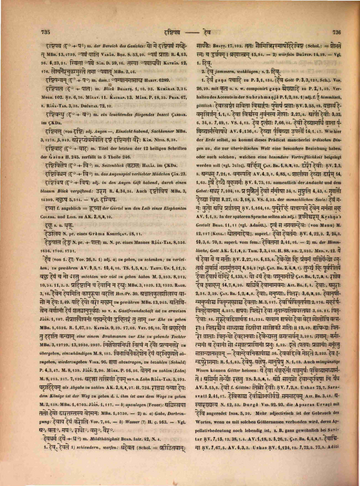
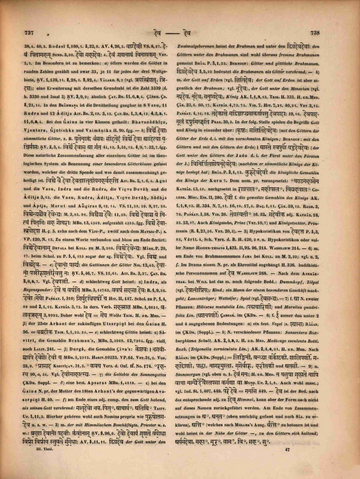
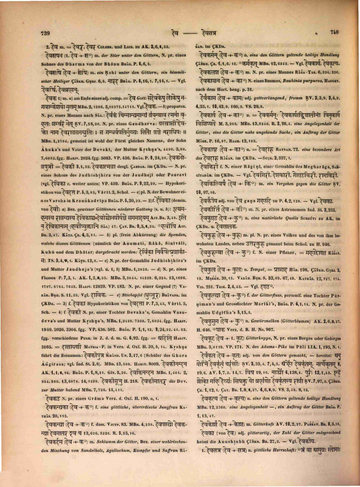
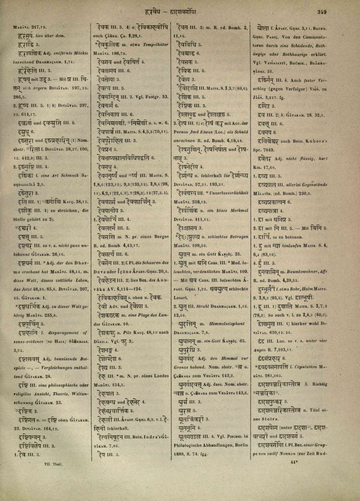
1. devá gaṇa pacādi zu P. 3,1,134. (déva Gott P. 3,3,121, Sch.). VOP. 26,29. mit kṛta u. s. w. componirt gaṇa śreṇyādi zu P. 2,1,59. Verhalten des Accents in der Subrahmaṇyā P. 1,2,38. 1〉 adj. f. ī himmlisch, göttlich: de̱vastvaṣṭā̀ savi̱tā vi̱śvarū̀paḥ pu̱poṣà pra̱jāḥ ṚV. 3,55,19. ya̱jñasyà de̱vamṛ̱tvijàm ṚV. 1,1,1. de̱vā viśvàsya̱ bhuvànasya go̱pāḥ ṚV. 2,27,4. āpò de̱vīḥ ṚV. 3,32,6. ṚV. 3,34,8. ṚV. 7,49,1. VS. 4,12. de̱va etàśaḥ VS. 7,66,14. de̱vī de̱vyāmadhì jā̱tā pṛ̀thi̱vyāmàsyoṣadhe AV. 6,136,1. de̱vyā pṛ̀thi̱vyā u̱pasthè AV. 14,1,47. Wie hier der Erde selbst, so kommt dieses Prädicat mancherlei irdischen Dingen zu, die zur überirdischen Welt eine besondere Beziehung haben, oder auch solchen, welchen eine besondere Vortrefflichkeit beigelegt werden soll (vgl. ϑεῖος). barhis ŚAT. BR. 1,8,2,15. dvārò de̱vīḥ ṚV. 2,3,5. andhas ṚV. 7,21,1. vanaspati AV. 4,3,1. AV. 6,85,1. śālā̀yā de̱vyā dvāràm AV. 14,1,63. i̱ṣvaì de̱vyai bṛ̱hannamàḥ ṚV. 6,75,15. namentlich der Andacht und dem Gebet: adhvara ṚV. 7,104,18. pra śu̱kraitù de̱vī mànī̱ṣā ṚV. 7,34,1. suṣṭuti ṚV. 4,43,1. gṛ̱ṇantò de̱vyā dhi̱yā ṚV. 8,27,13. ṚV. 3,18,3. VS. 4,23. der menschlichen Seele: de̱vaṃ mana̱ḥ kuto̱ adhi̱ prajā̀tam ṚV. 1,164,18. puna̱rehì vācaspate de̱vena̱ manàsā sa̱ha AV. 1,1,2. In der späteren Sprache selten als adj.: rūpamaiśvaram Kṛṣṇaʼs Gestalt BHAG. 11,11 (vgl. Adnott.). evaṃ sa bhagavāndevaḥ (von Manu) M. 12,117 (KULL.: dyotanāddevaḥ). superl.: de̱vo de̱vatàmaḥ ṚV. 4,22,3. ṚV. 2,24,3. ṚV. 10,3,6. ṚV. 10,70,2. superl. vom fem.: devitamā ṚV. 2,41,16. — 2〉 m. der Himmlische, Gott AK. 1,1,1,2. TRIK. 3,3,415. H. 88. H. an. 2,525. MED. v. 12. ye cà de̱vā ye ca̱ martā̀ḥ ṚV. 2,27,10. ṚV. 6,15,8. de̱vebhyo̱ hi pràtha̱maṃ ya̱jñiyèbhyo 'mṛta̱tvaṃ su̱vasì bhā̱gamùtta̱mam ṚV. 4,54,2. (vgl. ŚAT. BR. 2,4,2,1). tubhya̱ṃ hi pū̱rvapī̀taye de̱vā de̱vāyà yemi̱re ŚAT. BR. 2,1,135,1. yo 'yaṃ devaḥ paśūnāmīṣṭe ŚAT. BR. 1,7,3,1. rājeva deva ivāham ŚAT. BR. 14,7,1,20. agnirvai devānāmavamaḥ AIT. BR. 1,1. devāḥ, asurāḥ AIT. BR. 2,31. AIT. BR. 3,39. ŚAT. BR. 1,2,4,8. devāḥ, manuṣyāḥ, pitaraḥ ŚAT. BR. 3,6,2,25. devānṛṣīnmanuṣyāṃśca pitṝngṛhyāśca devatāḥ M. 3,117. devarṣipitṛtarpaṇa M. 2,176. maharṣipitṛdevānām M. 4,257. ṛṣayaḥ pitaro devā bhūtānyatithayastathā M. 3,80. M. 3,81. pitṛdevāḥ M. 18. gurudevadvijārcaka M. 11,224. yajvāna ṛṣayo devā vedā jyotīṃṣi vatsarāḥ . pitaraścaiva sādhyāśca dvitīyā sāttvikī gatiḥ .. M. 12,49. ṛṣibhyaḥ pitaro jātāḥ pitṛbhyo devadānavāḥ . devebhyastu jagatsarvam M. 3,201. (gaṇam) karmātmanāṃ ca devānāṃ so 'sṛjatprāṇināṃ prabhuḥ M. 1,22. ete (patayaḥ prajānāṃ) manūṃstu saptānyānasṛjan — devāndevanikāyāṃśca M. 36. devavaddivi modate M. 2,232. deva indrapurogamāḥ R. 1,1,83. deveṣu, yakṣeṣu, mānuṣeṣu N. 1,13. Auch missgünstige Wesen können Götter heissen: ye de̱vā yàjña̱hanò yajña̱muṣàḥ pṛthi̱vyāmadhyāsàte . a̱gnirmā̱ tebhyò rakṣatu TS. 3,5,4,1. agnè sāta̱ghno de̱vānha̱viṣā̱ ni ṣèdha AV. 3,15,5. devī f. Göttin: ti̱sro de̱vīḥ ṚV. 7,2,8. Uṣas ṚV. 7,75,7. Sarasvatī ṚV. 2,41,17. devikāśca devīścobhayīryajñe samamādayam AIT. BR. 3,48. asyāraṇyasya N. 12,53. Durgā VID. 92. VID. 93. die Apsaras Urvaśī mit devi angeredet INDR. 5,20. Mehr adjectivisch ist der Gebrauch des Wortes, wenn es mit solchen Götternamen verbunden wird, deren Appellativbedeutung noch lebendig ist, z. B. ganz gewöhnlich bei Savitar ṚV. 7,15,12. ṚV. 7,38,1. ṚV. 7,15,4. AV. 1,18,3. AV. 5,26,2. ŚAT. BR. 4,4,1,7. devāśvinā ṚV. 7,67,5. AV. 6,3,3. Uṣas ṚV. 1,124,12. ṚV. 7,72,3. ṚV. 7,77,5. Aditi ṚV. 38,4. ṚV. 40,2. Rodasī ṚV. 1,160,1. ṚV. 5,32,9. AV. 4,26,2. vāgdevī VS. 8,37. devaṃ pitāmaham SUND. 3,30. devo mahādevaḥ 4. devaṃ gaṇanāthaṃ vināyakam VET. 1,1. Im Besondern ist zu bemerken: a〉 öfters werden die Götter in runden Zahlen gezählt und zwar 33, je 11 für jedes der drei Weltgebiete, ṚV. 1,139,11. ṚV. 8,28,1. ṚV. 9,92,4. VĀLAKH. 8,2 (vgl. trayastriṃśat, tridaśa); eine Erweiterung mit derselben Grundzahl ist die Zahl VĀLAKH. 3339 (d. h. VĀLAKH. 3330 und 3mal 3) ṚV. 3,9,9; ähnlich ŚAT. BR. 11,6,3,4. ŚĀṄKH. ŚR. 8,21,14. In den BRĀHMAṆA ist die Dreitheilung gangbar in 8 Vasu, 11 Rudra und 12 Āditya AIT. BR. 2,18. AIT. BR. 3,13. ŚAT. BR. 1,3,4,12. ŚAT. BR. 4,3,5,1. ŚAT. BR. 11,6,3,4. Bei den Jaina in vier Klassen getheilt: Bhavanādhīśa, Vyantara, Jyotiṣka und Vaimānika H. 90. fgg. — b〉 viśvè de̱vāḥ sämmtliche Götter, z. B. ghṛ̱tenā̱ktaṃ vàsavaḥ sīdate̱daṃ viśvè devā ādatyā ya̱jñiyā̀saḥ ṚV. 2,3,4. viśvè devāsa̱ ā gàta ṚV. 41,13. ṚV. 5,51,13. ṚV. 6,9,7. ṚV. 52,7. fgg. Diese naturliche Zusammenfassung aller einzelnen Götter ist im theologischen System als Benennung einer besonderen Götterklasse gefasst worden, welcher die dritte Spende und was damit zusammenhangt geheiligt ist. viśve vai devā devatāstṛtīyamaharvahanti AIT. BR. 5,1. AIT. BR. 6,4. Agni und die Vasu, Indra und die Rudra, die Viśve Devāḥ und die Āditya AIT. BR. 3,13. die Vasu, Rudra, Āditya, Viśve Devāḥ, Sādhya und Aptya, Marut und Aṅgiras AIT. BR. 8,12. AIT. BR. 8,14. VS. 11,58. VS. 11,59. VS. 8,57. VS. 8,58. viśvebhyaścaiva devebhyaḥ M. 3,85. M. 3,90. viśvaiśca devaiḥ M. 11,29. viśve debāśca ye nityaṃ pitṛbhiḥ saha gocarāḥ MBH. 13,4349. aufgezähit MBH. 13,4355. fgg. viśve devāstrayodaśa H. ś. 3. zehn nach dem VĀYU-P., zwölf nach dem MATSYA-P.; s. VP. 120, N. 13. Zu einem Worte verbunden und bloss am Ende flectirt: viśvedevānām DEVALA_bei_KULL._zu_M. 3,208. viśvedevebhyaḥ MĀRK. P. 29,17. beim Schol. zu P. 5,4,155 sogar der sg. viśvedevaḥ. Vgl. viśva und viśvadeva. — c〉 de̱vānā̱ṃ patnyàḥ die Gattinnen der Götter NIR. 12,45. de̱vānā̱ṃ patnī̀ruśa̱tīràvantu naḥ ṚV. 5,46,7. VS. 11,61. AIT. BR. 3,37. ŚAT. BR. 3,8,5,7. Vgl. devapatnī. — d〉 schlechtweg Gott heisst: α〉 Indra, als Regenspender: deve ca varṣati MBH. 3,14763. vavarṣa sahasā devaḥ R. 1,9,56. devo (megho PAÑCAT. I, 310) giryudadhivarṣī ca HIT. II, 147. Schol. zu P. 1,4,88 und P. 2,1,12. KATHĀS. 5,72. In ders. Verb. sahasrākṣa MBH. 1,6621. balavṛttahan MBH. 3,9992. Daher wohl deva = megha Wolke TRIK. H. an. MED. — β〉 der 22ste Arhant der zukünftigen Utsarpiṇī bei den Jaina H. 56. = vajraṭīka TRIK. 1,1,23. TRIK. 1,1,24. — e〉 schlechtweg Göttin heisst: α〉 Sāvitrī, die Gemahlin Brahmanʼs, MBH. 5,3969. MBH. 12,7204. fgg. viell auch LALIT. 241. — β〉 Durgā, die Gemahlin Śivaʼs: keśavaḥ . bhagavāṃścāpi deveśo devī ca MBH. 1,2315. HARIV. 10233. VP. 64. VET. 31,2. VOP. 25,9. ˚prāsāda KṢITĪŚAV. 31,3. ˚kavaca Verz. d. Oxf. H. No. 174. ˚rahasya Verz. d. Oxf. H. 90,a,34. Vgl. devīmāhātmya. — γ〉 die Geliebte des Sonnengottes ŚKDR. Suppl. — δ〉 eine best. Apsaras MBH. 1,4818. — ε〉 bei den Jaina N. pr. der Mutter des 18ten Arhantʼs der gegenwärtigen Avasarpiṇī H. 40. — f〉 am Ende eines adj. comp. den zum Gott habend, als seinen Gott verehrend: mātṛdevo bhava, pitṛ˚, ācārya˚, atithi˚ TAITT. UP. 1,11,2. Hierher gehören wohl auch Nomina propria wie puruṣottamadeva u. s. w. — 3〉 m. der mit Himmlischem Beschäftigte, Priester u. s. w.: bra̱hmā de̱vānā̀ṃ pada̱vīḥ kàvī̱nām ṚV. 9,96,6. de̱vo de̱vāyà gṛṇa̱te vayo̱dhā vipro̱ viprā̀ya stuva̱te sùme̱dhāḥ AV. 5,11,11. dvijadeva der Gott unter den Zweimalgeborenen heisst der Brahman und unter den dvijadevadevāḥ den Göttern unter den Brahmanen sind wohl überaus fromme Brahmanen gemeint BHĀG. P. 3,1,23. BURNOUF: Götter und göttliche Brahmanen. dvijadevadeva BHĀG. P. 5,5,22 bedeutet die Brahmanen als Götter verehrend. — 4〉 m. der Gott auf Erden (vgl. kṣitideva; der Gott auf Erden ist aber eigentlich der Brahman; vgl. bhūdeva), der Gott unter den Menschen (vgl. naradeva, nṛdeva, manuṣyadeva), König AK. 1,1,7,13. TRIK. H. 333. H. an. MED. ŚĀK. 23,6. ŚĀK. 60,17. KATHĀS. 4,73. KATHĀS. 4,74. VID. 7. HIT. 7,21. HIT. 40,21. VET. 3,14. PAÑCAT. 4,14. PAÑCAT. 4,16. tadekānte madvijñāpyamākarṇayantu devapādāḥ PAÑCAT. 19,10. devapādamūlaṃ draṣṭumicchati PRAB. 30,5. In der folg. Stelle spielen die Begriffe Gott und König in einander über: (kṛṣṇaḥ) sakṣitidevadevaḥ (mit den Göttern der Götter der Erde d. i. mit den vornehmsten Königen; BURNOUF: mit den Göttern und mit den Göttern der Erde) . āste svapuryāṃ yadudevadevaḥ (der Gott unter den Göttern der Yadu d. i. der Fürst unter den Fürsten der Y.) vinirjitāśeṣanṛdevadevaḥ (nachdem er sämmtliche Könige der Könige besiegt hat) BHĀG. P. 3,1,12. kurudevadevī die königliche Gemahlin des Königs der Kuru BHĀG. P. 7. Dem nom. pr. vorangesetzt: ˚caṇḍamahāsena KATHĀS. 13,48. nachgesetzt in rājapāla˚, mahīpāla˚, vigrahapāla˚ COLEBR. Misc. Ess. II, 280. devī f. die geweihte Gemahlin des Königs AK. 1,1,7,13. H. 334. N. 7,11. N. 16,10. N. 17,8. DAŚ. 1,11. ŚĀK. 59,13. RAGH. 3,70. PAÑCAT. I, 58. VID. 26. tejasvatī˚ PAÑCAT. 16. PAÑCAT. 52. sadevīka adj. KATHĀS. 18,23. KATHĀS. 23,17. Auch Königssohn, Prinz (VET. 10,7) und Königstochter, Prinzessin (R. 6,23,26. VET. 20,3). — 5〉 Hypokoristikon von devadatta P. 5,3,83, Vārtt. 4, Sch. Verz. d. B. H. 420,3 v. u. Hypokoristikon oder voller Name HIOUEN-THSANG I, 432. HIOUEN-THSANG I,II, 95. HIOUEN-THSANG I,96. HIOUEN-THSANG I,214. WASSILJEW 214. — 6〉 m. am Ende von Brahmanennamen YAMA_bei_KULL._zu_M. 2,32; vgl. u. 2,f. Im Drama einem N. pr. als Ehrentitel angehangt H. 336. buddhistische Personennamen auf deva WASSILJEW 268. — Nach dem ANEKĀRTHAK._bei_WILS. hat das m. noch folgende Bedd.: Dummkopf, Tölpel (vgl. devānāṃpriya); Kind; ein Mann der einem besonderen Geschäft nachgeht; Lanzenträger; Wetteifer; Spiel (vgl. devasabhya). — 7〉 f. ā N. zweier Pflanzen: Hibiscus mutabilis Lin. (padmacāriṇī) und Marsilea quadrifolia Lin. (aśanaparṇī) ŚABDAC._im_ŚKDR. — 8〉 f. ī ausser den unter 2 und 4 angegebenen Bedeutungen: a〉 ein best. Vogel (s. śyāmā) RĀJAN._im_ŚKDR. (Suppl.). — b〉 N. verschiedener Pflanzen: Sanseviera Roxburghiana Schult. AK. 2,4,3,2. H. an. MED. Medicago esculenta Rottl. Roxb. (Trigonella corniculata Lin.) AK. 2,4,4,21. H. an. MED. Nach RĀJAN._im_ŚKDR. (Suppl.) = liṅginī, bandhyā karkoṭakī, śāliparṇī, mahādroṇī, pāṭhā, nāgaramustā, mṛgervāru, harītakī und atasī. — 9〉 n. Sinnesorgan (vgl. oben u. 1. devaṃ manaḥ) H. an. MED. na cakṣuṣā gṛhyate nāpi vācā nānyairdevaistapasā karmaṇā vā MUṆḌ. UP. 3,1,8. Auch wohl masc.; vgl. Ind. St. 1,407. Ind. St. 1,449. paredeve = manasi Ind. St. 449. — deva ist der Bed. nach das entsprechende adj. zu div Himmel, kann aber der Form nach nicht auf dieses Nomen zurückgeführt werden. Am Ende von Zusammensetzungen in a˚, anṛta˚ (oben unrichtig gefasst und nach SĀY. zu erklären), anti˚ (welches nach MÜLLERʼs Ausg. ánti˚ zu betonen ist und wohl heisst in der Nähe der Götter —, zu den Göttern sich haltend) aryamadevā, mahā˚, mūra˚, vāma˚, vi˚, saha˚, su˚.
Originaltext · Deutsch · Substantiv Maskulin
2. deva m. = devar, devara COLEBR. und LOIS._zu_AK. 2,6,1,32.
Originaltext · Deutsch · Substantiv Maskulin
1. deva 3〉 vgl. e̱te vai de̱vāḥ pra̱tyakṣa̱ṃ yadbrā̀hma̱ṇāḥ TS. 1,7,3,1 und füge bei AV. 3,3,2. Sp. 738, Z. 1 dvijadevadevaiḥ BHĀG. P. 3,1,23 erklärt der Schol. durch dvijadevairṛṣibhirdevaiśca. — 8〉c〉 Bez. einer best. übernatürlichen Macht, = kuṇḍalinī Verz. d. Oxf. H. 235,a,27. — 9〉 m. MUṆḌ. UP. 3,2,7.
Böhtlingk 1879 Adjektiv · Substantiv Maskulin · Substantiv Neutrum · Worttyp nicht bestimmt
Originaltext · Deutsch · Adjektiv · Substantiv Maskulin · Substantiv Neutrum
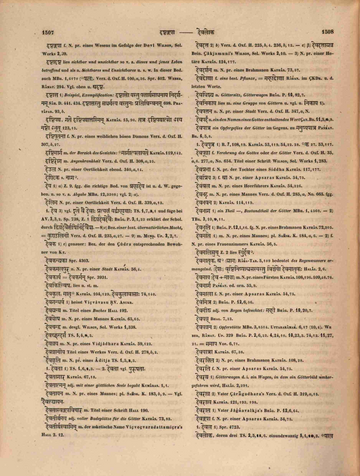
1. devá — 1〉 Adj. (f. ī́) himmlisch, göttlich; auch als Ausdruck besonderer Vortrefflichkeit. Superl. devátama und devítamā. — 2〉 m. — a〉 ein Himmlischer, ein Gott; auch von missgünstigen Wesen. Am Ende eines Comp. im BHĀG. P. ein Gott unter —, so v. a. unter — am Höchsten angesehen. Am Ende eines adj. Comp. Jmd zum Gott habend auch so v. a. wie einen Gott verehrend. — b〉 víśve devāḥu sämmtliche Götter und eine best. Klasse von Göttern. Vgl. viśvedeva. — c〉 Bez. der Zahl 33 GAṆIT. BHAGAṆ. 33. MADHYAM. 22. — d〉 schlechtweg Gott heisst Indra als Regenspender. Daher bei den Lexicographen die Bed. Wolke. — e〉 Götterbild, Idol VIṢṆUS. 9,33. 14,2. 11. 60. — f〉 der Gott auf Erden oder unter den Menschen ist. — α〉 ein Priester, ein Brahman. — β〉 ein Fürst, König, Prinz. — g〉 *Kind, Dummkopf, Tölpel Ind. St. 13,338. — h〉 *ein Mann, der einem besondern Geschäft nachgeht. — i〉 *Lanzenträger. — k〉 *Schwert GAL. — l〉 *Wetteifer. — m〉 *Spiel. — n〉 N. pr. verschiedener Männer VP.² — o〉 Hypokoristikon von devadatta. — 3〉 m. (*n.) ein Sinnesorgan. — 4〉 *f. devā — a〉 Hibiscus mutabilis. — b〉 Marsilea quadrifolia. — 5〉 f. devī́ — a〉 Göttin. — b〉 schlechtweg Göttin heisst — α〉 Sāvitrī, die Gattin Brahmanʼs. — β〉 Durgā, die Gattin Śivaʼs Chr. 290,12. — γ〉 *die Geliebte des Sonnengottes. — c〉 die Gemahlin eines Fürsten; auch eine Königstochter, Prinzessin. — d〉 *ein best. Vogel, = śyamā. — e〉 *Bez. verschiedener Pflanzen: Medicago esculenta, Sansevieria roxburghiana, Linum usitatissimum, einer Cyperus-Art, Clypea hernandiifolia, Koloquinthengurke, Glycine debilis, Terminalia chebula, = liṅginī und vandhyākarkoṭakī. — f〉 eine best. übernatürliche Kraft. — g〉 N. pr. — α〉 einer Apsaras. — β〉 *der Mutter des 18ten Arhantʼs der gegenwärtigen Avasarpiṇī.
Originaltext · Deutsch · Substantiv Maskulin
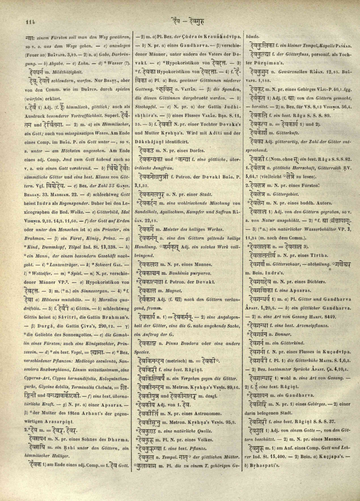
2. *deva m. = devar, devara.
Originaltext · Deutsch · Worttyp nicht bestimmt
1. deva 2〉e〉 lies 71,60 st. 11,60. [Nachtrag, Band 3]
Originaltext · Deutsch · Worttyp nicht bestimmt
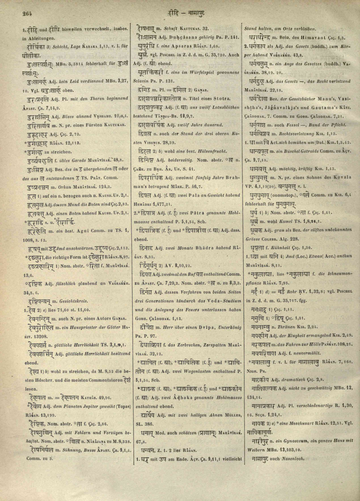
1. deva III. 3. [Nachtrag, Band 7]
Apte 1890 Adjektiv · Substantiv Maskulin · Substantiv Neutrum
Originaltext · Englisch · Adjektiv · Substantiv Maskulin · Substantiv Neutrum
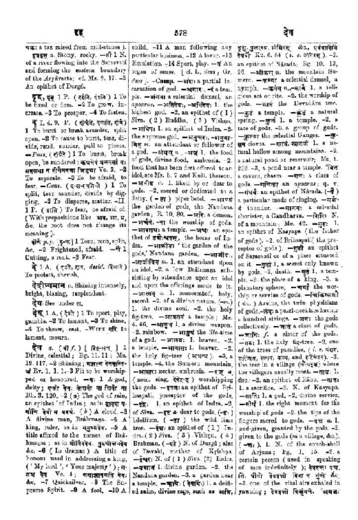
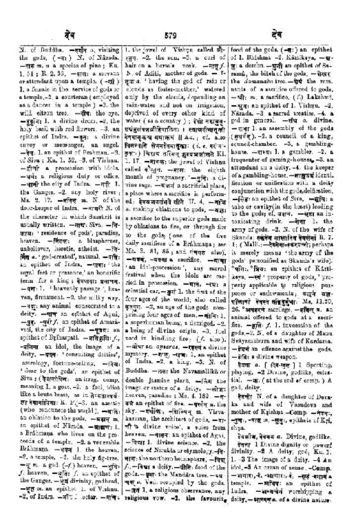
deva a. (vī f.) [div-ac] 1 Divine, celestial; Bg. 11. 11; Ms. 12. 117. 2 Shining; yajñasya devamṛtvijaṃ Rv. 1. 1. 1. 3 Fit to be worshipped or honoured. — vaḥ 1 A god, deity; eko devaḥ keśavo vā śivo vā Bh. 3. 120. 2 (a) The god of rain, an epithet of Indra; as in dvādaśa varṣāṇi devo na vavarṣa. (b) A cloud. 3 A divine man, Brāhmaṇa. 4 A king, ruler, as in manuṣyadeva. 5 A title affixed to the names of Brāhmaṇas; as in goviṃdadeva, puruṣottamadeva &c. 6 (In dramas) A title of honour used in addressing a king, (‘My lord’, ‘Your majesty’); tataśca deva Ve. 4; yathājñāpayati devaḥ &c. 7 Quicksilver. 8 The Supreme Spirit. 9 A fool. 10 A ([Page 0578-b]) child. 11 A man following any particular business. 12 A lover. 13 Emulation. 14 Sport, play. — vaṃ An organ of sense. [cf. L. deus; Gr. deos]. Comp. — aṃśaḥ a partial incarnation of god. — agāraḥ, -raṃ a temple. — aṃganā a celestial damsel, an apsaras. — atidevaḥ, -adhidevaḥ 1 the highest god. 2 an epithet of (1) Śiva. (2) Buddha. (3) Viṣṇu. — adhipaḥ 1 an epithet of Indra. 2 the supreme god. — anucaraḥ, — anuyāyin m. an attendant or follower of a god. — aṃdhas n., — annaṃ 1 the food of gods, divine food, ambrosia. 2 food that has been first offered to an idol; see Ms. 5. 7 and Kull. thereon. — abhīṣṭa a. 1 liked by or dear to gods. 2 sacred or dedicated to a deity. — (ṣṭā) piper betel. — araṇyaṃ the garden of gods, the Nandana garden; R. 10. 80. — ariḥ a demon. — arcanaṃ, -nā the worship of gods. — āvasathaḥ a temple. — aśvaḥ an epithet of uccaiḥśravas, the horse of Indra. — ākrīḍaḥ ‘the garden of the gods,’ Nandana garden. — ājīvaḥ, — ājīvin m. 1 an attendant upon an idol. 2 a low Brāhmaṇa subsisting by attendance upon an idol and upon the offerings made to it. — ātman a. 1 consecrated, holy, sacred. 2 of a divine nature. ( — m.) 1 the divine soul. 2 the holy fig-tree. — āyatanaṃ a temple; Ms. 4. 46. — āyudhaṃ 1 a divine weapon. 2 rainbow. — āyuṣaṃ the life-time of a god. — ālayaḥ 1 heaven. 2 a temple. — āvāsaḥ 1 heaven. 2 the holy fig-tree (aśvattha). 3 a temple. 4 the Sumeru mountain. — āhāraḥ nectar, ambrosia. — ij a. (nom. sing. deveṭ-ḍ) worshipping the gods. — ijyaḥ an epithet of Bṛhaspati, preceptor of the gods. — iṃdraḥ 1 an epithet of Indra. 2 of Śiva. — iṣṭa a. dear to gods. — (ṣṭaḥ) bdellium. — (ṣṭā) the wild lime tree. — īśaḥ an epithet of (1) Indra. (2) Śiva. (3) Viṣṇu. (4) Brahman. — (śī) N. of Durgā; also of Devakī, mother of Kṛṣṇa. — īśvaraḥ N. of (1) Śiva. (2) Indra. — udyānaṃ 1 divine garden. 2 the Nandana garden. 3 a garden near a temple. — ṛṣiḥ (devarṣiḥ) 1 a deified saint, divine sage, such as atri, ([Page 0578-c]) bhṛgu, pulastya, aṃgiras &c., evaṃvādini devarṣau Ku. 6. 84 (i. e. aṃgiras). 2 an epithet of Nārada; Bg. 10. 13, Bg. 10. 26. — okas n. the mountain Sumeru. — kanyā a celestial damsel, a nymph. — karman n., — kāryaṃ 1 a religious act or rite. 2 the worship of gods. — kāṣṭhaṃ the Devadāru tree. — kuṭaṃ a temple. — kuṃḍaṃ a natural spring. — kulaṃ 1 a temple. 2 a race of gods. 3 a group of gods. — kulyā the celestial Ganges. — kusumaṃ cloves. — khātaṃ, -khātakaṃ 1 a natural hollow among mountains. 2 a natural pond or reservoir; Ms. 4. 203. 3 a pond near a temple. ˚bila a cavern, chasm. — gaṇaḥ a class of gods. — gaṇikā an apsaras; q. v. — gaṃdharvaḥ an epithet of Nārada. — (rvaṃ) a particular mode of singing. — garjanaṃ thunder. — gāyanaḥ a celestial chorister, a Gandharva. — giriḥ N. of a mountain; Me. 42. — guruḥ 1 an epithet of Kaśyapa (the father of gods). 2 of Bṛhaspati (the preceptor of gods). — guhī an epithet of Sarasvatī or of a place situated on it. — guhyaṃ 1 a secret only known by gods. 2 death. — gṛhaṃ 1 a temple. 2 the place of a king. 3 a planetary sphere. — caryā the worship or service of gods. — cikitsakau (du.) Aśvins, the twin physicians of gods. — chaṃdaḥ a pearl-necklace having a hundred strings. — janaḥ the gods collectively. — jātaṃ a class of gods. — jāmiḥ f. a sister of the gods. — taruḥ 1 the holy fig-tree. 2 one of the trees of paradise, (i. e. maṃdāra, pārijāta, saṃtāna, kalpa, and haricaṃdana). 3 the tree in a village (caityavṛkṣa) where the villagers usually meet. — tāḍaḥ 1 fire. 2 an epithet of Rāhu. — tātaḥ 1 a sacrifice. 2 N. of Kaśyapa. — tātiḥ 1 a god. 2 divine service. — tīrthaṃ 1 the right moment for the worship of gods. 2 the tips of the fingers sacred to gods. — datta a. 1 god-given, granted by the gods. 2 given to the gods (as a village, &c.). — (ttaḥ) 1 N. of the conch-shell of Arjuna; Bg. 1. 15. 2 a certain person (used in speaking of men indefinitely); devadattaḥ pacati, pīno devadatto divā na bhuṃkte &c. 3 one of the vital airs exhaled in yawning; devadatto vijṛṃbhaṇe, ˚agrajaḥ ([Page 0579-a]) N. of Buddha. — darśana a. visiting the gods. — (naḥ) N. of Nārada. — dāru m. n. a species of pine; Ku. 1. 54; R. 2. 36. — dāsaḥ a servant or attendant upon a temple. — (sī) 1 a female in the service of gods or a temple. 2 a courtezan (employed as a dancer in a temple). 3 the wild citron tree. — dīpaḥ the eye. — duṃdubhiḥ 1 a divine drum. 2 the holy basil with red flowers. 3 an epithet of Indra. — dūtaḥ a divine envoy or messenger, an angel. — devaḥ 1 an epithet of Brahman. 2 of Śiva; Ku. 1. 52. 3 of Viṣṇu. — droṇī a procession with idols. — dharmaḥ a religious duty or office. — dhānī the city of Indra. — nadī 1 the Ganges. 2 any holy river; Ms. 2. 17. — naṃdin m. N. of the doorkeeper of Indra. — nāgarī N. of the character in which Sanskrit is usually written. — nāthaḥ Śiva. — nikāyaḥ ‘residence of gods’, paradise, heaven. — niṃdakaḥ a blasphemer, unbeliever, heretic, atheist. — nirmita a. ‘god-created’, natural. — patiḥ an epithet of Indra. — pādāḥ ‘the royal feet or presence,’ an honorific term for a king; devapādāḥ pramāṇam. — pathaḥ 1 ‘heavenly passage’, heaven, firmament. 2 the milky way. — paśuḥ any animal consecrated to a deity. — pātraṃ an epithet of Agni. — pur, -purī f. an epithet of Amarāvatī, the city of Indra. — pūjyaḥ an epithet of Bṛhaspati. — pratikṛtiḥ f., — pratimā an idol, the image of a deity. — praśnaḥ ‘consulting deities’, astrology, fortune-telling. — priyaḥ ‘dear to the gods’, an epithet of Śiva; devānāṃpriyaḥ an irreg. comp. meaning 1 a goat. 2 a fool, idiot like a brute beast, as in tepyatātparyajñā devānāṃpriyāḥ K. P. 3 an ascetic (who renounces the world). — baliḥ an oblation to the gods. — brahman m. an epithet of Nārada. — brāhmaṇaḥ 1 a Brāhmaṇa who lives on the proceeds of a temple. 2 a venerable Brāhmaṇa. — bhavanaṃ 1 the heaven. 2 a temple. 3 the holy fig-tree. — bhū m. a god. ( — f.) heaven. — bhūmiḥ f. heaven. — bhūtiḥ f. an epithet of the Ganges. — bhūyaṃ divinity, godhead. — bhṛt m. an epithet 1 of Viṣṇu. 2 of Indra. — bhojyam nectar. — maṇiḥ ([Page 0579-b]) 1 the jewel of Viṣṇu called kaustubha. 2 the sun. 3 a curl of hair on a horse's neck. — mātṛ f. N. of Aditi, mother of gods. — mātṛka a. ‘having the god of rain or clouds as foster-mother,’ watered only by the clouds, depending on rain-water and not on irrigation, deprived of every other kind of water (as a country); deśo nadyaṃbuvṛṣṭyaṃbusaṃpannavrīhipālitaḥ . syānnadīmātṛko devamātṛkaśca yathākramaṃ .. Ak.; cf. also vitanvati kṣemamadevamātṛkāḥ (i. e. nadīmātṛkāḥ) cirāya tasmin kurabaścakāṃsate Ki. 1. 17. — mānakaḥ the jewel of Viṣṇu called kaustubha. — māsaḥ the eighth month of pregnancy. — muniḥ a divine sage. — yajanaṃ a sacrificial place, a place where a sacrifice is performed; devayajanasaṃbhave sīte U. 4. — yaji a. making oblations to gods. — yajñaḥ a sacrifice to the superior gods made by oblations to fire, or through fire to the gods; (one of the five daily sacrifices of a Brāhmaṇa; see Ms. 3. 81, Ms. 3. 85; and paṃcayajña also). — yajyaṃ, -yajyā a sacrifice. — yātrā ‘an idol-procession’, any sacred festival when the idols are carried in procession. — yānaṃ, -rathaḥ a celestial car. — yugaṃ 1 the first of the four ages of the world; also called kṛtayuga. 2 an age of the gods comprising four ages of men. — yoniḥ 1 a superhuman being, a demigod. 2 a being of divine origin. 3 fuel used in kindling fire; (f. also). — yoṣā an apsaras. — rahasyaṃ a divine mystery. — rāj, -rājaḥ 1 an epithet of Indra. 2 a king. 3 N. of Buddha. — latā the Navamallikā or double jasmine plant. — liṃgaṃ the image or statue of a deity. — lokaḥ heaven, paradise; Ms. 4. 182. — vaktraṃ an epithet of fire. — vartman n. the sky. — vardhakiḥ, -śilpin m. Viśvakarman, the architect of gods. — vāṇī ‘a divine voice’, a voice from heaven. — vāhanaḥ an epithet of Agni. — vidyā 1 divine science. 2 the science of Nirukta or etymology. — vibhāgaḥ the northern hemisphere. — viś f., — viśā a deity. — vītiḥ food of the gods. — vṛkṣaḥ the Mandāra tree. — vyacas a. Ved. occupied by the gods. — vrataṃ 1 a religious observance, any religious vow. 2 the favourite ([Page 0579-c]) food of the gods. — (taḥ) an epithet of 1 Bhīṣma. 2 Kārtikeya. — śatruḥ a demon. — śunī an epithet of Saramā, the bitch of the gods. — śekhara the damanaka tree. — śeṣaṃ the remnants of a sacrifice offered to gods. — śrīḥ m. a sacrifice. (f.) Lakṣmī. — śrutaḥ an epithet of 1 Viṣṇu. 2 Nārada. 3 a sacred treatise. 4 a god in general. — saṃdha a. divine. — sabhā 1 an assembly of the gods (sudharman). 2 a council of a king, council-chamber. 3 a gamblinghouse. — sabhyaḥ 1 a gambler. 2 a frequenter of gaming-houses. 3 an attendant on a deity. 4 the keeper of a gambling-house. — sāyujyaṃ identification or unification with a deity conjunction with the gods, deification. — siṃhaḥ an epithet of Śiva. — suṣiḥ a tube or cavity (in the heart) leading to the gods; cf. udāna. — sṛṣṭā an intoxicating drink. — senā 1 the army of gods. 2 N. of the wife of Skanda; skaṃdena sākṣādiva devasenāṃ R. 7. 1; (Malli.: — devasenā = skaṃdapatnī; perhaps it merely means ‘the army of the gods’ personified as Skanda's wife). ˚patiḥ, ˚priyaḥ an epithet of Kārtikeya. — svaṃ ‘property of gods,’ property applicable to religious purposes or endowments; yaddhanaṃ yajñaśīlānāṃ devasvaṃ tadvidurbudhāḥ Ms. 11. 20, Ms. 11. 26. ˚apaharaṇaṃ sacrilege. — havis n. an animal offered to gods at a sacrifice. — hūtiḥ f. 1 invocation of the gods. 2 N. of a daughter of Manu Svāyambhuva and wife of Kardama. — heḍanaṃ an offence against the gods. — hetiḥ a divine weapon.
Cappeller 1887 Worttyp nicht bestimmt
Originaltext · Deutsch · Worttyp nicht bestimmt
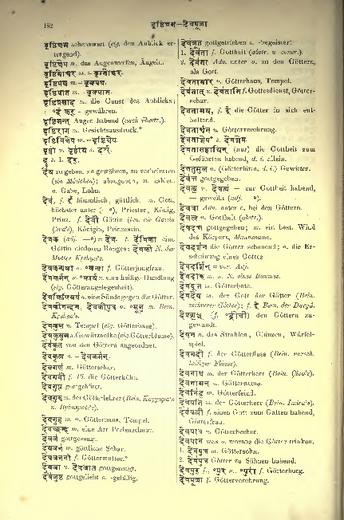
devá f. rí himmlisch, göttlich, m. Gott, höchster unter (—˚), Priester, König, Prinz. f. devī́ Göttin (bes. die Gattin Śiva's), Königin, Prinzessin.
Burnouf 1866 Adjektiv
Originaltext · Französisch · Adjektiv
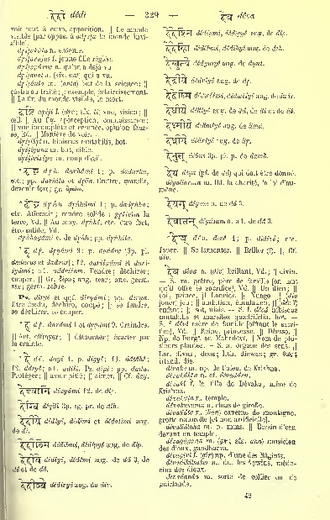
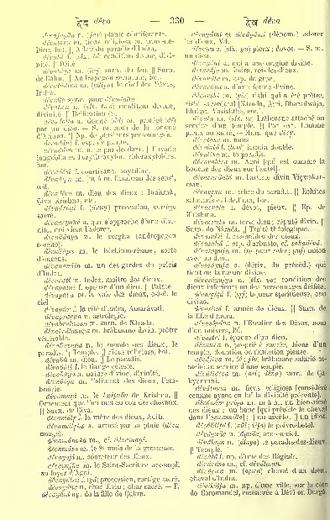
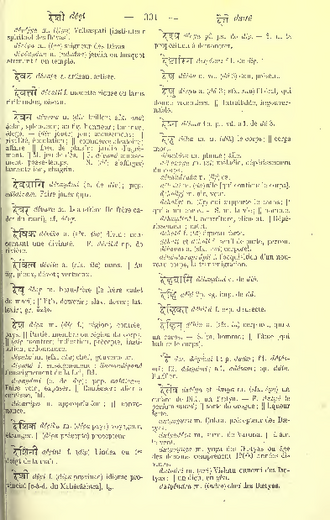
deva deva a. (div) brillant, Vd.; divin. — S. m. prêtre, père de famille [en tant qu'il offre le sacrifice], Vd. Un dieu; roi; prince. Lancier. Nuage. (div jouer) jeu; ambition, émulation. (dev ?) enfant; sot, niais. — S. f. devā hibiscus mutabilis et marsilea quadrifolia, bot. — S. f. devī mère de famille [offrant le sacrifice], Vd. Reine, princesse. Déesse. Np. de Durgā ou Mahādevī. Nom de plusieurs plantes. — S. n. organe des sens. Lat. divus, deus; lith. diewas; gr. θεός; irland. dia. devaka m. np. de l'aïeul de Kṛṣṇa. devakāṣṭha n. cf. devadāru. devakī f. la fille de Devaka, mère de Kṛṣṇa. devakuṭa n. temple. devakusuma n. clous de girofle. devakhāta n. (khan) caverne de montagne, grotte naturelle [et non artificielle]. devakhātaka m. n. mms. Bassin d'eau devant un temple. devagāyana m. (gai; sfx. ana) musicien des dieux, gandharva. devagirī f. (gir) np. d'une des Rāgiṇīs. devacikitsakau m. du. les Aśvins, médecins des dieux. devachanda m. sorte de collier ou de guirlande. [Page330-1] devajagdha n. (jakṣ) plante odoriférante. devataru m. ficus religiosa ou arbre-de-Dieu, bot. Arbre du paradis d'Indra. devatā f. (sfx. tā) condition divine, divinité. Déité. devatāḍa m. (taḍ) surn. du feu. Surn. de Rāhu. Andropogon serratum, bot. devatādhipa m. (adhipa) le chef des Devas, Indra. devatta sync. pour devadatta. devatva n. (sfx. tva) condition divine, divinité. Déification (?). devadatta a. donné (dā) ou protégé (de) par un dieu. — S. m. nom de la conque d'Arjuna. Np. de plusieurs personnages. devadānī f. esp. de plante. devadāru m. n. le pin deodara; l'uvaria longifolia et l'erythroxylon sideroxyloïdes, bot. devadāsī f. courtisane, bayadère. devadīpa m. [m à m. flambeau des sens], œil. devadeva m. dieu des dieux: Brahmā, Śiva, Kṛṣṇa, etc. devadroṇī f. (druṇ) procession, cortège sacré. devadryañc a. qui s'approche d'une divinité, qui vient l'adorer. devadhānya n. le sorgho (andropogon sorgho). devadhūpa m. le bdellium-résine, sorte d'encens. devanandin m. un des gardes du palais d'Indra. devapati m. Indra, maître des dieux. devapatnī f. épouse d'un dieu. Patate. devapatha m. la voie des dieux, c-à-d. le ciel. devapūr f. la cité d'Indra, Amarâvatî. devapraśna n. astrologie. devabrahman m. surn. de Nārada. devabrāhmaṇa m. brâhmane divin, prêtre vénérable. devabhavana n. le monde des dieux, le paradis. Temple. Ficus religiosa, bot. devabhū m. dieu. Le paradis. devabhūti f. le Gange céleste. devabhūya n. nature divine, divinité. devabhoga m. l'aliment des dieux, l'ambroisie. devamaṇi m. le kauṣṭubha de Kṛṣṇa. Ornement que l'on met au cou des chevaux. Surn. de Śiva. devamātṛ f. la mère des dieux, Aditi. devamātṛka a. arrosé par la pluie (deva nuage). devamānaka m., cf. devamaṇi. devamāsa m. le 8ᵉ mois de la grossesse. devayaji m. adorateur des dieux. devayajña m. le Saint-Sacrifice accompli au foyer d'Agni. devayātrā f. (yā) procession, cortège sacré. devayāna n. char divin; char sacré. — F. devayānī np. de la fille de Śukra. [Page330-2] devayāmi et devāyāmi (dénom.) adorer les dieux, Vd. devayu a. (sfx. yu) pieux; dévot. — S. m. un dieu. devayoni a. qui a une origine divine. devarāja m. Indra, roi-des-dieux. devarāta m. esp. de grue. devarūpa a. d'une forme divine. devarshi m. (ṛṣi) Ṛṣi qui a été prêtre, Ṛṣi sacerdotal [Nārada, Atri, Bharadvāja, Bhṛgu, Vasiṣṭha, etc.]. devala m. (sfx. la) brâhmane attaché au service d'un temple. Par ext. homme pieux ou sacré. — Mms. que devṛ. devalaka m. mms. devalatā f. (latā) jasmin double. devaloka m. le paradis. devavaktra m. Agni [qui est comme la bouche des dieux sur l'autel]. devavardhaki m. l'artiste divin Viśvakarman. devavṛkṣa m. arbre du paradis. Echites scholaris et bdellium, bot. devavrata a. dévot, pieux. Ép. de Bhīṣma. devaśruta m. (śru) dieu; réputé divin. Surn. de Nārada. Traité théologique. devasabhā f. assemblée des dieux. devasahā f. esp. d'arbuste, cf. sahadevā. devasayuja m. (sa pour saha; yuj) union avec un dieu. devasāyuja a. (dériv. du précéd.) qui tient de la nature divine. devasāyujya n. (sfx. ya) condition des dieux inférieurs ou des personnages déifiés. devasṛṣṭā f. (sṛj) liqueur spiritueuse, eau divine. devasenā f. armée de dieux. Surn. de la fille d'Indra. devasopāna n. l'Escalier des Devas, nom d'un univers, Bd. devastrī f. épouse d'un dieu. devasva n. propriété sacrée, biens d'un temple, donation ou fondation pieuse. devājīva m. (ā; jīv) brâhmane salarié attaché au service d'une temple. devātideva m. (ati; deva) surn. de Śākyamuni. devātman m. ficus religiosa [considéré comme ayant en lui la divinité présente]. devānām-priya m. m à m. un bien-aimé des dieux: un bouc [qui précède le cheval dans l'aśvamedha]; un ascète; un idiot. devābhīṣṭā f. (abhi; iṣṭa) le poivre-bétel. devāyudha n. (āyudha) arc-en-ciel. devālaya n. (ātaya) le paradis-des-dieux. Temple. devālā f. np. d'une des Rāgiṇīs. devāvāsa m., cf. devātman. devāśva m. (aśva) cheval d'un dieu, cheval d'Indra. devīkoṭṭa m. np. d'une ville, sur la côte de Coromandel, consacrée à Devī ou Durgā. [Page331-1] devejya m. (ijya) Bṛhaspati [instituteur spirituel des Devas]. deveśa m. (īśa) seigneur des Devas. devodyāna n. (udyāna) jardin ou bosquet attenant à un temple.
Abgeleitete Wörter
Quelltextfundstellen (88)
DYS 5 Fundstellen
HP 5 Fundstellen
HTK 2 Fundstellen
IVU 2 Fundstellen
MAN 3 Fundstellen
MandUp 2 Fundstellen
MandUp Śānti: Friedensanrufung 2 Fundstellen
Direkt belegt
-
MandUp Śānti 1 Segment 5
-
MandUp Śānti 1 Segment 16
PJH 1 Fundstelle
PYS 1 Fundstelle
SiSa 18 Fundstellen
SiSa 2.21-2.24: Ādhāra und Kuṇḍalī 2 Fundstellen
Direkt belegt
-
SiSa 2.24 Segment 14
Über Ableitungen belegt
-
SiSa 2.23 Segment 7
Weitere 9 Quelltextseiten
SiSa 5.113-5.120: Anāhata 2 Fundstellen
Direkt belegt
-
SiSa 5.120 Segment 12
Über Ableitungen belegt
-
SiSa 5.115 Segment 15
SiSa 5.144-5.155: Ājñā und Khecarī 2 Fundstellen
Direkt belegt
-
SiSa 5.144 Segment 6
Über Ableitungen belegt
-
SiSa 5.155 Segment 12
SVU 40 Fundstellen
SVU 1.7-1.12: Dreiheit und Freiheit 3 Fundstellen
Direkt belegt
SVU 2.1-2.3: Savitṛ sammelt Geist und Sinne 2 Fundstellen
Direkt belegt
SVU 2.14-2.16: Selbstlicht ohne Fesseln 2 Fundstellen
Direkt belegt
Weitere 11 Quelltextseiten
SVU 2.17: Verehrung der Gegenwart in allem 2 Fundstellen
Direkt belegt
SVU 4.11-4.16: Der verborgene Schöpfer 6 Fundstellen
Direkt belegt
Über Ableitungen belegt
-
SVU 4.15 Segment 15
SVU 5.1-5.6: Der Herr der Weltursprünge 3 Fundstellen
Direkt belegt
SVU 5.12-5.14: Erkenntnis und Freiheit 2 Fundstellen
Direkt belegt
SVU 6.1-6.6: Herr der Weltentfaltung 2 Fundstellen
Direkt belegt
SVU 6.7-6.13: Der Herr aller Herren 5 Fundstellen
Direkt belegt
Über Ableitungen belegt
-
SVU 6.7 Segment 6
VBT 9 Fundstellen
Mit AYI Free weitermachen
Bildquelle: AYI Archiv.