

brahman ब्रह्मन् – Hiraṇyagarbha; Brahmā; Weltschöpfer; Brahmane; Priester
Substantiv Maskulin · Substantiv Neutrum · Worttyp nicht bestimmt
Wörterbuchquellen
AYI Wörterbuch Substantiv Maskulin · Substantiv Neutrum
Substantiv Maskulin
Hiraṇyagarbha; Brahmā; Weltschöpfer; Brahmane; Priester
Substantiv Neutrum
Brahman; heiliges Wissen; das Absolute; Urgrund; heiliges Wort
Cappeller 1891 Substantiv Maskulin · Substantiv Neutrum
Originaltext · Englisch · Substantiv Neutrum
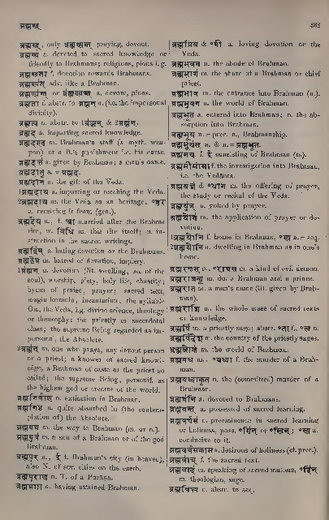
bráhman1 ·n. devotion (lit. swelling, sc. of the soul), worship, piety, holy life, chastity; hymn of praise, prayer; sacred text, magic formula, incantation, the syllable Om, the Veda, i.g. divine science, theology or theosophy; the priestly or sacerdotal class; the supreme Being regarded as impersonal, the Absolute.
Originaltext · Englisch · Substantiv Maskulin
brahmán2 ·m. one who prays, any devout person or a priest; a knower of sacred knowledge, a Brahman of caste or the priest so called; the supreme Being, personif. as the highest god or creator of the world.
Monier-Williams 1872 Substantiv Neutrum
Originaltext · Englisch · Substantiv Neutrum
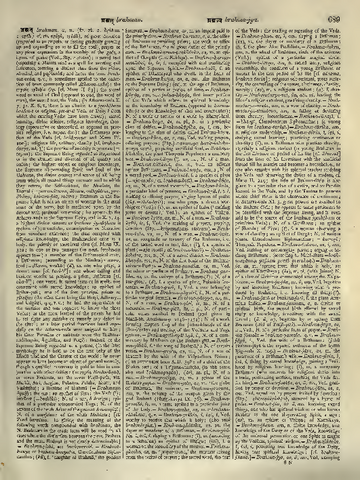
brahman brahman, a, n. (fr. rt. 2. bṛh = 2. vṛh; cf. rts. vṛṃh, vṛdh), religious devotion (regarded as an impulse or feeling gradually growing up and expanding so as to fill the soul), prayer or any pious expression in the worship of the gods, a hymn of praise (Ved., Sāy. = stotra); a sacred text (especially a Mantra used as a spell for averting evil influences, forming a distinct class from the ṛcas, sāmāni, and yajūṃṣi; and hence the term Brah- ma-veda, q. v., is sometimes applied to the collec- tion of texts commonly called Atharva-veda); the mystic syllable Om [cf. Manu II. 83]; the sacred word or word of God (opposed to vāc, the word of man), the sacred text, the Veda; (in Atharva-veda X. 7, 32, X. 8, 1, there is an allusion to a jyeṣṭham brahma or original pre-æval Veda or Deity? from which the existing Vedas have been drawn); sacred learning, divine science, religious knowledge, theo- logy (speculative or theoretical, as opposed to prac- tical religion, i. e. tapas, &c.); the Brāhmaṇa por- tion of the Veda [cf. brāhmaṇa and Manu IV. 100]; religious life, celibacy, chastity [cf. brahma- carya, col. 3]; the practice of austerity or penance (= tapas); the Supreme Being regarded as impersonal or in the abstract and divested of all quality and action; the highest object of religious knowledge, the Supreme all-pervading Spirit and Soul of the Universe, the divine essence and source of all being from which all created things emanate and to which they return, the Self-existent, the Absolute, the Eternal (= paramātman, ātman, adhyātma, pra- dhāna, kṣetra-jña, tattva; Brahman as the Su- preme Spirit is not an object of worship in the usual sense of the term, but is meditated upon by the devout with profound veneration; he appears in the Atharva-veda as the Supreme Deity, and in X. 7, 24, a highest divine essence or brahma jyeṣṭham is spoken of); = mokṣa, emancipation or liberation from mundane existence; the class occupied with religious knowledge, the Brāhmanical caste as a body, the priestly or sacerdotal class (cf. Manu IX. 322; in one or two passages the neut. brahman appears to = ) a member of the Brāhmanical caste, a Brāhman; (according to the Nirukta) = anna, food; = dhana, wealth; (ā), m. one who prays, a devout man [cf. tuvi-b˚]; one whose calling and business consist in praying, a priest, Brāhman [cf. oha-b˚]; one versed in sacred texts or in spells, one conversant with sacred knowledge; an epithet of Bṛhas-pati; one of the four principal priests or ṛtvijas (the other three being the Hotṛ, Adhvaryu, and Udgātṛ, q. q. v. v.; he had the supervision of the sacrifice and was required to know the three Vedas; as the most learned of the priests he had to set right any mistake or remedy any defect in the ritual; at a later period functions based espe- cially on the Atharva-veda were assigned to him; his three Puruṣas or assistants were the Brāhma- ṇācchaṃsin, Āgnīdhra, and Potṛ); Brahmā or the Supreme Being regarded as a person, (in the later mythology he is held to be the first deity of the Hindū triad and the Creator of the world; he never appears to have become an object of general worship, though a qualified reverence is paid to him in con- junction with other deities; the sapta Brahmāṇaḥ, or seven Brahmās, are the seven Prajā-patis, viz. Marīci, Atri, Aṅgiras, Pulastya, Pulaha, Kratu, and Vasiṣṭha); a lifetime of Brahmā (= Brahmaṇa āyuḥ); the sun; an epithet of Śiva; the Veda (?); intellect (= buddhi); N. of a star, δ Aurigæ; epi- thet of a particular astronomical Yoga; N. of the servant of the tenth Arhat of the present Ava-sarpiṇī; N. of a magician; of the ninth Muhūrta; [cf. Zend bareśma. In giving the meaning of the following words compounded with brahman, the N. Brahman in the crude form will be used in all cases where the distinction between the neut. Brahma and the masc. Brahmā is not clearly determinable.]
Petersburger 1855 Substantiv Maskulin · Substantiv Neutrum · Worttyp nicht bestimmt
Originaltext · Deutsch · Substantiv Maskulin · Substantiv Neutrum
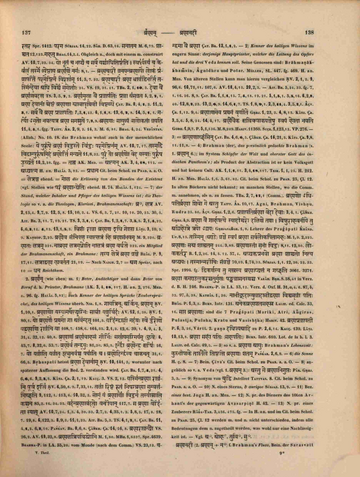
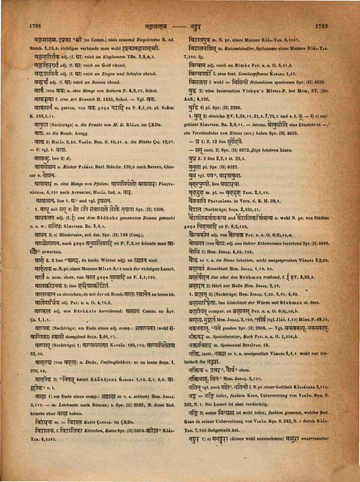
2. brahmán (wie eben) m. 1〉 Beter, Andächtiger und dann Beter von Beruf d. h. Priester, Brahmane (AK. 3,4,18,117. H. an. 2,276. MED. n. 96. fg. HALĀY. 5,82); auch Kenner der heiligen Sprüche (Zaubersprüche), des heiligen Wissens uberh. NIR. 1,8. gāyatrin, arkin, brahman ṚV. 1,10,1. bra̱hmāṇo̱ yasyā̱marcàntyṛ̱gbhiḥ sāmnā̀ yaju̱rvidàḥ AV. 12,1,38. ṚV. 1,80,1. yo bra̱hmaṇè pratha̱mo gā avìndat ṚV. 1,101,5. yadìndrāgnī̱ madàtha̱ḥ sve dùroṇe yadbra̱hmaṇi̱ rājàni vā ṚV. 108,7. ṚV. 158,6. ṚV. 164,35. ṚV. 2,1,3. ṚV. 12,6. ṚV. 39,1. ṚV. 4,9,4. ṚV. 5,31,4. ṚV. 32,12. ṚV. 40,8. bra̱hmāṇa̱ṃ brahmàvāhasaṃ gī̱rbhiḥ sakhā̀yamṛ̱gmiyàm (huve) ṚV. 6,45,7. ṚV. 8,32,6. ṚV. 8,53,7. bra̱hmevà tandra̱yuḥ ṚV. 81,30. ṚV. 85,5. indrò bra̱hmendra̱ ṛṣìḥ ṚV. 8,16,7. yo yajā̀ti̱ yajā̀ta̱ itsu̱navàcca̱ pacā̀ti ca . bra̱hmedindràsya cākanat ṚV. 31,1. ṚV. 66,5. Bṛhaspati heisst bra̱hmā de̱vānā̀m ṚV. 10,141,3, worunter nach späterer Auffassung die Bed. 2. verstanden wird. ŚAT. BR. 1,7,4,21. ŚAT. BR. 4,6,6,6. ŚAT. BR. 9,2,3,5. KĀTY. ŚR. 2,1,19. KAUŚ. 3. VS. 2,12. yasmìnbra̱hmā rājàni̱ pūrva̱ etì ṚV. 4,50,8. ṚV. 4,50,9. ṚV. 7,33,11. takṣā̀ ri̱ṣṭaṃ ru̱taṃ bhi̱ṣagbra̱hmā su̱nvantàmicchati ṚV. 9,112,1. ṚV. 9,113,6. ṚV. 10,52,2. soma̱ṃ yaṃ bra̱hmāṇò vi̱durna tasyā̀śnāti̱ kaśca̱na ṚV. 85,3. ṚV. 10,16. ṚV. 10,34. ṚV. 10,35. vadànbra̱hmāvàdato̱ vanī̀yān ṚV. 10,117,7. sa bra̱hmā vedìtā syāt AV. 10,7,24. AV. 10,1,3. AV. 10,4,30. AV. 10,7,33. AV. 2,7,2. AV. 4,35,1. AV. 4,35,2. AV. 5,8,5. AV. 5,17,8. AV. 5,18,7. AV. 5,19,8. AV. 6,122,5. AV. 8,9,3. AV. 11,1,25. AIT. BR. 5,3. TS. 4,1,7,1. ŚAT. BR. 11,4,1,2. ŚAT. BR. 11,6,2,10. PAÑCAV. BR. 8,6,8. ŚĀṄKH. ŚR. 14,16,8. brahmarājanyau VS. 26,2. AV. 19,32,8. brahmakṣatriyaviḍyoni M. 1,80. MBH. 1,6337. Spr. 4639. BRAHMA-P. in LA. 55,20. vom Monde (nach dem Comm.) VS. 23,13. candramā vai brahmā ŚAT. BR. 12,1,1,2. — 2〉 Kenner des heiligen Wissens im engern Sinne: derjenige Hauptpriester, welcher die Leitung des Opfers hat und die drei Veda kennen soll. Seine Genossen sind: Brāhmaṇācchaṃsin, Āgnīdhra und Potar. MÜLLER, SL. 447. fg. MÜLLER, SL. 469. H. an. MED. Von älteren Stellen kann man hierzu vergleichen ṚV. 2,1,2. ṚV. 2,1,9. ṚV. 2,96,6. ṚV. 10,71,11. ṚV. 10,107,6. AV. 18,4,15. AV. 20,2,3. — AIT. BR. 5,24. fg. AIT. BR. 5,33. AIT. BR. 7,1. fg. AIT. BR. 7,16. AIT. BR. 7,26. fg. AIT. BR. 8,9. ŚAT. BR. 1,1,1,15. ŚAT. BR. 1,7,4,18. ŚAT. BR. 1,1,1,19. ŚAT. BR. 1,1,1,21. ŚAT. BR. 5,1,5,1. ŚAT. BR. 5,5,5,16. ŚAT. BR. 6,2,2,40. ŚAT. BR. 12,8,2,23. ŚAT. BR. 13,2,6,9. ŚAT. BR. 14,6,1,7. TS. 1,8,9,1. TS. 2,3,11,4. TS. 3,5,2,1. ĀŚV. ŚR. 1,12. ĀŚV. ŚR. 9,4. brahmāṇameva prathamaṃ vṛṇīte GṚHY. 1,23,3. GṚHY. 4,8,15. KĀTY. ŚR. 3,5,6. KĀTY. ŚR. 5,8,24. KĀTY. ŚR. 14,4,17. brahmaivaika ṛtvikpākayajñeṣu svayaṃ hotā bhavati GOBH. 1,9,7. P. 5,1,136. M. 8,209. HARIV. 11360. SUŚR. 1,123,12. VP. 276. — 3〉 = brāhmaṇācchaṃsin ŚAT. BR. 4,6,6,5. ŚĀṄKH. ŚR. 16,21,5. KĀTY. ŚR. 9,8. KĀTY. ŚR. 9,11. KĀTY. ŚR. 11,8. — 4〉 Brahman (der), das persönlich gedachte Brahman (s. 1. brahman 6.); im System Schöpfer der Welt und oberster Gott des indischen Pantheonʼs; als Product der Abstraction ist er kein Volksgott und hat keinen Cult. AK. 1,1,1,11. AK. 3,4,18,117. TRIK. 1,1,25. H. 212. H. an. MED. HALĀY. 1,6. HALĀY. 5,61. HALĀY. 5,82. Cit. beim Schol. zu PRAB. 25, Śl. 12. In alten Büchern nicht bekannt; an manchen Stellen, wo die Comm. m. annehmen, als n. zu fassen. TBR. 2,7,17,1 (Comm.). brahmaṇo 'dhipatirbrahmā śivo me astu TAITT. ĀR. 10,17. Agni, Brahman, Viṣṇu, Rudra TAITT. ĀR. 10,35. TAITT. ĀR. 10,80. ĀŚV. GṚHY. 1,2,6. prajāpatirbrahmā vedā devāḥ ĀŚV. GṚHY. 3,4,1. ŚĀṄKH. GṚHY. 4,9. brahmā vai gārhapatye syādīśvaro dakṣiṇe tathā . viṣṇurāhavanīye tu agnihotre trayo 'gnayaḥ GṚHYASAṂGR. 1,8. Lehrer des Prajāpati CHĀND. UP. 8,15. tasmin (aṇḍe) jajñe svayaṃ brahmā sarvalokapitāmahaḥ M. 1,9. M. 2,225. brahmaṇaḥ sadma śāśvatam M. 244. M. 3,89. brahmaṇastāṃ sabhāṃ viduḥ M. 8,11. M. 12,50. lokakartar R. 1,2,26. R. 1,14,5. R. 1,2,12. R. 1,57,4. avyaktaprabhavo brahmā śāśvato nitya avyayaḥ . tasmānmarīciḥ saṃjajñe R. 70,19. R. 6,74,35. SŪRYAS. 1,1. SŪRYAS. 12,20. SŪRYAS. 12,22. SŪRYAS. 12,33. Spr. 1994. fg. dvikarṇasya tu mantrasya brahmāpyantaṃ na gacchati Spr. 3061. Spr. 3271. brahmā kamaṇḍalukaraścaturmukhaḥ paṅkajāsanasthaśca VARĀH. BṚH. S. 58,41_in_Verz. d. B. H. 246. BRAHMA-P. in LA. 53,12. Verz. d. Oxf. H. 31,a,4. Verz. d. Oxf. H. 31,a,6. Verz. d. Oxf. H. 87,a,4. Verz. d. Oxf. H. 87,a,6. Verz. d. Oxf. H. 87,87,b. 32. Verz. d. Oxf. H. 97,b,38. KATHĀS. 1,30. nābhīhradāmbujādāsīdbrahmā viśvasṛjāṃ patiḥ BHĀG. P. 1,3,2. BURN. Intr. 131. anekabrahmaśatasahasra LALIT. ed. Calc. 33. LALIT. ed. Calc. 16. sapta brahmāṇaḥ sind die 7 Prajāpati (Marīki, Atri, Aṅgiras, Pulastya, Pulaha, Kratu und Vasiṣṭha) HARIV. 42. brahmaprajāpatī P. 6,3,26, Vārtt. 2. gaṇa dadhipayaādi zu P. 2,4,14. KAUŚ. 139. LĀṬY. 10,13,8. brahmā sahāṃ patiḥ (sahapatiḥ) BURN. Intr. 610. Lot. de la b. l. 3. LALIT. ed. Calc. 49,5. — 5〉 so v. a. brahmaṇa āyuḥ Brahmanʼs Lebenszeit: kumbhīpāke taptataile tiṣṭhanti brahmaṇaḥ śatam PAÑCAR. 2,6,9. — 6〉 die Sonne H. ś. 8. — 7〉 Bein. Śivaʼs Cit. beim Schol. zu PRAB. a. a. O. — 8〉 angeblich so v. a. Veda (vgl. 1. brahman 3.): astu me brahmābhiguptaḥ PĀR. GṚHY. 3,3. — 9〉 Synonym von buddhi Intellect TATTVAS. 8. Cit. beim Schol. zu PRAB. a. a. O. — 10〉 N. eines Sterns, δ Aurigae SŪRYAS. 13,9. — 11〉 Bez. eines best. Yoga H. an. MED. — 12〉 N. pr. des Dieners des 10ten Arhantʼs der gegenwärtigen Avasarpiṇī H. 42. — 13〉 N. pr. eines Zauberers RĀJA-TAR. 3,456. RĀJA-TAR. 3,475. fg. — In H. an. und im Cit. beim Schol. zu PRAB. 25, Śl. 12 werden m. und n. nicht unterschieden, indem alle Bedeutungen dem n. zugetheilt werden, was wohl nur eine Nachlässigkeit ist. — Vgl. a˚, oha˚, tuvi˚, su˚.
Originaltext · Deutsch · Substantiv Neutrum
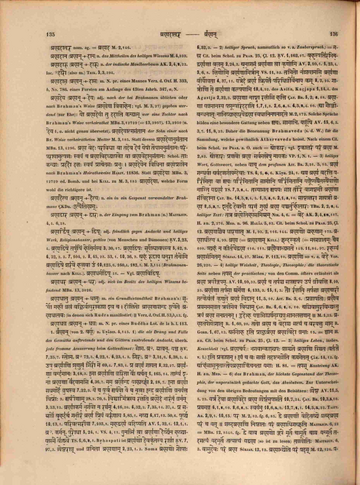
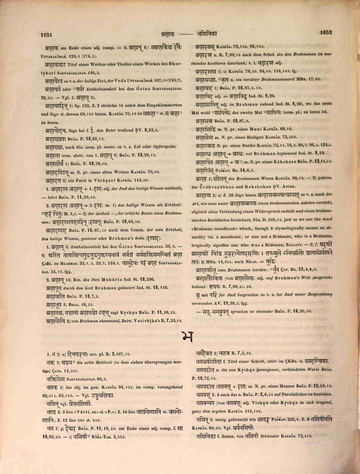
1. bráhman (von 2. barh) n. UṆĀDIS. 4,145. 1〉 die als Drang und Fülle des Gemüths auftretende und den Göttern zustrebende Andacht, überh. jede fromme Aeusserung beim Gottesdienst: soma, bra˚, grāvan, yajña ṚV. 7,35,7. stoma, bra˚ ṚV. 72,3. ṚV. 4,22,1. ṚV. 6,23,1. ṚV. 7,5. giraḥ, bra˚ ṚV. 3,51,6. ṚV. 6,38,3. ṚV. 6,38,4. upa̱ brahmā̀ṇi śṛṇuta̱ṃ girò me ṚV. 69,4. ṚV. 7,83,4. pra brahmà gāyata ṚV. 8,32,27. brahmàṇā̱ vandàmānaḥ ṚV. 3,18,3. i̱mā brahmā̀ṇi jari̱tā vò arcat ṚV. 1,165,14. tānvà e̱nā brahma̱ṇā vèdayāmasi ṚV. 4,36,7. mama̱ brahmèndra yā̱hyacchā̀ ṚV. 2,18,7. i̱mā brahmā̀ sadha̱mādè juṣasva ṚV. 7,22,3. ye ca̱ pūrva̱ ṛṣàyo̱ ye ca̱ nūtnā̱ indra̱ brahmā̀ṇi ja̱nayànta̱ viprā̀ḥ ṚV. 7,22,9. ṛṣī̀ṇām ṚV. 28,2. ṚV. 70,5. vi̱śvāmìtrasya rakṣati̱ brahme̱daṃ bhāràda̱ṃ janàm ṚV. 3,53,12. brahmā̀karma̱ bhṛgàvo̱ na rathàm ṚV. 4,16,20. ṚV. 6,52,2. ṚV. 7,35,14. ṚV. 7,37,4. pra sa̱mrājè bṛ̱hadàrca gabhī̱raṃ brahmà pri̱yaṃ varùṇāya ṚV. 5,85,1. navya ṚV. 6,17,13. ṚV. 6,50,6. pūrvya ṚV. 6,50,10. ṚV. 6,13,1. parivatsarīṇa ṚV. 7,103,8. ma̱hadbrahmà vadiṣyati AV. 1,32,1. AV. 12,1,1. bra˚. karman, purodhā AV. 5,24,1. VS. 4,11. yu̱najmì tvā̱ brahmàṇā̱ daivyèna ha̱vyāyā̱smai vòḍha̱ve TS. 1,6,2,1. Bṛhaspati ist brahmàṇo de̱vakṛ̀tasya̱ rājā̀ ṚV. 7,97,3. jyeṣṭharāj und janitā brahmaṇām ṚV. 2,23,1. ṚV. 2,23,2. Soma brahmaṇo gopāḥ ṚV. 6,52,3. — 2〉 heiliger Spruch, namentlich so v. a. Zauberspruch; = mantra Cit. beim Schol. zu PRAB. 25, Śl. 12. ṚV. 1,162,17. bṛha̱spatìrabhina̱dbrahmàṇā va̱lam ṚV. 2,24,3. a̱nā̱gasa̱ṃ brahmàṇā tvā kṛṇomi AV. 2,10,1. AV. 1,23,4. AV. 3,6,8. kṣi̱ṇomi̱ brahmàṇā̱mitrā̀n VS. 11,82. tami̱to nā̀śayāmasi̱ brahmàṇā vī̱ryā̀vatā VS. 4,37,11. yatre̱daṃ brahmà kri̱yatè pari̱dhirjīvànāya̱ kam VS. 8,2,25. gā- trā̀ṇi te̱ brahmàṇā kalpayāmi VS. 18,4,52. des Asita, Kaśyapa VS. 1,14,4. des Agastya VS. 2,32,3. brahmaṇā nāṣṭrā rakṣāṃsi hanti ŚAT. BR. 5,2,4,18. brahmaṇā yajamānasya paśūnparidadāti ŚAT. BR. 1,7,1,8. ŚAT. BR. 2,6,4,5. ŚAT. BR. 4,5,2,4. ŚAT. BR. 4,5,2,10. (ā mauñjībandhanāt) nābhivyāhārayedbrahma svadhāninayanādṛte M. 2,172. Solche Sprüche bilden eine besondere Gattung neben ṛcaḥ, sāmāni, yajūṃṣi AV. 15,6,3. AV. 15,3,7. AV. 11,8,23. Daher die Benennung Brahmaveda (s. d. W.) für die Sammlung, welche gewöhnlich Atharvaveda heisst. Nach einem Cit. beim Schol. zu PRAB. a. O. auch = oṃkāra; vgl. ekākṣaraṃ paraṃ brahma M. 2,83. oṃkāraḥ praṇavo brahma sarvamantreṣu nāyakaḥ VP. 1, N. 1. — 3〉 heiliges Wort, Gotteswort, neben vāc dem profanen AIT. BR. 3,31. AIT. BR. 5,15. brahmà gandha̱rvā avàda̱nnagā̀yande̱vāḥ TS. 6,1,6,6. KĀṬH. 24,1. atha̱ brahmà vadanti̱ parìmitā̱ vā ṛca̱ḥ parìmitāni̱ sāmā̀ni̱ parìmitāni̱ yajū̀ṃṣyathai̱tasyai̱vānto̱ nāsti̱ yadbrahmà TS. 7,3,1,4. tasyāsata ṛṣayaḥ sapta tīre vāgaṣṭamī brahmaṇā saṃvidānā ŚAT. BR. 14,5,2,4. ŚAT. BR. 14,5,2,5. ŚAT. BR. 1,5,4,6. ŚAT. BR. 2,1,4,10. sāṣṭākṣarā gāyatrī brahma ŚAT. BR. 8,5,3,7. eta̱dvai de̱vānā̀ṃ para̱maṃ guhya̱ṃ brahma̱ yaccatùrhotāraḥ TBR. 2,2,1,4. heiliger Text: tatra brahmetihāsamiśram NIR. 4,6. = veda AK. 3,4,18,147. H. an. 2,276. MED. n. 96. HALĀY. 5,82. Cit. beim Schol. zu PRAB. 25, Śl. 12. brahmaṇaścaiva dhāraṇāt M. 1,93. M. 2,116. M. 2,144. brahmaṇo grahaṇam M. 173. brahmādhītya M. 4,99. brahma (= brāhmaṇam KULL.) chandaskṛtaṃ (= mantrajātam) caiva M. 4,100. tryahaṃ na kīrtayedbrahma M. 4,110. M. 4,111. brahmaivābhyasate M. 4,149. M. 11,84. M. 4,97. rahasyaṃ brahmasaṃmitam SŪRYAS. 14,27. MĀRK. P. 112,10. brahmaṇi so v. a. vede VOP. 26,220. — 4〉 heilige Weisheit, Theologie, Theosophie; die theoretische Seite neben tapas der practischen; von den Comm. öfters erläutert als brahma trayīrūpam. AV. 10,10,33. brahmà ca̱ tapàśca saptaṛ̱ṣaya̱ upà jīvanti AV. 8,10,25. brahmàṇā̱ tapàsā̱ śramèṇa AV. 6,133,3. AV. 15,1,3. tau ràkṣati̱ tapàsā brahmacārī tatkevàlaṃ kṛṇute̱ brahmà vi̱dvān AV. 11,5,10. AIT. BR. 3,6. (prajāpatiḥ) brahmaiva prathamamasṛjata trayīmeva vidyām ŚAT. BR. 6,6,1,8. ŚAT. BR. 6,6,1,10. agnivāyuravibhyastu trayaṃ brahma sanātanam . dudoha yajñasidhyarthamṛgyajuḥsāmalakṣaṇam .. M. 1,23. brahmatapoyogāt R. 1,60,20. tato brahma ca vedāśca satyaṃ ca varayantu mām R. GORR. 1,67,13. asaṃmoha iti prāhurbrahma brahmavido janāḥ R. GORR. 1,67,15. = jñāna H. an. Cit. beim Schol. zu PRAB. 25, Śl. 12. — 5〉 heiliges Leben, insbes. Keuschheit (vgl. brahmacarya): bhagavānkāśyapaḥ śāśvate brahmaṇi sthita (vartate v. l.) iti prakāśam . iyaṃ ca vaḥ sakhī tadātmajeti kathametat ŚĀK. 14,12. fg. ahiṃsāsūnṛtāsteyabrahmākiṃcanatā yamāḥ H. 81. = tapas Kasteiung AK. H. an. MED. — 6〉 das Brahman, der höchste Gegenstand der Theosophie, der unpersönlich gedachte Gott, das Absolutum. Zur Unterscheidung von den übrigen Bedeutungen mit den Beisätzen: jyeṣṭha AV. 11,5,5. AV. 11,5,23. yatrà de̱vā brahma̱vido̱ brahma̱ jyeṣṭhàmu̱pāsàte AV. 10,7,24. ŚAT. BR. 10,3,5,10. prathamaja ŚAT. BR. 6,1,1,10. ŚAT. BR. 8,6,1,5. svayaṃbhu ŚAT. BR. 10,6,5,9. ŚAT. BR. 13,7,1,1. ŚAT. BR. 14,5,5,22. TAITT. AR. 2,9,1. TAITT. AR. 2,10,15. para M. 2,82. fg. M. 6,85. dve brahmaṇī veditavye śabdabrahma paraṃ ca yat .. śabdabrahmaṇi niṣṇātaḥ paraṃ brahmādhigacchati MAITRYUP. 6,22 = MBH. 12,8540. fg. dve vāva brahmaṇo rūpe mūrtaṃ cāmūrtaṃ cātha yanmūrtaṃ tadasatyaṃ yadamūrtaṃ tatsatyaṃ yadbrahma (so ist zu lesen) tajjyotiḥ MAITRYUP. 6,3. vāsudevaḥ paraṃ brahma SŪRYAS. 12,12. brahmābhyeti paraṃ padam M. 12,126. paratara Spr. 1412. parama SŪRYAS. 14,22. SĀH. D. 63,16. sanātana M. 6,79. śāśvata M. 12,123. mahat BHAG. 14,3. BHAG. 14,4. Obgleich n., doch mit einem m. construirt AV. 10,7,32. AV. 10,7,34. yo bhū̱taṃ ca̱ bhavyàṃ ca̱ sarvaṃ yaścā̀dhi̱tiṣṭhàti . sva1̱̀ryasyà ca̱ kevàla̱ṃ tasmaì jye̱ṣṭhāya̱ brahmàṇe̱ namàḥ AV. 10,8,1. — bra̱hma̱cā̱rī ja̱naya̱nbrahmā̱po lo̱kaṃ pràjāpatìṃ parame̱ṣṭhinàṃ vi̱rājàm AV. 11,5,7. AV. 11,5,22. bra̱hma̱cā̱rī brahma̱ bhrājàdbibharti̱ tasmìnde̱vā adhi̱ viśvè sa̱motā̀ḥ AV. 10,7,24. VS. 19,31. VS. 19,41. TBR. 2,1,10,3. de̱vā vai brahmànnavadanta TS. 3,5,7,2. brahmàmukhā̱ vai pra̱jāpàtiḥ pra̱jā àsṛjata TS. 5,2,7,1. brahma devānāṃ śreṣṭhaṃ brahmaṇā dyāvāpṛthivī viṣṭabdhe ŚAT. BR. 8,4,1,3. ŚAT. BR. 11,2,3,1. sarvaṃ vai brahma prajāpatiḥ ŚAT. BR. 7,3,1,42. ŚAT. BR. 6,1,1,8. ŚAT. BR. 13,6,2,8. ŚAT. BR. 14,5,1,1. martyo 'mṛto bhavatyatra brahma samaśnute ŚAT. BR. 14,7,2,9. brahmaṇaḥ sāyujyaṃ salokatāṃ jayati ŚAT. BR. 11,4,4,1. fgg. TAITT. ĀR. 2,9,2. TAITT. ĀR. 2,14,3. M. 6,81. BHAG. 4,24. VEDĀNTAS. (Allah.) No. 10. VEDĀNTAS. (Allah.) No. 18. das Brahman wohnt auch in der menschlichen Seele: ye purùṣe̱ brahmà vi̱duste vìduḥ parame̱ṣṭhinàm AV. 10,7,17. tasmā̱dvai vi̱dvānpurùṣami̱daṃ brahmetì manyate AV. 11,8,32. pura̱ṃ yo brahmàṇo̱ veda̱ yasyā̱ḥ purùṣa u̱cyatè AV. 10,2,28. fgg. = tattva AK. MED. = ātman AK. 3,4,18,112. = adhyātma H. an. HALĀY. 5,82. = pradhāna Cit. beim Schol. zu PRAB. a. a. O. = kṣetrajña ebend. = mokṣa die Erlösung von den Banden der Existenz (vgl. Stellen wie paraṃ brahmābhyeti) ebend. H. 74. HALĀY. 1,124. — 7〉 der Stand, welcher Inhaber und Pfleger Wissens ist; die Theologie so v. a. die Theologen, Klerisei, Brahmanenschaft: bra˚, kṣatra AV. 2,15,4. AV. 9,7,9. AV. 12,5,8. AV. 15,10,3. AV. 15,10,4. VS. 6,3. VS. 7,21. VS. 10,10. VS. 20,25. VS. 20,30. VS. 20,5. AIT. BR. 3,11. AIT. BR. 7,19. AIT. BR. 7,21. TS. 3,3,1,1. ŚAT. BR. 1,2,1,7. ŚAT. BR. 1,3,5,5. ŚAT. BR. 2,1,4,22. ŚAT. BR. 6,6,3,14. ŚAT. BR. 6,6,4,13. ŚAT. BR. 13,1,5,3. viśāṃ rājā brahmaṇa edhi goptā LĀṬY. 3,10,5. LĀṬY. 3,10,9. KAṬHOP. 2,25. brahmaiva saṃniyantṛ syātkṣatraṃ hi brahmasaṃbhavam M. 9,320. brahmataḥ kṣatram M. 321. nābrahma kṣatramṛdhnoti nākṣatraṃ brahma vardhate M. 322. ein Mitglied der Brahmanenschaft, ein Brahmane: tasya kṣetre brahma jajñe BHĀG. P. 9,17,11. kṣatrādbrahma hyavartata BHĀG. P. 21,19. — Nach NAIGH. 2,7 = anna Speise, nach 10 = dhana Reichthum.
Originaltext · Deutsch · Worttyp nicht bestimmt
1. brahman 5〉 Enthaltsamkeit bei den Jaina SARVADARŚANAS. 33,8. — 6〉 asti tāvannityaśuddhabuddhamuktasvabhāvaṃ sarvajñaṃ sarvaśaktisamanvitaṃ brahma ŚAṂK._zu_BRAHMAS. 33,1. BRAHMAS. 33,2. BRAHMAS. 53,7. BRAHMAS. 110,1. vāsudevaḥ paraṃ brahma SARVADARŚANAS. 54,15. fgg.
Originaltext · Deutsch · Worttyp nicht bestimmt
2. brahman 14〉 Bez. des 9ten Muhūrta Ind. St. 10,296.
Originaltext · Deutsch · Worttyp nicht bestimmt
1. brahman 5〉 (Nachträge) HEM. YOGAŚ. 1,23. YOGAŚ. 3,92. YOGAŚ. 4,92.
Böhtlingk 1879 Substantiv Maskulin · Substantiv Neutrum · Worttyp nicht bestimmt
Originaltext · Deutsch · Substantiv Maskulin
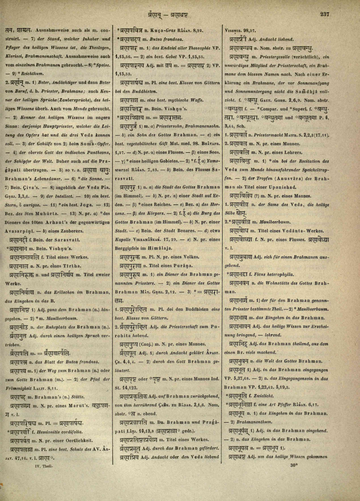
2. brahmán m. — 1〉 Beter, Andächtiger und dann Beter von Beruf, d. h. Priester, Brahmane; auch Kenner der heiligen Sprüche (Zaubersprüche), des heiligen Wissens überh. Auch von Monde gebraucht. — 2〉 Kenner des heiligen Wissens im engern Sinne; derjenige Hauptpriester, welcher die Leitung des Opfers hat und die drei Veda kennen soll. — 3〉 der Gehülfe von 2〉 beim Soma-Opfer. — 4〉 der oberste Gott des indischen Pantheons, der Schöpfer der Welt. Daher auch auf die Prajāpati übertragen. — 5〉 so v. a. brahmaṇa āyuḥ Brahmanʼs Lebensdauer. — 6〉 die Sonne. — 7〉 Bein. Śivaʼs. — 8〉 angeblich der Veda PĀR. GṚHY. 3,3,6. — 9〉 der Intellect. — 10〉 ein best. Stern, δ aurigae. — 11〉 ein best. Yoga. — 12〉 Bez. des 9ten Muhūrta. — 13〉 N. pr. des Dieners des 10ten Arhantʼs der gegenwärtigen Avasarpiṇī — b〉 eines Zauberes.
Originaltext · Deutsch · Substantiv Neutrum
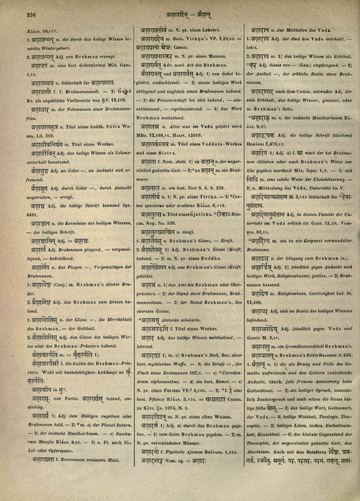
1. bráhman n. — 1〉 die als Drang und Fülle des Gemüths auftretende und den Göttern zustrebende Andacht überh. jede fromme Aeusserung beim Gottesdienst. — 2〉 ein heiliger Spruch, namentlich Zauberspruch und auch schon die blosse heilige Silbe om. — 3〉 das heilige Wort, Gotteswort, der Veda. — 4〉 heilige Weisheit, Theologie, Theosophie. — 5〉 heiliges Leben, insbes. Enthaltsamkeit, Keuschheit. — 6〉 der höchste Gegenstand der Theosophie, der unpersönlich gedachte Gott, das Absolutum. Auch mit den Beisätzen jyéṣṭha, prathamajá, svayáṃbhu, āmūrta, para, paratara, parama, mahat, sanātana, [Page4-237-a] śāśvata. Ausnahmsweise auch als m. construirt. — 7〉 der Stand, welcher Inhaber und Pfleger des heiligen Wissens ist, die Theologen, Klerisei, Brahmanenschaft. Ausnahmsweise auch vom einzelnen Brahmanen gebraucht. — 8〉 Speise. — 9〉 Reichthum.
Originaltext · Deutsch · Worttyp nicht bestimmt
2. brahman IV. ein Bewohner von Brahmanʼs Himmel JĀTAKAM. 29. ein best. Kalpa bei den Jaina DHARMAŚARM. 21,67. [Nachtrag, Band 7]

Apte 1890 Substantiv Maskulin · Substantiv Neutrum
Originaltext · Englisch · Substantiv Maskulin · Substantiv Neutrum
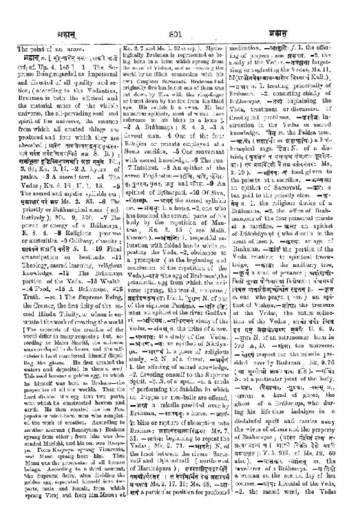
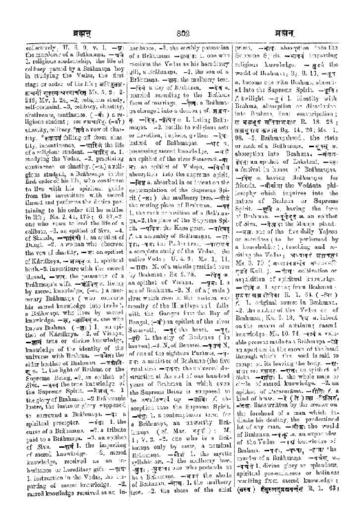
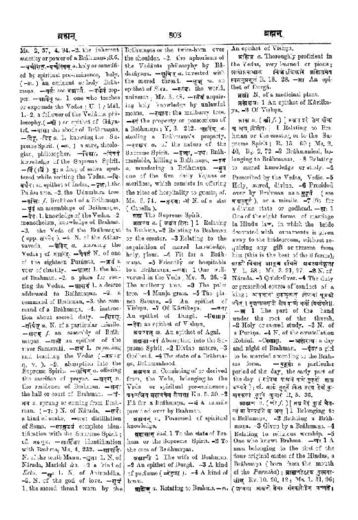
brahman n. [bṛṃh-manin nakārasyākāre ṛto ratvaṃ; cf. Uṇ. 4. 145] 1 The Supreme Being, regarded as impersonal and divested of all quality and action; (according to the Vedāntins, Brahman is both the efficient and the material cause of the visible universe, the all-pervading soul and spirit of the universe, the essence from which all created things are produced and into which they are absorbed; asti tāvannityaśaddhabuddhamuktasvabhāvaṃ sarvajñaṃ sarvaśaktisamanvitaṃ brahma Ś. B.); samībhūtā dṛṣṭistribhuvanamapi brahma manute Bh.; Bh. 3. 84; Ku. 3. 15. 2 A hymn of praise. 3 A sacred text. 4 The Vedas; Ku. 6. 16; U. 1. 15. 5 The sacred and mystic syllable om; ekākṣaraṃ paraṃ brahma Ms. 2. 83. 6 The priestly or Brāhmaṇical class (collectively); Ms. 9. 320. 7 The power or energy of a Brāhmaṇa; R. 8. 4. 8 Religious penance or austerities. 9 Celibacy, chastity; śāśvate brahmaṇi vartate Ś. 1. 10 Final emancipation or beatitude. 11 Theology, sacred learning, religious knowledge. 12 The Brāhmaṇa portion of the Veda. 13 Wealth. 14 Food. 15 A Brāhmaṇa. 16 Truth. — m. 1 The Supreme Being, the Creator, the first deity of the sacred Hindu Trinity, to whom is entrusted the work of creating the world [The accounts of the creation of the world differ in many respects; but, according to Manu Smṛti, the universe was enveloped in darkness, and the selfexistent Lord manifested himself dispelling the gloom. He first created the waters and deposited in them a seed. This seed became a golden egg, in which he himself was born as Brahmā-the progenitor of all the worlds. Then the Lord divided the egg into two parts, with which he constructed heaven and earth. He then created the ten Prajāpatis or mind-born sons who completed the work of creation. According to another account (Rāmāyaṇa) Brahmā sprang from ether; from him was descended Marīci, and his son was Kaśyapa. From Kaśyapa sprang Vivasvat, and Manu sprang from him. Thus Manu was the procreator of all human beings. According to a third account, the Supreme deity, after dividing the golden egg, separated himself into two parts, male and female, from which sprang Virāj and from him Manu; cf. ([Page 0801-b]) Ku. 2. 7 and Ms. 1. 32 et seq.. Mythologically Brahman is represented as being born in a lotus which sprang from the navel of Viṣṇu, and as creating the world by an illicit connection with his own daughter Sarasvatī. Brahman had originally five heads, but one of them was cut down by Śiva with the ring finger or burnt down by the fire from his third eye. His vehicle is a swan. He has numerous epithets, most of which have reference to his birth in a lotus]. 2 A Brāhmaṇa; Ś. 4. 3. 3 A devout man. 4 One of the four Ritvijas or priests employed at a Soma sacrifice. 5 One conversant with sacred knowledge. 6 The sun. 7 Intellect. 8 An epithet of the seven Prajāpatis: — marīci, atri, aṃgiras, pulasya, pulaha, kratu and vasiṣṭha. 9 An epithet of Bṛhaspati. 10 Of Śiva. Comp. — akṣaraṃ the sacred syllable om. — aṃgabhūḥ 1 a horse. 2 one who has touched the several parts of his body by the repetition of Mantras; Ku. 3. 15 (see Malli. thereon). — aṃjaliḥ 1 respectful salutation with folded hands while repeating the Veda. 2 obeisance to a preceptor (at the beginning and conclusion of the repetition of the Veda). — aṃḍaṃ ‘the egg of Brahman’, the primordial egg from which the universe sprang, the world, universe; brahmāṃḍacchatradaṃḍaḥ Dk. 1. ˚purāṇaṃ N. of one of the eighteen Purāṇas. — adi (dri) jātā an epithet of the river Godāvarī. — adhigamaḥ, -adhigamanaṃ study of the Vedas. — aṃbhas n. the urine of a cow. — abhyāsaḥ the study of the Vedas. — ayaṇaḥ, -naḥ an epithet of Nārāyaṇa. — araṇyaṃ 1 a place of religious study. 2 N. of a forest. — arpaṇaṃ 1 the offering of sacred knowledge. 2 devoting oneself to the Supreme Spirit. 3 N. of a spell. 4 a mode of performing the Śrāddha in which no Piṇḍas or rice-balls are offered. — astraṃ a missile presided over by Brahman. — ātmabhūḥ a horse. — ānaṃdaṃḥ bliss or rapture of absorption into Brahma; brahmānaṃdasākṣātkriyā Mv. 7. 31. — āraṃbhaḥ beginning to repeat the Vedas; Ms. 2. 71. — āvartaḥ N. of the tract between the rivers Sarasvatī and Dṛṣadvatī (north-west of Hastināpura); sarasvatīdṛṣadvatyordevanadyoryadaṃtaraṃ . taṃ devanirmitaṃ deśaṃ brahmāvartaṃ pracakṣate Ms. 2. 17, Ms. 2. 19; Me. 48. — āsanaṃ a particular position for profound ([Page 0801-c]) meditation. — āhutiḥ f. 1 the offering of prayers; see brahmayajña. 2 the study of the Vedas. — ujjhatā forgetting or neglecting the Vedas; Ms. 11. 57 (adhītavedasyānabhyāsena vismaraṇaṃ Kull.). — uttara a. 1 treating principally of Brahman. 2 consisting chiefly of Brāhmaṇas. — udyaṃ explaining the Veda, treatment or discussion of theological problems. — upadeśaḥ instruction in the Vedas or sacred knowledge. ˚netṛ m. the Palāśa tree. — ṛṣiḥ (brahmarṣiḥ or brahmaṛṣiḥ) a Brāhmaṇical sage. ˚deśaḥ N. of a district; (kurukṣetraṃ ca matsyāśca paṃcālāḥ śūrasenakāḥ . eṣa brahmarṣideśo vai brahmāvartādanaṃtaraḥ Ms. 2. 19). — odanaḥ -naṃ food given to the priests at a sacrifice. — kanyakā an epithet of Sarasvatī. — karaḥ a tax paid to the priestly class. — karman n. 1 the religious duties of a Brāhmaṇa. 2 the office of Brahman, one of the four principal priests at a sacrifice. — kalā an epithet of Dākṣāyaṇī (who dwells in the heart of men). — kalpaḥ an age of Brahman. — kāṃḍaṃ the portion of the Veda relating to spiritual knowledge. — kāṣṭhaḥ the mulberry tree. — kūrcaṃ a kind of penance; ahorātroṣito bhūtvā paurṇamāsyāṃ viśeṣataḥ . paṃcagavyaṃ pibet prātarbrahmakūrcamiti smūtam ... — kṛt a. one who prays. ( — m.) an epithet of Viṣṇu. — kośaḥ the treasure of the Vedas, the entire collection of the Vedas; kṣātro dharmaḥ śrita iva tanuṃ brahmakośasya guptyai U. 6. 9. — guptaḥ N. of an astronomer born in 598 A. D. — golaḥ the universe. — gauravaṃ respect for the missile presided over by Brahman; Bk. 9. 76 (mā bhūnmogho brāhmaḥ pāśa iti). — graṃthiḥ N. of a particular joint of the body. — grahaḥ, -piśācaḥ, -puruṣaḥ, -rakṣas n., — rākṣasaḥ a kind of ghost, the ghost of a Brāhmaṇa, who during his life time indulges in a disdainful spirit and carries away the wives of others and the property of Brāhmaṇas; (parasya yoṣitaṃ hṛtvā brahmasvamapahṛtya ca . araṇye nirjale deśe bhavati brahmarākṣasaḥ .. Y. 3. 212; cf. Ms. 12. 60 also). — ghātakaḥ, -ghātin m. the murderer of a Brāhmaṇa. — ghātinī a woman on the second day of her courses. — ghoṣaḥ 1 recital of the Veda. 2 the sacred word, the Vedas ([Page 0802-a]) collectively; U. 6. 9. v. 1 — ghnaḥ the murderer of a Brāhmaṇa. — caryaṃ 1 religious studentship, the life of celibacy passed by a Brāhmaṇa boy in studying the Vedas, he first stage or order of his life; aviplutabrahmacaryo gṛhasthāśramamācaret Ms. 3. 2; Ms. 2. 249; Mv. 1. 24. 2 religious study, self-restraint. 3 celibacy, chastity, abstinence, continence. — (ryaḥ) a religious student; see brahmacārin. — (ryā) chastity, celibacy. ˚vrataṃ a vow of chastity. ˚skhalanaṃ falling off from chastity, incontinence. — cārikaṃ the life of a religious student. — cārin a. 1 studying the Vedas. 2 practising continence or chastity. ( — m.) a religious student, a Brāhmaṇa in the first order of his life, who continues to live with his spiritual guide from the investiture with sacred thread and performs the duties pertaining to his order till he settles in life; Ms. 2. 41, Ms. 2. 175; Ms. 6. 87. 2 one who vows to lead the life of a celibate. 3 an epithet of Śiva. 4 of Skanda. — cāriṇī 1 an epithet of Durgā. 2 a woman who observes the vow of chastity. — jaḥ an epithet of Kārtikeya. — janman n. 1 spiritual birth. 2 investiture with the sacred thread. — jāraḥ the paramour of a Brāhmaṇa's wife. — jīvin a. living by sacred knowledge. ( — m.) a mercenary Brāhmaṇa (who converts his sacred knowledge into trade). a Brāhmaṇa who lives by sacred knowledge. — jña, -jñānin a. one who knows Brahma. — (jñaḥ) 1 an epithet of Kārtikeya. 2 of Viṣṇu. — jñānaṃ true or divine knowledge, knowledge of the identity of the universe with Brahma. — jyeṣṭhaḥ the elder brother of Brahman. — jyotis n. 1 the light of Brahma or the Supreme Being. 2 an epithet of Śiva. — tattvaṃ the true knowledge of the Supreme Spirit. — tejas n. 1 the glory of Brahman. 2 Brāhmaṇic lustre, the lustre or glory supposed to surround a Brāhmaṇa. — daḥ a spiritual preceptor. — daṃḍaḥ 1 the curse of a Brāhmaṇa. 2 a tribute paid to a Brāhmaṇa. 3 an epithet of Śiva. — dānaṃ 1 the imparting of sacred knowledge. 2 sacred knowledge, received as an inheritance or hereditary gift. — dāyaḥ 1 instruction in the Vedas, the imparting of sacred knowledge. 2 sacred knowledge received as an ([Page 0802-b]) inheritance. 3 the earthly possession of a Brāhmaṇa — dāyādaḥ 1 one who receives the Vedas as his hereditary gift, a Brāhmaṇa. 2 the son of a Brāhmaṇa. — dāruḥ the mulberry tree. — dinaṃ a day of Brahman. — deyaṃ a. married according to the Brāhma form of marriage. — daityaḥ a Brāhmaṇa changed into a demon; cf. brahmagraha. — dviṣ, -dveṣin a. 1 hating Brāhmaṇas. 2 hostile to religious acts or devotion, impious, godless. — dveṣaḥ hatred of Brāhmaṇas. — dhara a. possessing sacred knowledge. — nadī an epithet of the river Sarasvatī. — nābhaḥ an epithet of Viṣṇu. — nirvāṇaṃ absorption into the supreme spirit. — niṣṭha a. absorbed in or intent on the contemplation of the Supreme Spirit. — (ṣṭhaḥ) the mulberry tree. — nīḍaṃ the resting-place of Brahman. — padaṃ 1 the rank or position of a Brāhmaṇa. 2 the place of the Supreme Spirit. — pavitraḥ the Kuśa grass. — pariṣad f. an assembly of Brāhmaṇas. — pādapaḥ, -patraḥ the Palāśa tree. — pārāyaṇaṃ a complete study of the Vedas, the entire Veda; U. 4. 9; Mv. 1. 14. — pāśaḥ N. of a missile presided over by Brahman; Bk. 9. 75. — pitṛ m. an epithet of Viṣṇu. — putraḥ 1 a son of Brahman. 2 N. of a (male) river which rises in the eastern extremity of the Himālaya and falls with the Ganges into the Bay of Bengal. — (trī) an epithet of the river Sarasvatī. — puraṃ the heart. — puraṃ, — purī 1 the city of Brahman (in heaven). 2 N. of Benares. — purāṇaṃ N. of one of the eighteen Purāṇas. — paruṣaḥ a minister of Brahman (the five vital airs). — palayaḥ the universal destruction at the end of one hundred years of Brahman in which even the Supreme Being is supposed to be swallowed up. — prāptiḥ f. absorption into the Supreme Spirit. — baṃdhuḥ 1 a contemptuous term for a Brāhmaṇa, an unworthy Brāhmaṇa (cf. Mar. maṭurgā); M. 4; V. 2. 2 one who is a Brāhmaṇa only by caste, a nominal Brāhmaṇa. — bījaṃ 1 the mystic syllable om. 2 the mulberry tree. — bruvaḥ, -bruvāṇaḥ one who pretends to be a Brāhmaṇa. — bhavanaṃ the abode of Brahman. — bhāgaḥ 1 the mulberry tree. 2 the share of the chief ([Page 0802-c]) priest. — bhāvaḥ absorption into the Supreme Spirit. — bhāvanaṃ imparting religious knowledge. — bhuvanaṃ the world of Brahman; Bg. 8. 16. — bhūta a. become one with Brahma, absorbed into the Supreme Spirit. — bhūtiḥ f. twilight. — bhūyaṃ 1 identity with Brahma, absorption or dissolution into Brahma, final emancipation; sa brahmabhūyaṃ gatimājagāma R. 18. 28; brahmabhūprāya kalpate Bg. 14. 26; Ms. 1. 98. 2 Brāhmaṇahood, the state or rank of a Brāhmaṇa. — bhūyas n. absorption into Brahma. — maṃgaladevatā an epithet of Lakṣmī. — mahaḥ a festival in honor of Brāhmaṇas. — mitra a. having Brāhmaṇas for friends. — mīmāṃsā the Vedānta philosophy which inquires into the nature of Brahma or Supreme Spirit. — mūrti a. having the form of Brahman. — mūrdhabhṛt m. an epithet of Śiva. — mekhalaḥ the Munja plant. — yajñaḥ one of the five daily Yajñas or sacrifices (to be performed by a householder), teaching and reciting the Vedas; adhyāpanaṃ brahmayajñaḥ Ms. 3. 70 (adhyāpanaśabdena adhyayanamapi gṛhyate Kull.). — yogaḥ cultivation or acquisition of spiritual knowledge. — yoni a. 1 sprung from Brahman; gṛruṇā brahmayotitā R. 1. 64. — (niḥ) f. 1 original source in Brahman. 2 the author of the Vedas or of Brahman; Ku. 6. 18. ˚stha a. intent on the means of attaining sacred knowledge; Ms. 10. 74. — ratnaṃ a valuable present made to a Brāhmaṇa — raṃdhraṃ an aperture in the crown of the head through which the soul is said to escape on its leaving the body. — rākṣasaḥ see brahmagraha. — rātaḥ an epithet of Śuka. — rāśiḥ 1 the whole mass or circle of sacred knowledge. 2 an epithet of Paraśurāma. — rītiḥ f. a kind of brass. — re(le)khā, -likhitaṃ, — lekhaḥ lines written by the creator on the forehead of a man which indicate his destiny, the predestined lot of any man. — lokaḥ the world of Brahman. — vakṛ m. an expounder of the Vedas. — vadyaṃ knowledge of Brahma. — vadhaḥ, -vadhyā, -hatyā the murder of a Brāhmaṇa. — varcas n., — varcasaṃ 1 divine glory or splendour, spiritual pre-eminence or holiness resulting from sacred knowledge; (tasya) hetustvadbrahmavarcasaṃ R. 1. 63; ([Page 0803-a]) Ms. 2. 37, Ms. 4. 94. 2 the inherent sanctity or power of a Brāhmaṇa; Ś. 6. — varcasin, -varcasvin a. holy or sanctified by spiritual pre-eminence, holy. ( — m.) an eminent or holy Brāhmaṇa. — vartaḥ see brahmāvarta. — vardhanaṃ copper. — vādin m. 1 one who teaches or expounds the Vedas; U. 1; Māl. 1. 2 a follower of the Vedānta philosophy. — (nī) an epithet of Gāyatrī. — vāsaḥ the abode of Brāhmaṇas. — vid, -vida a. 1 knowing the Supreme Spirit. ( — m.) a sage, theologian, philosopher. — vidyā, -vittvaṃ knowledge of the Supreme Spirit. — viṃ (biṃ) duḥ a drop of saliva sputtered while reciting the Vedas. — vivardhanaḥ an epithet of Indra. — vṛkṣaḥ 1 the Palāśa tree. 2 the Udumbara tree. — vṛttiḥ f. livelihood of a Brāhmaṇa. — vṛṃdaṃ an assemblage of Brāhmaṇas. — vedaḥ 1 knowledge of the Vedas. 2 monotheism, knowledge of Brahma. 3 the Veda of the Brāhmaṇas (opp. kṣatraveda). 4 N. of the Atharvaveda. — vedin a. knowing the Vedas; cf. brahmavid. — vaivartaṃ N. of one of the eighteen Purāṇas. — vrataṃ a vow of chastity. — śālā 1 the hall of Brahman. 2 a place for reciting the Vedas. — śāsanaṃ 1 a decree addressed to Brāhmaṇas. 2 a command of Brahman. 3 the command of a Brāhmaṇa. 4 instruction about sacred duty. — śiras, — śīrṣan n. N. of a particular missile. — saṃsad f. an assembly of Brāhmaṇas. — satī an epithet of the river Sarasvatī. — satraṃ 1 repeating and teaching the Vedas (= brahmayajña q. v.). 2 absorption into the Supreme Spirit. — satrin a. offering the sacrifice of prayer. — sadas n. the residence of Brahman. — sabhā the hall or court of Brahman. — saṃbhava a. sprung or coming from Brahman. — (vaḥ) N. of Nārada. — sarpaḥ a kind of snake. — savaḥ distillation of Soma. — sāyujyaṃ complete identification with the Supreme Spirit; cf. brahmabhūya. — sārṣṭikā identification with Brahma; Ms. 4. 232. — sāvarṇiḥ N. of the tenth Manu. — sutaḥ 1 N. of Nārada, Marīci &c. 2 a kind of Ketu. — saḥ 1 N. of Aniruddha. 2 N. of the god of love. — sūtraṃ 1 the sacred thread worn by the ([Page 0803-b]) Brāhmaṇas or the twice-born over the shoulder. 2 the aphorisms of the Vedānta philosophy by Bādarāyaṇa. — sūtrin a. invested with the sacred thread. — sṛj m. an epithet of Śiva. — staṃbaḥ the world, universe; Mv. 3. 48. — steyaṃ acquiring holy knowledge by unlawful means. — sthānaḥ the mulberry tree. — svaṃ the property or possessions of a Brāhmaṇa; Y. 3. 212. ˚hārin a. stealing a Brāhmaṇa's property. — svarūpa a. of the nature of the Supreme Spirit. — hatyā, -vadhaḥ Brāhmaṇicide, killing a Brāhmaṇa. — hana a. murdering a Brāhmaṇa. — hutaṃ one of the five daily Yajñas or sacrifices, which consists in offering the rites of hospitality to guests; cf. Ms. 3. 74. — hṛdayaḥ -yaṃ N. of a star (Capella).
Cappeller 1887 Substantiv Maskulin · Substantiv Neutrum
Originaltext · Deutsch · Substantiv Maskulin
2. brahmán m. ein Frommer, Beter, Priester, Brahmene; Hauptpriester; der oberste Gott, der Schöpfer der Welt.
Originaltext · Deutsch · Substantiv Neutrum
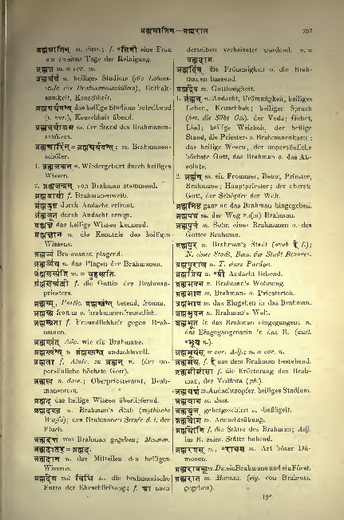
1. bráhman n. Andacht, Frömmigkeit, heiliges Leben, Keuschheit; heiliger Spruch (bes. die Silbe Om), der Veda; Gebet, Lied; heilige Weisheit, der heilige Stand, die Priester- o. Brahmanenkaste; das heilige Wesen, der unpersönliche höchste Gott, das Brahman o. das Absolute.
Burnouf 1866 Substantiv Maskulin
Originaltext · Französisch · Substantiv Maskulin
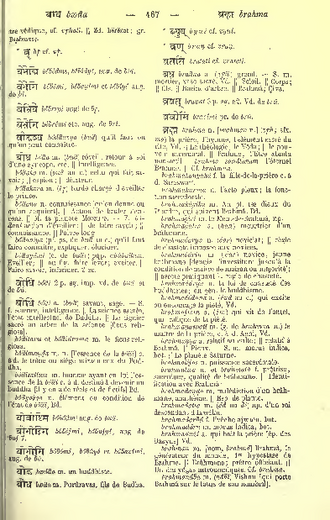
brahman m. [nom. brahmā] Brahmā, le générateur du monde, 1ʳᵉ hypostase de Brahme. Brâhmane; prêtre officiant. Un des yogas astronomiques. Cf. brahma.
Abgeleitete Wörter
Quelltextfundstellen (96)
DYS 4 Fundstellen
GoS 5 Fundstellen
HP 13 Fundstellen
Weitere 5 Quelltextseiten
MAN 6 Fundstellen
Brahmārpaṇam-Mantra 6 Fundstellen
Direkt belegt
-
MAN BR 1.1 Segment 1
-
MAN BR 1.1 Segment 3
-
MAN BR 1.1 Segment 5
-
MAN BR 1.1 Segment 7
-
MAN BR 1.2 Segment 1
-
MAN BR 1.2 Segment 5
MandUp 3 Fundstellen
PYS 2 Fundstellen
SiSa 29 Fundstellen
SiSa 1.71-1.81: Avidyā und Elemente 2 Fundstellen
Direkt belegt
Weitere 13 Quelltextseiten
SiSa 5.132-5.143: Innere Vārāṇasī 2 Fundstellen
Direkt belegt
-
SiSa 5.134 Segment 4
-
SiSa 5.135 Segment 1
SiSa 5.156-5.181: Sahasrāra 8 Fundstellen
Direkt belegt
-
SiSa 5.157 Segment 22
-
SiSa 5.159 Segment 9
-
SiSa 5.160 Segment 13
-
SiSa 5.167 Segment 9
-
SiSa 5.168 Segment 1
-
SiSa 5.171 Segment 13
-
SiSa 5.178 Segment 1
-
SiSa 5.181 Segment 13
SVU 26 Fundstellen
SVU 1.1-1.3: Suche nach der Ursache 2 Fundstellen
Direkt belegt
SVU 1.7-1.12: Dreiheit und Freiheit 5 Fundstellen
Direkt belegt
SVU 1.13-1.16: Das verborgene Feuer 2 Fundstellen
Direkt belegt
Weitere 11 Quelltextseiten
SVU 5.1-5.6: Der Herr der Weltursprünge 3 Fundstellen
Direkt belegt
VBT 8 Fundstellen
Mit AYI Free weitermachen
Bildquelle: AYI Archiv.