Plank variations for a stronger, steadier centre

Plank variations for a stronger, steadier centre

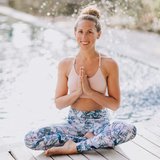
Join Ronald and Sara for static and moving plank variations. Explore how your trunk responds as the load shifts and choose an amount of effort that challenges you.

Dr. Ronald Steiner Dr. Ronald Steiner Sara Buck Sara Buck 16 Min.

What will you explore in this tutorial?

Ronald and Sara use plank variations to strengthen your centre and stabilise your trunk. The static holds and moving variations can help prevent back pain and build the foundations of a strong yoga practice. Continue with your usual practice afterwards if you wish.

Why does the body need strength?

Yoga therapy is central to the AYI® Method. Sometimes people come to us with discomfort despite a regular yoga practice. Many of us put so much emphasis on flexibility that being flexible can seem almost synonymous with enlightenment. The body also needs strength, stamina, coordination and the ability to relax. When strength is neglected, the body can lose stability. Excess movement between vertebrae, for example, can contribute to inflammation and back pain.

Give yourself a challenge

Muscles need to work to develop strength and help counter discomfort. The dynamic plank adds a small disturbance that travels through the trunk. As you respond to the wobble, the deeper layers of muscle join in.

Ronald and Sara show ways to make the movements easier or more demanding. Choose a variation that works for your body and still asks the muscles to make an effort.

Who is this tutorial for?

This practice is particularly helpful if you are already very flexible and want more core stability. If stretching dominates your usual practice, or you tire quickly on the mat, the more intensive plank work offers a chance to build strength.

What will you take into your practice?

You can be creative with the exercises, easing off or adding a challenge as you go. Which variations did you choose, and what will you keep? Tell us in the comments.

Highlights

  • 00:05 Building stability through yoga therapy
  • 02:06 Plank
  • 04:00 Side plank
  • 07:31 Reverse plank, Pūrvottānāsana and the table variation
  • 09:09 Plank with a wood-chopping movement
  • 10:43 Side plank with a wood-chopping movement
  • 11:36 Side plank with an extended arm
  • 12:32 Wood-chopping movement in reverse plank, Pūrvottānāsana
  • 13:31 Diagonal wood-chopping movement in plank
  • 14:36 What will you take into your practice?

Enjoy practising. Share what you discovered in the comments.

Thank you to OGNX for the clothing worn by the teacher and student.

Teacher

Dr. Ronald Steiner

AYI Expert teacher

From 89075 Ulm

The "Yoga Doc" - Dr. Ronald Steiner is the founder of the AYI method. This method links traditional Ashtanga Yoga with innovative Yogatherapy and living Philosophy. This forms a practice that is personal for each and... more ›

Sara Buck

Mein Name ist Sara Buck und ich übe Ashtange Yoga seit 2018 im AYI in Ulm. Die AYI Methode hat mich von Anfang an überzeugt und ich wollte mehr Wissen. Deshalb habe ich voller Neugierde die Inspired Ausbildung in Ulm... more ›

Messages (16)

Please log in to write a message. Go to login

Y
Yvonne Berardi
Supersequenz. Anstrengender als vermutet. Ich stelle fest mir fehlt noch viel Kraft. Danke für die gute Anleitung der Schulterhaltung.
genau das richtige Maß: anstrengend aber zeitlich begrenzt und du fühlst dich top danach,
Jens Michael Gering
Jens Michael Gering
Diese Plank-Serie finde ich sehr gut, da ich Erfolgserlebnisse vermute.
Annemarie Stärk
Annemarie Stärk
Hallo, danke für das tolle Video. Ich mache Yoga für Senioren, 70 - Ende 80. Und dieses Video hat mir viele neue Ideen gegeben. Denn selbst bei älteren Menschen ist es wichtig neue Sachen auszuprobieren. In meiner Ausbildung Anatomie der Bewegung bei dir, habe es nicht so recht verstanden. Aber nun verstehe ich, das ich alle Aspekte des Yogas auch mit dem Stuhl machen kann und immer einen Lerneffekt erhalten. Dies ist im Alter sehr wichtig.
Andrea Mogwitz
Andrea Mogwitz
lieber Ronald,
warum bekomme ich einen Krampf bei der Rückenlage der schiefen Ebene, wenn ich die Zehen auf den Boden bringen will? Und wie kann ich den lösen?
danke für Deine Antwort, Andrea
A
AYI
Hallo Andrea,
ein Krampf in dieser Haltung ist relativ häufig. Er sagt nur, dass Deine Muskeln gerade etwas neues lernen. Genieße ihn und atme ruhig weiter. Wenn er zu intensiv wird, gehe kurz aus der Haltung heraus, schüttele Deine Wade, oder Beinrückseite aus und probiere es erneut.
- Wenn Du insgesamt häufig Krämpfe bekommst, achte auf Dein Trinken und Mineralien.
Viel Freude beim Üben wünscht Dir
Ronald
Carmen Gindorf-Paulus
Ton und Bild sind leider nicht synchron!
Liebe Carmen, das wundert mich. Ich habe gerade das Video auf unserer Webseite und auf der Ursprungsseite Vimeo getestet. Es lief beide Male bis zum Schluss synchron. Das Problem liegt offenbar nicht direkt bei der Videodatei. Versuche es doch einfach nochmals und leere davor den Cache der Seite. Ich hoffe, dann funktioniert es. Lieben Gruß aus dem AYI Office. Doro
Ich finde die Sequenz super hilfreich, um kräftiger und stabiler zu werden. Es ist eine Herausforderung, alles durchzuhalten, aber die Praxis danach fühlt sich definitiv besser an. Wichtig für mich waren auch nochmal die Hinweise, wie wir mit den Schultern arbeiten sollen und dass wir die Schultern weiten sollen. Außerdem hat es mir riesig Freude gemacht, hier auch Sarah wiederzusehen, mit der ich ja in der Ausbildungsgruppe war. Euch allen Frohe Ostern!
A
AYI
Viel Freude!